There is no single best Amazon business model. Dropshipping is best for low-risk product validation, Amazon wholesale FBA is better for faster cash-flow scaling, and Amazon private label FBA has the highest long-term upside if you want to build a brand asset.
The real question is not only “Which model is better?” It is whether you can source products at the right landed cost, stay compliant with Amazon’s policies, and manage China-to-Amazon logistics without destroying your margin.
In this guide, I’ll compare Amazon dropshipping, wholesale FBA, and private label FBA from a China sourcing perspective. We’ll cover cost math, supplier selection, risks, and the smart roadmap from testing products to building a private label brand.
Key Takeaways
- Dropshipping has the lowest barrier, but the highest policy risk. You may start with a few hundred dollars, but Amazon requires you to be the seller of record and remove third-party supplier information from orders.
- Wholesale FBA needs more capital but can scale faster. A typical beginner budget may start around $1,000–$3,000, depending on MOQ, shipping, prep, and Amazon fees.
- Private Label FBA needs the most capital and patience. I would usually expect $3,000–$5,000+ for inventory, samples, packaging, freight, and launch PPC.
- FBA is a fulfillment method, not a business model. Wholesale and private label sellers can both use FBA to store inventory and let Amazon handle fulfillment.
- China sourcing can improve margins, but only with proper landed cost math. Factory price means very little until you add freight, customs, FBA prep, Amazon referral fees, fulfillment fees, storage, and PPC.
- Best use case: dropshipping = validation; wholesale FBA = cash flow; private label FBA = long-term brand equity.
What Is Amazon Dropshipping, FBA, Wholesale, and Private Label?
Before comparing the models, it helps to separate the business model from the fulfillment method.
What Is Amazon Dropshipping?
Amazon dropshipping means you list a product on Amazon without holding inventory. When a customer buys, a supplier ships the product directly to the customer.
This sounds simple, but Amazon dropshipping has strict rules. You must be the seller of record. Your supplier cannot send invoices, packaging, or inserts that identify another seller or marketplace. You are also responsible for customer service and returns.
In practice, I would treat Amazon dropshipping as a validation model, not a long-term moat. It can help you test product demand, but margins are usually thin and policy compliance is non-negotiable.
What Is Amazon FBA?
FBA stands for Fulfillment by Amazon. You send inventory to Amazon fulfillment centers, and Amazon stores, picks, packs, ships, and handles customer service for those orders.
FBA is not a business model by itself. It is a logistics layer. You can use FBA for wholesale products, private label products, or even products you source from a China supplier.
For a beginner comparison of Amazon FBA vs dropshipping, you can internally link to: beginner comparison of Amazon FBA vs Dropshipping.
What Is Amazon Wholesale FBA?
Amazon wholesale FBA means you buy products in bulk from a brand, distributor, wholesaler, or supplier, then send that inventory to Amazon FBA.
The product already exists. You are usually competing on an existing listing with other sellers. Your main job is buying at a low enough cost, staying authorized, winning the Buy Box, and keeping inventory moving.
Wholesale FBA can scale faster than private label because you are not building a product from scratch. But it also gives you less brand control.
What Is Amazon Private Label FBA?
Amazon private label FBA means you source an unbranded or OEM product, add your own branding, create your own listing, and send inventory to Amazon FBA.
This model gives you the most control. You can customize packaging, improve the product, build A+ Content, enroll in Brand Registry, and defend your listing better than a generic reseller.
The trade-off is capital and risk. Private label sellers need inventory, samples, branding, photography, PPC, reviews, and time to rank.
Amazon Dropshipping vs Wholesale FBA vs Private Label: Quick Comparison
| Model | Upfront Capital | Margin Potential | Time to First Sale | Brand Control | Scalability | Main Risk |
| Amazon Dropshipping | Low | Low | Fast | Low | Limited | Policy suspension and supplier issues |
| Amazon Wholesale FBA | Medium | Medium | Medium | Low | Strong | Buy Box competition and IP complaints |
| Amazon Private Label FBA | High | High | Slow | High | Strongest | Inventory, PPC, and product launch risk |
Amazon Dropshipping
Best for: beginners testing demand with low upfront inventory risk.
Pros
- Low starting capital.
- No need to buy bulk inventory.
- Fast product testing.
- Useful for validating 5–10 SKUs before committing to stock.
Cons
- Thin margins after supplier cost, shipping, and Amazon referral fees.
- Higher policy risk if supplier packaging is not compliant.
- Slow shipping can hurt customer experience.
- You do not control the product listing or customer perception as well as private label sellers.
I would only use Amazon dropshipping if the supplier can blind-ship properly and keep inventory stable. A random marketplace supplier is too risky.
Amazon Wholesale FBA
Best for: sellers who have some capital and want faster inventory-based scaling without building a brand from scratch.
Pros
- Faster than private label because the product already exists.
- FBA can improve customer trust and delivery speed.
- Easier to forecast demand if the listing already has sales history.
- Good stepping stone after a product has been validated.
Cons
- Buy Box competition can compress margins.
- Brand authorization may be required.
- IP complaints can happen if sourcing is not clean.
- You do not own the listing or brand.
Wholesale FBA works when you can buy below the market price and prove your supply chain is legitimate. If you cannot show real invoices or authorization, I would avoid branded wholesale on Amazon.
Amazon Private Label FBA
Best for: sellers with capital, patience, and a long-term brand mindset.
Pros
- You control the listing, brand, packaging, pricing, and positioning.
- Higher margin potential than dropshipping and many wholesale models.
- Better long-term asset value.
- Easier to differentiate through bundles, materials, design, or branding.
Cons
- Higher upfront investment.
- MOQ risk.
- PPC burn during launch.
- Reviews take time.
- Bad product quality can damage the listing early.
Private label is where the upside is, but I would not start there blindly. The better path is to validate demand first, then private label a product that has already shown sales potential.
Landed Cost Reality: From Chinese Factory to Amazon FBA
Most Amazon comparison articles talk about margins in broad terms. That is not enough. Amazon profit is built or lost in landed cost.
Landed cost includes:
- Factory unit cost
- Sample cost
- Product packaging
- Carton packaging
- Inspection
- Domestic China shipping
- Sea or air freight
- Customs duty
- Import tax/VAT/GST where applicable
- FBA prep and labeling
- Amazon inbound placement or shipping fees
- Referral fee
- FBA fulfillment fee
- Monthly storage fee
- Aged inventory surcharge risk
- PPC advertising cost
For this example, let’s use a non-pet product: a compact kitchen drawer organizer that sells for $25 on Amazon.
This is a planning example, not a final quote. Factory pricing should be replaced with live Alibaba or 1688 quotes before publishing or ordering.
Model 1: Amazon Dropshipping Cost Example
In dropshipping, the supplier ships one unit directly to the customer. You avoid inventory risk, but the per-unit shipping cost is high.
| Cost Item | Estimate |
| Amazon sale price | $25.00 |
| 1688/Alibaba product cost | $2.50–$4.00 |
| DDP shipping to customer | $8.00–$12.00 |
| Amazon referral fee estimate | $3.75 |
| Payment/processing/operational buffer | $1.00 |
| Estimated total cost | $15.25–$20.75 |
| Estimated gross profit | $4.25–$9.75 |
| Estimated margin | 17–39% before returns/issues |
On paper, this can look workable. In practice, I would haircut this heavily.
Why? Because Amazon dropshipping has compliance and service risks. If the supplier ships slowly, uses non-compliant packaging, includes a 1688 invoice, or shows another seller’s name, the account risk outweighs the margin.
For a realistic dropshipping model, I would target at least 15% net margin after all fees and build in a refund/reship buffer. If the product only works at 5–10% margin, it is probably not worth the account risk.
Model 2: Wholesale FBA Cost Example
With wholesale FBA, you buy inventory in bulk and send it to Amazon. Your unit cost drops, and the customer gets Amazon fulfillment. But now you have inventory risk.
| Cost Item | Estimate |
| Amazon sale price | $25.00 |
| Bulk unit cost from China | $1.80–$3.00 |
| Sea freight + duty per unit | $0.80–$1.50 |
| FBA prep/labeling | $0.30–$0.80 |
| Amazon referral fee estimate | $3.75 |
| FBA fulfillment fee estimate | $3.50–$4.50 |
| Storage/aged inventory buffer | $0.20–$0.60 |
| Estimated total cost | $10.35–$14.15 |
| Estimated gross profit | $10.85–$14.65 |
| Estimated margin | 43–59% before PPC/price competition |
This looks much stronger than dropshipping because freight is spread across bulk inventory. But wholesale FBA has another issue: you may not control the price.
If multiple sellers are on the same listing, the Buy Box can turn into a price war. A product that looks like a 40% margin item can quickly become 15% if competitors drop price, Amazon fees change, or storage costs build up.
This is why wholesale sellers need to watch sell-through rate, not just margin. Slow-moving inventory in FBA can become expensive.
Model 3: Private Label FBA Cost Example
Private label starts with a product you can improve or differentiate. For the same kitchen organizer, you might change the material, color, packaging, bundle, or included accessories.
| Cost Item | Estimate |
| Amazon sale price | $25.00 |
| OEM/private label unit cost | $1.20–$2.50 |
| Custom packaging/insert | $0.30–$0.80 |
| Sea freight + duty per unit | $0.80–$1.50 |
| FBA prep/labeling | $0.30–$0.80 |
| Amazon referral fee estimate | $3.75 |
| FBA fulfillment fee estimate | $3.50–$4.50 |
| Storage/aged inventory buffer | $0.20–$0.60 |
| PPC launch cost per unit sold | $2.00–$5.00 |
| Estimated total cost | $12.05–$19.45 |
| Estimated gross profit | $5.55–$12.95 |
| Estimated margin | 22–52% during launch |
Private label can eventually produce stronger margins than wholesale, but launch costs make the early numbers less attractive. PPC, photography, A+ Content, samples, and review-building can delay profitability.
I would treat private label as a 3–6 month break-even project, not a quick cash-flow play.
Side-by-Side Cost Snapshot
| Model | Factory Unit Cost | Shipping & Duty | Amazon Fees | Extra Costs | Estimated Net Margin |
| Amazon Dropshipping | $2.50–$4.00 | $8–$12 DDP | Referral fee | Refund/reship risk | ~5–15% realistic net target |
| Wholesale FBA | $1.80–$3.00 | $0.80–$1.50/unit sea | Referral + FBA | Prep/storage | ~12–18% after competition |
| Private Label FBA | $1.20–$2.50 | $0.80–$1.50/unit sea | Referral + FBA | Packaging + PPC | ~25–35% after launch stabilizes |
The main lesson is simple: private label has the best long-term economics, but wholesale may produce faster cash flow, and dropshipping is mainly useful for validation.
The Smart Roadmap: Dropshipping → Wholesale FBA → Private Label FBA

I would not treat these models as separate boxes. A smarter way is to use them as stages.
Phase 1: Validate with Dropshipping
Goal: Test demand without buying inventory. Timeline: 30–60 days. Capital needed: Around $100–$500 for account setup, samples, listings, and small tests. Success milestone: One product sells consistently with at least 15% margin after all visible costs.
In this phase, use dropshipping to test 5–10 SKUs. The goal is not to build the final business. The goal is to identify which product deserves inventory.
For example, if three kitchen organizers get clicks but only one gets repeat sales, that one becomes your candidate for wholesale FBA.
Move to the next phase when:
- The product has repeat sales.
- Supplier performance is stable.
- Customer complaints are manageable.
- The product still has margin after Amazon referral fees and shipping.
- You can source it in bulk at a much lower landed cost.
Phase 2: Scale with Wholesale FBA
Goal: Buy 100–500 units and send them to Amazon FBA. Timeline: 2–3 weeks for restock after supplier setup, longer for first shipment. Capital needed: Around $1,000–$3,000 depending on product size, MOQ, and freight. Success milestone: Stable sell-through, predictable reorder cycle, and margin after FBA fees.
This is where the model becomes more operational. You move from one-piece fulfillment to bulk inventory.
The advantage is faster shipping, better customer experience, and lower per-unit landed cost. The risk is that you now own inventory.
Move to the next phase when:
- You can sell through inventory within 30–60 days.
- The listing has consistent demand.
- You understand the best price point.
- You have customer feedback showing what can be improved.
- The product has room for branding, bundling, or packaging upgrades.
Phase 3: Build Equity with Private Label FBA
Goal: Build a differentiated product and own the listing. Timeline: 3–6 months to break even. Capital needed: Usually $3,000–$5,000+ for MOQ, samples, branding, freight, and launch PPC. Success milestone: Branded listing, stable reviews, repeatable PPC economics, and reorder confidence.
This is where you stop competing only on price. Instead of selling the same kitchen organizer as everyone else, you might create:
- A better material version.
- A custom color.
- A bundle with drawer labels.
- Branded packaging.
- A higher-quality instruction insert.
- A clearer Amazon listing with A+ Content.
Private label is not only about putting a logo on a generic product. The best private label products solve a specific customer complaint better than the existing listings.
How to Source Products for Each Amazon Model on Alibaba and 1688
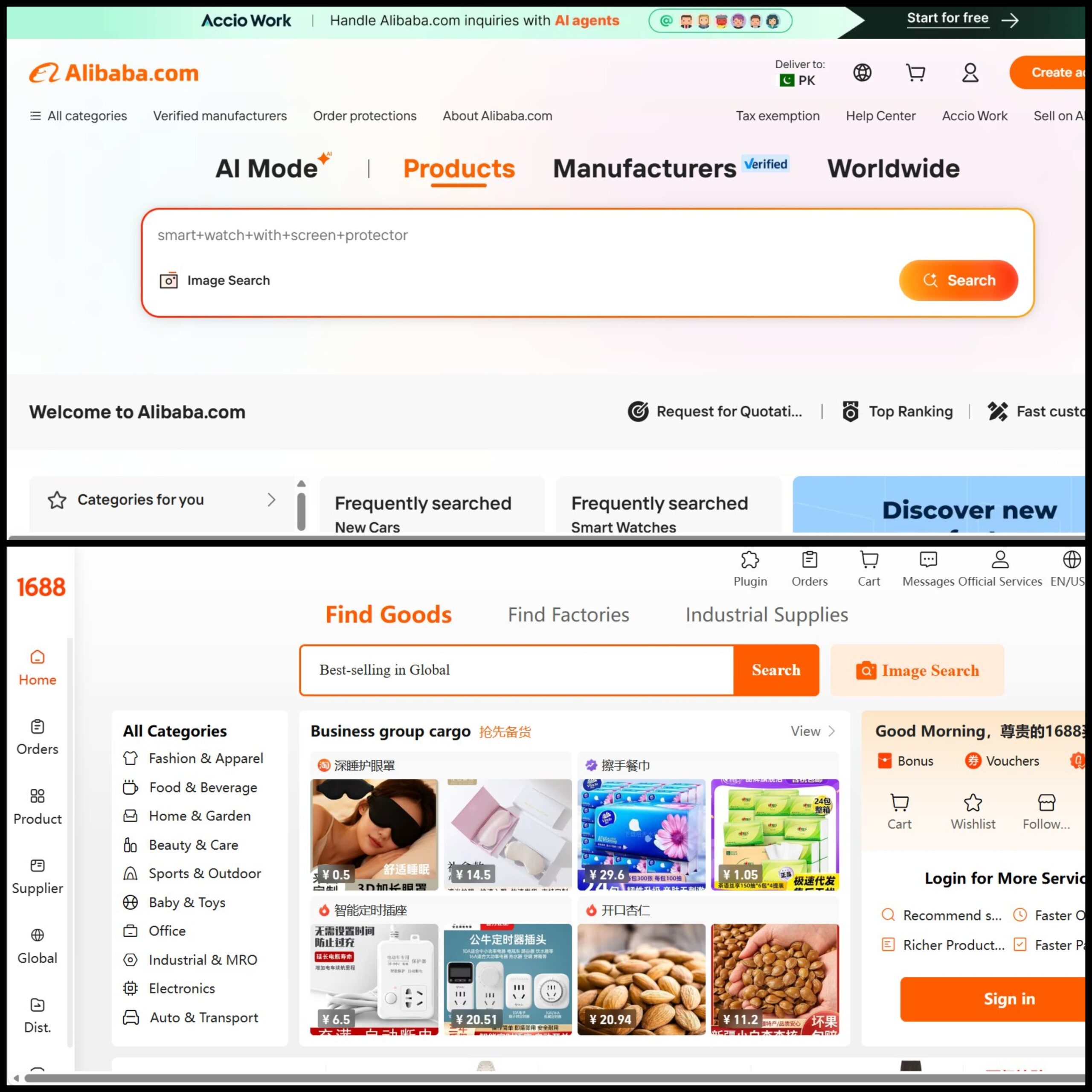
The supplier criteria change depending on the model.
Sourcing for Amazon Dropshipping
For dropshipping, I would look for suppliers who can handle one-piece fulfillment and blind shipping.
Check for:
- Single-piece order support.
- No supplier invoice inside the package.
- No 1688, Alibaba, or warehouse branding.
- Consistent stock availability.
- Processing time under 48 hours.
- Tracking upload support.
- Clear return/reship policy.
- Sample order before listing.
The biggest mistake is using a supplier who can ship one unit but cannot follow Amazon compliance requirements. That can put you at a suspension risk.
Sourcing for Wholesale FBA
For wholesale FBA, supplier selection is about bulk pricing, documentation, and prep capability.
Check for:
- MOQ of 100–500 units.
- Stable product quality.
- Carton dimensions and weight.
- FNSKU labeling support.
- Carton label support.
- Ability to ship to a freight forwarder.
- Invoices matching your seller account details.
- Authorization letters for branded products where required.
- Product compliance documents if the category needs them.
If the product is branded, be very careful. Amazon may ask for invoices or authorization. A cheap supplier is not useful if you cannot prove the supply chain.
Sourcing for Private Label FBA
For private label, you need a factory, not just a trader with a catalog.
Check for:
- OEM/ODM capability.
- Custom packaging options.
- MOQ for logo and color changes.
- Sample lead time.
- Production lead time.
- Material options.
- Factory certifications such as ISO 9001 or BSCI where relevant.
- Product testing capability.
- AQL inspection acceptance.
- Clear defect policy.
- Packaging durability for FBA handling.
I would also ask for photos or videos of previous production, but I would not rely on them alone. For private label, pre-shipment inspection is worth the cost because the first batch can define the listing’s review profile.
Risks, Pitfalls, and How to Avoid Them by Model
Amazon Dropshipping Risks
Policy Suspension
Amazon dropshipping is allowed only when you are clearly the seller of record. If the package shows another seller, retailer, or supplier, your account can be at risk.
Mitigation: Use a supplier that agrees to blind shipping and removes all third-party packing slips, invoices, and branding.
Slow Shipping
Customers expect Amazon-level delivery standards. Long international shipping times can lead to complaints, refunds, and bad feedback.
Mitigation: Use faster shipping only for tested products, or move winners into FBA as soon as demand is proven.
Inventory Sync Failures
Dropshipping suppliers may run out of stock while your Amazon listing stays live.
Mitigation: Track supplier inventory daily and avoid products with unstable stock.
Thin Margins
One-piece shipping can destroy profit.
Mitigation: Dropship only to validate. Do not build the full business around thin-margin single-unit shipping.
Wholesale FBA Risks
Buy Box Price Wars
If multiple sellers are competing on the same listing, the Buy Box can push prices down.
Mitigation: Calculate profit at a lower selling price before buying inventory. Do not assume today’s Buy Box price will hold.
IP Complaints
Selling branded products without authorization can trigger complaints.
Mitigation: Buy only from legitimate suppliers and keep invoices, authorization letters, and communication records.
Counterfeit Risk
A supplier may claim products are authentic when they are not.
Mitigation: Avoid suspiciously cheap branded goods. Verify supplier authorization before buying.
Slow-Moving Inventory
FBA storage and aged inventory fees can eat margin if stock sits too long.
Mitigation: Start with smaller test orders, monitor sell-through, and reorder based on data.
Private Label FBA Risks
High Upfront Inventory Risk
MOQ can lock your cash into a product that may not sell.
Mitigation: Validate demand first with dropshipping or small wholesale batches before private labeling.
PPC Burn
A new listing usually needs PPC to get visibility. Poor conversion can drain budget quickly.
Mitigation: Improve the product, photos, title, bullet points, and pricing before scaling ads.
Negative Review Spiral
Early quality problems can hurt the listing before it gains traction.
Mitigation: Inspect the product before shipment and approve packaging carefully.
Hijackers and Piggyback Sellers
Other sellers may try to list against your product detail page.
Mitigation: Use proper branding, packaging, trademark planning, and Brand Registry where eligible.
Long-Term Storage Fees
A bad private label launch can leave hundreds of units sitting in FBA.
Mitigation: Forecast conservatively and avoid sending the entire production batch to FBA at once. Use a 3PL or agent warehouse for overflow when practical.
How NicheDropshipping Bridges the Gap
NicheDropshipping supports Amazon sellers across all three stages: dropshipping, wholesale FBA, and private label FBA.
The value is not just “finding a supplier.” The real value is handling the China-side work that many Amazon sellers struggle with: supplier communication, payment, inspection, labeling, consolidation, and shipping.
For the Dropshipping Phase
NicheDropshipping can help with:
- One-piece fulfillment from China.
- Blind shipping support.
- Product sourcing from 1688, Alibaba, and other China platforms.
- Supplier communication in Chinese.
- Sample checks before listing.
- Inventory and fulfillment support.
This is useful when you want to validate SKUs without holding inventory but still need a supplier who understands blind shipping and Amazon customer expectations.
For the Wholesale FBA Phase
NicheDropshipping can help with:
- Bulk sourcing from 1688 and Alibaba.
- Supplier verification.
- MOQ negotiation.
- Product inspection.
- FBA prep and labeling.
- Carton labeling support.
- Warehouse consolidation.
- Freight forwarding support.
This matters because wholesale FBA is not only about buying units cheaply. The products must arrive at Amazon correctly labeled, packed, and documented.
For the Private Label FBA Phase
NicheDropshipping can help with:
- OEM factory matching.
- Product customization.
- Custom packaging.
- Logo and insert coordination.
- Sample management.
- AQL quality control.
- Packaging inspection.
- Product photo support where needed.
- Warehouse consolidation before FBA shipment.
For private label, I would not skip QC. A bad first batch can create reviews that are difficult to recover from. Catching defects in China is usually cheaper than handling returns, refunds, and negative feedback after the product reaches Amazon customers.
NicheDropshipping also helps with English/Chinese communication, Alipay or supplier payment handling, and China-side coordination. The standard commission is 5–10%, with no upfront fee.
If you are testing Amazon products, moving into wholesale FBA, or preparing a private label launch, you can request a Free Sourcing Quote from NicheDropshipping.
Final Recommendation: Which Amazon Model Should You Choose?
If you are testing Amazon for the first time with under $500, start with dropshipping only as a validation model. Keep it compliant and use it to identify products worth stocking.
If you have $1,000–$3,000 and want faster cash flow, choose Amazon wholesale FBA. Buy small bulk batches, send inventory to FBA, and focus on sell-through and Buy Box economics.
If you have $5,000+, a long-term mindset, and product research confidence, invest in Amazon private label FBA. It is slower and riskier, but it gives you the best chance to build a sellable brand asset.
If you already have a winning dropshipping SKU, move it into wholesale FBA within 60 days. If it keeps selling and customer feedback shows room for improvement, consider private labeling it within 6 months.
FAQs
What is the difference between Amazon private label and wholesale?
Amazon wholesale means buying existing branded or catalog products in bulk and reselling them, usually on existing listings. Private label means sourcing or manufacturing a product under your own brand and creating your own listing. Wholesale is better for faster cash flow, while private label gives more control and long-term brand value.
Can you dropship private label?
Yes, you can dropship private label products if the supplier can ship products with your branding and no third-party supplier information. However, on Amazon, this must still comply with dropshipping policy. You must be the seller of record, handle returns, and ensure packaging does not identify another supplier or retailer.
Is private label profitable on Amazon?
Private label can be profitable on Amazon, but only if the product has real demand, strong differentiation, controlled landed cost, and a realistic PPC budget. Many sellers lose money because they overorder inventory, underestimate fees, skip QC, or launch generic products with no clear advantage.
What are common FBA private label mistakes?
Common mistakes include choosing an overcompetitive product, ordering too much inventory, ignoring Amazon fees, using poor packaging, skipping inspection, underestimating PPC costs, and launching without enough differentiation. I would also avoid private labeling a product before validating demand through dropshipping, wholesale, or strong product research.
What are the risks of private labeling?
The main risks are upfront inventory cost, MOQ pressure, slow sales, PPC burn, negative reviews, hijackers, product defects, and long-term FBA storage fees. Private label is powerful, but it is not low-risk. Sellers need samples, quality control, proper branding, and conservative inventory planning.
How much does Amazon take from a $100 sale?
It depends on the category and fulfillment method. Amazon referral fees vary by category, often around 8–15% for many categories but higher in some cases. If you use FBA, you also pay fulfillment and storage fees. For a $100 sale, calculate referral fee, FBA fee, storage, ads, returns, and landed product cost.
Is Amazon wholesale better than private label?
Amazon wholesale is better if you want faster cash flow and less product development work. Private label is better if you want brand control, pricing control, and long-term equity. I would choose wholesale first if capital is limited, then move to private label once a product category is proven.
Is dropshipping allowed on Amazon?
Dropshipping is allowed on Amazon only if you follow Amazon’s policy. You must be the seller of record, remove third-party supplier information from packaging and invoices, and remain responsible for returns. Retail arbitrage-style dropshipping from another retailer directly to Amazon customers is risky and often non-compliant.
Can I use Alibaba or 1688 for Amazon FBA?
Yes, many Amazon sellers use Alibaba or 1688 to source products for FBA. The key is not just finding a cheap supplier. You need supplier verification, samples, product compliance, carton specs, FNSKU labeling, inspection, freight forwarding, and correct shipment creation before goods are sent to Amazon.
What is the best Amazon model for beginners?
For beginners with very low capital, dropshipping can help validate demand, but it must be compliant. For beginners with $1,000–$3,000, wholesale FBA is often more practical. Private label is better for sellers with more capital, stronger product research, and the patience to build a brand over several months.