A dropshipping agent helps ecommerce sellers source products, inspect inventory, store stock, and fulfill orders without managing multiple suppliers. In 2026, the best agents are evaluated not just by price, but also by MOQ, shipping speed, QC process, warehouse options, and branding support.
For growing Shopify stores, Amazon FBA sellers, and small-scale dropshippers, the right agent can simplify sourcing and make fulfillment more predictable. Instead of relying only on public marketplaces, you can work with an agent for factory sourcing, custom packaging, inventory storage, and faster order processing.
In this guide, we compare the best dropshipping agents for 2026 by MOQ, shipping, pricing, and use case to help you choose the right partner for your stage of growth.
Key Takeaways
- Compare dropshipping agents by MOQ, shipping speed, pricing, QC, and warehouse coverage — not just product cost.
- App-based agents are useful for product testing; private dropshipping agents are better for sourcing control, branded packaging, and scaling.
- Once your store reaches 20–30+ orders per day, agent reliability matters more because delays, stockouts, and packaging issues become harder to manage.
- For US/EU customers, check whether the agent has local warehouse options or only ships from China.
- Before scaling, ask for a full quote that separates product cost, shipping, packaging, storage, and service fees.
What Is a Dropshipping Agent?
A dropshipping agent is a sourcing and fulfillment partner that helps you find products, communicate with suppliers, inspect goods, manage store inventory, and ship orders to customers. Unlike a basic supplier, an agent usually manages more of the backend process so you can focus on marketing, customer service, and growing your store.
Related Guide: How Does Dropshipping Work? A Beginner’s Guide
A List of the Best Dropshipping Agents
1. NicheDropshipping
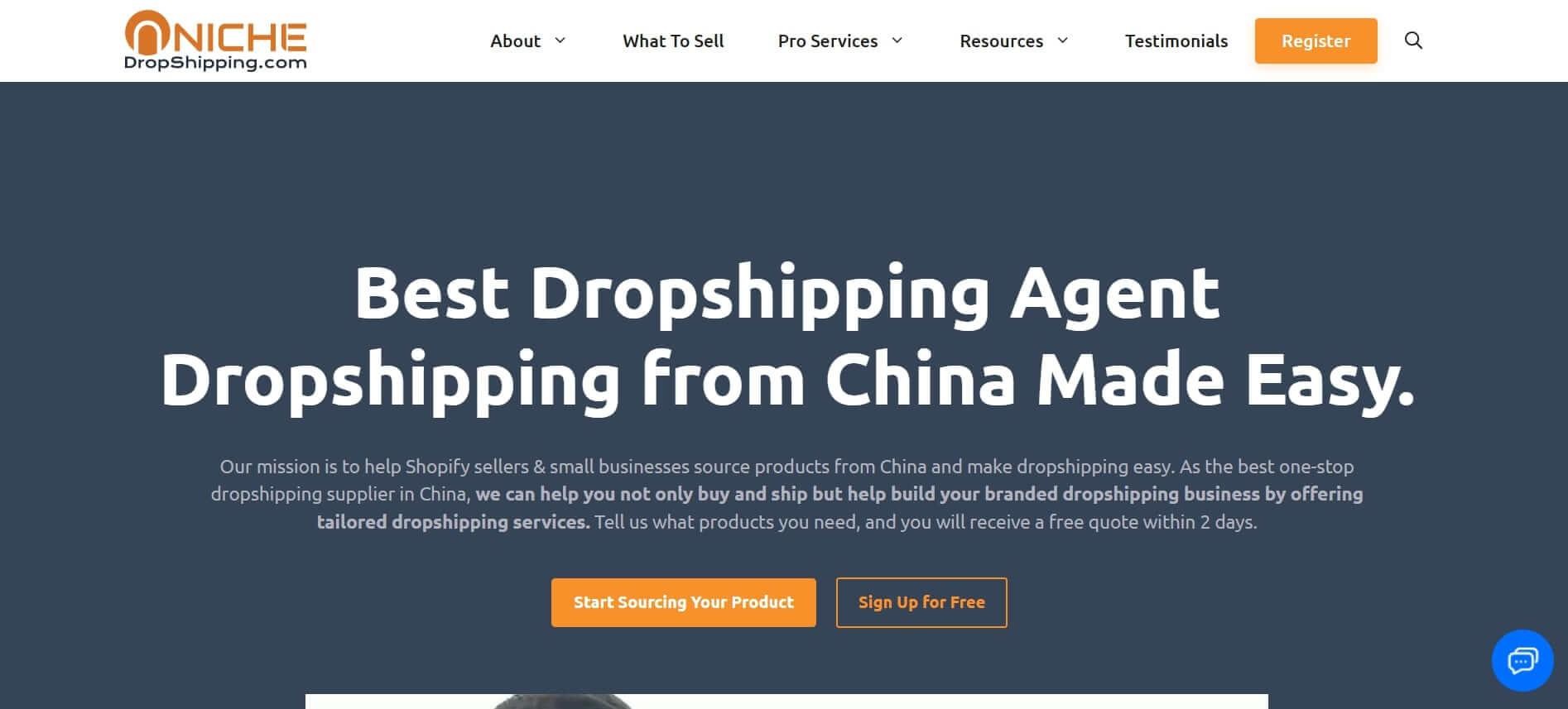
Best For: Scaling Shopify stores, Amazon FBA sellers, and ecommerce brands that need China sourcing, QC, warehousing, and branded fulfillment.
NicheDropshipping is a China-based dropshipping agent and sourcing-based fulfillment center founded by Stanley Nieh. Unlike catalog-only tools, our team helps sellers source products from factories, negotiate pricing, inspect goods, store inventory, customize packaging, and fulfill orders from China, the US, and Europe.
This makes NicheDropshipping a strong fit if you are moving beyond basic product testing and need more control over sourcing, packaging, and fulfillment quality.
- MOQ: No upfront MOQ for standard sourcing. MOQ may apply for private label products, custom packaging, or factory production.
- Shipping speed: Same-day processing for stocked items; China direct and US/EU warehouse options available depending on inventory location.
- Pricing: Free to start. No upfront fee. You pay per order based on product cost, shipping, packaging, and service requirements.
- Key services: Free product sourcing, QC, 90-day free warehousing, custom branded packaging, private/white label support, and Shopify integration.
Pros
- 15-person professional sourcing team.
- 3,000+ operated factories across China.
- Warehouses in Yiwu, Shenzhen, USA, and Europe.
- Supports custom packaging and branded packaging.
- Better fit for sellers who want to build a long-term brand.
Cons
- Not ideal if you only want to browse a public product catalog.
- Custom packaging and private label orders may require MOQ.
- Quote-based pricing means you need to request a price before comparing margins.
In practice, NicheDropshipping works best when you already have a product direction or winning product and need a reliable partner to source, inspect, store, and fulfill it more professionally.
Want to source products from China without language barriers?
NicheDropshipping offers free product sourcing with factory-direct prices.
Get your free quote today — no credit card required.
Pricing
NicheDropshipping offers four different plans designed to accommodate various business sizes and needs. For detailed pricing information, you’ll need to contact their sales team directly.
2. Eprolo
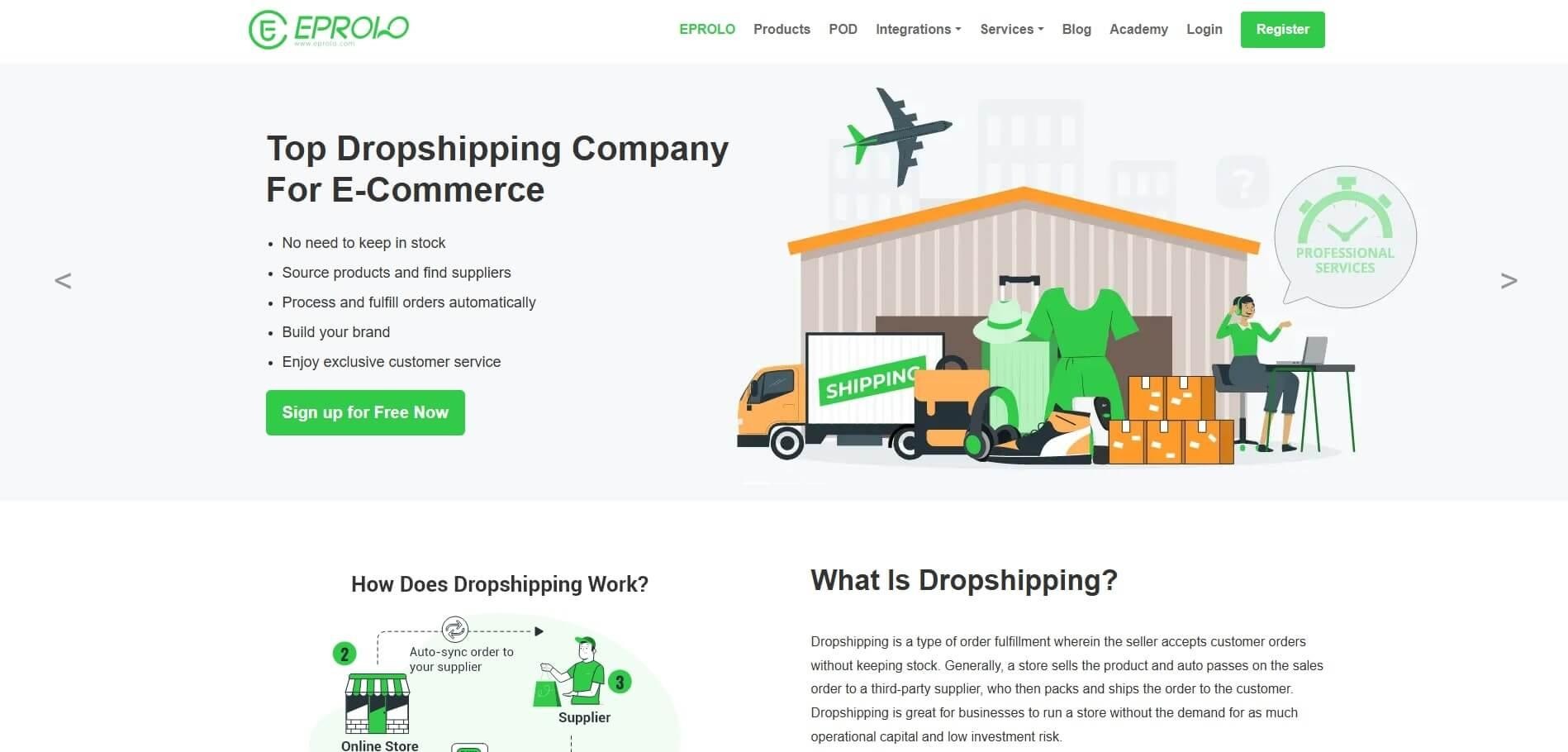
Best For: Beginners and small Shopify sellers who want free product sourcing, fulfillment, and basic branding options.
Eprolo is a popular dropshipping agent-style service with product sourcing, order fulfillment, and branding support. It is often used by newer dropshippers because there is no monthly subscription for the core dropshipping service, and sellers can connect their store to manage orders more easily.
It can be useful if you want a simple entry point into product sourcing and branded packaging without immediately working with a fully private agent.
- MOQ: Often no MOQ for standard dropshipping products. Branding materials may have separate requirements.
- Shipping speed: China direct shipping and selected warehouse options, depending on the product and destination.
- Pricing: Free account for core dropshipping. Branding programs may have separate annual fees or material costs.
- Key services: Product sourcing, fulfillment, store integration, and branding options.
Pros
- Beginner-friendly setup.
- No monthly fee for standard integrations.
- Supports custom labels, hangtags, print on demand services and packaging options.
- Useful for sellers testing branded dropshipping.
- Shopify integration available.
Cons
- Less private sourcing depth than a dedicated sourcing agent.
- Branding options may be limited by product category.
- Shipping speed varies by destination and product.
- Less control over supplier relationships compared with private sourcing.
Pricing
Eprolo operates on a free-to-use model for their basic dropshipping services. You only pay for the products and shipping costs when you place an order.
For branding services, prices vary depending on the customization level you require. These may include costs for custom packaging, labels, or product modifications.
3. EcommOps
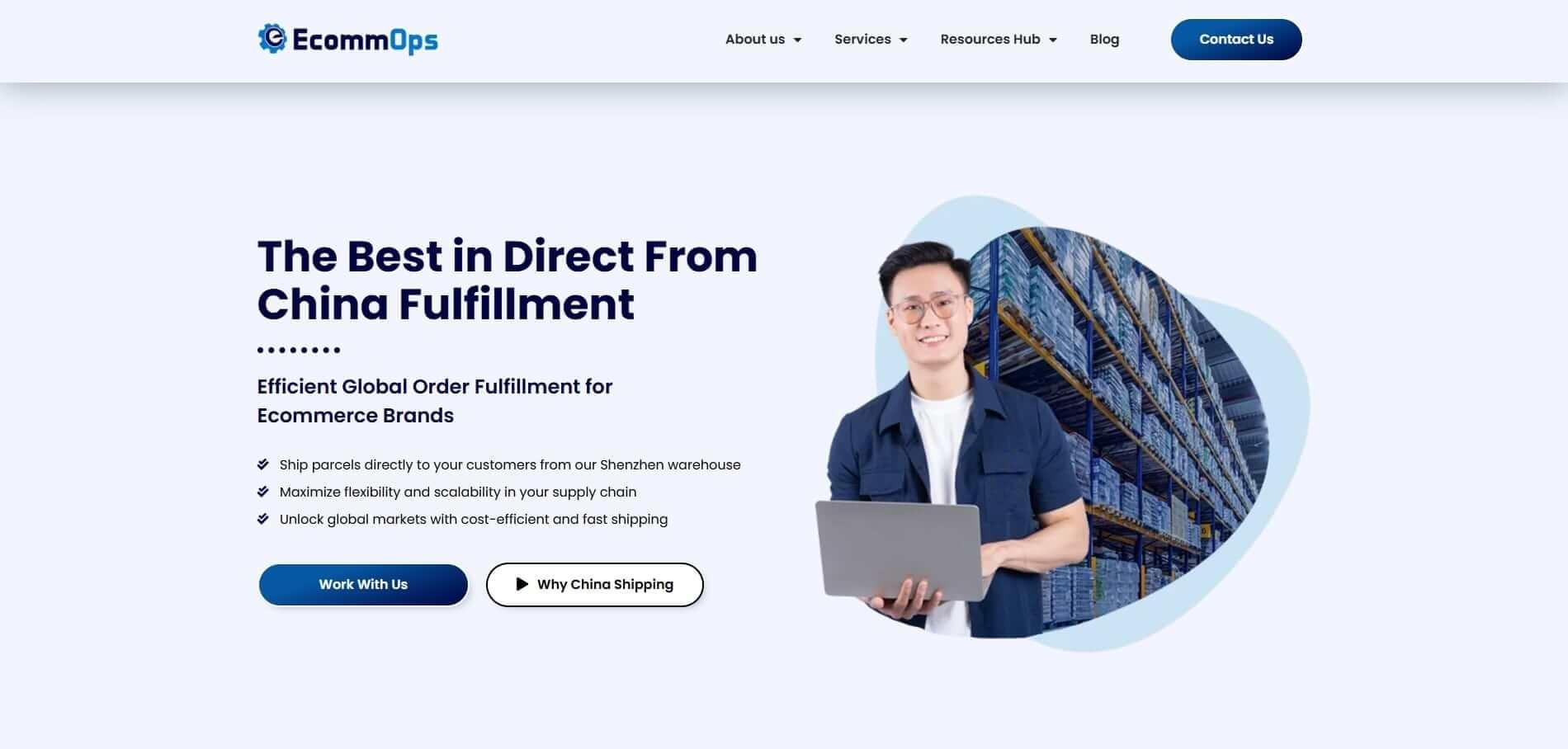
Best For: Ecommerce brands that need operations support, fulfillment guidance, and more structured backend systems.
EcommOps is different from many beginner-focused dropshipping agents because it is more focused on ecommerce operations and fulfillment strategy. It is usually a better fit for sellers who already understand their product and need help improving fulfillment, logistics, or supply chain workflows.
For dropshippers, EcommOps may be useful when the problem is no longer “where do I find products?” but “how do I make fulfillment more stable as volume grows?”
- MOQ: Depends on the service, product, and fulfillment arrangement.
- Shipping speed: Depends on the warehouse setup, supplier location, and logistics plan.
- Pricing: Usually custom or service-based rather than simple per-order public pricing.
- Key services: Ecommerce operations, fulfillment planning, logistics support, and supply chain improvement.
Pros
- Better suited for operational improvement.
- Helpful for sellers with existing volume.
- Can support more structured fulfillment workflows.
- Useful when scaling creates logistics complexity.
Cons
- Not the simplest choice for beginners.
- Pricing may not be as transparent as app-based tools.
- May not be ideal for small stores still testing products.
- Requires clearer business needs before onboarding.
EcommOps is worth considering if your store has moved past product testing and your main challenge is operational efficiency, fulfillment reliability, or supply chain control.
Pricing
EcommOps uses a straightforward pricing model. You pay for the product cost and shipping fees without additional service charges. However, they require an advance payment that covers 3-5 days of orders or a minimum of 500 orders.
4. ShipSmartly
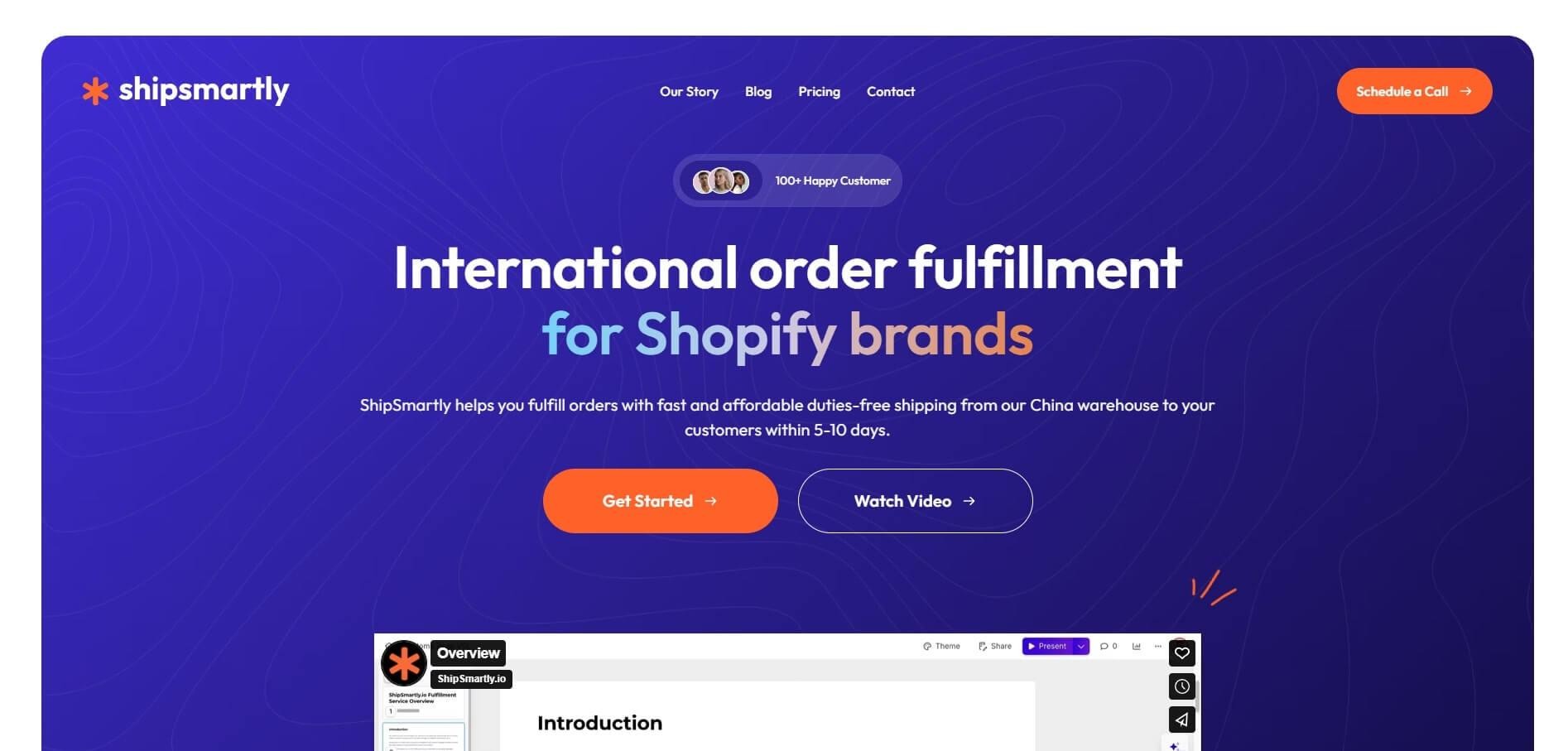
Best For: Shopify brands that want China-based 3PL fulfillment, supplier coordination, and transparent fulfillment pricing.
ShipSmartly is a China-based 3PL fulfillment center for Shopify brands. It focuses more on fulfillment and logistics than product catalog browsing, so it may suit sellers who already have products or suppliers and need help with storage, supplier coordination, order processing, and international shipping.
- MOQ: Not clearly listed as a fixed MOQ; sellers should confirm based on SKU, storage, and fulfillment needs.
- Shipping speed: ShipSmartly states 5–10 day delivery from its China warehouse to customers.
- Pricing: Listed pricing includes $1 for the first item, $0.35 for each additional item, variable shipping costs, and storage at $0.5 per CBM/day. Its site also mentions an account management fee that may be waived above 300 orders/month.
- Key services: China warehouse fulfillment, supplier coordination, storage, pick and pack, shipping, custom packaging, kitting, and bundling.
Pros
- Clear fulfillment and storage pricing.
- China-based warehouse fulfillment.
- Supplier coordination included.
- Supports custom packaging, kitting, and bundling.
- Useful for Shopify brands with existing product flow.
Cons
- More fulfillment-focused than sourcing-focused.
- Sellers should verify MOQ, warehouse terms, and shipping lines directly.
- Account management fees may matter for lower-volume stores.
- Less ideal if you need a large public catalog to browse.
Pricing
Shipsmartly has a transparent pricing structure on their website. They charge $1 for first item and an additional $0.35 for additional SKUs.
5. HyperSKU
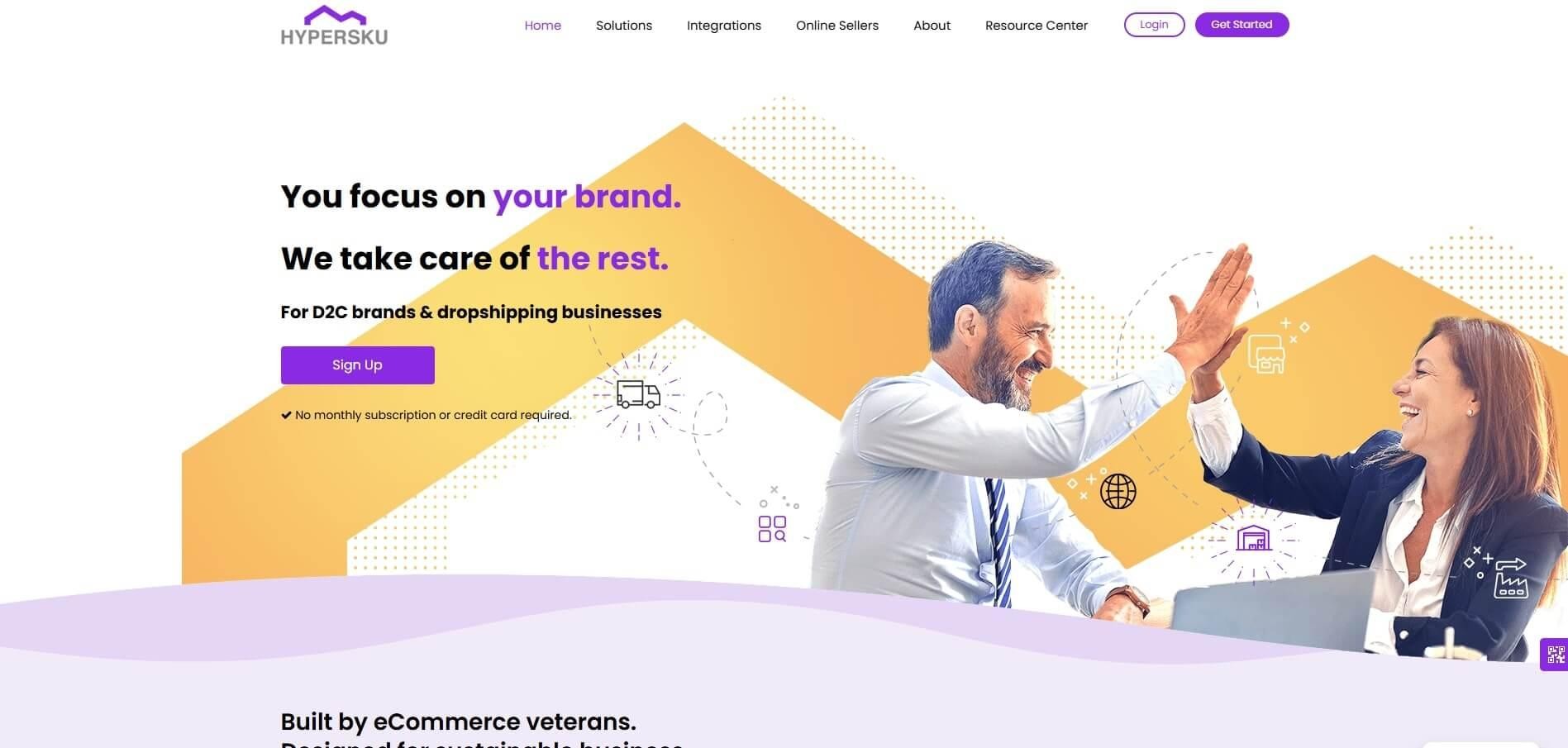
Best For: Growing Shopify and WooCommerce stores that want sourcing support, fulfillment automation, and faster order processing.
HyperSKU combines product sourcing, fulfillment, and store integration features. It is often used by sellers who want more support than a basic supplier app but still prefer an organized dashboard and automated workflows.
Its main advantage is that it balances agent-style sourcing with app-based convenience. That can be helpful if you are scaling but do not want a fully manual sourcing process.
- MOQ: Depends on the product and sourcing request.
- Shipping speed: HyperSKU lists economy and standard shipping options, with express methods available depending on product and destination.
- Pricing: Free plan available; product costs, shipping, and additional services are charged separately.
- Key services: Product sourcing, order sync, fulfillment, tracking sync, and warehouse support.
Pros
- Stronger workflow than many basic supplier apps.
- Store order syncing and fulfillment automation.
- Supports sourcing requests.
- Useful for growing ecommerce stores.
- Multiple shipping options depending on destination.
Cons
- Sourcing limits may apply depending on plan.
- Costs vary by product and shipping line.
- Not every product will have the same delivery speed.
- Customization depth may vary by category.
HyperSKU is a good middle-ground option for sellers who want more operational support without fully moving into a private sourcing relationship.
Pricing
HyperSKU operates on a pay-as-you-go model with no monthly subscription fees. You only pay when you fulfill orders through their platform. While specific pricing details aren’t publicly listed, they offer competitive rates due to their direct factory sourcing.
Custom services like thank-you cards ($0.08 per order, minimum 200) and stickers ($0.10 per order, minimum 500) are available for an additional fee.
6. Wiio
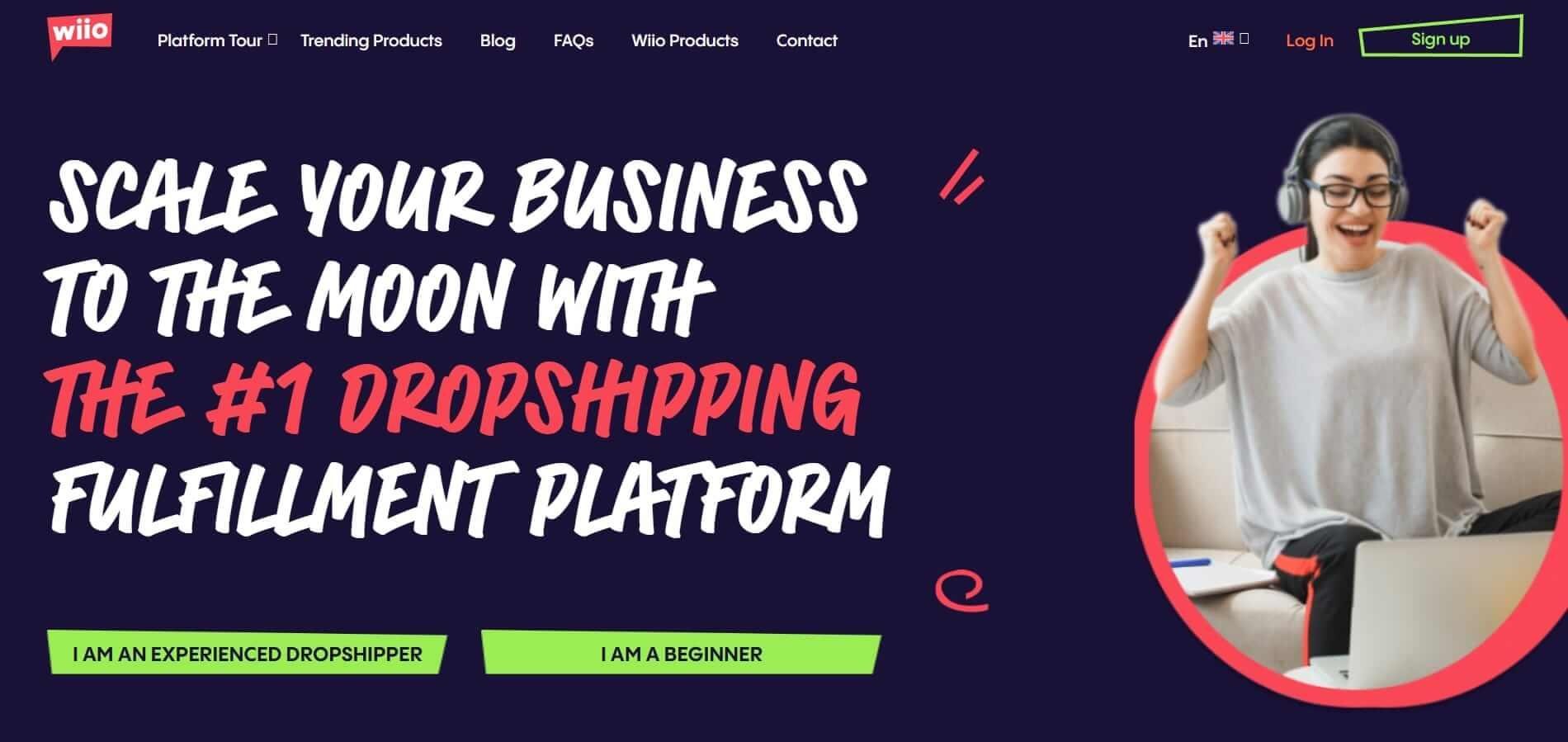
Best For: Dropshippers who want China sourcing, personal agent support, warehousing, and fulfillment in one place.
Wiio offers product sourcing, fulfillment, warehousing, and Shopify integration. It positions itself around agent support and fast global shipping, which makes it relevant for sellers who want a more guided sourcing process than public marketplaces.
It can be useful for stores that already have products in mind and want help sourcing, storing, and shipping them from China.
- MOQ: Wiio states no MOQ for standard dropshipping, though custom products or packaging may have separate requirements.
- Shipping speed: Wiio mentions 5–12 days to key markets, depending on product, destination, and shipping method.
- Pricing: Free plan available; product and shipping costs vary by order.
- Key services: Product sourcing, personal agent support, storage, and fulfillment.
Pros
- No MOQ for many standard dropshipping orders.
- Personal sales agent support.
- 90-day free storage listed on its site.
- Useful for China-based product sourcing.
- Shopify integration available.
Cons
- Shipping speed depends on destination and product type.
- Quote-based product pricing requires comparison before scaling.
- Customization options may require more discussion.
- Less suitable if you only want US/EU local suppliers.
Wiio is best for sellers who are comfortable with China-based sourcing and want a balance between personal support and app-based fulfillment.
Pricing
Wiio does not charge upfront fees or monthly subscriptions. Their pricing model is based on the cost of goods plus shipping fees.
Wiio offers volume discounts for larger orders. They provide transparent pricing breakdowns for each product, including sourcing cost, shipping fees, and any additional charges. This clarity helps you calculate your potential profit margins accurately.
You can request custom quotes for bulk orders or specific product modifications. Wiio’s agents can often negotiate better rates with suppliers for high-volume purchases.
7. Yakkyofy
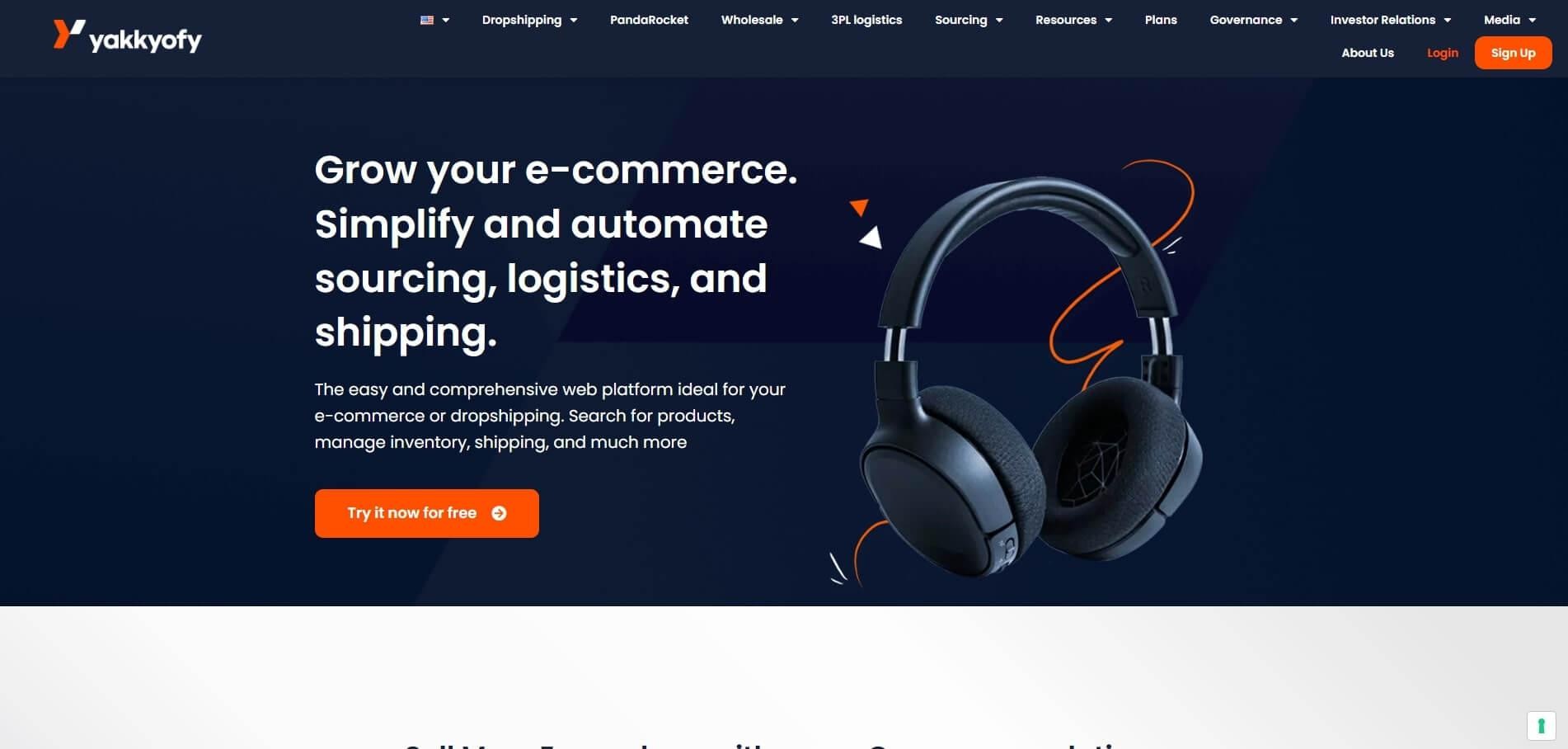
Best For: Sellers who want 1688 sourcing access, automation, and China-based fulfillment.
Yakkyofy focuses on automated dropshipping, sourcing, and fulfillment, with a strong emphasis on 1688 product access. This can be useful for sellers who want to source closer to factory-level product options rather than relying only on retail-style supplier listings.
It is especially relevant if you want to search products by image or keyword and request fulfillment from China.
- MOQ: Yakkyofy lists “buy from 1 unit, no MOQ” on its pricing page for standard use.
- Shipping speed: Depends on product, destination, and shipping method.
- Pricing: Free plan available, with paid plans for more advanced features.
- Key services: 1688 sourcing, product search, fulfillment, warehouse space, and custom packaging options.
Pros
- 1688 sourcing access.
- No MOQ listed for standard plan usage.
- Useful image and keyword search features.
- Supports custom packaging.
- Good fit for China product sourcing.
Cons
- Advanced features may require a paid plan.
- Delivery speed depends heavily on shipping route.
- Product research still needs human review.
- Less hands-on than a fully private sourcing agent.
Yakkyofy is a strong option if 1688 sourcing is important to your workflow and you want a more automated way to access Chinese factory products.
Pricing
Yakkyofy offers tiered subscription plans.
The Premium plan costs $59/month with annual billing or $79/month for monthly billing. Their higher-tier plan is priced at $189/month annually or $249/month for monthly billing.
These fees cover access to their platform and services, but additional costs may apply for specific services or per-order charges.
8. FillSell
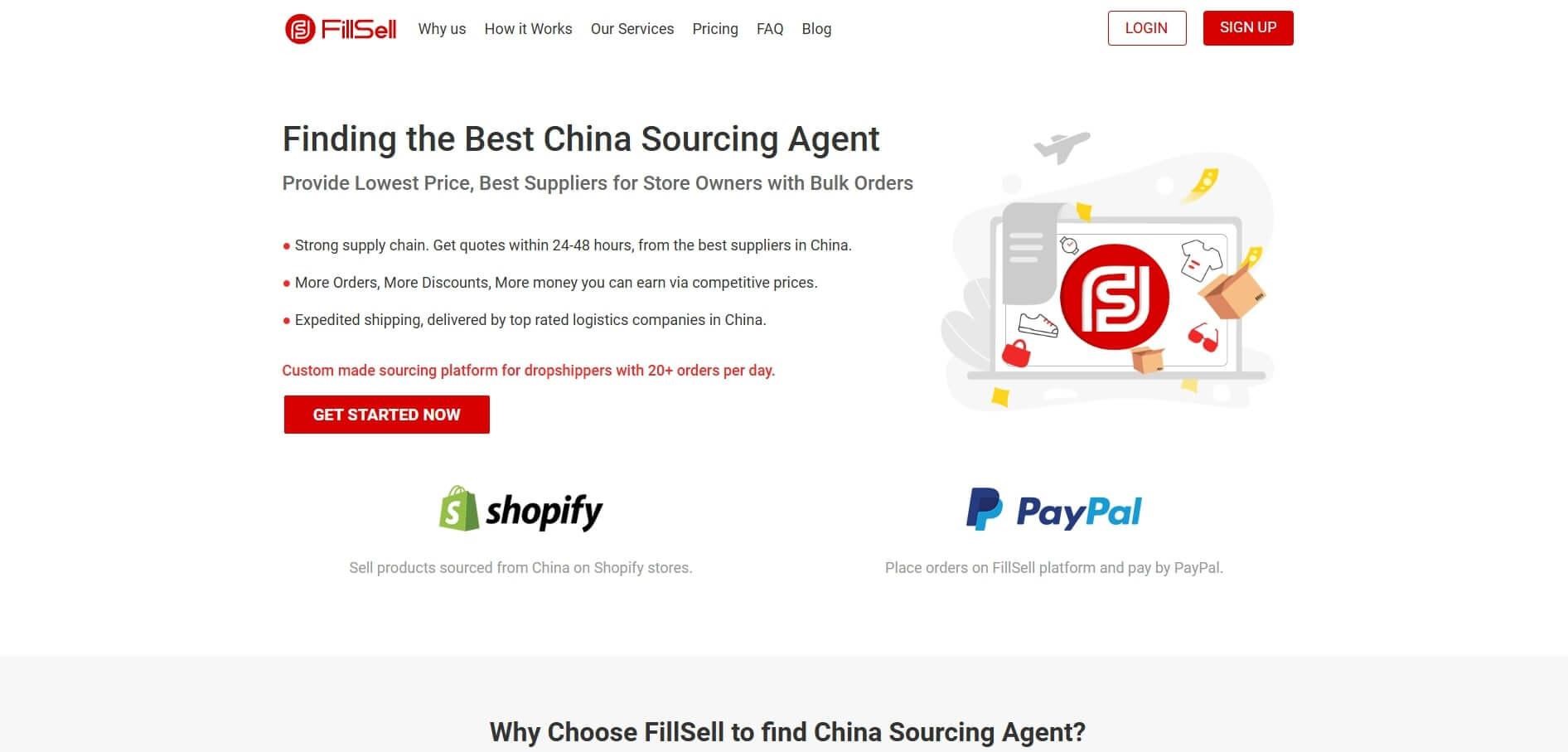
Best For: Dropshippers with 20+ orders per day who want China sourcing, Shopify order syncing, and one-to-one account manager support.
FillSell positions itself as a China sourcing agent for store owners with bulk orders. Its site says sellers can request quotes within 24–48 hours, sync Shopify orders to the FillSell system, and work with approved shipping providers such as UBI, 4PX, CNE, Yanwen Express, DHL, PostNL, and Singapore Post.
It is more suitable for sellers who already have some order volume, rather than complete beginners still testing their first product.
- MOQ: FillSell targets dropshippers with 20+ orders per day, so it may not be the best fit for very low-volume stores.
- Shipping speed: Uses approved logistics partners; exact shipping speed depends on product, destination, and shipping line.
- Pricing: Quote-based. Sellers request product quotes and compare supplier options before ordering.
- Key services: China sourcing, Shopify order syncing, QC, product development, customs support, branded packaging, and one-to-one account manager support for paid customers.
Pros
- Built for dropshippers with existing order volume.
- Quote requests within 24–48 hours.
- Supports Shopify order syncing.
- Can combine multiple products into one package.
- Offers branding options such as logos, stickers, and gift cards.
Cons
- Less suitable for sellers below 20 orders per day.
- Pricing is quote-based, so comparison takes more work.
- Shipping speed is not fixed across all products.
- One-to-one account manager support appears tied to paid customers.
Pricing
FillSell offers both free and paid plans. The free plan allows you to request quotes and access basic features.
Paid plans provide additional benefits, including a dedicated account manager and priority support.
Specific pricing details are not publicly available on their website. You’ll need to contact FillSell directly for a customized quote based on your business needs and order volume.
9. Fulfillbot
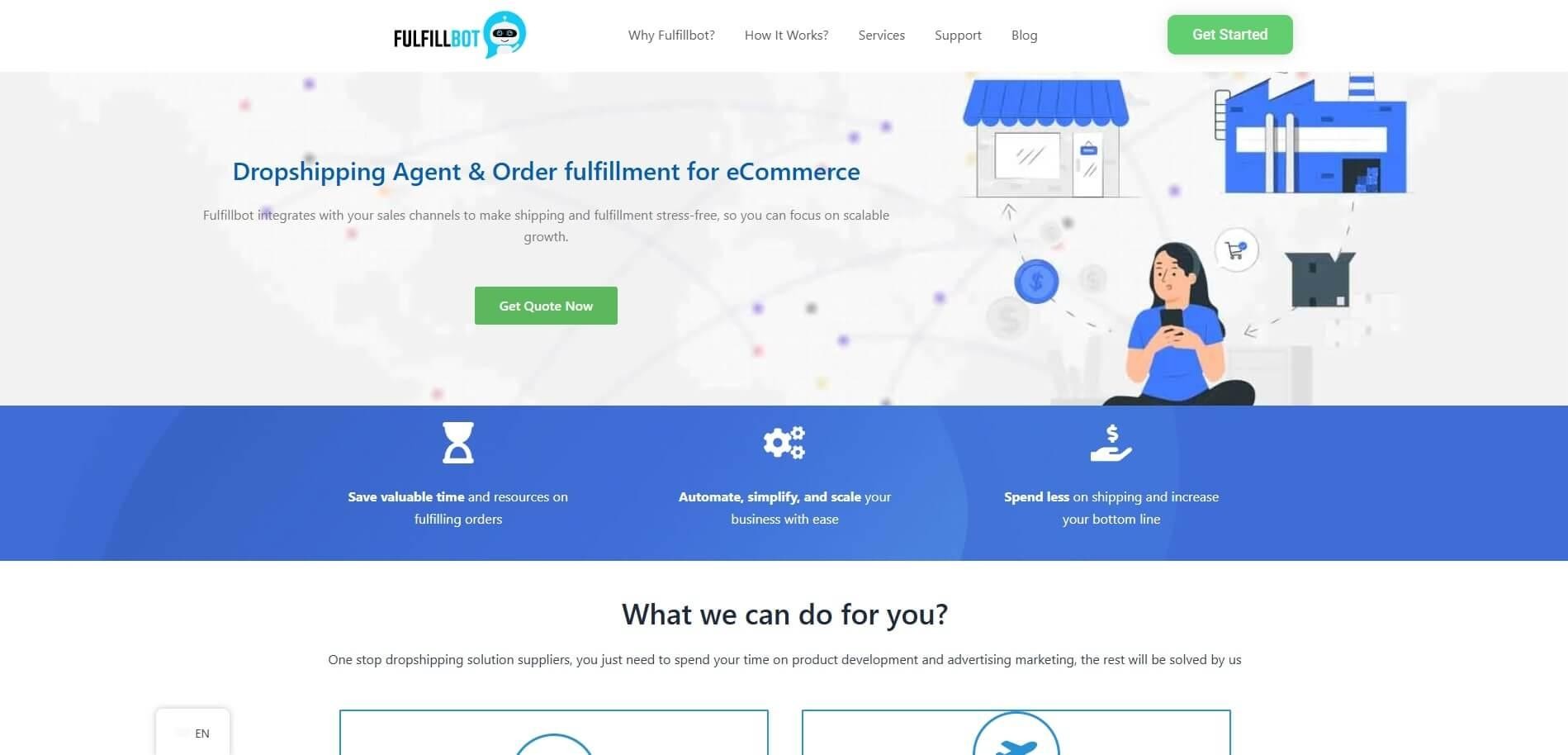
Best For: Sellers who need China sourcing, custom packaging, warehousing, and global fulfillment support.
Fulfillbot is a China sourcing and dropshipping agent that helps ecommerce sellers source products, quote shipping, fulfill orders, and support branded packaging. It is more agent-like than a simple product import app, which makes it relevant for sellers who need sourcing and fulfillment help together.
It can be useful when you want a partner to handle product sourcing and logistics rather than only connecting your store to a supplier catalog.
- MOQ: Depends on product, sourcing request, and customization needs.
- Shipping speed: China direct and warehouse-based fulfillment; delivery times depend on destination and shipping method.
- Pricing: Custom quotes based on product, shipping, packaging, and service requirements.
- Key services: Product sourcing, warehousing, fulfillment, custom packaging, and global shipping support.
Pros
- Agent-style sourcing support.
- Can quote product and shipping costs.
- Supports custom packaging.
- Useful for global fulfillment.
- Suitable for sellers who want more than basic automation.
Cons
- Pricing is quote-based.
- MOQ may apply for custom products or packaging.
- Less transparent than fixed monthly software tools.
- Requires communication before comparing options.
Fulfillbot is worth considering if your store needs sourcing, packaging, and fulfillment support from one provider instead of only a product catalog.
Pricing
Fulfillbot doesn’t publicly disclose a fixed pricing structure on their website. To get accurate pricing for your business, you’ll need to request a quote directly from Fulfillbot.
10. SourcinBox
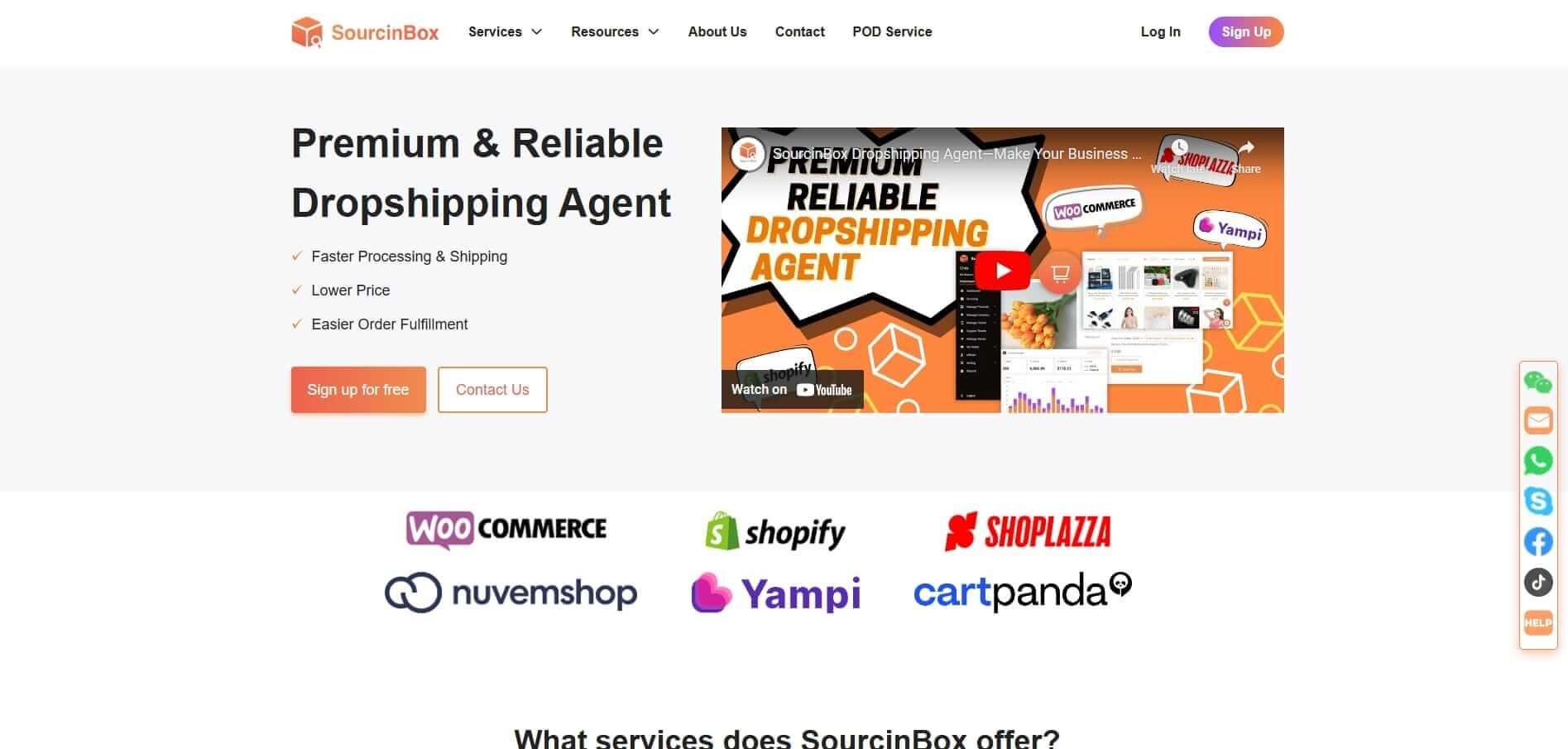
Best For: Sellers who want China sourcing, order syncing, free warehousing, and fulfillment support.
SourcinBox is a dropshipping agent service that helps sellers source products from China, sync store orders, inspect goods, and ship orders to customers. It is often used by sellers who want better sourcing support than AliExpress-style suppliers but still want a dashboard-based process.
It can work well for Shopify and WooCommerce sellers who want sourcing support without immediately building a fully custom supply chain.
- MOQ: Usually flexible for standard dropshipping; depends on the product and sourcing request.
- Shipping speed: China direct shipping; shipping cost and speed depend on product weight, shipping method, and destination.
- Pricing: Free account; sellers pay product and shipping costs.
- Key services: Product sourcing, QC, order sync, warehousing, private label service, and fulfillment.
Pros
- Free account for basic use.
- Shopify and WooCommerce support.
- Can pre-purchase inventory and store it in their warehouse.
- Direct China sourcing support.
- Private labeling and customization options
Cons
- Mainly focused on Chinese suppliers.
- Shipping speed varies by destination.
- Product quotes need to be checked before scaling.
- Branding depth may not suit every category.
SourcinBox is a practical choice for sellers who want China sourcing support with store syncing and fulfillment, especially before moving into deeper private label production.
Pricing
SourcinBox operates on a free platform model, with no upfront costs or subscription fees. They make money by charging a markup on the products you purchase through them.
For accurate pricing information, you’ll need to contact their customer service team to discuss your specific needs and order volumes.
11.DropHippo
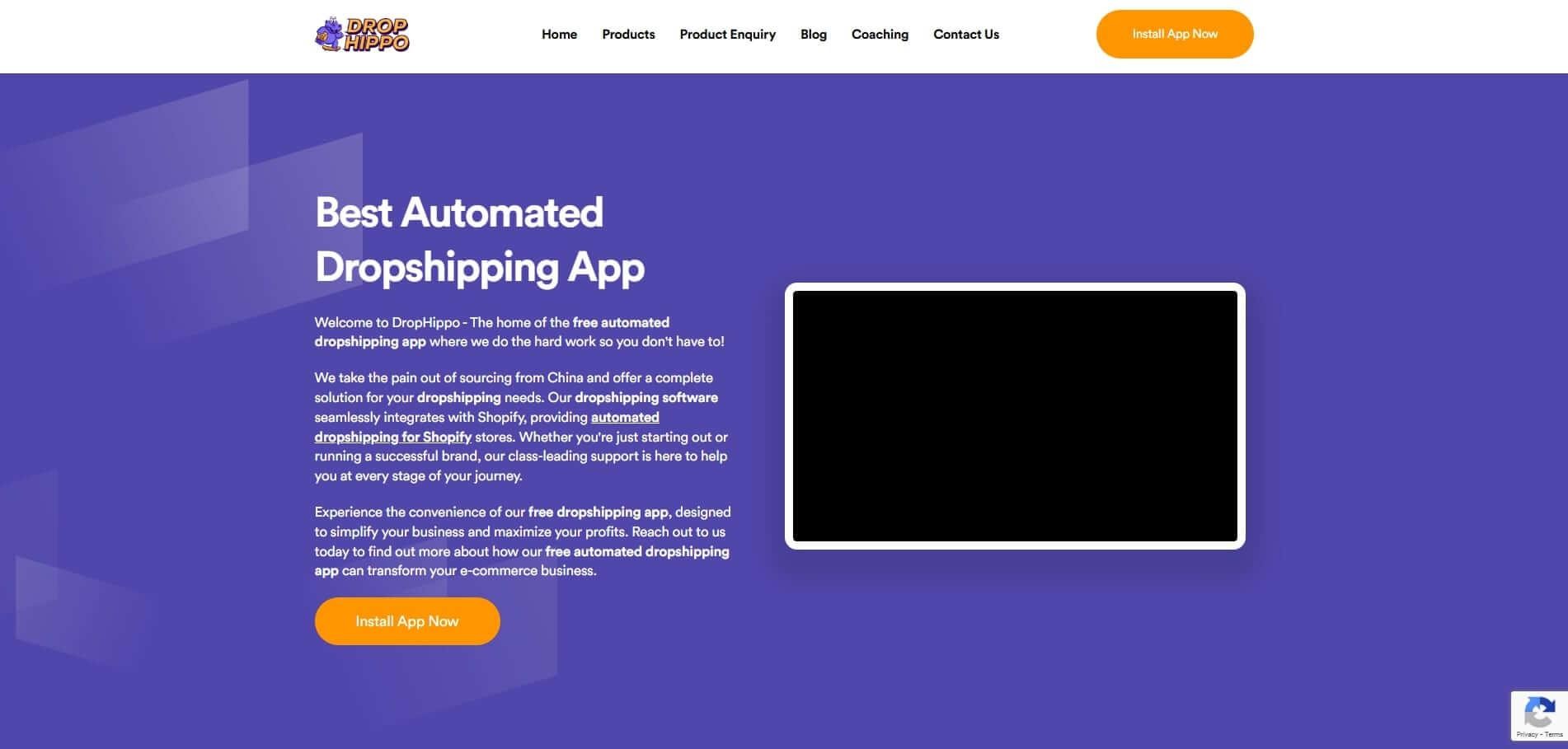
Best For: Dropshippers with some daily order volume who want private sourcing, Shopify app support, and English-speaking customer service.
DropHippo is a private dropshipping agent that offers product sourcing and fulfillment support for ecommerce sellers. Its product enquiry page asks sellers to include product links, target countries, and average daily orders, and it suggests installing the Shopify app and having at least 5 daily orders before requesting a quote. That makes it more suitable for sellers with early traction than for complete beginners.
- MOQ: No fixed MOQ is clearly listed publicly, but DropHippo suggests a minimum of 5 daily orders before requesting a quote.
- Shipping speed: Not listed as one fixed speed; depends on product, destination country, and available shipping method.
- Pricing: Quote-based. Sellers submit product details and average daily order volume to receive pricing.
- Key services: Product sourcing, Shopify app support, fulfillment, customer support, and quote-based private sourcing.
Pros
- Suitable for sellers with early daily order volume.
- Private sourcing enquiry process.
- Shopify app support.
- English-speaking support is a stated part of its positioning.
- Useful for sellers moving away from public supplier listings.
Cons
- Not ideal for stores with zero or very low order volume.
- Pricing is not publicly fixed.
- Shipping speeds need to be confirmed before scaling.
- Less useful if you want a large product catalog to browse.
Pricing
DropHippo’s app is free to use, with no subscription fees. You only pay for the products fulfilled. They offer multiple payment options including card, Wise, and bank wire transfers.
The in-app checkout system is powered by Stripe, providing a secure payment process. While specific product pricing isn’t provided, their direct relationships with manufacturers suggest competitive rates.
12. Dropified
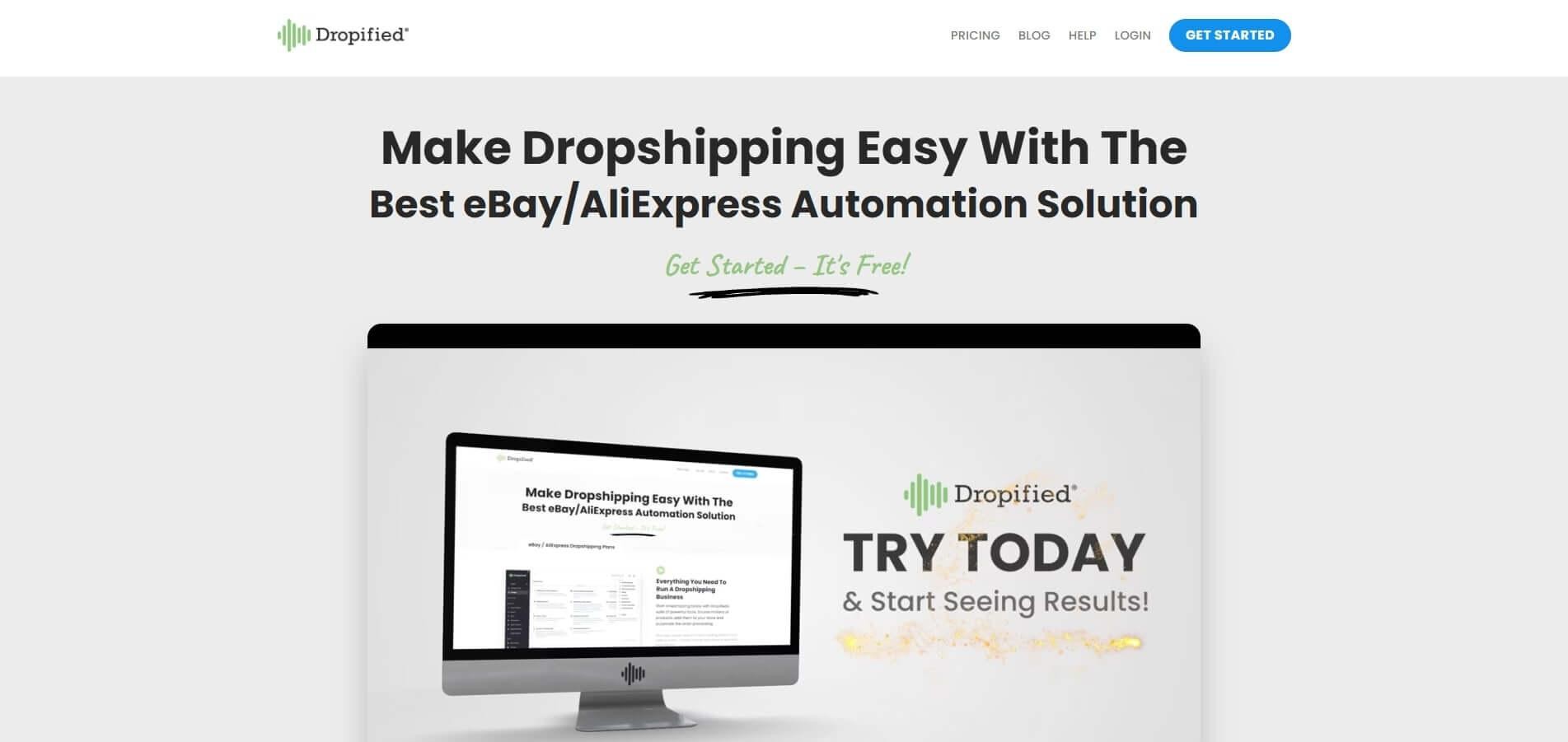
Best For: Sellers who want dropshipping automation, product importing, and AI-assisted store tools.
Dropified is a dropshipping automation tool that helps sellers import products, manage orders, and automate parts of the fulfillment workflow. It has shifted more toward automation and AI-assisted tools, which can appeal to sellers who want software support while managing supplier workflows.
It is useful for store owners who want to reduce manual importing and order management work. MOQ: Usually no MOQ because it works through supplier integrations and automation workflows.
- Shipping speed: Depends on the supplier and fulfillment source used.
- Pricing: Monthly subscription; pricing may vary by plan and billing cycle.
- Key services: Product importing, order automation, AI tools, product research, and supplier workflow support.
Pros
- Strong automation features.
- Helpful for product importing.
- Supports ecommerce store workflows.
- Useful for sellers managing multiple products.
- AI-assisted tools may help with setup and operations.
Cons
- Monthly fee.
- Not a traditional private sourcing agent.
- Shipping and QC depend on supplier source.
- Less suitable for custom packaging or private factory sourcing.
Pricing
Dropified offers a free plan to get you started. This plan includes basic features like product importing and order fulfillment for up to 500 products.
The Builder plan, priced at $47 per month, allows up to 15,000 products and includes advanced features like profit dashboard and Facebook Marketplace integration.
For power users, the Premier plan at $127 per month offers unlimited products and additional tools like the captcha solver and advanced automation rules.
Dropified also provides a 14-day free trial for paid plans, allowing you to test the full range of features before committing.
13. Zendrop
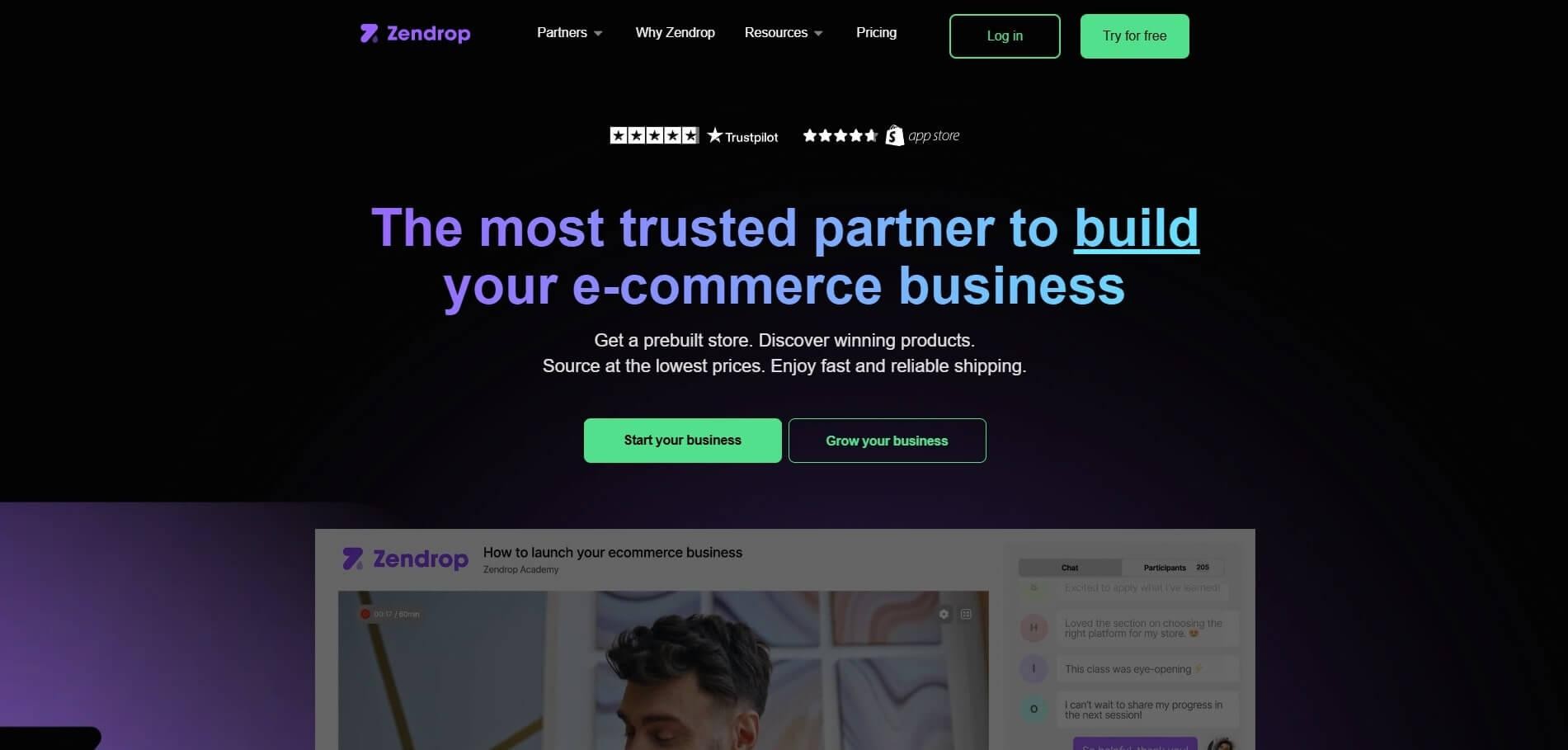
Best For: Shopify sellers who want a clean app experience, automated fulfillment, and US product options.
Zendrop is a dropshipping fulfillment app built for Shopify sellers. It offers product access, automated fulfillment, US products, branding features, and paid plans for sellers who want more advanced tools.
It is especially useful for beginners who want an easier dashboard and a smoother setup experience than traditional supplier sourcing.
- MOQ: Usually no MOQ for standard products.
- Shipping speed: US and China shipping options depending on the product.
- Pricing: Free plan available; paid plans unlock more features such as automation and branding.
- Key services: Product catalog, automated fulfillment, US products, custom branding, and Shopify support.
Pros
- Clean and beginner-friendly interface.
- Free plan available.
- US product options.
- Automated fulfillment on paid plans.
- Useful for Shopify sellers.
Cons
- Advanced features require paid plans.
- Less sourcing depth than a private dropshipping agent.
- Product selection may be less flexible for niche products.
- Customization options depend on plan and product.
Zendrop is a good fit if you want a polished app experience and simple fulfillment, especially while testing products or building an early-stage Shopify store.
Pricing
Zendrop offers a tiered pricing structure to accommodate different business sizes and needs. Their plans include:
- Free Plan: $0/month
- Access to product catalog
- Manual order fulfillment
- Standard customer support
- Pro Plan: $49/month
- All Free Plan features
- Automated order fulfillment
- Priority customer support
- Custom branding options
- Plus Plan: $79/month
- All Pro Plan features
- Advanced analytics
- VIP customer support
- Exclusive product access
14. CJDropshipping
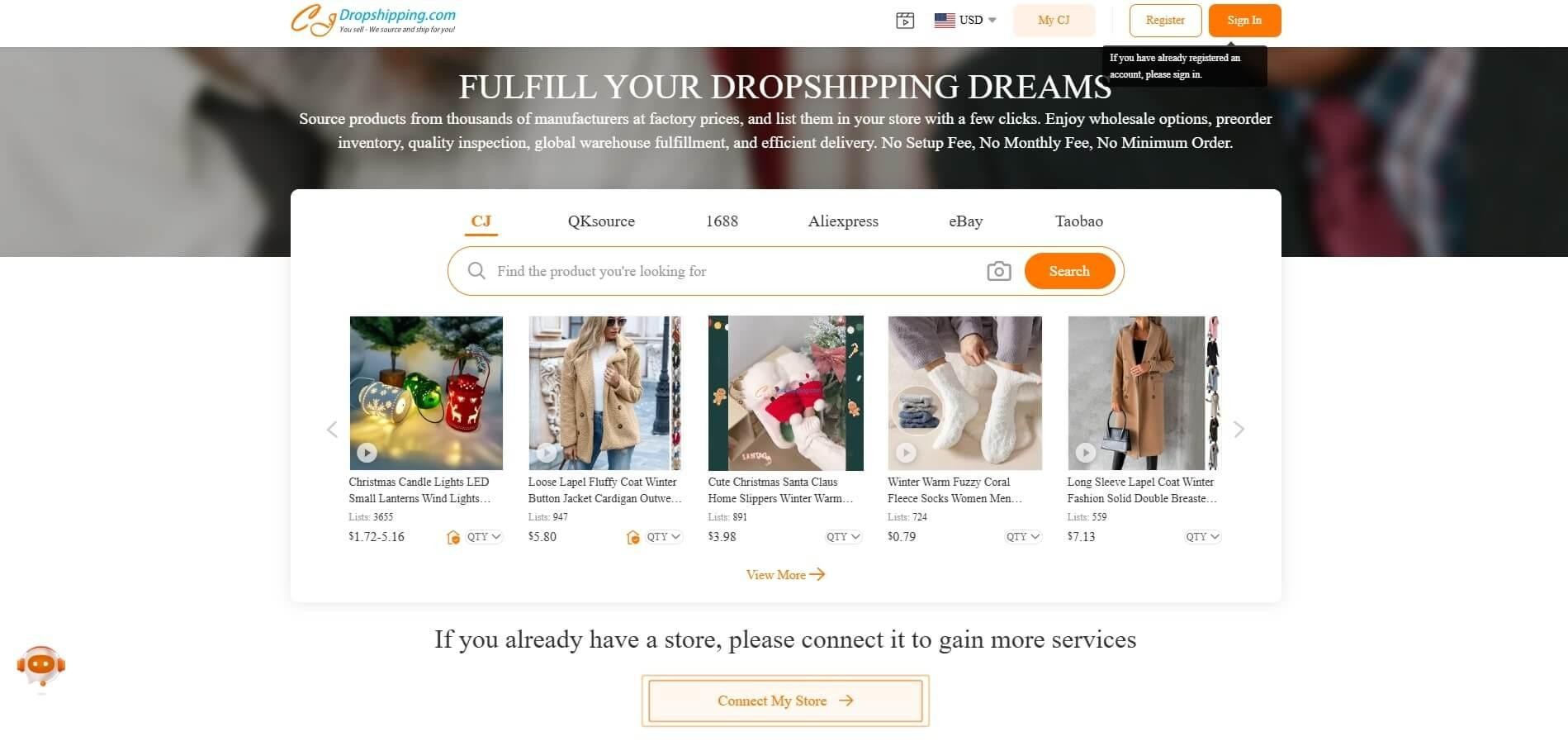
Best For: Beginners and intermediate sellers who want a large product catalog, sourcing requests, and app-based fulfillment.
CJDropshipping is one of the most widely known dropshipping services. It offers product sourcing, global warehouses, order fulfillment, POD options, and integrations with ecommerce stores.
It is often a good first step for sellers who want more structure than AliExpress but are not ready for a fully private dropshipping agent.
- MOQ: Usually no MOQ for many catalog products; MOQ may apply for wholesale, custom, or warehouse stocking requests.
- Shipping speed: China, US, and European warehouse options depending on product availability.
- Pricing: Free account; sellers pay product cost, shipping, and service fees where applicable.
- Key services: Product catalog, sourcing requests, fulfillment, warehouse options, and store integrations.
Pros
- Large product catalog.
- No monthly subscription for core features.
- Multiple warehouse options.
- Supports sourcing requests.
- Useful for beginners testing different products.
Cons
- Product and shipping costs can vary widely.
- Support quality may vary at scale.
- Catalog products are not exclusive.
- Less personalized than a dedicated private agent.
Pricing
CJDropshipping operates on a pay-as-you-go model with no upfront costs. You only pay for the products you order and the associated shipping fees.
Product prices are typically at or near wholesale rates. Shipping costs vary based on destination and chosen shipping method.
They offer different shipping options, including economy and express services. Rates are calculated based on the product’s weight and dimensions, as well as the destination country.
For precise pricing, you’ll need to create an account and check specific product listings.
How to Choose a Dropshipping Agent (5-Step Vetting Process)
Follow this checklist before committing to any agent:
Step 1 — Match MOQ to Your Order Volume
- 0–10 orders/day: Look for no-MOQ agents (NicheDropshipping, CJ, SourcinBox)
- 10–50 orders/day: Any agent on our list works
- 50+ orders/day: Consider EcommOps or a dedicated private agent for exclusive rates
Step 2 — Verify Shipping Lines and Warehouse Locations
- Ask for tracking samples to your target country
- Confirm whether they stock inventory in US/EU warehouses
- Get written estimates for peak-season (Q4) delivery times
Step 3 — Request a Video Call or Factory Visit Proof
- Serious agents will show you their warehouse via video
- Ask for photos of their QC station and packaging area
- Verify their business license and years in operation
Step 4 — Place a Test Order Before Scaling
- Order 3–5 units to your own address
- Evaluate packaging, product quality, and delivery speed
- Time their communication response during the test
Step 5 — Evaluate Communication Speed and Language
- Your agent should respond within 12–24 hours during business days
- Confirm they support your preferred channel (WhatsApp, Skype, WeChat, email)
- Ask for a dedicated point of contact, not a rotating ticket system
Red Flags to Watch Out For
Avoid any agent that shows these warning signs:
- Vague pricing — “It depends” without clear fee structures
- No QC process — If they cannot describe their inspection checklist, walk away
- Slow or inconsistent communication — Delays in pre-sale chat predict post-sale problems
- No proof of results — Legitimate agents have screenshots, reviews, or client references
- No warehouse photos — Every professional agent can show you their facility
- Pressure to pay large deposits upfront — Reputable agents offer trial periods or small-batch testing
When to Switch from AliExpress to a Dropshipping Agent
AliExpress is a valid starting point for product testing. But once you hit 20+ orders per day, its structural limitations start eating your margins and damaging your brand.
| 3–7 day processing + 15–45 day shipping | Chargebacks and 1-star reviews | Same-day processing + 2–7 day US delivery |
| Generic packaging with Chinese invoices | Customers realize it’s dropshipping | Custom branded packaging and tag removal |
| No quality control | 10–15% defect rates | 100% inspection before shipment |
| Middleman pricing | Thin margins, no room for ads | Factory-direct pricing (3–30% cheaper) |
| Stockouts without warning | Ad spend wasted on unavailable SKUs | Dedicated inventory alerts |
| No branding support | You compete only on price | Private label, white label, custom inserts |
Tired of long processing times and poor packaging from AliExpress? That’s exactly why 3,000+ dropshippers switched to NicheDropshipping. We offer same-day processing and custom branded packaging. See the difference.
FAQs about Dropshipping Agents
Is Dropshipping Agent Free?
Dropshipping agents typically don’t offer free services. Most agents charge fees to cover their operational costs and provide value-added services. Some may offer free trials or limited-time promotions to attract new clients.
Common pricing models include pay-per-service and commission-based structures. Pay-per-service involves charges for specific tasks, while commission-based fees take a percentage of your sales.
How Much Does a Dropshipping Agent Cost?
The cost of a dropshipping agent varies based on their services and pricing structure. Fixed fees can range from $100 to $500 per month, depending on the agent’s expertise and service level.
Percentage-based commissions often fall between 5% to 15% of your order value. Per-order charges may be $2 to $10, depending on the fulfillment complexity.
You can expect to pay an average of $200 to $1000 monthly for a comprehensive dropshipping agent service, depending on your sales volume and specific needs.
How to Find a Dropshipping Agent?
To find a reliable dropshipping agent, start by exploring online directories and industry forums. These platforms often list reputable agents with user reviews and ratings.
Seek referrals from other eCommerce businesses in your niche. Their firsthand experiences can provide valuable insights into an agent’s performance and reliability.
When evaluating potential agents, look for those with experience in your product category and target market. Check their communication responsiveness and ask for client references to gauge their reliability.
What Are the Factors to Consider When Choosing a Dropshipping Agent?
When choosing a dropshipping agent, you should consider the following factors:
Location
Processing Time
Delivery and Shipping Times
Services
Minimum Order Quantity
The location of the dropshipping agent has to be strategic. We all know that location affects delivery times, especially for overseas shipping.
So, choose a dropshipping agent that’s closer to your target suppliers and has access to ideal shipping services or routes.
Second, take note of the agent’s processing time. This period of time directly affects how long orders will reach your customers. The shorter the processing time, the better.
Of course, delivery and shipping times are also important factors to consider. Ever since commerce giants like Amazon pioneered same-day and next-day shipping, customers are now expecting the same from other retailers.
This is why it’s essential to find dropshipping agents that offer the fastest delivery and shipping times without compromising the quality.
Lastly, consider the minimum order quantity (MOQ). Some agents require a minimum order quantity before dropshippers can work with them. While this is generally okay for some, not all dropshippers can meet this requirement.
Sales might fluctuate, proving to be a risk when you have a minimum number of orders. Therefore, decide on whether you can handle this risk.
Do All Dropshipping Agents Require MOQ?
Not all dropshipping agents require Minimum Order Quantities (MOQ). Some agents specialize in working with low-volume sellers and don’t impose MOQs.
However, certain agents may have MOQ requirements to maintain efficiency and profitability. These requirements can range from 10 to 100 units per product, depending on the agent and supplier relationships.
If you’re starting with low order volumes, look for agents that offer flexible MOQ options or no MOQ at all. This flexibility allows you to test products without significant upfront investment.
Is a dropshipping agent better than AliExpress?
A dropshipping agent can be better than AliExpress once your store has consistent orders or you need more control over sourcing, QC, packaging, and shipping. AliExpress is useful for early product testing because it is easy to access and does not require supplier negotiation. However, sellers often switch to agents when they face slow processing, inconsistent packaging, limited branding options, or stock issues. An agent can help source from factories, inspect products before shipment, and manage fulfillment more professionally.
What is the difference between a dropshipping agent and a supplier?
A dropshipping supplier usually provides the product and ships it when an order is placed. A dropshipping agent does more than that. An agent can help find suppliers, compare factory prices, inspect goods, store inventory, manage packaging, and coordinate shipping. In simple terms, a supplier is one part of the supply chain, while an agent helps manage several parts of the backend operation. This makes agents more useful for sellers who want to scale beyond basic product testing.
Is dropshipping still profitable in 2026?
Yes, dropshipping can still be profitable in 2026, but it is harder to win with generic products and weak fulfillment. Margins depend on product selection, ad costs, supplier pricing, shipping speed, refund rates, and customer experience. Stores that treat dropshipping as quick product flipping often struggle. Stores that use better sourcing, QC, branding, and repeatable fulfillment systems have a stronger chance of building long-term profit. A good agent helps by improving product access, packaging, and backend reliability.
How fast can a dropshipping agent ship to the US?
Shipping speed to the US depends on the agent’s warehouse location, shipping line, product category, and whether inventory is already stocked. US warehouse fulfillment can often deliver in a few business days, while China direct shipping usually takes longer. Some agents offer express lines, economy lines, or hybrid fulfillment where inventory is stored closer to the customer. Always ask for realistic delivery estimates by product weight, destination country, and shipping method. Do not rely only on homepage shipping claims.
What is the best dropshipping agent for small orders?
For small orders, the best option is usually an agent or app that supports no MOQ or low-volume fulfillment. CJdropshipping, Eprolo, Zendrop, AutoDS, and Spocket can work well for early testing because they are easier to start with. Some private agents may also accept small orders, but they are usually more valuable once you have consistent daily volume. If you are under 10 orders per day, focus on flexibility. Once you reach 20–30+ orders per day, compare private agent options.
Final Thoughts: Choosing the Right Dropshipping Agent
Choosing the right dropshipping agent can transform your business. These professionals offer invaluable benefits, from product sourcing to order fulfillment.
Private dropshipping agents provide personalized service, giving you a competitive edge. They understand your unique needs and work tirelessly to meet them.
China dropship agents offer access to a vast network of suppliers and manufacturers. This connection can lead to better prices and product variety for your store.
Sourcing expertise is crucial. Experienced agents navigate complex supply chains, ensuring you get quality products at the best prices.
Ready to take your dropshipping business to the next level? Don’t hesitate to request a sourcing quote from NicheDropshipping. Our team of experts is here to help you find the perfect products and streamline your operations.
Take action now and watch your dropshipping venture thrive with professional support. Your success story starts with the right partnership.