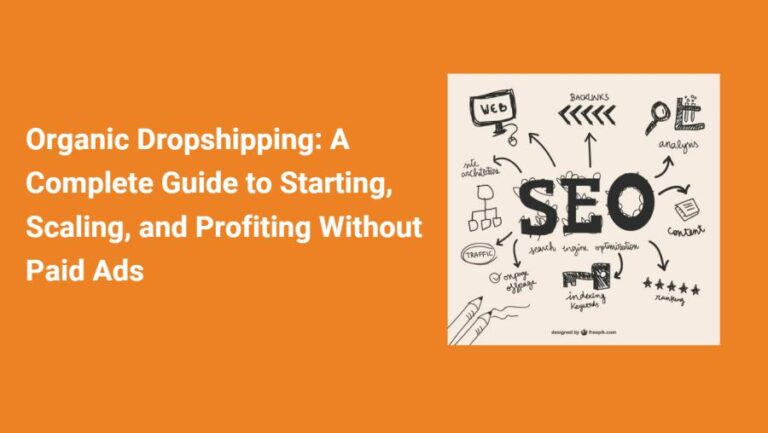
Paid advertising has long been hailed as the “fast track” to dropshipping success—but for most entrepreneurs, it’s a costly gamble. Budgets drain quickly, audiences grow tired of intrusive ads, and traffic vanishes the moment you pause your campaigns. If you’re tired of burning cash on ads that don’t deliver, or if you’re a beginner with no funds to spare, there’s a better way: organic dropshipping. This sustainable business model prioritizes value, trust, and long-term growth over quick sales, letting you build a profitable brand without relying on paid promotions. In this guide, we’ll break down everything you need to know to start, scale, and profit from organic dropshipping—no ad spend required.
What Is Organic Dropshipping?
Definition & Core Principles
Organic dropshipping is a business model where you sell products through a dropshipping framework—meaning you don’t hold inventory; suppliers ship directly to customers—without investing in paid advertising (e.g., Google Ads, Facebook Ads, TikTok Ads). Instead, you drive traffic and generate sales through organic marketing tactics: content creation, search engine optimization (SEO), social media engagement, community building, and user-generated content (UGC).
At its core, organic dropshipping follows three key principles:
- Value first: Your content should educate, entertain, or inform your audience—selling comes second.
- Consistency: Organic growth takes time; regular, high-quality content builds trust and visibility over months, not weeks.
- Trust-building: Unlike paid ads that rely on catchy copy, organic dropshipping turns you into an authority in your niche, making customers more likely to buy from you.
How Organic Dropshipping Differs From Paid Dropshipping

To understand why organic dropshipping is a game-changer for budget-conscious entrepreneurs, let’s compare it to traditional paid dropshipping:
| Aspect | Organic Dropshipping | Paid Dropshipping |
|---|---|---|
| Cost | Low financial risk | High ad spend (risk of loss if campaigns underperform) |
| Traffic Sustainability | Long-term | Temporary (traffic stops when ads pause) |
| Trust & Credibility | Built organically | Dependent on ad copy (low trust for new stores) |
| Speed to Results | Gradual | Fast (weeks, if ads are optimized) |
| Scalability | Stable | Volatile (ad costs rise as competition increases) |
Key Benefits of Organic Dropshipping
Organic dropshipping isn’t just a “budget alternative”—it’s a strategic choice for building a sustainable brand. Here’s why it stands out:
- Low financial risk: No ad budgets to burn, making it ideal for beginners or entrepreneurs with limited funds. You invest time, not money, to grow.
- Sustainable traffic: Evergreen content continues to drive traffic months or years after publication.
- Higher trust & conversion: Audiences buy from people they perceive as experts, not from ads. By providing value, you turn casual viewers into paying customers.
- Multiple revenue streams: Beyond product sales, you can monetize your content—think YouTube ad revenue, memberships, or affiliate marketing—creating a more resilient business.
Who Should Start Organic Dropshipping?
Organic dropshipping isn’t for everyone—but it’s perfect for entrepreneurs who align with these profiles:
- Budget-constrained beginners: If you don’t have thousands to spend on ads (or if $100 feels like a stretch), organic dropshipping lets you start with nothing but time and effort.
- Entrepreneurs tired of “get-rich-quick” schemes: Paid dropshipping promises fast results, but most beginners lose money before mastering ad optimization. Organic dropshipping builds real, lasting growth.
- Brand builders focused on credibility: If you want to create a brand people recognize and trust (not just a store that sells products), organic marketing is the way to go. It turns customers into fans.
- Those who’ve exhausted ad budgets: If you’ve already spent your startup funds on ads with little return, organic dropshipping lets you pivot without more financial investment.
How to Start Organic Dropshipping (Step-by-Step Guide)

Starting organic dropshipping doesn’t require technical skills or a big budget—but it does need careful planning. Follow this step-by-step process to launch your store and start driving organic traffic.
Step 1: Choose a Profitable Niche
Your niche is the foundation of your organic dropshipping success—choose wisely. Here’s how:
- Pick a niche you’re passionate about: Creating consistent content is easier if you care about the topic (e.g., hiking gear, vegan skincare, retro gaming accessories).
- Validate demand: Use tools like Google Trends to check if interest is steady (avoid fads that fade fast). For SEO, use Ahrefs or Ubersuggest to find long-tail keywords with decent search volume (e.g., “best lightweight drone for beginners” instead of “drones”).
- Niche down to avoid saturation: Instead of “phone cases” (oversaturated), go for “vintage camera phone cases” or “waterproof phone cases for surfers.” A narrow niche lets you stand out as an expert.
Step 2: Source Reliable Dropshipping Suppliers
Your supplier makes or breaks your customer experience—don’t cut corners here. Look for:
- Fast shipping times (2–7 days for domestic; 10–21 for international).
- Quality products (order 1–2 samples to test durability, fit, and appearance).
- Transparent return policies (customers trust brands that offer easy returns).
- Low minimum orders (most dropshipping suppliers require no minimums, but confirm this upfront).
Step 3: Build a User-Friendly Dropshipping Store
Your store should be easy to navigate, mobile-optimized, and trustworthy. Stick to beginner-friendly platforms:
- Shopify: The most popular choice—drag-and-drop design, built-in payment processing, and hundreds of apps to enhance functionality.
- WooCommerce: Ideal if you want more control (runs on WordPress) but requires a bit more technical setup.
Must-have features for your store:
- Clear product descriptions that focus on benefits, not just features (e.g., “Waterproof backpack keeps your gear dry on hikes” instead of “100% polyester, waterproof”).
- Easy checkout (fewer than 3 steps—avoid forcing customers to create an account).
- Mobile optimization (over 50% of online shoppers use phones; slow or unresponsive sites drive them away).
- Trust signals: Customer reviews, shipping timelines, return policies, and contact information (avoid hiding these!).
- A blog section: Critical for SEO—this is where you’ll publish content to drive organic traffic.
Step 4: Craft an Organic Marketing Strategy
Don’t spread yourself thin—focus on 1–2 core channels to master first. Here are the most effective options:
- Blogging (SEO-focused): Publish articles that answer your niche’s most pressing questions (e.g., “How to clean a vintage camera lens” or “Vegan skincare ingredients to avoid”).
- YouTube/TikTok: Create video content that educates or entertains (e.g., product demos, tutorials, or niche-related trends).
- UGC (User-Generated Content): Encourage customers to share unboxing videos, reviews, or product photos (offer a 10% discount for tagging your brand).
- Social Media Communities: Engage in Facebook groups, Reddit subs, or Instagram communities—share tips, answer questions, and avoid hard selling (people buy from those who add value).
Step 5: Optimize for SEO (Drive Evergreen Traffic)
SEO is the secret to organic dropshipping success—it lets your content rank on Google, YouTube, or TikTok for years, driving free traffic. Here’s how to optimize:
- On-page SEO: Use long-tail keywords in blog titles, product pages, and meta descriptions (e.g., “best compact yoga mat for small apartments” instead of “yoga mat”). Break up text with headings (H2, H3) and bullet points for readability.
- Off-page SEO: Build backlinks by guest posting on niche blogs, collaborating with micro-influencers, or sharing your content in relevant communities (e.g., a hiking blog linking to your “best hiking boots” article).
- Video SEO: For YouTube/TikTok, include keywords in titles, descriptions, and tags. Use tools like TubeBuddy (YouTube) or TikTok’s built-in search to find high-volume, low-competition keywords.
Step 6: Launch, Analyze, and Iterate
You don’t need a “perfect” store to launch—start with 10–15 pieces of core content (blogs, videos, or social posts) to attract initial traffic. Then:
- Track metrics: Use Google Analytics to monitor traffic sources, conversion rates, and user behavior. For social platforms, use YouTube Analytics or TikTok Insights to see which content performs best (views, engagement, click-throughs to your store).
- Iterate: Double down on high-performing content (e.g., if a “drone tutorial” gets 10k views, create more tutorials). Tweak low-engagement content—improve headlines, add more value, or adjust your tone.
Proven Organic Dropshipping Strategies
Organic dropshipping succeeds when you prioritize value and consistency. Here are actionable strategies to boost your results:
Content That Converts: Focus on “The Big Three”
Every piece of content you publish should do at least one of three things—inform, entertain, or educate. These types of content build trust and keep your audience coming back:
- Inform: Share factual, data-backed content.
- Entertain: Create engaging, shareable content.
- Educate: Teach your audience a skill.
Educational content is especially powerful—it’s evergreen (stays relevant for years) and positions you as an authority. Invest 60–70% of your content time here.
Build a Community (Turn Customers Into Fans)
A loyal community doesn’t just buy from you—they promote your brand for free. Here’s how to build one:
- Engage consistently: Respond to comments, DMs, and reviews within 24 hours. Show your audience you’re a real person, not a faceless store.
- Offer exclusive value: Create a Facebook group for niche enthusiasts (e.g., “Plant Parents for Small Spaces” or “Beginner Drone Pilots”). Share tips, early access to new products, and host Q&As.
- Reward loyalty: Offer discounts for repeat buyers (e.g., “15% off your second order”) or referral programs (e.g., “Refer a friend, get $10 off”).
Leverage UGC to Boost Trust
User-generated content is gold for organic dropshipping—people trust real customers more than brand ads. Here’s how to encourage UGC:
- Run contests: Ask customers to post photos/videos of your product in use (e.g., “Tag us in your hiking photo with our backpack for a chance to win a free water bottle”).
- Repost UGC: Share customer content on your social media (always credit the creator!). This proves social proof and encourages others to share.
- Feature UGC on your store: Add a “Customer Photos” section on product pages—seeing real people using your product makes new buyers more confident.
Dominate Organic Traffic on YouTube & TikTok (Platform-Specific Tactics)
YouTube and TikTok are two of the most powerful channels for organic dropshipping—each serves different goals, so tailor your strategy to the platform.
YouTube is perfect for long-term growth—its algorithm favors in-depth content, and videos rank on Google for years. Here’s how to succeed:
- Content types that work:
- Tutorials: Step-by-step guides (e.g., “How to Calibrate a Beginner Drone Step-by-Step”)—ranks for high-intent long-tail keywords.
- Product comparisons: Help buyers decide (e.g., “Brand X vs. Brand Y: Which Wireless Earbud Is Worth It?”)—addresses doubts that stop people from buying.
- Honest reviews: Test your dropshipping products and share pros/cons (e.g., “Testing My Dropshipping Desk Organizer—Honest Thoughts”).
- SEO optimization:
- Use TubeBuddy or VidIQ to research keywords (e.g., “how to fix a foggy action camera lens” has high search volume and low competition).
- Optimize thumbnails: Use high-contrast colors and clear text (e.g., “NO MORE TANGLED CORDS!”) to stand out in search results.
- Write keyword-rich descriptions: Include your store link in the first 2–3 lines, and add timestamps to make videos easier to navigate.
- Growth hacks:
- Create playlists: Group related videos (e.g., “Beginner’s Guide to Hiking Gear”) to keep viewers on your channel longer (boosts algorithm ranking).
- Collaborate with micro-influencers: Partner with creators in your niche (10k–50k followers) for cross-promotion—e.g., a hiking YouTuber reviews your backpack.
- Host live Q&As: Engage with your audience in real time, answer product questions, and promote new items naturally.
TikTok is faster for short-term visibility—its algorithm pushes content to millions of users if it resonates. Use it to drive quick traffic to your store:
- Content types that work:
- Trendjacking: Use popular sounds or challenges to demo your product (e.g., “How My Travel Organizer Fixes Packing Stress [Viral Hack]”).
- Pain-point solutions: Show how your product solves a common problem (e.g., “I Hated Tangled Headphones—Until This Dropshipping Product Existed”).
- UGC-style demos: Keep videos unpolished and authentic (e.g., “Unboxing My New Yoga Mat: Honest First Impressions”)—avoid overly scripted content.
- SEO & algorithm optimization:
- Include niche keywords in titles, captions, and descriptions (e.g., “best compact yoga mat for small apartments”).
- Use 3–5 relevant hashtags: Mix broad (#OrganicDropshipping) and niche (#YogaGearForSmallSpaces) to reach your target audience.
- Leverage Duet/Stitch: Engage with popular niche content (e.g., Stitch a yoga influencer’s video and show how your mat works with their routine).
- Traffic conversion:
- Add your store link to your bio (use Linktree if you have multiple links) and mention it in captions (e.g., “Link in bio to grab this space-saving yoga mat!”).
- Use TikTok Shop (if eligible): Let users buy directly on the platform to reduce friction (fewer clicks = higher conversions).
- Post consistently: TikTok’s algorithm favors active creators—aim for 3–5 videos per week to stay visible.
Common Organic Dropshipping Mistakes to Avoid
Organic dropshipping is low-risk, but these mistakes can derail your progress—avoid them at all costs:
- Skipping SEO: Don’t ignore keyword research or optimization. Without SEO, your content won’t rank, and you’ll miss out on free traffic.
- Being inconsistent: Posting 1 blog or video a month won’t build trust. Consistency (even 1–2 pieces of content per week) is key to growing your audience.
- Focusing on sales over value: Hard selling (“Buy now before it’s gone!”) turns people away. Prioritize helping your audience first—sales will follow.
- Choosing too many channels: Trying to master YouTube, TikTok, Instagram, and a blog at once leads to burnout. Start with one channel, then expand.
- Giving up too soon: Organic growth takes 6–12 months. Don’t quit if you don’t see sales in the first few months—keep creating value, and results will come.
Is Organic Dropshipping Profitable?
Short answer: Yes—if you prioritize value, consistency, and SEO. Here’s why it’s profitable:
- Low overhead: No ad costs, no inventory costs, and minimal startup fees (e.g., Shopify’s $29/month plan). Most of your expenses go to supplier costs and tools (e.g., Dropship.IO, SEO tools).
- High profit margins: Organic dropshipping eliminates ad costs, which can eat up 30–50% of revenue in paid dropshipping. For example, if your product costs $10 to source and sells for $30, your profit margin is $20—no ad fees to deduct.
- Scalable revenue: As your content ranks higher, you’ll get more traffic and sales. Plus, you can monetize your content directly (e.g., YouTube ad revenue, memberships) to add another income stream.
Let’s do the math: Suppose your hiking gear store gets 10,000 monthly organic visitors (from blogs and YouTube). With a 3% conversion rate (average for organic traffic) and an average order value (AOV) of $50, that’s 300 sales per month—$15,000 in revenue. After deducting supplier costs ($30 per order = $9,000), you’re left with $6,000 in monthly profit. And as your content grows, so will your traffic and sales.
The key to profitability is patience and consistency. It may take 6 months to hit 10,000 visitors, but once you do, that traffic will keep coming—unlike paid ads that stop when you pause spending.
FAQs About Organic Dropshipping
1. Is organic dropshipping legal?
Yes—dropshipping (organic or paid) is a legal business model. To stay compliant:
- Follow local laws (e.g., product safety regulations, tax requirements).
- Disclose affiliate links if you use them.
- Be transparent about shipping times and return policies (don’t mislead customers).
2. How long does it take to see results with organic dropshipping?
Most entrepreneurs see consistent sales within 6–12 months of regular content creation. Low-competition niches (e.g., “vintage camera accessories”) may see results in 3–6 months, while saturated niches (e.g., “skincare”) may take longer. The key is to keep creating value and optimizing your SEO.
3. Do I need technical skills to start organic dropshipping?
No—platforms like Shopify are beginner-friendly, and you don’t need coding skills to build a store. SEO basics (e.g., keyword research) can be learned through free resources like Google’s SEO Guide or YouTube tutorials. Tools like Dropship.IO and Ahrefs simplify product research and keyword analysis.
4. Which platform is best for organic dropshipping: YouTube or TikTok?
YouTube is better for long-term growth—its evergreen content drives traffic for years, and you can monetize through ads, memberships, and YouTube Shopping. TikTok is faster for short-term visibility but has shorter content lifespans (videos get buried under new content quickly). Start with one platform, master it, then expand.
5. Can I combine organic and paid dropshipping?
Yes—many successful dropshippers use organic marketing to build trust and grow an audience, then add small ad budgets (once profitable) to scale high-performing products. For example, if a YouTube video about your drone gets 50k views and 100 sales, you could run a small TikTok ad to promote that video to a larger audience.
Conclusion
Organic dropshipping isn’t a “get-rich-quick” scheme—but it’s one of the most sustainable ways to build a profitable dropshipping business. By focusing on value, consistency, and SEO, you’ll create assets (content, community, credibility) that drive sales for years, without burning through ad budgets.
The journey starts with a single step: Pick a niche you’re passionate about, source a reliable supplier, and publish your first piece of content. Use tools to research winning products and spy on competitors, and don’t let short-term setbacks stop you—organic growth takes time, but the rewards are worth it.
Whether you’re a beginner with no funds for ads or an entrepreneur tired of paid ad volatility, organic dropshipping lets you build a brand that lasts. Start today, stay consistent, and watch your business grow—one piece of value-driven content at a time.