A dropship shoes supplier is a company that lets you sell footwear without stocking every size, color, or style yourself. Depending on the supplier model, they may hold inventory and ship each order directly to your customer, or source, inspect, package, and fulfill shoes on your behalf.
The opportunity is still substantial. The global e-commerce footwear market was valued at about $131.2 billion in 2025, while the broader footwear market is projected to reach $529.25 billion in 2026.
But from our perspective, shoes are also one of the easier categories to get wrong. Sizing, return costs, shipping weight, and inconsistent variants can quickly eat into an attractive markup. That’s why we’ve organized these suppliers by business model, so you can compare them based on how you actually plan to run your store.
Quick Facts
- Online footwear has a 19% median return rate, according to a British Footwear Association member survey.
- Size and fit remain the leading reason for product returns, accounting for 45% of returns in Narvar’s State of Returns research.
- US-stocked shoes can typically reach US customers in 2–5 business days, compared with roughly 6–15 days when fulfilled from China.
- Shipping a pair of shoes from China commonly adds around $4–$10 per order, so landing cost matters more here than with lightweight products.
- Custom and private-label shoe production commonly starts around 50–300 pairs, although simpler customization can sometimes be negotiated at much lower quantities through a sourcing agent.
Key Takeaways
- There’s no single best shoe dropshipping supplier. The right choice depends on whether you prioritize low startup cost, fast US/EU shipping, luxury products, custom designs, or private-label scaling.
- Returns can make or break your margins. Online footwear sees roughly a 19% median return rate, with sizing and fit among the biggest drivers, so accurate size charts and reliable supplier data matter from day one.
- A high product markup doesn’t automatically mean high profit. You still need to account for shipping, advertising, payment fees, and expected return costs when calculating what you actually earn per pair.
- US/EU suppliers usually win on delivery speed, while China-based sourcing gives you more product choice, factory-direct pricing, and greater branding flexibility.
- For testing, self-serve platforms are usually easier. Once you have proven products and consistent volume, working with a sourcing agent can give you more control over QC, packaging, fulfillment, and landed cost.
What Types of Shoe Dropshipping Suppliers Can You Choose From?
Before we compare individual suppliers, we’d first decide how you want to source and fulfill your shoes. The supplier model affects your margins, delivery speed, branding options, and how much operational work you’ll need to handle.
| Supplier Type | How It Works | Main Advantage | Main Trade-Off | Best For |
| Sourcing agents | Source shoes from factories or marketplaces, then handle QC, packaging, and fulfillment | Factory-direct pricing and strong branding flexibility | Less convenient for browsing products yourself | Stores with proven products that want to scale |
| US/EU wholesalers & manufacturers | Hold regional inventory and ship individual orders to your customers | Faster domestic delivery and easier returns | Usually higher product costs and smaller catalogs | Stores focused on US or European customers |
| Platforms & marketplaces | Give you a searchable supplier catalog with store integrations and automated ordering | Fastest model for testing products | Less control over pricing, QC, and branding | Beginners and product-testing stores |
| Luxury & designer suppliers | Supply authenticated or specialist high-end footwear | Higher order values and access to premium brands | Higher entry costs and stricter supplier requirements | Established fashion and luxury stores |
| Niche & POD suppliers | Focus on specialty footwear or produce shoes with your designs on demand | Easier differentiation without holding inventory | Smaller catalogs or higher per-unit production costs | Creators and niche-focused brands |
Our rule of thumb: use platforms when you’re still discovering what sells, regional suppliers when speed is the priority, and sourcing or manufacturing partners once you need better margins, QC, or a more defensible brand.
Top Picks by Category
If you want the shortest route to a decision, start here. We’ve matched each supplier to the business model where it makes the most sense rather than naming one overall winner.
| Best For | Our Pick | Why It Fits |
| Beginners | CJdropshipping | No fixed platform cost, broad shoe catalog, sourcing requests, and store integrations make it easy to test without committing heavily upfront. |
| Fast US Shipping | Trendsi | US-stocked footwear can reach customers in roughly 2–5 business days, with domestic returns and no MOQ. |
| Luxury & Designer | BrandsGateway | Focuses on authenticated designer products with EU and US warehousing, making it a stronger fit for higher-AOV fashion stores. |
| Custom / POD Shoes | Printify | Lets you add your own designs to selected footwear with no MOQ, making it one of the easiest ways to test a differentiated shoe brand. |
| EU Women’s Footwear | Matterhorn | Large European women’s fashion catalog, no subscription fee, no MOQ, and product data built for EU sellers. |
| Scaling With Branding | NicheDropshipping | Best suited to proven stores that need factory sourcing, quality inspection, custom packaging, private label support, and regional warehousing. |
These picks are starting points, not universal rankings. For example, Footwear US may be a better choice than Trendsi if you sell comfort or wide-fit shoes, while Very Fine Shoes is much stronger for dance and wedding niches.
The 14 Best Dropship Shoes Suppliers, Reviewed by Type
We’ve grouped the suppliers below by business model so you can compare them based on how you actually plan to run your store. Within each group, we focus on the practical factors that matter most: product range, MOQ, fulfillment speed, integrations, pricing, and where the supplier is likely to become limiting.
Sourcing Agents & Full-Service Suppliers
1. CJdropshipping — Best for Beginners Testing Shoes
CJdropshipping works well when you want a large catalog, no monthly commitment, and the ability to test different footwear styles quickly. It combines a self-serve marketplace with sourcing requests and global warehousing, so you can start simple and move selected products into regional stock later.
For shoes, that flexibility matters because you may need to test multiple sizes and styles before deciding which SKUs deserve inventory.
Products Offered
- Women’s fashion shoes
- Men’s sneakers and athletic footwear
- Kids’ shoes
- Boots, sandals, slippers
- Select POD footwear
- Custom sourcing requests
MOQ: None for standard dropshipping.
Pros
- Free core platform with no fixed monthly cost
- Large footwear catalog
- Sourcing requests for products outside the catalog
- US and EU warehouse options
- Shopify, WooCommerce, eBay, Amazon, Etsy, and TikTok integrations
- Private label and custom packaging available
Cons
- Product quality varies across such a large catalog
- Many sellers can access the same products
- Support can become slower during refund and dispute periods
- Review scores vary significantly between platforms, so recent feedback is worth checking before scaling
Pricing: Free core platform; optional paid tiers start at $15.99/month.
Ideal For: Beginners testing multiple footwear styles before committing to a dedicated supplier or larger inventory position.
2. NicheDropshipping — Best for Scaling with Branding and QC
NicheDropshipping is the model we’d look at once a shoe store has already found products worth scaling. Rather than choosing from a fixed catalog, you send us the footwear you want and our sourcing team works with factories and Chinese marketplaces to source it, inspect it, package it, and fulfill orders.
That makes the model more useful when your priorities shift from simply finding products to improving landed cost, consistency, packaging, and customer experience.
Products Offered
- Men’s, women’s, and children’s footwear
- Sneakers, casual shoes, formal shoes, sandals, boots, and seasonal styles
- Factory-sourced products requested by the seller
MOQ: None for standard dropshipping.
Pros
- Free product sourcing with no upfront cost
- Quotes in 1–2 working days
- Quality inspection before shipment
- Custom branded packaging
- Private-label support
- Warehouses in Yiwu, Shenzhen, the US, and Europe
- 90-day free inventory storage
- Shopify integration and automated order syncing
Cons
- Products fulfilled directly from China are slower than domestic US stock
- There is no large self-serve catalog to browse
- Pricing is quote-based rather than publicly listed
- The model is generally more useful after you already know what products you want to source
Pricing: Free sourcing; you pay product and shipping costs per order.
Ideal For: Growing Shopify stores that want more control over sourcing, QC, custom packaging, private label, and regional warehousing.
US & EU Wholesalers and Manufacturers
3. Footwear US — Best for Comfort and Wide-Width Shoes
Footwear US is a New Jersey-based manufacturer and wholesaler specializing in comfort footwear and wider size ranges. That gives it a clearer niche than most general fashion suppliers.
Its dropship program is also relatively simple: approved accounts receive 35% off retail, blind dropshipping, and shipping to the 48 contiguous US states.
Products Offered
- Wide-width and comfort shoes
- Athletic and casual footwear
- Dress shoes
- Sandals and boots
- Work footwear
- Children’s shoes
MOQ: None for dropshipping. Wholesale orders have separate minimums.
Pros
- 35% discount from retail pricing
- Shipping included to the 48 contiguous US states
- Blind dropshipping
- 24–48 hour dispatch
- Strong range of widths and comfort-focused styles
Cons
- Manual ordering with no dedicated ecommerce app
- $5.95 restocking fee per returned item
- Limited branding options
- Less suitable for international-focused stores
- Product costs are generally higher than direct China sourcing
Pricing: Dropship accounts receive 35% off retail pricing.
Ideal For: US stores targeting comfort footwear, wide-fit customers, and demographics that value fit over trend-driven styles.
4. Very Fine Shoes — Best for Dance and Wedding Footwear
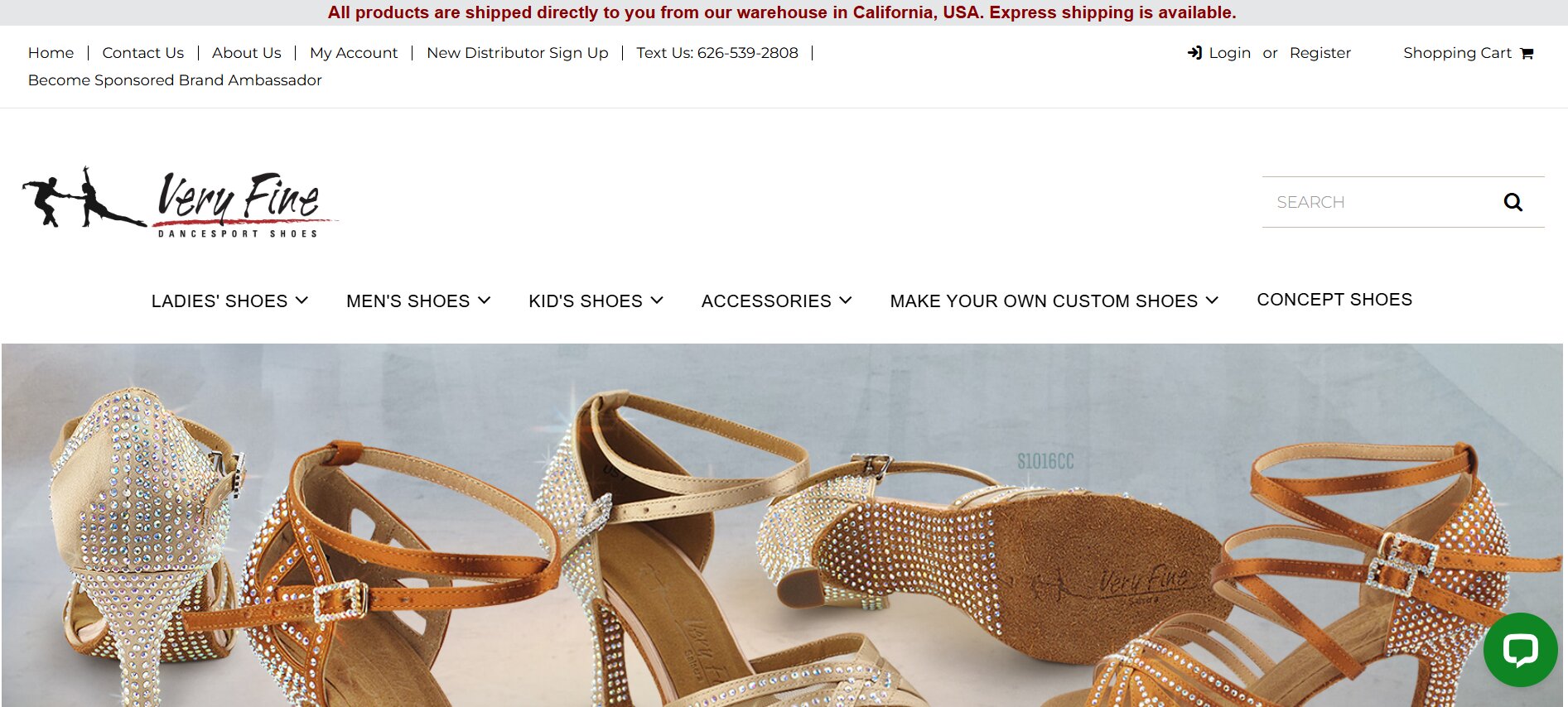
Very Fine Shoes is one of the more specialized suppliers on this list. The California-based company focuses on ballroom, Latin, salsa, tango, wedding, and competition footwear.
We like the niche from a sourcing perspective because it is harder to commoditize than generic sneakers. The company also supports customization and OEM/private-label production once you are ready to move beyond basic dropshipping.
Products Offered
- Ballroom shoes
- Latin, salsa, and tango shoes
- Dance sneakers
- Wedding shoes
- Competition footwear
- Children’s dance shoes
MOQ: None for regular dropshipping; 120 pairs for OEM/private label.
Pros
- Specialized dance-footwear catalog
- In-stock products can ship within 24 hours
- Custom heel heights, widths, and embellishments
- OEM and private-label path for established stores
Cons
- Very narrow niche
- Made-to-order products can take 5–8 weeks
- No modern plug-and-play ecommerce integration
- Higher product pricing than mass-market footwear
Pricing: Product pricing varies; practice sneakers start around $29.95, while standard styles can retail around $89 and above.
Ideal For: Stores focused on ballroom, dance, wedding, and performance footwear.
5. Matterhorn — Best for EU Women’s Fashion Without a Subscription
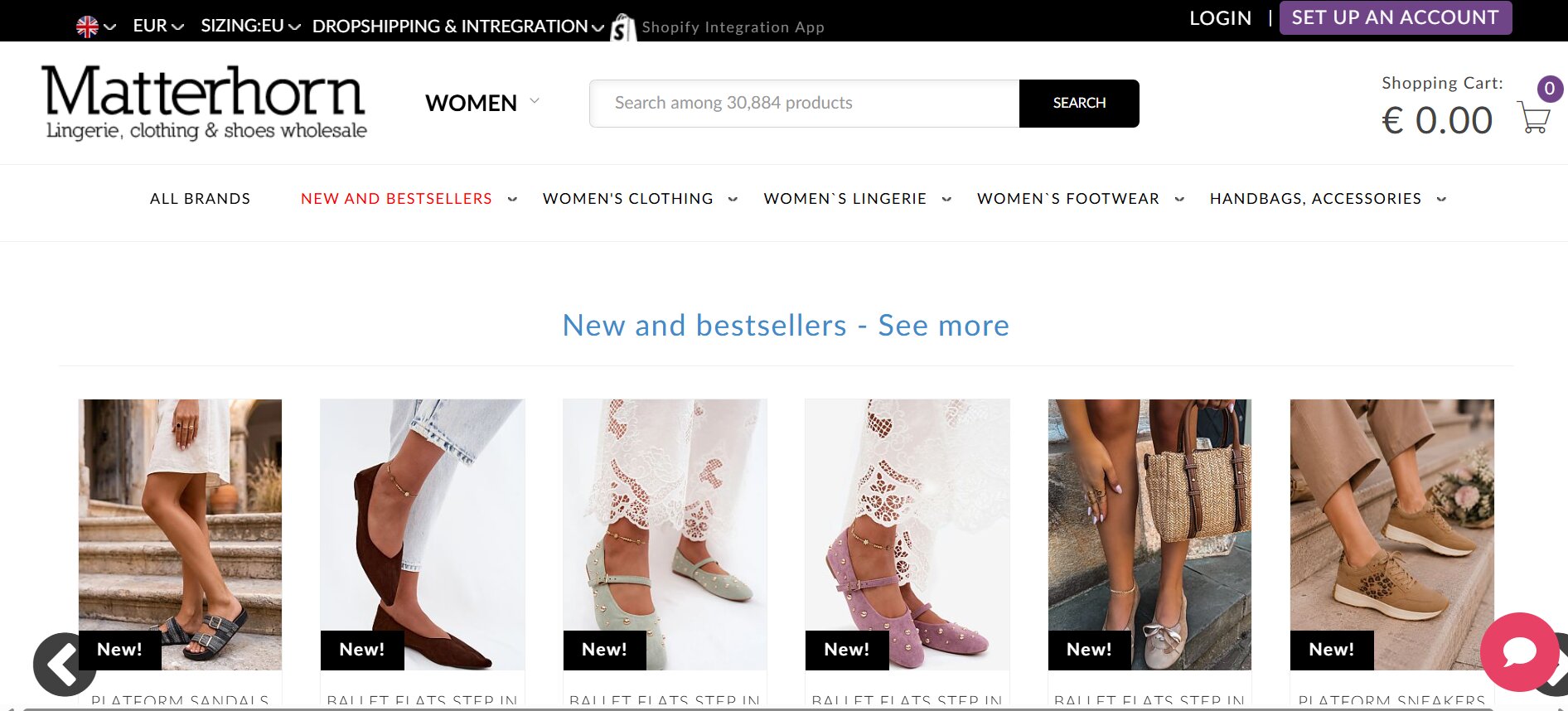
Matterhorn is a Polish wholesaler with a large women’s fashion catalog, including footwear and apparel. Its main advantage is accessibility: there is no subscription fee or MOQ for dropshipping.
However, we would test the operational side carefully before relying on it. Its Shopify App Store rating is currently much weaker than older articles suggest, with recent complaints focused on support and order handling.
Products Offered
- Flats
- Loafers
- Sneakers
- Boots
- Sandals
- Heels
- Women’s apparel and accessories
MOQ: None.
Pros
- No subscription fee
- No MOQ
- Large European women’s fashion catalog
- Multilingual product data
- Real-time inventory synchronization
Cons
- Shopify-focused integration
- Current Shopify app rating is 2.0★
- Shipping outside Europe can become slower and more expensive
- PayPal payments carry an additional commission
Pricing: No dropshipping subscription; you pay wholesale product cost plus shipping.
Ideal For: EU-focused Shopify boutiques that want broad women’s footwear selection without another monthly supplier fee.
6. Trendsi — Best for Fast US Women’s Fashion Fulfillment
Trendsi is particularly useful if you want to build a women’s fashion store rather than a shoe-only business. Its catalog includes footwear alongside apparel and accessories, which makes bundling full outfits easier.
For US customers, its domestic inventory is the main attraction. Selected items can arrive within roughly 2–5 business days, while domestic returns reduce some of the friction that normally comes with footwear.
Products Offered
- Heels
- Boots
- Sandals
- Flats
- Sneakers
- Slip-ons
- Women’s apparel and accessories
MOQ: None.
Pros
- Free to start
- US-stocked products can arrive in 2–5 business days
- Domestic returns
- Shopify, TikTok Shop, WooCommerce, and Wix integrations
- Branded invoices and packaging options
- Private-label path available
Cons
- Some products are still sourced internationally
- Fulfillment can be affected by Chinese holiday disruptions
- Return windows are relatively short
- Overseas product pricing has faced tariff-related increases
Pricing: Free Starter plan; Pro Seller costs $29.90/month.
Ideal For: US-focused women’s fashion stores that want footwear alongside clothing and accessories.
Platforms & Marketplaces
7. Spocket — Best for Access to US and EU Suppliers
Spocket is useful when you want to browse products from multiple US and European suppliers through one interface. Rather than managing each wholesaler separately, you can import products, sync orders, and manage inventory through supported ecommerce integrations.
The trade-off is cost. You are paying for access to the marketplace layer, and that can make margins tighter than sourcing directly.
Products Offered
- Sneakers
- Boots
- Sandals
- Flats
- Heels
- Casual and boutique footwear
MOQ: None.
Pros
- Many suppliers ship domestically within the US or EU
- Typical local delivery can be around 2–7 days
- Supplier performance information
- One-click sample ordering
- Broad ecommerce integration support
- Branded invoices on eligible plans
Cons
- Subscription required
- Higher-tier products may require more expensive plans
- Limited private-label flexibility
- Product costs can be higher than direct sourcing
- Recent reviews include billing and integration complaints
Pricing: Plans start at $39.99/month.
Ideal For: Sellers who value fast regional fulfillment and easy integrations more than achieving the lowest possible landed cost.
8. Syncee — Best for Multi-Region Product Discovery
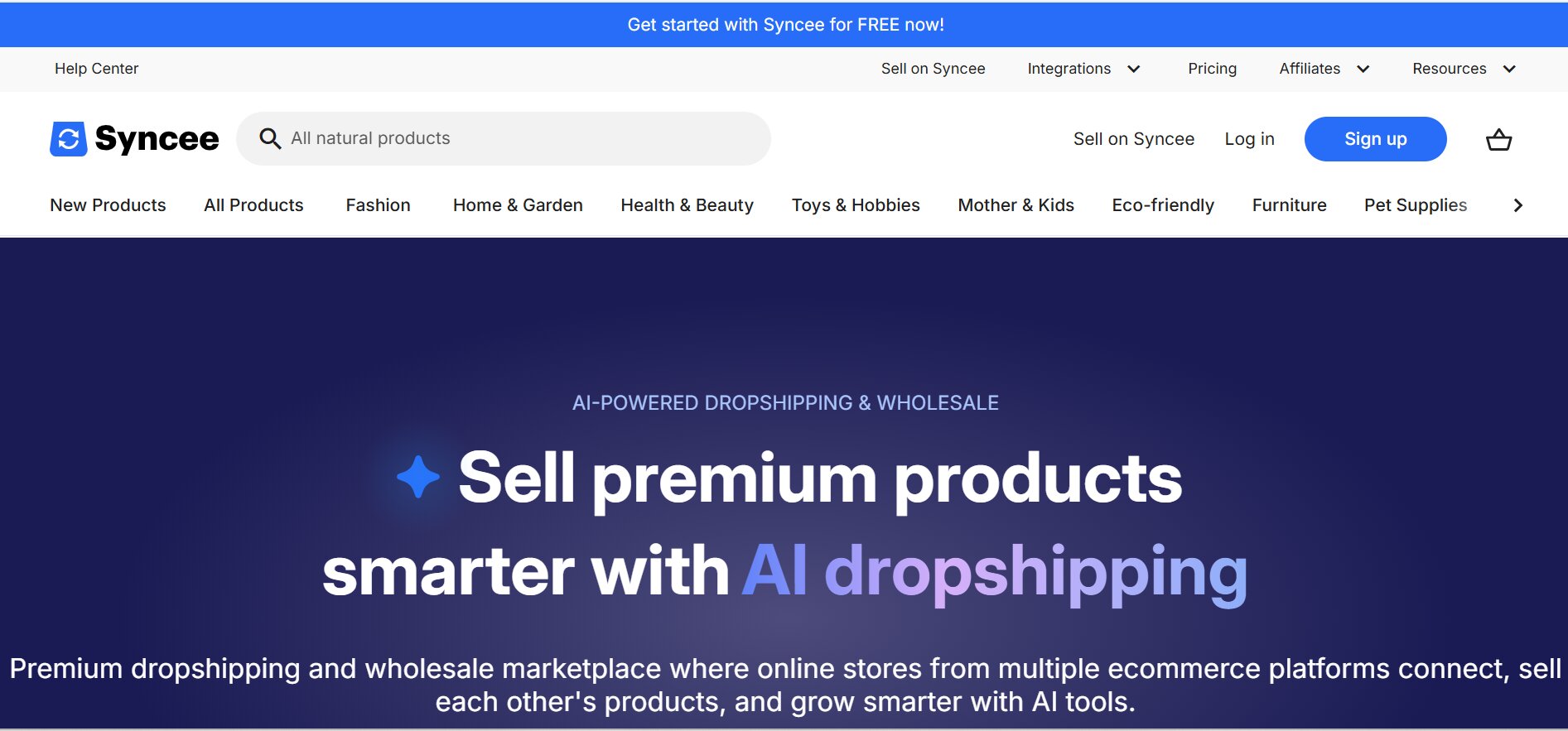
Syncee takes a similar marketplace approach but offers particularly broad geographic coverage. Its supplier network spans regions including the US, Canada, UK, Europe, and Australia.
That makes it useful if you want to build separate catalogs for different markets without negotiating individually with dozens of suppliers.
Products Offered
- Sneakers
- Boots
- Heels
- Flats
- Sandals
- Slippers
- Clogs
- Children’s footwear
MOQ: None for most dropshipping listings.
Pros
- Large global supplier network
- 0% transaction fees
- Local suppliers can offer 1–10 day delivery
- Broad ecommerce integration coverage
- Automated catalog and order synchronization
Cons
- Requires a paid plan for meaningful catalog access
- Fulfillment quality depends on the individual supplier
- Some premium suppliers require higher plan tiers
- Billing terms should be reviewed carefully before committing
Pricing: Paid plans start at $39.99/month.
Ideal For: Sellers operating across several regions who want to manage multiple footwear suppliers through one system.
Luxury & Designer Suppliers
9. BrandsGateway — Best for Authentic Designer Shoes
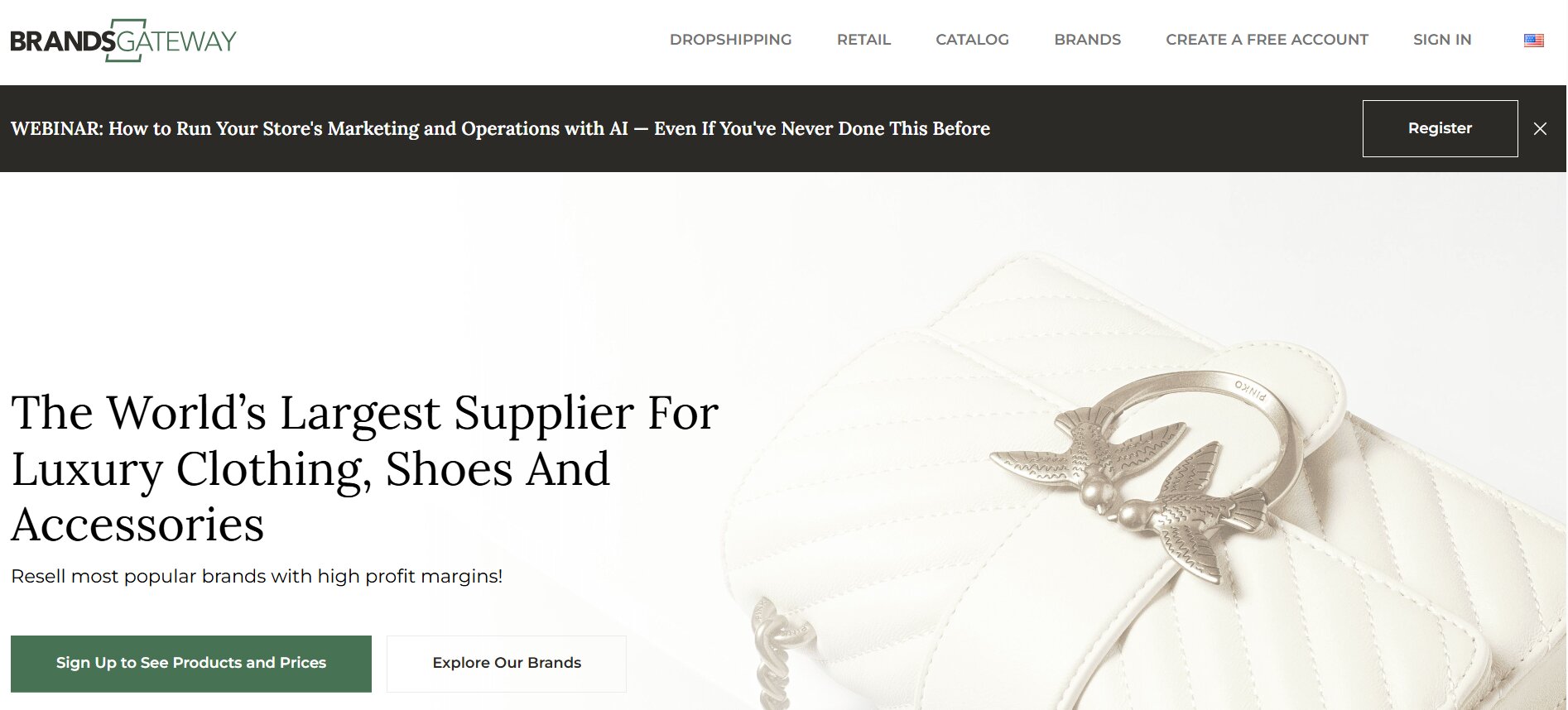
BrandsGateway is aimed at a completely different customer than most suppliers here. It focuses on authenticated luxury products from established fashion brands, making it more relevant for stores built around high average order values.
The important trade-off is fixed cost. Its subscription can be difficult to justify until you already have traffic, positioning, and enough cash flow to support a luxury catalog.
Products Offered
- Men’s and women’s designer footwear
- Luxury shoes from established international brands
- Supporting designer apparel and accessories
MOQ: None.
Pros
- Authenticated luxury products
- Documented supply chain
- EU and US warehousing
- Express international fulfillment
- Professional product images and descriptions
- Automated inventory and order routing
Cons
- High monthly subscription cost
- Popular sizes can sell out quickly
- Stock depth varies by SKU
- Duties and taxes can affect non-EU orders
Pricing: Grow €180/month, Scale €250/month, Enterprise €690/month.
Ideal For: Established fashion stores with a premium customer base and enough volume to justify the subscription.
10. Nordstrom Drop Ship Program — Best Viewed as a Scaling Destination
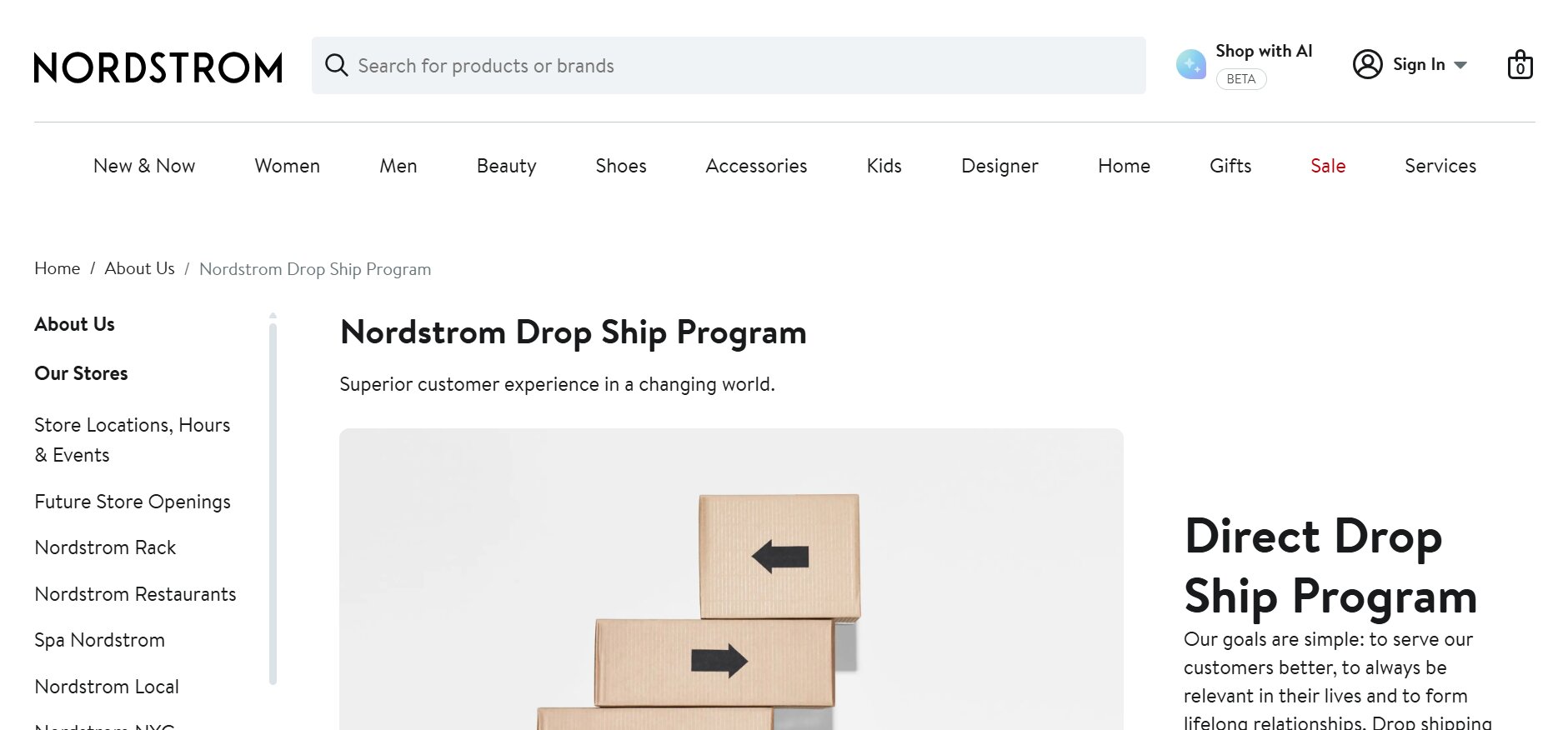
Nordstrom is unusual on this list because you cannot simply register and start dropshipping products from it. Its drop ship program is invite-only and designed for established vendors selected by Nordstrom buyers.
We would therefore treat Nordstrom as an example of where a successful footwear brand can eventually go rather than a supplier for a new dropshipping store.
Products Offered
- Designer shoes
- Athletic footwear
- Casual and formal shoes
- Boots and sandals
- Children’s footwear
MOQ: Not applicable.
Pros
- No program setup or listing fees
- Nordstrom covers shipping
- Access to a major retail customer base
- Automated inventory management
Cons
- Invite-only
- No open application for ordinary dropshippers
- Strict one-business-day shipping SLA
- Requires EDI connectivity through Dsco/Rithum
Pricing: No program fees; commercial terms are based on the vendor relationship.
Ideal For: Established footwear brands capable of meeting enterprise retail fulfillment standards.
11. Paul Parkman — Best for Handmade Luxury Men’s Shoes
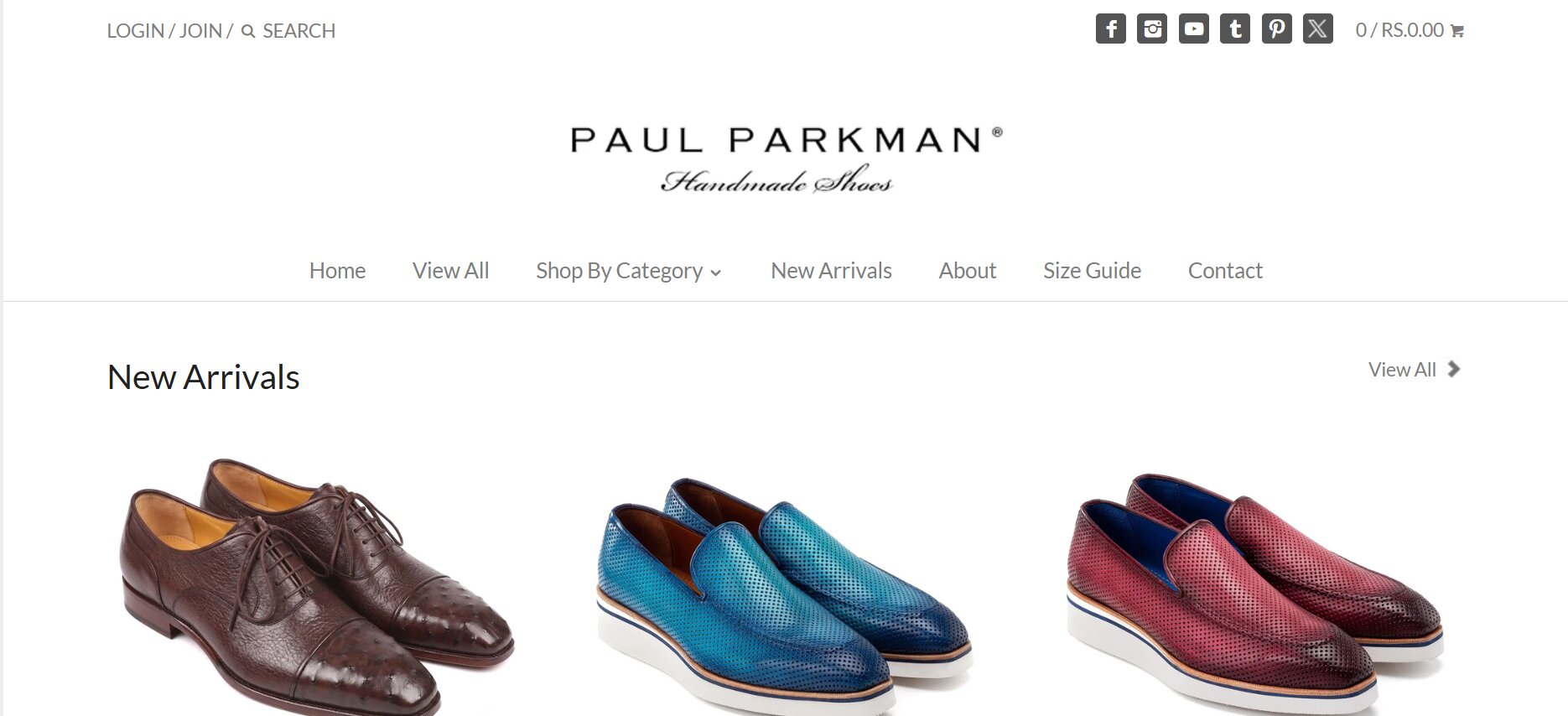
Paul Parkman focuses on premium handmade men’s footwear, including hand-painted and Norwegian hand-welted styles. This creates a much more defensible product proposition than generic fashion shoes, but it also requires the right audience.
The made-to-order model means customers need to be comfortable with both premium pricing and longer fulfillment times.
Products Offered
- Oxfords
- Derbies
- Loafers
- Monk straps
- Dress shoes
- Ankle boots
MOQ: None for approved dropship dealers.
Pros
- Distinct handmade positioning
- No MOQ
- 500+ products available to dealers
- CSV and UPC support
- New products added regularly
- Less direct price competition than generic footwear
Cons
- Premium pricing narrows the addressable customer base
- Production takes around 10–15 days
- Dealer approval is selective
- Requires stronger merchandising and customer education
Pricing: Retail prices generally range from about $345–$625; wholesale pricing is provided through dealer applications.
Ideal For: Luxury menswear stores targeting customers who understand handmade footwear and are comfortable waiting for made-to-order products.
12. Italian Shoe Factory — Best for Building a Private-Label Shoe Line
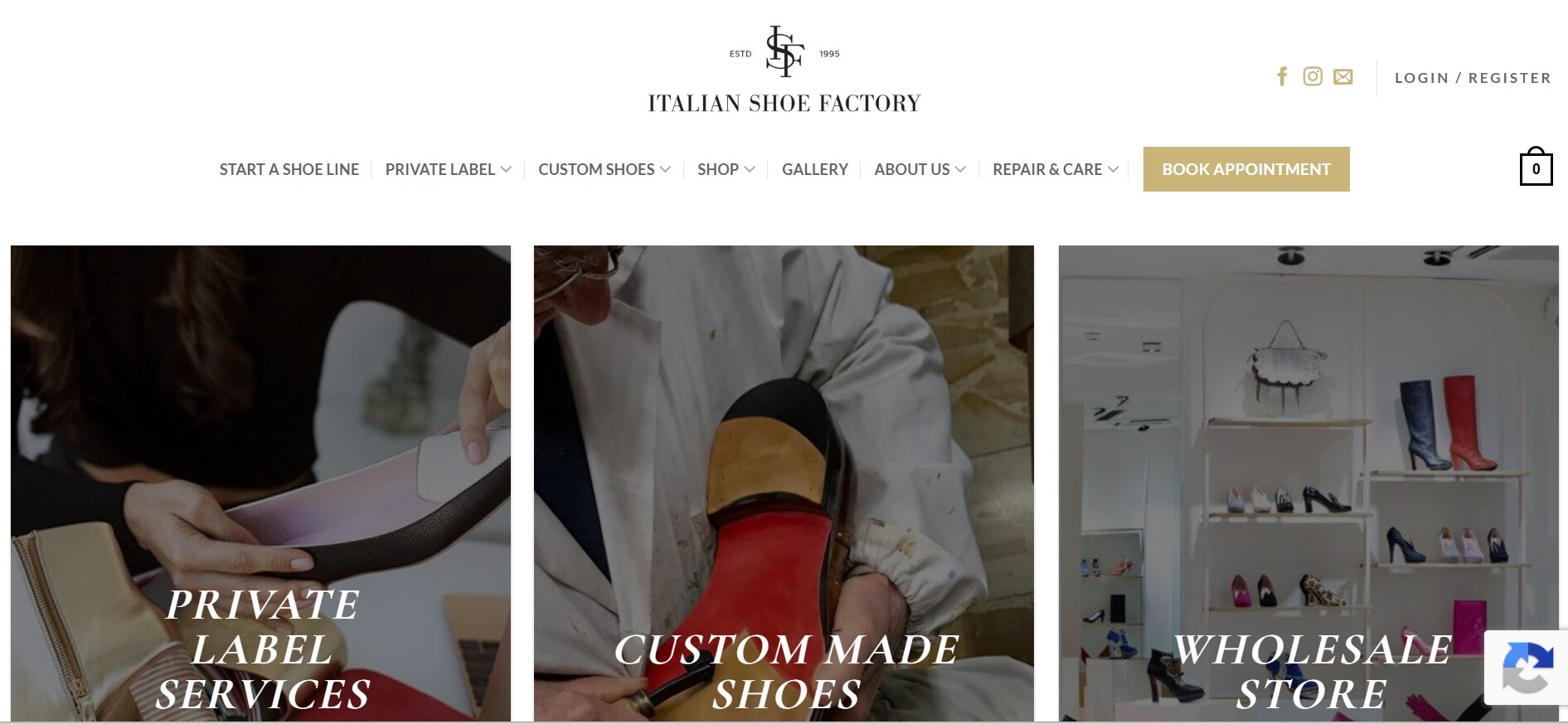
Despite its name, the Italian Shoe Factory is based in Dubai. It works more like a bespoke manufacturer than a traditional dropshipping supplier, making it relevant once you want to create footwear under your own brand.
The company supports prototyping, private label, small-batch production, and bespoke work, so this is closer to product development than catalog dropshipping.
Products Offered
- Bespoke footwear
- Private-label shoes
- Medical and orthopedic footwear
- Leather and vegan leather products
- Related leather goods
MOQ: No formal MOQ is stated; the company promotes flexibility from single-pair bespoke work upward.
Pros
- True product customization
- Prototyping and small-batch production
- Private-label capability
- Flexible order quantities
- Useful for highly differentiated shoe concepts
Cons
- Quote-based premium pricing
- Bespoke production can take around four weeks
- Requires more involvement in product development
- No plug-and-play store integration
Pricing: Quote-based according to materials, design, complexity, and quantity.
Ideal For: Sellers moving beyond dropshipping into a genuine private-label or custom footwear brand.
Niche & Print-on-Demand Suppliers
13. Printify — Best for Custom-Designed POD Shoes
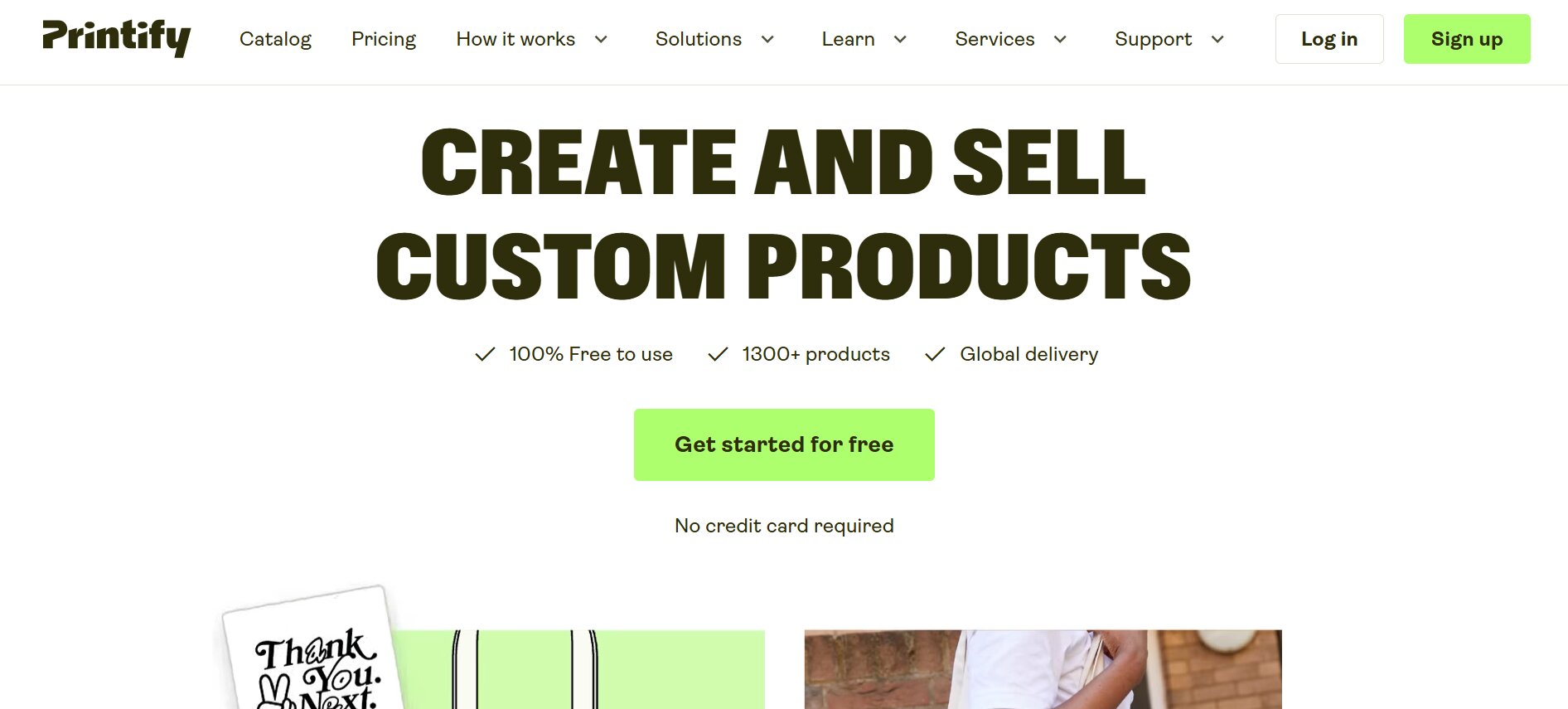
Printify is one of the easiest options if your differentiation comes from your artwork rather than the underlying shoe construction. You upload a design, select an eligible footwear product, and the print provider manufactures it after a customer orders.
This keeps inventory risk low, but we would always sample the exact provider you plan to use because print quality, sizing, and fulfillment can vary between production partners.
Products Offered
- All-over-print sneakers
- High-tops
- Slip-ons
- Running shoes
- Boots
- Slippers
- Sandals
MOQ: None.
Pros
- No inventory requirement
- Free plan available
- Broad print-provider network
- Integrations with Shopify, Etsy, Amazon, and other platforms
- Full ownership of your designs
- Premium plans can reduce product costs
Cons
- Product quality varies by print provider
- Footwear selection is smaller than dedicated shoe suppliers
- Sizing returns remain a meaningful risk
- International fulfillment can be slow
Pricing: Free plan; Premium $39/month or $24.99/month when billed annually.
Ideal For: Creators and ecommerce brands that want to test original footwear designs without manufacturing inventory upfront.
14. LED Shoe Source — Best for a Novelty Footwear Store
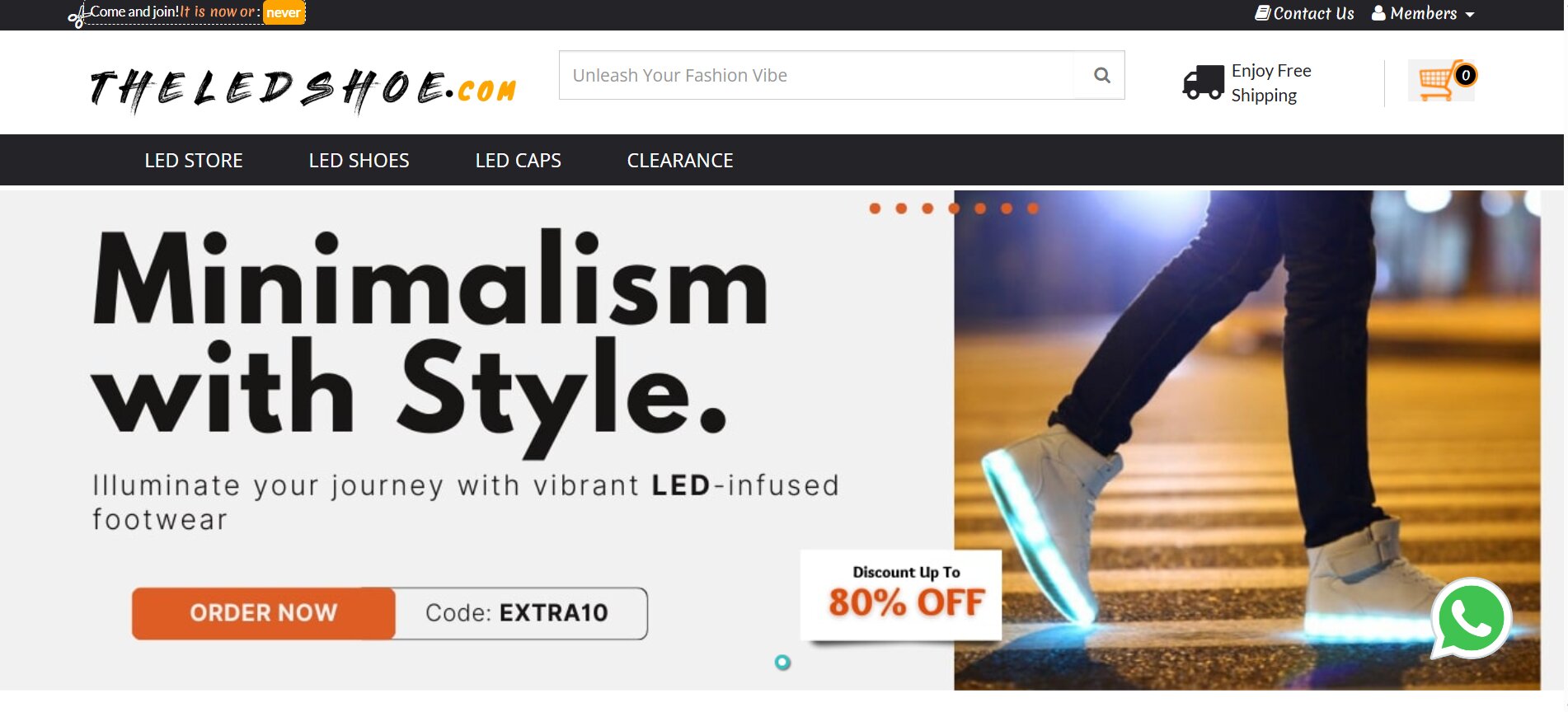
LED Shoe Source is the most specialized supplier in this list. The Florida-based business focuses on rechargeable LED footwear aimed at festivals, events, costumes, and novelty buyers.
The niche can help you stand out, but we would verify the current dropshipping program directly before building a store around it because the company has a much smaller online footprint than the larger suppliers above.
Products Offered
- LED sneakers
- Light-up sandals
- Illuminated boots
- Men’s, women’s, and children’s styles
MOQ: None publicly stated.
Pros
- Highly differentiated product category
- Products for multiple age groups
- Wholesale and dropshipping options
- US and international fulfillment
Cons
- Extremely narrow catalog
- Demand is more event-driven than evergreen
- Limited independent review data
- Electronics introduce an additional potential defect point
Pricing: Not publicly listed; contact the supplier for current wholesale or dropshipping terms.
Ideal For: Festival, event, costume, and novelty-focused stores that want a visually distinctive product category.
US vs China Shoe Suppliers: Cost, Speed & the Hybrid Play
For shoe dropshipping, the US-versus-China decision usually comes down to speed versus landed cost and flexibility. We wouldn’t choose based on location alone; the better option depends on whether you’re still testing products or already scaling proven winners.
| Factor | US/EU Suppliers | China Suppliers & Agents |
| Typical US delivery | 2–5 business days | 6–15 days via dedicated shipping lines |
| Product cost | Usually higher wholesale pricing | Lower factory-direct pricing |
| Shoe shipping cost | Often built into domestic pricing | Typically adds around $4–$10 per pair |
| Product selection | Smaller regional catalogs | Much wider factory and marketplace access |
| Returns | Easier with a domestic return address | International returns can be uneconomical |
| Branding | Often limited | Custom packaging and private label are easier to arrange |
| Best stage | Testing speed-sensitive markets | Scaling products where margin and customization matter |
When Does a US Supplier Make More Sense?
We’d lean toward a US supplier when customers expect fast delivery and you’re still validating demand. Getting shoes to buyers in around 2–5 business days also makes exchanges and sizing-related returns easier to manage.
The trade-off is margin. Domestic wholesalers generally charge more for the product, and you may have less flexibility around packaging, materials, or private labeling.
When Does Sourcing from China Make More Sense?
China becomes more attractive when you already know which shoes sell and want to improve your economics. Factory sourcing opens up a much wider product pool and gives you more room to negotiate pricing, packaging, and eventually private-label production.
But always calculate landed cost, not just factory price. Shoes are relatively bulky and heavy, so international shipping can add roughly $4–$10 per pair. A $10 shoe with $8 shipping is effectively an $18 product before ads, payment fees, or returns.
The Hybrid Model We Prefer for Proven Products
For a scaling store, you don’t necessarily have to choose one side.
A practical progression is:
- Test products without holding inventory.
- Source proven winners from China at factory-direct pricing.
- Pre-stock the best-selling sizes and colors in a US warehouse.
- Fulfill domestic orders locally for 2–5 day delivery.
- Keep slower-moving variants in China until demand justifies stocking them.
This approach gives you much of the cost and branding flexibility of China sourcing without forcing every customer to wait for international delivery.
Is Shoe Dropshipping Profitable in 2026?
Yes, shoe dropshipping can be profitable in 2026, but the economics vary significantly by supplier model. From the suppliers we reviewed, you can see everything from 35% off retail with domestic shipping included at Footwear US to POD shoes starting around $19.35 at Printify and luxury footwear retailing for $345–$625 through Paul Parkman.
The bigger issue is what remains after fulfillment and returns. Footwear has an average ecommerce return rate of roughly 18–19%, with sizing responsible for a large share of returns, so we would never evaluate a shoe solely on the gap between supplier cost and retail price.
What Do Shoe Dropshipping Margins Look Like by Supplier Type?
Rather than inventing a universal margin for each footwear niche, these are the pricing signals we can actually verify from the suppliers in this guide:
| Business Model | Supplier Example | Supplier-Side Cost / Pricing | Retail or Margin Signal | What It Means for Sellers |
| Comfort / wide-fit | Footwear US | Dropship accounts receive 35% off retail | Retail price is supplier-set | About 35% gross room before payment fees, ads, returns, and the $5.95 return restocking fee |
| Dance shoes | Very Fine Shoes | Practice shoes from about $29.95; other pricing varies | Standard styles can retail around $89+ | Specialty positioning can support a larger selling-price spread, but wholesale terms vary |
| Women’s fashion | Trendsi | Typical products around $10–$25 | Retail price set by seller | Potentially attractive markup, although shipping, tariffs, and returns still need to be added |
| Luxury designer | BrandsGateway | Wholesale catalog + subscription from €180/month | BrandsGateway advertises margins of up to 250% | Higher AOV potential, but subscription cost and low stock depth must be absorbed |
| Handmade luxury | Paul Parkman | Wholesale pricing available to approved dealers | Retail typically $345–$625 | High revenue per order, but wholesale margin cannot be calculated until dealer pricing is provided |
| Print on demand | Printify | Selected custom sneakers start around $19.35 before shipping | Seller controls retail price | Low inventory risk, but production and shipping must be included before calculating margin |
| China sourcing | CJdropshipping | Example slippers: $2.60 product + $7.99 US shipping | Seller controls retail price | Shows why landed cost matters: a $2.60 product is already $10.59 before marketing or fees |
The key point is that markup and profit are different numbers. A $2.60 shoe sounds extremely margin-friendly until $7.99 shipping is added. Likewise, a luxury shoe can produce much more gross profit per sale, but you may also be carrying a €180+ monthly supplier subscription.
A Simple Per-Order Profit Example
Suppose you source a shoe with an $18.50 landed cost and sell it for $49.99. This is an illustrative model rather than pricing from one specific supplier:
| Per-Order Economics | Amount |
| Selling price | $49.99 |
| Product + shipping | -$18.50 |
| Payment processing (~3%) | -$1.50 |
| Advertising cost | -$15.00 |
| Expected return cost* | -$2.16 |
| Estimated contribution profit | $12.83 |
Using an 18% expected return rate and an assumed $12 average loss when a return occurs.
That leaves about $12.83 per order, or 26%, before other business overhead.
This is why we calculate profitability from the bottom up. Your selling price needs to cover the landed shoe cost, payment fees, customer acquisition, and expected returns before you decide whether a SKU deserves more ad spend.
Which Shoe Models Have the Strongest Economics?
Based on the supplier models above, we see different opportunities:
- China sourcing can create more pricing room, but shipping may represent a large share of landed cost.
- US suppliers such as Footwear US trade some margin for faster fulfillment and simpler returns.
- POD removes inventory risk, although per-pair production costs are higher than factory sourcing.
- Luxury footwear creates more gross profit per order but requires stronger branding, customer trust, and sometimes monthly supplier fees.
- Specialty niches such as dance and wide-fit footwear can be attractive because you compete on fit and product suitability rather than simply listing another generic sneaker.
Our advice is to track contribution profit by SKU, not just revenue or gross margin. A shoe generating plenty of sales can still be a weak product if one size consistently produces refunds or if international shipping consumes most of the markup.
For more on evaluating categories before you commit, see our guide to profitable dropshipping niches.
The Sizing & Returns Playbook
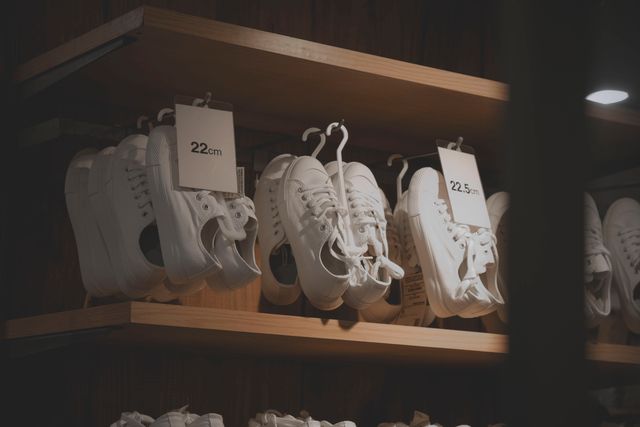
Sizing is one of the biggest risk factors in shoe dropshipping because suppliers handle returns very differently. For example, Footwear US charges a $5.95 restocking fee per return, Trendsi offers domestic US returns, while sending low-value shoes back to overseas suppliers is often not worth it.
Here’s how to reduce that risk before and after the sale.
1. Build Size Charts Around Real Foot Measurements
Don’t rely only on US/EU conversions. Ask suppliers for insole length and width per model, then display both cm and inches.
| Foot Length | US Size | EU Size |
| Supplier measurement | Supplier size | Supplier size |
| Supplier measurement | Supplier size | Supplier size |
Avoid generic conversion charts, sizing varies by supplier and model.
2. Add Clear Fit Notes on Product Pages
If a shoe runs small or large, state it next to the size selector:
- Runs small-size up
- Wide fit
- Measure your foot before ordering
- Use measurements, not usual size
This is especially important when working with multiple suppliers.
3. Sample Key Sizes Before Scaling
Never validate a shoe with just one sample. Test multiple sizes and check insole length, width, labeling, and consistency.
Even large platforms like CJdropshipping and Printify vary by provider, so always sample the exact supplier you’ll use.
4. Start With More Forgiving Styles
Slides, slippers, and adjustable sandals reduce fit sensitivity compared to tight sneakers or dress shoes.
We can’t guarantee lower return rates, but these styles generally reduce sizing-related issues during testing phases.
5. Compare Return Terms, Not Just Product Cost
Similar-priced shoes can have very different return economics:
- Footwear US: $5.95 restocking fee per return
- Trendsi: domestic returns, but only a 7-day return window
- BrandsGateway: fast fulfillment, but high-value luxury returns increase cost exposure
- China-direct: cheaper products, but return shipping often exceeds product value
Always check return address, fees, window, and defect policy before listing.
6. Know When Not to Require a Return
For low-cost international orders, returns may cost more than the product itself.
If return shipping exceeds product value, it can be cheaper to refund and let the customer keep the item.
7. Track Returns by Variant
Once you have volume, track:
- SKU
- Size
- Color
- Supplier
- Return reason
- Refund vs exchange
A product can look profitable overall while one size causes most issues. Fix or remove those variants before scaling.
How to Vet a Shoe Supplier
Before listing any footwear, we’d verify these seven points. Shoes have more sizing, return, and variant risk than many other dropshipping products, so a supplier that looks competitive on price can still become expensive operationally.
1. Ask for a Complete Size Chart
Get more than US/EU size conversions. The supplier should provide:
- Insole length in cm/inches
- Width where relevant
- Model-specific sizing
- Notes on whether the shoe runs small or large
If they can’t provide actual measurements, we’d hesitate to scale that product.
2. Order Samples in Key Sizes
Don’t judge a shoe from one pair. Sample several sizes across the range and compare fit, measurements, materials, stitching, labeling, and left/right consistency.
This matters particularly with large catalogs and POD networks where quality can vary between individual suppliers or production providers.
3. Confirm the Materials Specification
Ask exactly what the upper, lining, insole, outsole, and other important components are made from.
Vague descriptions such as “premium leather” or “high-quality material” aren’t enough. Accurate specifications help you write better product listings and reduce disputes when the delivered shoe doesn’t match customer expectations.
4. Test Inventory Sync and Stockout Handling
Shoes multiply inventory quickly because every color may have several sizes. Before scaling, confirm:
- How often inventory updates
- Whether your store syncs automatically
- What happens if an ordered size is unavailable
- How quickly discontinued variants are removed
This is one reason integrations matter. Suppliers such as Syncee and Matterhorn offer inventory synchronization, while Footwear US and Very Fine Shoes rely more heavily on manual workflows.
5. Understand the Full Return Policy
Always check the return address, return window, restocking fee, exchange process, and who pays for defective items.
The differences can materially affect margin. Footwear US, for example, charges a $5.95 restocking fee per returned item, while Trendsi handles US returns domestically but uses a 7-day return window.
6. Confirm Image and Packaging Rights
Ask whether you’re allowed to use the supplier’s:
- Product photos
- Videos
- Descriptions
- Brand names
- Packaging assets
Also confirm what arrives at the customer’s door. Footwear US offers blind dropshipping, while suppliers and agents offering custom packaging can give you greater control over the customer experience.
If the supplier offers branded footwear, ask for documentation showing that the products are authentic and legally authorized for resale.
For luxury products, that may mean invoices or a documented distribution chain. BrandsGateway, for example, positions its designer inventory as authenticated and sourced through official distribution channels. We would avoid any supplier offering replica Nike, Adidas, Gucci, or similar products without clear authorization.
Our Final Check: Place a Real Test Order
Before spending heavily on ads, order through the same process your customer will experience.
Check the actual delivery time, tracking, packaging, sizing, product condition, and communication when something goes wrong. Supplier promises matter, but the real fulfillment experience tells you whether the operation is ready to scale.
Read more: How to Find a Good Dropshipping Supplier
Can You Dropship Branded Shoes?
You can dropship branded shoes only when you have a legitimate, authorized supply chain. We would not build a store around replica Nike, Adidas, Gucci, or other branded footwear from an unverified supplier.
The risk goes beyond receiving a poor-quality product. Unauthorized or counterfeit footwear can expose your store to:
- Payment processor restrictions or frozen funds
- Marketplace account suspensions
- Customs seizures
- Trademark and other legal disputes
- Refunds and chargebacks from customers who receive counterfeit goods
What Are the Legitimate Options?
If branded footwear is part of your business model, we’d stick to one of these routes:
- Become an authorized retailer. Work directly with the brand or an approved distributor and keep invoices showing where the products came from.
- Use a verified luxury distributor. BrandsGateway, for example, supplies authenticated designer products through a documented distribution chain.
- Build your own footwear brand. Private label gives you much more control over the product, packaging, pricing, and long-term brand equity.
Nordstrom’s program shows the other end of the spectrum: established footwear brands may eventually access major retail partnerships, but its drop ship program is invite-only and intended for approved vendors rather than new dropshippers.
If a supplier claims to offer branded Nike or Adidas shoes at unusually low prices but cannot provide clear authorization or invoices, we’d walk away. Saving a few dollars on sourcing is not worth putting the entire store at risk.
For sellers who want branding without those restrictions, private label dropshipping is usually the cleaner path.
How to Start a Shoe Dropshipping Business in 2026
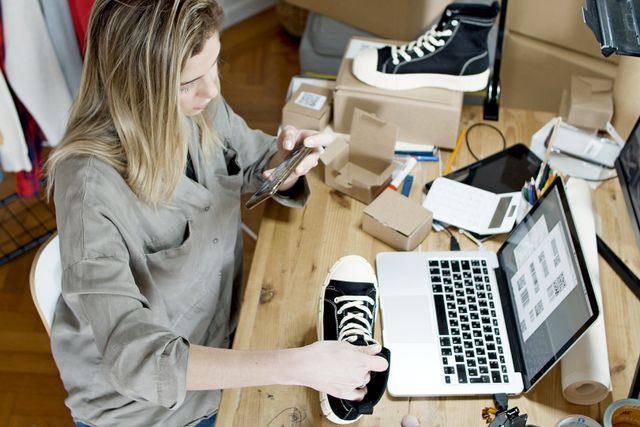
You can start a shoe dropshipping business without buying inventory upfront, but we’d avoid launching with hundreds of styles. A better approach is to start with 10–20 carefully selected products, validate sizing and demand, then scale only the SKUs that perform well.
1. Choose a Specific Shoe Niche
Start narrower than “shoes.” Based on the supplier options we reviewed, viable directions include:
- Wide-fit and comfort footwear
- Dance and wedding shoes
- Women’s fashion footwear
- Luxury or handmade shoes
- Custom POD sneakers
- Private-label footwear
A focused niche also makes supplier selection much easier. Footwear US, for example, fits comfort and wide-width stores, while Very Fine Shoes is built around dance footwear and Printify suits custom designs.
2. Choose the Right Supplier Model
Match the supplier to your current stage.
If you’re still testing, platforms such as CJdropshipping or Syncee give you broad catalogs without committing to inventory. Regional suppliers such as Trendsi can make sense when US delivery speed matters.
Once a product has consistent volume, you can consider sourcing through an agent, adding custom packaging, or pre-stocking proven sizes in a regional warehouse.
3. Order Samples Before Listing Products
For footwear, we’d sample before spending on ads.
Check:
- Fit across key sizes
- Insole length and width
- Materials and construction
- Packaging
- Tracking and delivery speed
- Whether the actual product matches the listing
For important products, test more than one size. A single sample won’t reveal whether sizing is consistent across the range.
4. Build the Store Around Sizing and Returns
Your product pages should include model-specific size information rather than generic conversion charts.
Before launch, make sure you have:
- Foot-length measurements in cm and inches
- Fit notes such as “runs small”
- A visible return window
- Clear exchange/refund rules
- Accurate stock syncing for every size and color
This is especially important because return terms differ significantly between suppliers. Footwear US, for example, charges a $5.95 restocking fee, while Trendsi uses a 7-day return window.
5. Launch With 10–20 Styles
We’d rather launch 15 products we understand than import 500 listings from a supplier catalog.
Your first goal is to identify:
- Which styles convert
- Which sizes sell most
- Which variants generate returns
- Which products remain profitable after shipping and ads
Once you have enough orders, remove weak products and kill size variants that repeatedly cause fit complaints or refunds.
6. Scale the Products That Survive Testing
When a shoe proves itself, improve the economics around it.
Depending on your model, that could mean:
- Negotiating better sourcing costs
- Moving inventory closer to customers
- Adding custom packaging
- Introducing private label
- Expanding winning colors and sizes
- Removing slow or return-heavy variants
This is where dropshipping becomes useful as a testing model: you learn what customers actually want before committing to larger inventory or custom production.
How Much Does It Cost to Start Shoe Dropshipping?
A practical lean launch budget is roughly $300–$1,000, depending mainly on how much you spend on samples and initial advertising.
| Startup Expense | Approximate Budget |
| Store plan + domain | ~$55 for the first month |
| Samples from 2–3 suppliers | $50–$150 |
| Initial advertising tests | $200–$500 |
| Apps / theme | ~$50 |
| Typical starting range | About $300–$1,000 |
You don’t need to spend the full amount immediately. We’d put more of the early budget into samples and controlled product testing rather than premium themes or a huge imported catalog.
Once you find a shoe that sells consistently, that’s the point to spend more on inventory, faster fulfillment, branding, or private-label development.
Conclusion: Choose the Right Supplier for Your Stage
There’s no single “best” shoe dropshipping supplier, it depends on your business stage.
For testing, CJdropshipping or Syncee offer flexibility with no inventory risk. US-focused stores may prefer Trendsi or Footwear US, while BrandsGateway suits luxury products and Printify works for custom designs.
Once you find winning products, focus on improving margins through better sourcing, quality control, faster shipping, and branding.
Key factors to watch: sizing consistency and return rates, as these can quickly reduce profits even on best-selling shoes.
If you’re ready to move beyond testing and start building a real brand, working with a dedicated sourcing agent can make a big difference in your margins, delivery speed, and product quality.
Get a Free Sourcing Quote from NicheDropshipping
NicheDropshipping helps Shopify and WooCommerce sellers scale with:
- Product sourcing from China factories
- 90-day free warehousing
- Fast order processing (same-day handling)
- Custom branding & packaging options
- US & EU warehouse support for faster delivery
No upfront cost. No commitment. You’ll receive a sourcing quote within 1–2 business days.
Frequently Asked Questions
Dropshipping shoes can be a profitable venture with the right approach. Finding reliable suppliers, understanding customer preferences, and considering brand importance are crucial factors for success.
Is Dropshipping Shoes Worth It?
Dropshipping shoes can be highly profitable. The global footwear market is projected to reach $440 billion by 2026, offering ample opportunities for entrepreneurs. Shoes have year-round demand and appeal to diverse customer segments.
You can target various niches within the shoe market. From athletic footwear to luxury brands, there’s potential for significant sales and profits across multiple marketplaces.
How to Find a Reliable Supplier for Dropshipping Shoes?
Start by researching established dropshipping platforms. Platforms like Zendrop offer access to vetted suppliers in China and the US. These platforms often have years of experience in ecommerce and understand dropshippers’ needs.
Look for suppliers with positive reviews and a track record of timely shipping. Check their product range, pricing, and policies regarding returns and damaged goods.
What Qualities Should I Look for in a Dropshipping Shoe Supplier?
Shoes are a fashion statement but they are also highly functional in our day-to-day lives. Subsequently, a good supplier should be able to offer quality shoes that are stylish and comfortable.
Shoes aside, a supplier’s services are equally paramount. It defeats the purpose to partner with a supplier that offers great shoes but delays deliveries. Aim for a supplier that:
Delivers promptly
Can offer additional value-adding dropshipping services
Carries a wide selection of shoe options
Has efficient dropshipping systems
Are Shoe Brands an Essential Consideration for Customers?
Brand recognition can significantly impact customer decisions. Many shoppers prefer well-known brands for perceived quality and style.
However, non-branded shoes can also be successful. Some customers prioritize style and affordability over brand names. Offering a mix of branded and non-branded options can help you cater to diverse customer preferences.
Can I Use More Than One Shoe Dropshipping Supplier in the Same Store?
Yes. Using multiple suppliers can actually reduce dependence on one catalog or warehouse, especially if you sell different footwear niches.
For example, you could use Trendsi for US women’s fashion, Very Fine Shoes for dance footwear, and Printify for custom designs.
The main challenge is keeping shipping expectations, return policies, and inventory rules clear for customers.
We’d also avoid mixing suppliers for the same SKU unless you’ve verified that sizing, materials, and product quality are genuinely consistent between them.
Can I Dropship Shoes and Clothing From the Same Supplier?
Yes. Some suppliers in this list offer footwear alongside broader fashion catalogs, which can be useful if you want to build outfits rather than a shoe-only store.
Trendsi carries women’s apparel, accessories, and footwear, while Matterhorn combines women’s shoes with clothing, lingerie, and accessories. Syncee and Spocket also connect stores with suppliers across multiple categories.
The advantage is easier cross-selling, but we’d still evaluate footwear separately because sizing, returns, and shipping economics can differ considerably from apparel even when both products come from the same supplier.
How Do I Prevent Shoe Sizes From Going Out of Stock After a Customer Orders?
Use suppliers with frequent inventory updates and make sure size-level stock is synchronized, not just the overall product. This matters because a shoe may technically remain “in stock” while the customer’s selected size is unavailable.
Syncee, Matterhorn, Trendsi, CJdropshipping, and other integrated suppliers provide varying degrees of inventory automation. For manually managed suppliers, you may need regular stock files or direct checks.
We’d also avoid advertising a shoe heavily until you understand how quickly the supplier replenishes popular sizes and how they handle discontinued variants.
What Should I Check Before Paying for a Shoe Supplier Subscription?
First calculate how many profitable orders you need just to recover the subscription fee. Spocket starts at $39.99 per month, Syncee at $39.99, while BrandsGateway starts at €180 per month.
Then check whether the plan you’re considering actually unlocks the suppliers, products, integrations, or branding features you need. We’d also read current billing and cancellation terms carefully, since review data for some platforms includes billing-related complaints.
A paid platform makes sense when its automation or supplier access saves more money than the subscription costs your store each month.
Can I Switch Suppliers After a Shoe Starts Selling?
Yes, but never switch silently based on product photos alone. Two suppliers may sell shoes that look identical while using different sizing, materials, insoles, packaging, or construction. Before moving a winning SKU, order samples from the new supplier and compare them directly with the product customers already receive.
You should also remap every size and color variant before changing fulfillment. Switching can make sense when you want lower landed costs or better branding, but preserving the customer experience matters more than saving a small amount per pair.
What Should I Do When a Supplier Has Mixed Online Reviews?
Look at the pattern rather than relying on one headline rating. CJdropshipping, for example, has strong ratings on some platforms and noticeably weaker scores on others.
Spocket also shows a gap between its Trustpilot and Shopify App Store ratings, while Matterhorn’s Shopify rating is currently much lower than older supplier roundups suggest.
We’d focus on recent complaints related to the exact service you need: fulfillment, refunds, inventory syncing, billing, or support.
Then place a test order yourself. Review scores are useful screening signals, but actual supplier performance for your products matters more.