Do you hate dropshipping taxes? You’re not alone! Most of us do, especially considering the different tax rates and tax laws to start international dropshipping.
Although navigating the labyrinth of dropshipping worldwide taxes becomes easier with experience, it can seem impossible for a new eCommerce business owner.
Charge taxes, collect taxes, pay taxes, sales taxes, VAT, income taxes, where’s the end? With so many terms surrounding the topic, it’s no wonder that many dropshippers want to give up from fear of getting in trouble with tax laws.
So, let’s finally explain everything in simple words!
Disclaimer: This guide is for informational purposes only and does not constitute legal or tax advice. Tax laws change frequently. Consult a licensed tax professional or accountant for advice specific to your situation.
Key Takeaways
Here is what you need to know before reading the full guide:
- Yes, dropshippers pay taxes. Pay income tax on profits; collect sales tax (US) or VAT (UK/EU) from customers based on location.
- US sales tax depends on “nexus.” Most states: $100K or 200 transactions. CA/TX = $500K; IL dropped the 200-transaction test in 2026.
- UK VAT threshold: £90,000. The EU abolished the €22 import VAT exemption in 2021; all B2C imports now attract VAT at destination.
- Shopify reports to the IRS. 2025 1099-K at $20,000 + 200 transactions (was $5,000 in 2024). Shopify calculates tax but does not remit.
- Customs duties are separate. US de minimis: $800; EU duty-free: €150 until July 1, 2026.
Do Dropshippers Pay Taxes?
To start with, we have to learn how to differentiate the terms collect and pay taxes.
When we talk about “collecting”, these are either sales taxes (US) or VAT (EU) that your end customer covers.
So, the only type of taxes that you actually pay by yourself in most cases is income taxes.
According to tax laws, income tax is paid in almost all countries worldwide on any profit you make throughout a calendar year.
Do Dropshippers Collect Taxes?
Whether dropshippers collect taxes or not depends on many factors. Generally speaking, when obliged, dropshippers have to collect a so-called consumption tax that the end-consumer pays according to their state or country tax rate.
The consumption tax that dropshippers collect at the point-of-sale (PoS) is called a sales tax in the USA. A similar concept exists in the EU, where each state has its own VAT rate – the EU equivalent of the US sales tax.
In both cases, the end-consumer always covers the costs, and these costs ultimately end up in the state or country’s budget.
Does Dropshipping Affect Your Taxes?
Dropshipping affects your personal taxes only in regards to your income taxes.
Namely, if you resell products without having a registered company, your country’s tax laws will require that you pay income taxes on your earnings.
You always pay this income tax amount to your local government in the country of living. So, the income tax doesn’t depend on where your customers are from but where you’re from.
Depending on the nature of your earnings and how you’ve established your business, the dropshipping income tax rate can vary from one country to another.

What Types of Taxes Are Associated with Dropshipping?
When we talk about dropshipping taxes, we typically refer to one of these:
- Income tax
- Sales tax (US)
- VAT (EU)
- Customs / import duties (when shipping cross-border)
The sales tax in the US and the VAT in the EU are so-called consumer taxes since they’re collected and covered by the end customer.
Income Tax
As a dropshipper or reseller, you pay income tax to your country on all the profits you’ve made through your store. In fact, tax laws state that income tax is due on any income you receive from products or services.
This dropshipping income tax is paid differently in different countries. Often, you pay it once a year or quarterly. However, some countries have a pay-as-you-go law, which means you pay your income tax right after each transaction.
Who do you pay it to: your country
Sales Tax (USA)
In the US, sales tax is a type of consumption tax that dropshippers often need to collect and pay.
Sales taxes are imposed by states where the product or service is sold. That means – your customer’s state. So, as opposed to the income tax under your country’s jurisdiction, the sales tax depends on your buyer’s state.
So, you collect the sales tax from your end-consumer (customer, buyer), and you pay it to their state.

However, when dropshipping in the US, you don’t have to charge sales tax from customers in all states but only in the state where you have a nexus (physical presence or passing the minimum threshold).
So, if you reside in the US, you’ll probably have to charge a sales tax only from local customers located in the same state. And, if you’re a non-resident without physical presence in the US, you generally won’t have nexus unless you exceed a state’s economic threshold ($100K+ or 200+ transactions).
Who do you pay it to: your customer’s state
VAT (EU)
VAT is the EU alternative to sales taxes in the US – a consumption tax that you charge at PoS from your end customers.
The VAT tax rate isn’t the same throughout the EU but varies from country to country, and it can go from 17 to 27% at the very maximum.

Since July 1, 2021, the €22 VAT exemption on imports into the EU was abolished. All B2C goods imported into the EU are now subject to VAT at the rate of the destination country, regardless of value.
For non-EU sellers, the IOSS (Import One-Stop Shop) allows registration to collect and remit VAT at checkout. EU sellers use the OSS (One-Stop Shop) to report VAT in all EU member states through a single portal.
Important 2026 update: From July 1, 2026, the EU will abolish the €150 customs duty exemption for low-value imports from outside the EU. As a transitional measure, the European Commission has introduced a temporary €3 flat customs duty for eligible low-value consignments (up to €150) imported under the simplified customs regime.
This temporary measure will remain in effect until July 1, 2028, when the broader EU Customs Reform is expected to take full effect. If you ship goods to EU customers, review your customs and pricing strategy to ensure compliance with the new rules.
Who do you pay it to: your customer’s country
Customs Duties and Import Taxes
Customs duties are separate from VAT and sales tax. They are tariffs charged on goods crossing international borders.
- USA: Goods valued at $800 or less (per shipment) generally enter duty-free under the de minimis exemption. Above $800, duties apply based on the HTS code.
- EU: Currently, goods under €150 enter duty-free (but VAT still applies). This changes in July 2026.
- UK: The de minimis for customs duty is £135.
- Who pays: In dropshipping, the end customer usually pays if the supplier ships DDU (Delivered Duty Unpaid). If you ship DDP (Delivered Duty Paid), you prepay duties and build them into your pricing.
What Is a Sales Tax Nexus?
Dropshippers who have a physical presence in the USA or sell to US customers are probably already familiar with the term “tax nexus”.
Nexus is a term that shows your presence in a particular US state. Whether you have nexus in a state or not will determine your obligation (or lack thereof) to collect sales taxes from your customers in that state.
If you have nexus in a state, you have to collect taxes and pay them to that state’s government budget. If not, you’re not obliged to collect or pay sales tax.
But, how to know if you have nexus in different states? Here are all the scenarios where you’ll have nexus:
- States where you reside or your business has a physical presence;
- States where you have employees or staff;
- States where you warehouse and have inventory storage;
- States where your sales to local customers surpass a certain threshold amount;
So, if you found yourself in one (or more) of those four cases, you probably have a nexus and have to collect sales taxes in those states.
And, lastly, what if you don’t live in the USA at all? Non-US residents who don’t have a physical presence, staff, or inventory in any state, will have nexus in a state only in the fourth scenario – when they surpass a certain threshold in sales.
Most states use an economic nexus threshold of $100,000 in annual sales OR 200+ transactions in a calendar year. However, key exceptions apply in 2026:
| State | 2026 Economic Nexus Threshold | Notes |
|---|---|---|
| Most states | $100,000 OR 200 transactions | Standard rule |
| California | $500,000 | No transaction test |
| Texas | $500,000 | No transaction test |
| New York | $500,000 AND 100 transactions | Both conditions must be met |
| Illinois | $100,000 only | Dropped the 200-transaction test on January 1, 2026 (Source: Illinois Dept. of Revenue) |
| Colorado | $100,000 only | No transaction test |
This concept originated from the South Dakota v. Wayfair Supreme Court ruling in 2018, which allowed states to tax remote sellers based on economic activity, not just physical presence.
So, that can happen if:
- Your sales are concentrated in a single large state from where you manage to get over 200 transactions a year;
- You sell high-ticket items that surpass $100,000+ in sales;
Do I Need to Pay a Dropshipping Income Tax?
Yes. According to tax laws, you have to pay a dropshipping income tax on your earnings throughout the whole calendar year.
In the UK, the Personal Allowance for income tax is £12,570 (2026/27 tax year). You only pay income tax on profits above this amount. For VAT, the registration threshold is £90,000 (not £1,000) — if your taxable turnover exceeds £90,000 in a 12-month period, you must register for VAT.
However, in most countries, income taxes are paid on all profits made regardless of the business nature.
Does Shopify Report to the IRS?
Yes. Shopify reports the yearly income of all stores on their platform, regardless of the earnings.
According to the Shopify Help Center, for tax year 2025, Shopify issues a Form 1099-K if you processed more than $20,000 USD AND more than 200 transactions through Shopify Payments.
Note: The threshold was temporarily lowered to $5,000 for Tax Year 2024 only.
Additionally, several states (including Arkansas, Illinois, Maryland, Massachusetts, and others) have their own lower filing thresholds — you may receive a 1099-K based on state rules even if you don’t meet the federal threshold.
However, even if you don’t reach those numbers, Shopify still reports your earnings to the IRS, so paying your income taxes is still obligatory. Only, in this case, it’s your responsibility instead of Shopify’s.

Do I Get a 1099 from Shopify?
To automatically get a 1099-K from Shopify for Tax Year 2025, you must process more than $20,000 USD AND more than 200 transactions through Shopify Payments.
However, that doesn’t mean you shouldn’t pay your taxes if you don’t get the form. As we mentioned before, every single income you make through Shopify payments or PayPal is subject to taxes.
Additionally, Shopify notifies the IRS of all of their stores and accounts’ earnings. So, in any case, they have an insight into your profits. Without paying your taxes on time, you risk getting in trouble with the law.
Does Shopify Automatically Collect Sales Tax?
Not by default, but you can set it up! For all of you that are dropshipping with Shopify, you can set up your store to automatically collect sales taxes from the customers that pass the thresholds, and Shopify will adjust the rate based on their location.

But, for customers in states where you don’t have a nexus, you can set an exemption by not charging tax.
That’s a great Shopify feature since it boosts your compliance to tax rules and ensures you’re charging tax at the correct rate, directly at PoS.
However, beware that Shopify will not file or remit your taxes – this is your responsibility.
How Do You Calculate Sales Tax when Selling Online?
The sales tax is calculated based on the tax rate of the state where you have a nexus.
As an example, let’s calculate on a product that costs $50, with a 4% tax rate like the one in New York.
So, in this scenario, the sales tax you’d have to charge your NY customer is $2. Altogether, the customer will pay $52 at PoS.
What Are the Dropshipping Taxes in the USA?
In the USA, there are two kinds of dropshipping taxes that concern eCommerce business owners:
- Income tax
- Sales tax
You have to pay income taxes on every profit you make throughout the calendar year.
Sales taxes are collected from customers only if you have a nexus in one or multiple states (if you have a physical presence or go over the minimum thresholds).
Where Can I Get Advice on Dropshipping Taxes for the USA?
Our first advice when it comes to dropshipping taxes in the USA is to check where you have nexus.
Then, once you know the state/s where you have nexus (if any), check the sales tax rate in that state. Often, even different cities within a state can have different tax rates, typically the case with larger states.
We want to point out that tax rules and tax laws aren’t fixed, and they have the tendency to change often. So, it’s crucial that you follow the developments in this aspect.
If your case is more complicated, here are some things you could do to find a solution and stay compliant:
- Get in touch with a full-service dropshipping agent who can help you with worldwide order fulfillment;
- Contact a local tax advisor or a lawyer to get legal advice;
- Check official sources like the IRS to get the latest information;
What Are the Dropshipping Taxes in the EU and UK?
In the EU, you have two types of dropshipping taxes:
- Income tax
- VAT
Just like in the USA, dropshippers that reside in EU countries also have to pay income taxes on every profit made throughout the year.
And similarly to the US sales tax, VAT is the tax you collect from customers in EU countries. Regardless of whether you’re an EU or a non-EU resident, you’ll have to charge VAT if your customer (shipping address) is in the EU.
UK (Post-Brexit): The UK is no longer part of the EU VAT system. If you sell to UK customers:
- You must register for UK VAT if your taxable UK turnover exceeds £90,000.
- The standard VAT rate is 20%.
- For imports into the UK, VAT is collected at the point of sale if you use an online marketplace or at delivery if not.
How Do I Pay Taxes on Dropshipping Profits?
Taxes on dropshipping profits are called income taxes. Different countries’ jurisdictions have different rules on how you’re supposed to pay income tax.

For instance, in some countries, you pay your income taxes yearly, while others might require quarterly or pay-as-you-go models that oblige you to pay taxes on each income you receive throughout the year.
The process itself also differentiates between countries. But, generally speaking, you have to keep your proof of income and tax return records throughout the fiscal year and file them within the given deadlines.
How Do Tax Rates Work with Dropshipping in Multiple States?
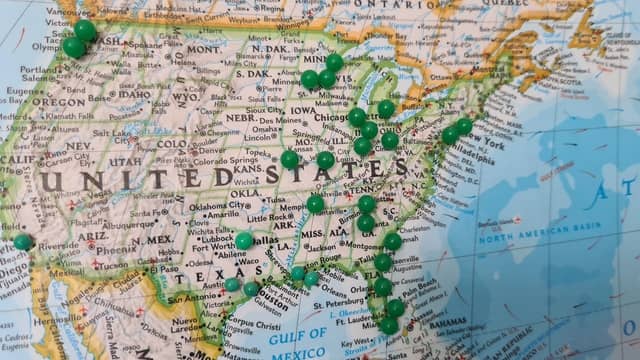
The fact that you’re dropshipping in multiple states doesn’t mean that you have nexus in all of them. In most cases, dropshippers have nexus only in the state they have a physical presence (business, warehouse, employees).
Another scenario where you have nexus in a state and have to collect sales tax is if you’ve made over $100,000 or 200+ transactions in that state.
So, if you do have nexus in multiple states, you’ll have to collect taxes from all your customers in those states.
Each state has different tax rates, so you’ll have to check this individually for each state where you have a nexus.
If you use Shopify, you can go to settings and enable automatic sales taxes for the desired customer locations. Then, Shopify will calculate the tax rates and charge your customer accordingly based on their location.
What Are Resale Certificates or Exemption Certificates?
We know that in dropshipping, usually three parties are involved:
- The customer (end buyer, consumer)
- The dropshipper (dropshipping store, online store)
- The order fulfiller (supplier)
So, it’s clear that if the customer and dropshipper reside in the same state, the dropshipper has to collect sales tax since they have a nexus in that state.
But, what if the dropshipper doesn’t have a nexus in the customer state, but the supplier (fulfillment agent) has one?
In that case, although you couldn’t charge the end-customer a sales tax, the supplier will have to charge you as the dropshipper a sales tax. Why? Because although they’re selling the product to you, they’re shipping it to your customer.
So, when the PoS is the customer’s “ship to” address, the supplier will have to charge a sales tax from you as the dropshipper.
Is there a way to avoid that and stop working at a loss? Yes! That’s what resale certificates or exemption certificates are for.
Resale certificates are documents that allow dropshippers to buy products without a sales tax since they’re purchased to resell. However, you should know that not all suppliers and vendors will accept resale certificates.
Important: According to the Multistate Tax Commission (MTC), not all states accept the Uniform Sales and Use Tax Certificate — some require a state-specific form.
Additionally, state tax laws in some jurisdictions require an in-state sales tax permit before granting a resale exemption. Examples include California, Florida, Hawaii, Illinois, Louisiana, Maryland, Massachusetts, and Washington, although the exact requirements vary by state.
Always verify the applicable rules with your supplier’s state Department of Revenue or the MTC before relying on a resale certificate.
Tip: Keep a calendar for resale certificate expiration dates. Many states require renewal every 1-3 years. If a certificate expires, your supplier may start charging tax on your next order.
Beware of your tax obligations especially if you’re dropshipping from multiple suppliers since things can get more complicated in that case.
Are Dropshipping Expenses Tax Deductible?
Yes. You can reduce your taxable income by deducting legitimate business expenses. Common deductions for dropshipping businesses include:
- Advertising costs: Facebook Ads, Google Ads, influencer marketing
- Software subscriptions: Shopify, Oberlo/DSers, email marketing tools, SEO tools
- Product samples: Test orders and quality inspection samples
- Business insurance: Liability or product insurance premiums
- Home office: If you run your store from home, a portion of rent/utilities may be deductible (check local rules)
- Professional fees: Tax preparer or accountant fees
- Banking fees: PayPal, Stripe, or wire transfer fees
Keep receipts and digital records for all expenses. Use accounting software like QuickBooks, Xero, or Wave to track income and expenses automatically.
What Tools Help Dropshippers Stay Tax Compliant?
Manually tracking nexus and tax rates across multiple states or countries is impractical. Consider these tools:
| Tool | Best For | Pricing Model |
| TaxJar | US sales tax calculation, reporting, and filing | Monthly subscription based on order volume |
| Avalara | Enterprise-level tax compliance, global VAT | Custom pricing |
| Quaderno | EU VAT, OSS, and digital product tax | Monthly subscription |
| QuickBooks / Xero | Income tracking, expense categorization, tax prep | Monthly subscription |
| SimplyVAT | EU/UK VAT registration and filing | Service-based pricing |
Shopify’s built-in tax calculator is a good starting point, but for multi-state or multi-country compliance, a dedicated tax automation tool is highly recommended.
Final Words
All things considered, we sincerely hope we managed to clarify the confusion around this topic. By learning how to pay taxes on dropshipping, you’ll ensure you stay on the safe side of the law and comply with all tax obligations.
Some key takeaways to remember from this guide are:
- Income tax is paid to your government on all profits throughout the year;
- A sales tax is a consumption tax in the USA that you collect from end customers in countries you have a nexus only;
- VAT is a consumption tax in the EU that you collect from all your EU customers;
- The threshold for distance-selling nexus in a US state is typically $100,000+ in sales or 200+ transactions, but check state-specific rules (e.g., California/Texas at $500K; Illinois dropped the transaction test in 2026);
- Always register for a sales tax permit before collecting tax, and monitor resale certificate expiration dates;
- Customs duties and import taxes are separate from sales tax/VAT — factor them into your pricing or shipping policy;
At NicheDropshipping, we completely understand how confusing it can be to deal with dropshipping taxes, so feel free to reach out if you still have questions.
Need help with worldwide fulfillment? As a full-service dropshipping agent, we help eCommerce sellers manage sourcing, warehousing, and shipping—so you can focus on growing your store while keeping your books clean. Ready to get started? Start Sourcing Your Product.
Frequently Asked Questions
Do I need an EIN to dropship?
If you operate in the USA, an EIN (Employer Identification Number) is required if you form an LLC or corporation, hire employees, or open a business bank account.
Sole proprietors can use their SSN, but an EIN is recommended for privacy and professionalism. You can apply for free at IRS.gov. Non-US sellers do not need a US EIN unless they have a US business entity.
Do I need a sales tax permit to dropship on Shopify?
Yes. In most US states, you must register for a sales tax permit before you can legally collect sales tax. You cannot simply collect tax and hold it; you must be registered.
Some states issue this automatically upon business registration; others require a separate application. Check your state’s Department of Revenue website.
Is dropshipping considered resale?
Yes. In tax terms, dropshipping is a form of resale because you buy goods from a supplier and sell them to an end customer without transforming the product. This is why resale certificates exist — they allow you to purchase inventory tax-free for the purpose of resale.
However, because the supplier ships directly to your customer, some states treat the transaction differently, which is why nexus rules for suppliers matter.
Do I need an LLC for dropshipping?
You do not legally need an LLC to start dropshipping; you can operate as a sole proprietorship. However, an LLC provides liability protection and can offer tax flexibility (e.g., electing S-Corp status in the US).
For tax purposes, a single-member LLC is typically a “pass-through” entity, meaning profits are taxed on your personal return. Consult a local attorney to see if an LLC makes sense for your situation.
Do I need a tax ID to sell on Shopify?
If you are in the US, you need either an SSN (sole proprietors) or an EIN (LLC/corporation). In the UK, you need a UTR (Unique Taxpayer Reference) if self-employed, or a VAT number if registered.
In the EU, non-EU sellers need an IOSS number for VAT on imports under €150. Shopify requires a tax ID during setup for payment processing in many regions.
Does Shopify count as income?
Yes. All revenue generated through your Shopify store counts as taxable income in your country of residence. This includes product sales, shipping charges you collect, and any handling fees. You then deduct allowable business expenses to arrive at your net profit, which is what you pay income tax on.
Will I get a W2 from Shopify?
No. Shopify does not issue W2 forms because you are not a Shopify employee. If you are a sole proprietor or LLC owner, you are self-employed.
You may receive a 1099-K from Shopify Payments if you exceed $20,000 in sales AND 200 transactions (2025 federal threshold), but you report income on your personal or business tax return, not via a W2.
Is Shopify a tax write off?
Yes. Your Shopify subscription fees, app charges, transaction fees, and theme purchases are all ordinary and necessary business expenses and are therefore tax-deductible.
Keep your Shopify invoices for your records. Similarly, domain hosting, email marketing tools, and ad spend are deductible.
How do I not collect tax on Shopify?
You can set products or customers as tax-exempt in Shopify settings. For example, if you sell to a customer with a valid resale certificate, or if you sell to a state where you have no nexus, you can override tax collection.
Go to Settings > Taxes and duties in your Shopify admin to configure exemptions by state or customer. However, never collect tax without a permit, and never skip collecting tax if you have nexus.