Quick Answer: Most companies marketed as “manufacturer dropship companies” are not literal factories. They are sourcing agents, trading companies, or fulfilment platforms that sit between you and the factory. For UK sellers, the practical alternative is factory sourcing combined with agent-led QC, branding, warehousing, and fulfilment — which is exactly the model offered by NicheDropshipping.
That gap between expectation and reality has a real cost. Sellers who assume they’re buying factory-direct end up with a sourcing partner they didn’t vet, margins that don’t improve as expected, and fulfilment they didn’t plan for.
This guide cuts through that. It covers which platforms actually get you close to factory pricing, what the workable fulfilment model looks like, and how to choose the right setup for where your business is now.
Key Takeaways
- Most “manufacturer dropship companies” are not literal factories shipping individual customer orders. They are usually platforms, agents, wholesalers, or supplier networks.
- Real factories can help lower product costs, but they usually expect MOQs, batch production, and clearer planning than a traditional dropshipping supplier.
- For growing UK sellers, the more practical model is often factory sourcing plus agent-led QC, branding, warehousing, and fulfilment.
- Alibaba and 1688 can unlock better pricing than AliExpress, but they do not automatically solve inspection, packaging, or one-by-one fulfilment.
- If your goal is to build a branded store with healthier margins, you are not just choosing a supplier. You are choosing an operating model.
The Best Manufacturer Dropship Companies and Platforms for UK Sellers
Before getting into the list, one thing to clarify: these platforms don’t all do the same job. Some help you source from factories. Some are fulfilment middleware. Some are supplier directories. Others are domestic marketplaces built for speed over cost.
Picking the right one depends less on which platform is “best” and more on what stage your business is at and what problem you’re actually trying to solve.
Quick Comparison
| Platform | Type | Best For | UK Shipping | Branding Support |
| NicheDropshipping | Sourcing agent + fulfilment | Scaling sellers, private label | Yes (via sourcing) | Strong |
| Alibaba / 1688 | Factory marketplace | Low unit cost, OEM/ODM | No (you arrange) | Yes (MOQ dependent) |
| CJDropshipping | Fulfilment platform | Mid-tier flexibility | Yes | Limited |
| Avasam | UK supplier marketplace | Domestic simplicity | Yes | Minimal |
| Spocket | Supplier network | Faster delivery | Yes | Minimal |
| SaleHoo | Supplier directory | Research and discovery | Varies | Varies |
1. NicheDropshipping – Best for Sellers Who Want Factory Sourcing With Operational Support
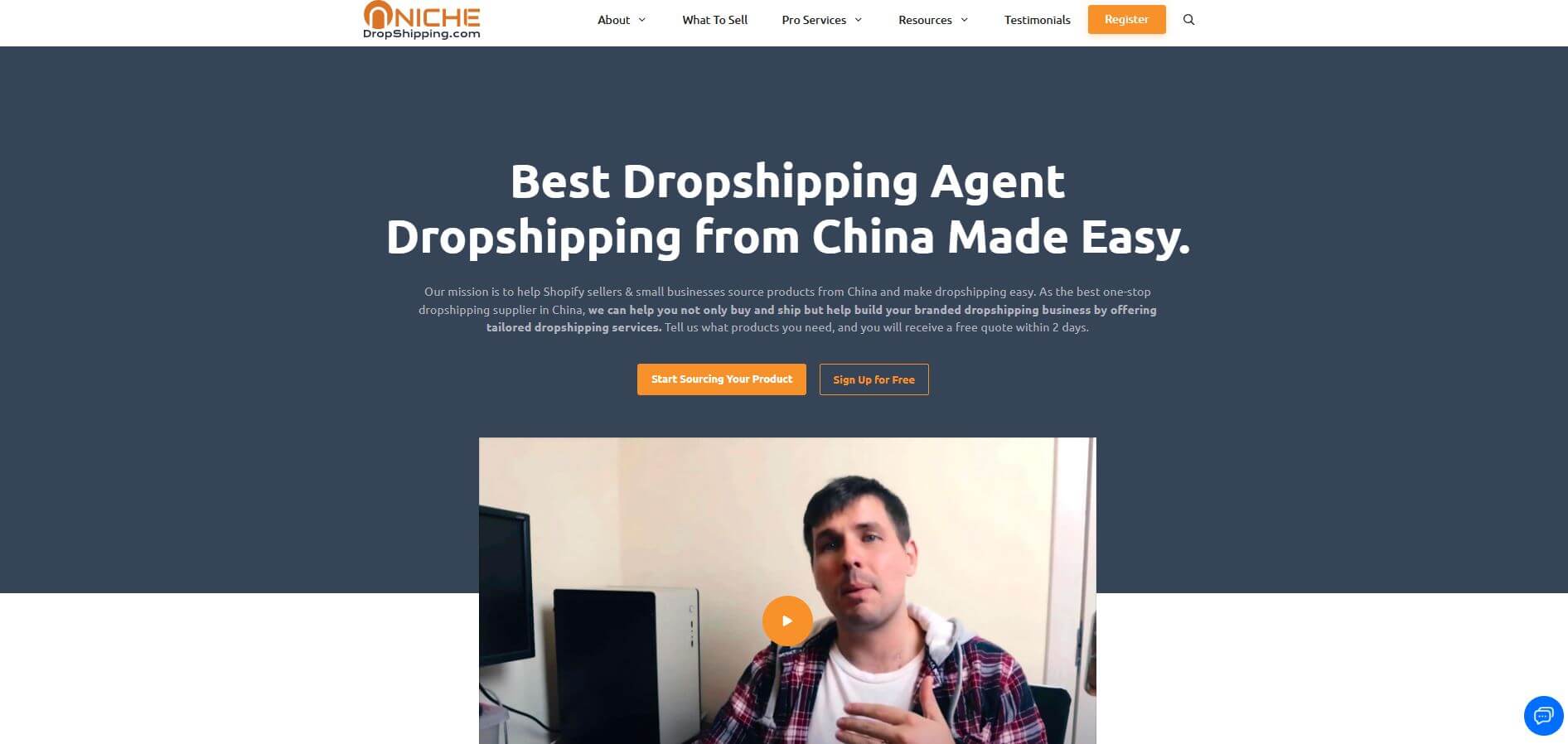
For sellers who want to move beyond catalogue-style dropshipping, NicheDropshipping sits closest to what most people mean when they search for “manufacturer dropshipping.”
The model is not built around a fixed product catalogue. Instead, it covers:
- Sourcing from Chinese suppliers and factories (including 1688)
- Supplier vetting and verification
- Quality inspection before dispatch
- Custom packaging and private label
- End-to-end fulfilment managed as a coordinated service
That matters because the biggest gap in factory-direct dropshipping isn’t finding a manufacturer. It’s everything that comes after: someone still needs to inspect the goods, consolidate shipments, pack orders to spec, and ship them reliably. A factory won’t do that by default.
For UK sellers specifically, this kind of setup can help close the delivery gap that makes China-based fulfilment difficult, while still capturing the cost advantages that come from sourcing at the factory level.
Main downside: Less suited to complete beginners who are still testing random products with no clear sales data. The model works better when you already know what you’re selling.
2. Alibaba / 1688 – Best for Factory-Side Pricing and Customisation
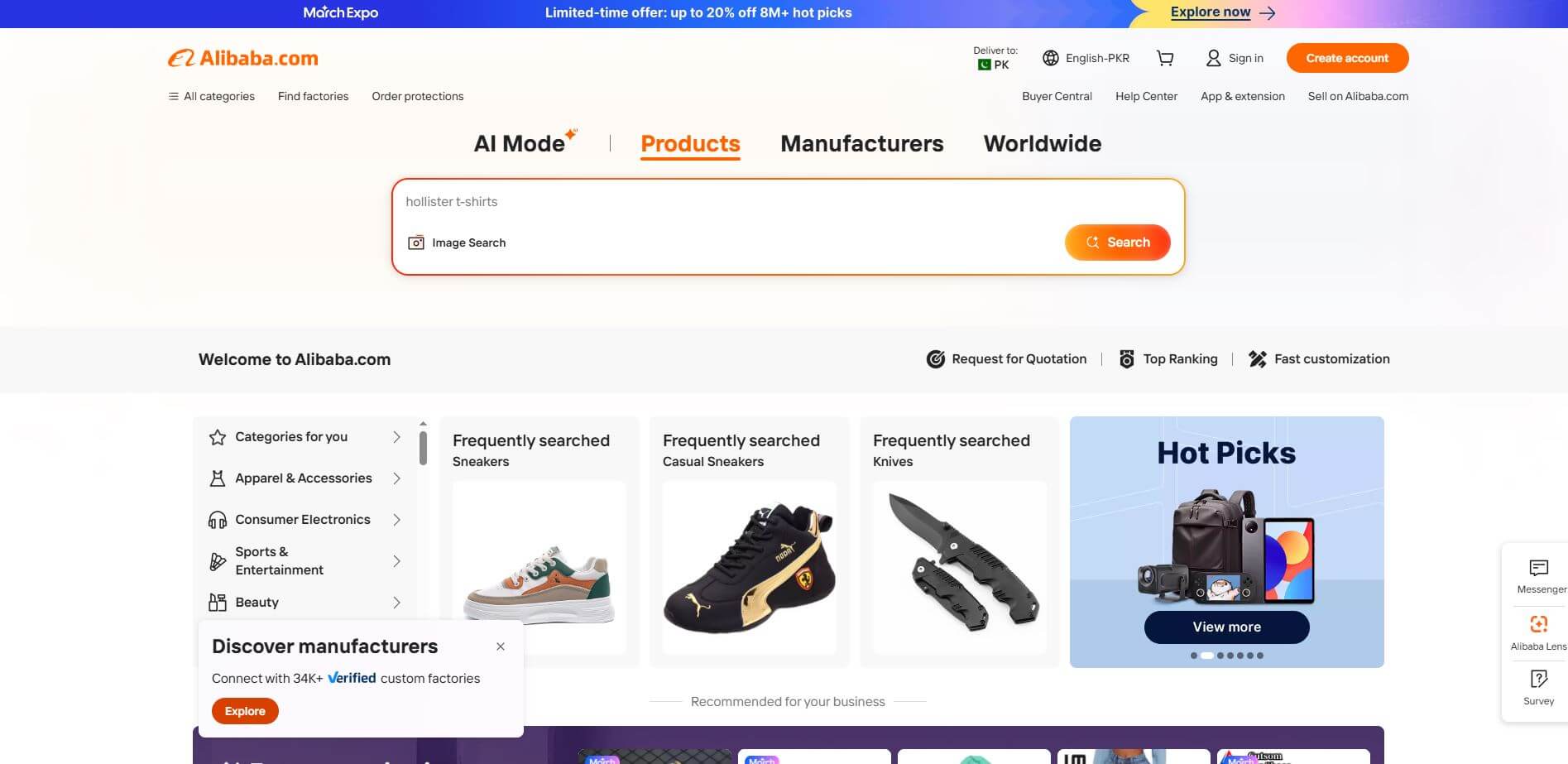
Alibaba and its domestic Chinese counterpart 1688 are where factory-level pricing actually starts.
Compared with AliExpress, unit costs are typically lower, MOQs are negotiable, and sellers can access OEM and ODM options. Meaning products can be made to specification or rebranded for private label purposes. For sellers building a more defensible product line, that’s a significant structural advantage.
The trade-off is operational complexity. You’re responsible for supplier vetting, sample requests, communication, quality checks, logistics, and import arrangements. 1688 in particular is powerful on price but difficult to navigate without Mandarin language support or a sourcing partner who can bridge the gap.
These platforms are strong sourcing tools. They are not fulfilment systems, and they won’t manage the steps between factory and end customer.
Main downside: High operational responsibility. Most suppliers are not set up for consumer-level order-by-order fulfilment.
3. CJDropshipping – Best for a Middle Ground Between Ease and Factory Flexibility
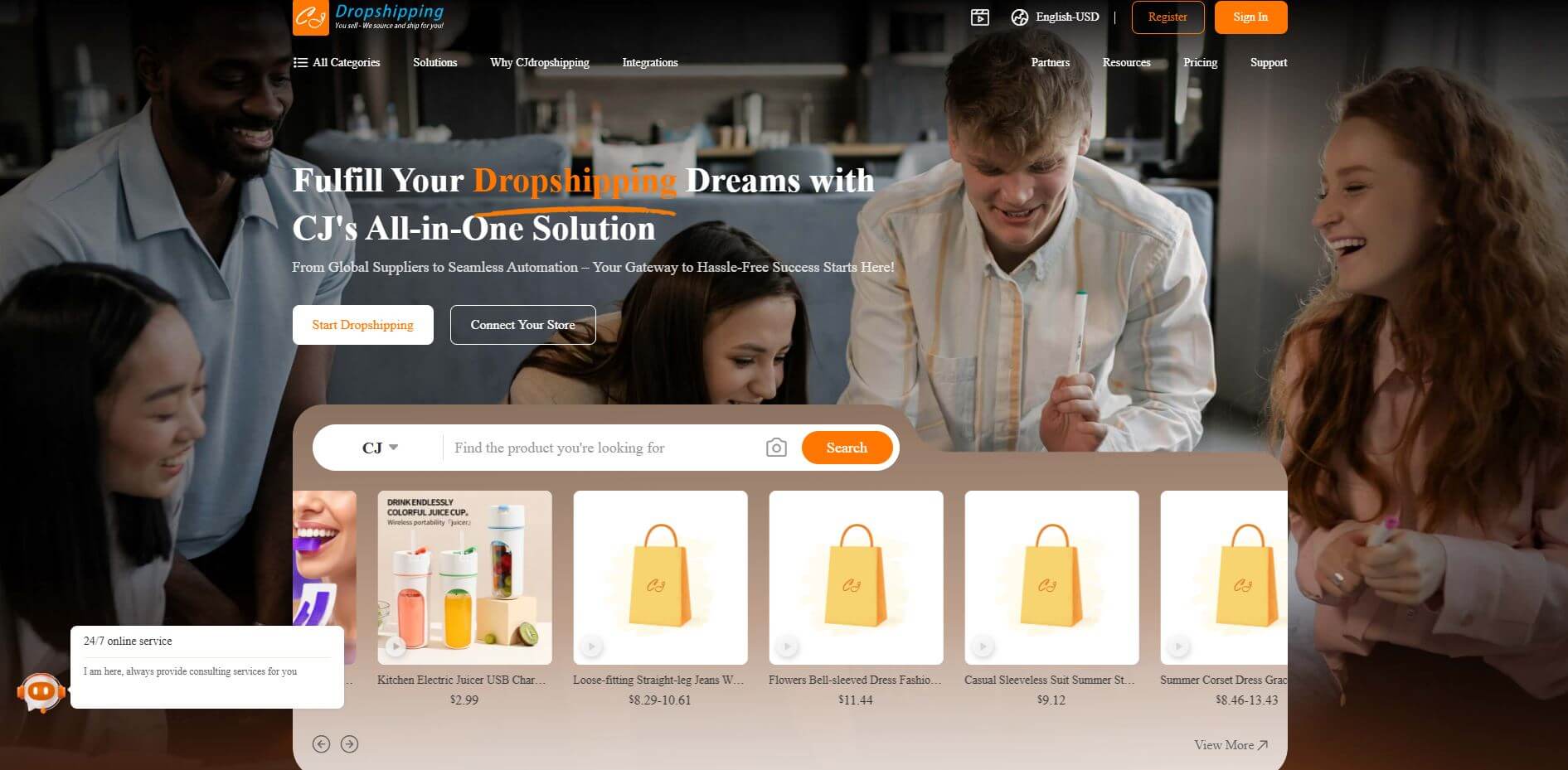
CJDropshipping occupies the space between plug-and-play dropshipping and a full sourcing workflow.
It offers product sourcing, order fulfilment, platform integrations (Shopify, WooCommerce, TikTok Shop), and some basic branding options. For sellers who want more flexibility than AliExpress but aren’t ready to build supplier relationships from scratch, it functions as a practical upgrade.
The main appeal is convenience. Testing new products is faster, the operational overhead is lower, and the platform handles a lot of the middle-layer work sellers would otherwise manage manually.
Where it falls short is factory visibility and margin depth. You’re working through CJ’s network rather than directly with manufacturers, which limits how much cost reduction and product control is actually achievable.
Main downside: Less factory transparency and thinner margin advantage than a dedicated sourcing partner can deliver.
4. Avasam – Best for UK-Focused Domestic Simplicity
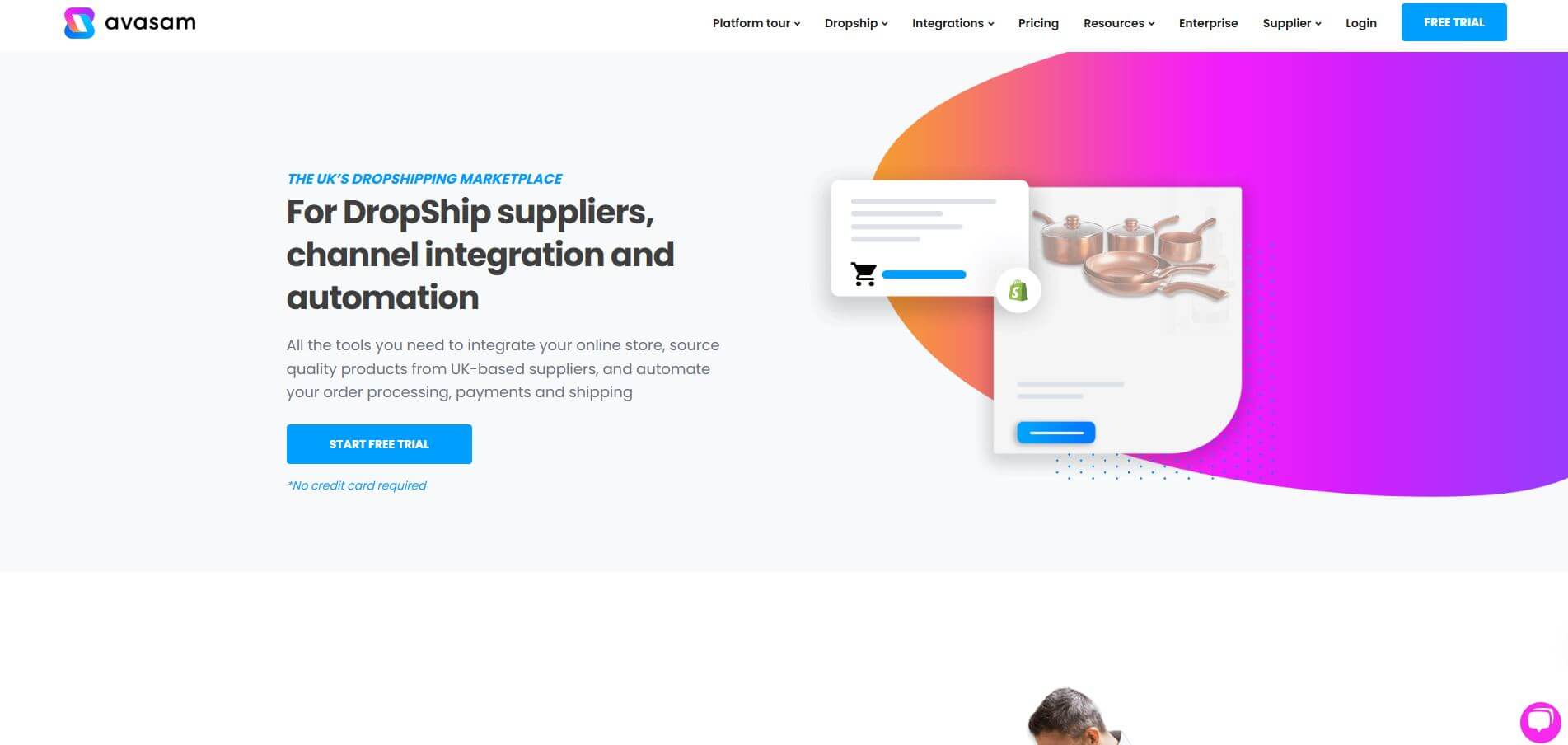
Avasam is built around the UK market, and that’s where its value is most clear.
It connects sellers with UK-based suppliers, which helps in shipping speed, returns handling, and platform integration.
For sellers who prioritise stable domestic operations and fewer international moving parts, it removes a lot of the friction that comes with China-based sourcing.
The cost trade-off is real, though. Domestic convenience typically comes with higher supplier prices, which compresses margins for sellers trying to compete on price or build a private label business. It’s a platform optimised for operational ease, not factory economics.
Main downside: Less cost-efficient than factory-led sourcing models for sellers trying to maximise margins.
5. Spocket – Best for Faster Delivery, Not Factory Economics
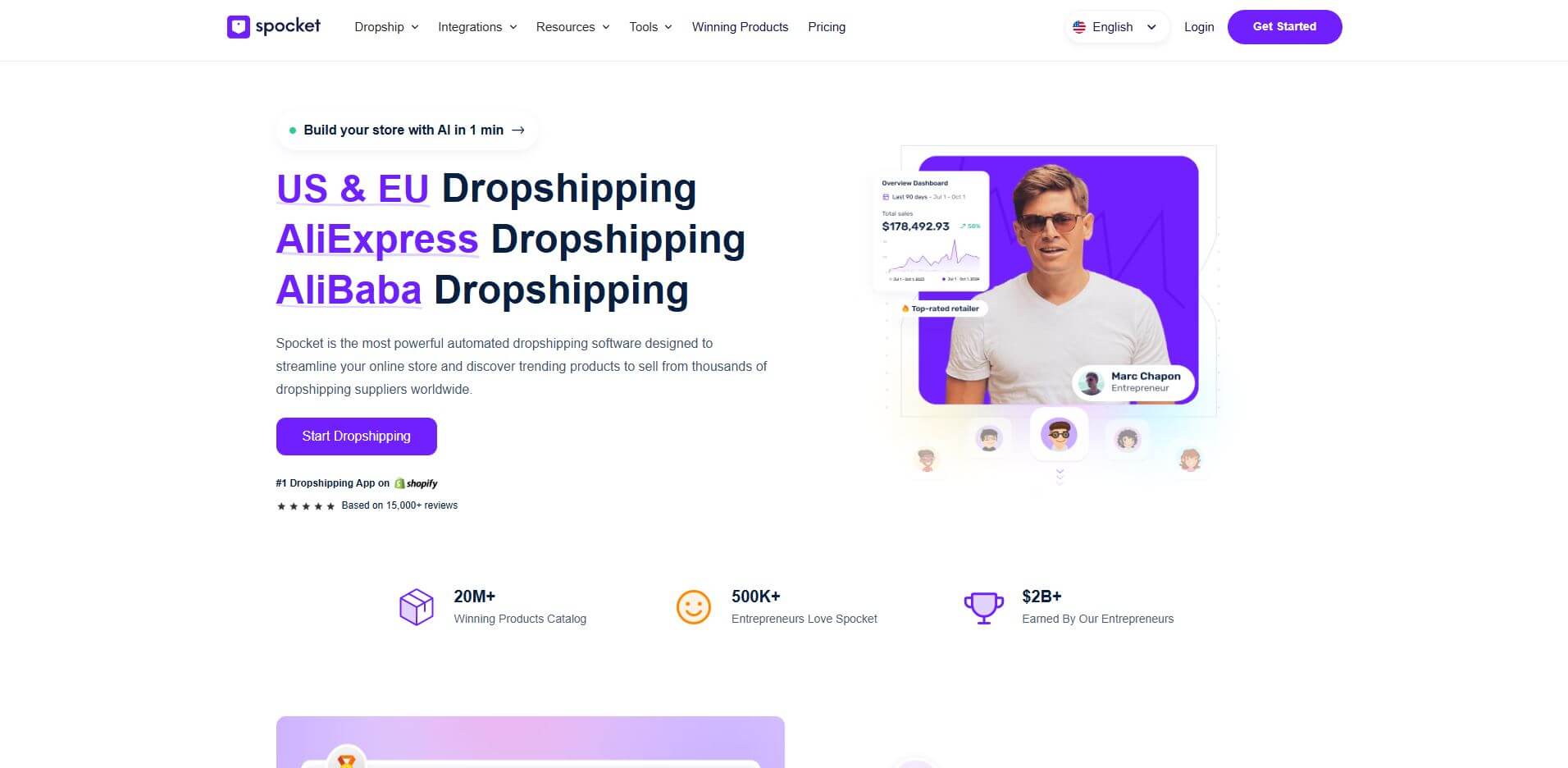
Spocket’s main selling point is access to suppliers based in the UK, EU, and US, which translates to faster delivery windows compared with China-based fulfilment.
That’s a genuine advantage for stores where delivery speed is a meaningful part of the customer experience. Combined with a relatively easy setup, it’s one of the more accessible options for sellers who are early stage but tired of long shipping times.
Where it doesn’t deliver is on factory economics. Multiple sellers typically have access to the same supplier catalogue at similar price points, which limits product differentiation and makes it harder to build a defensible long-term position.
Main downside: Weak factory-direct benefit and limited private label potential compared with sourcing-led models.
6. SaleHoo – Best for Supplier Discovery, Not Fulfilment Execution
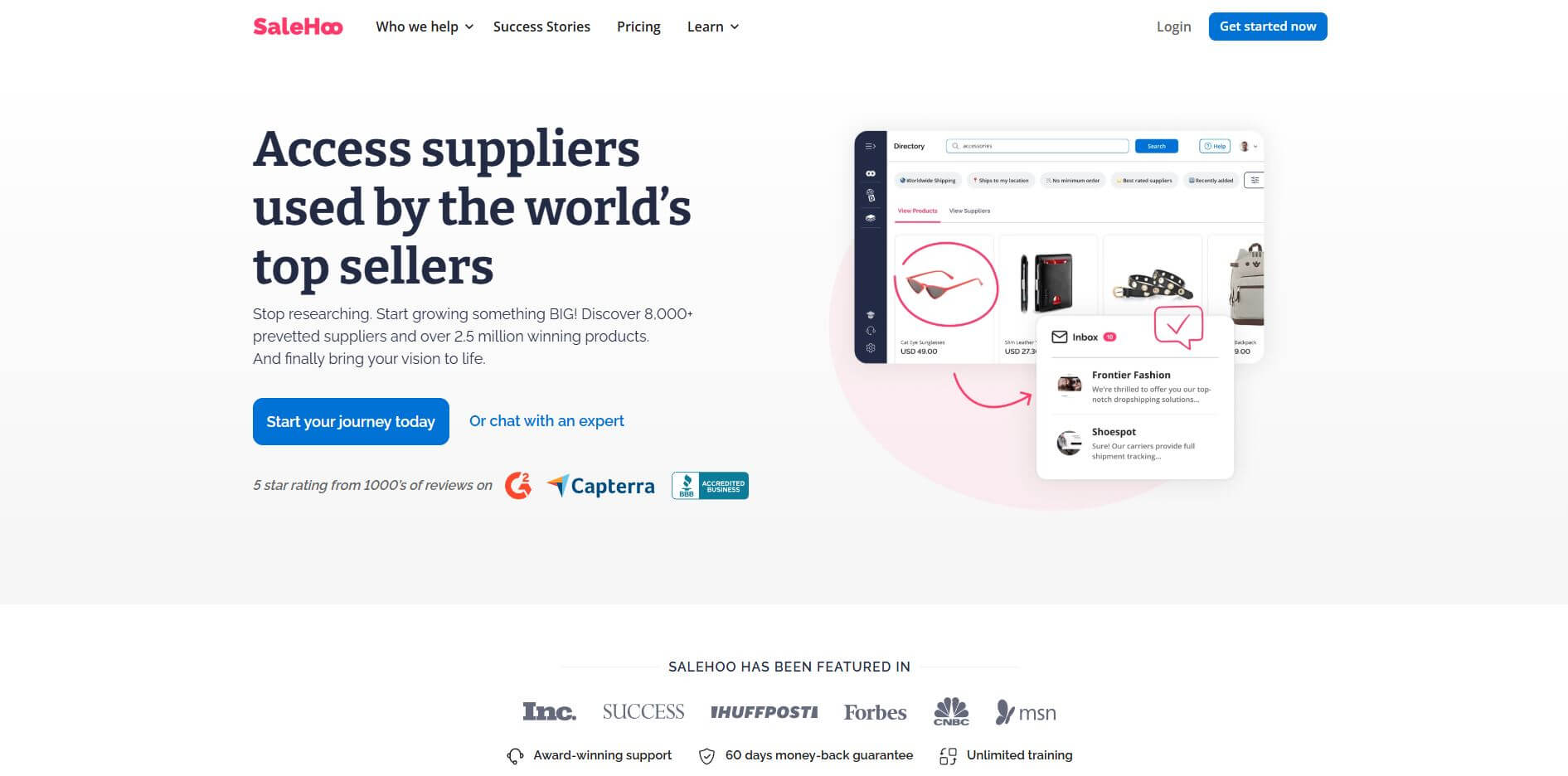
SaleHoo is a supplier directory, not a fulfilment platform. That distinction shapes what it can and can’t do for you.
It can help sellers find vetted suppliers, wholesalers, and potential sourcing contacts, which has some value in the research phase. But discovery is only the first step. Everything after it, quality assessment, negotiation, branding, logistics, and order management, is still your responsibility.
For sellers who are still mapping the landscape, SaleHoo can be a useful starting point. For sellers who need a working sourcing and fulfilment system, it’s one small input, not a complete solution.
Main downside: Provides no operational support, sourcing, QC, and fulfilment are entirely on the seller.
A Note on AliExpress
AliExpress isn’t included as a recommendation here, but it’s worth naming directly: it’s the baseline most sellers are trying to move away from when they search for manufacturer dropship companies.
It still has a role, primarily for low-commitment product testing before investing in a more serious sourcing setup.
But for any seller with growing order volumes or margin pressure, the limitations (higher unit costs, limited branding, inconsistent fulfilment) are well established. The platforms above each represent a different path beyond it.
Which Platform Is Right for Your Stage?
The right option depends on where your business actually is, not which platform sounds most advanced.
- If you’re still testing products with no consistent sales: Start with AliExpress or CJDropshipping. Keep operational overhead low until you have data on what sells.
- If you have proven products and want better margins or branding: Move to a sourcing-led model. NicheDropshipping or a direct Alibaba/1688 sourcing workflow are the two main paths. The difference being how much of the operational work you want to manage yourself.
- If you’re a UK seller who prioritises domestic fulfilment over cost: Avasam or Spocket will reduce friction, though at the cost of margin depth.
- If you’re still researching suppliers: SaleHoo can support discovery, but treat it as one input in a broader sourcing process, not a complete solution.
The “manufacturer dropshipping” model works best when it’s used for what it’s actually good at: sourcing products closer to the factory for established stores that have something worth optimising. Applying it before that point adds complexity without a clear payoff.
Why Real Factories Rarely Ship One Order at a Time
Most sellers discover this when they start contacting suppliers directly. The conversation tends to go well until fulfilment comes up.
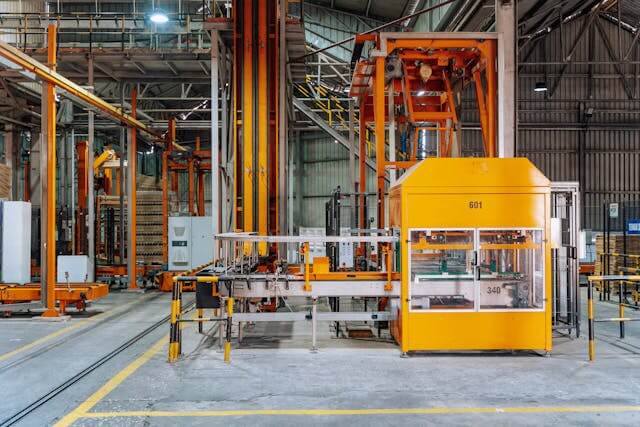
Factories are built for production efficiency, not retail dispatch. Their operations are planned around materials, machinery, labour schedules, and batch output, not individual Shopify orders arriving throughout the day.
A clothing factory is a useful example. It may be well equipped to produce 500 hoodies with custom labels and packaging, finished to spec and packed for container shipping. That same factory is not designed to receive an order for one medium black hoodie going to Birmingham, one large beige hoodie going to Leeds, and a return exchange for Manchester, and then do that reliably, every day, at retail speed.
Those are two structurally different operations. The friction shows up in several specific ways:
- MOQ logic doesn’t map to dropshipping: When a supplier advertises a low MOQ, that usually refers to the minimum for a production run, not a commitment to run ongoing one-order-at-a-time fulfilment. Sellers often read “low MOQ” as “flexible fulfilment.” Those aren’t the same thing.
- Factories plan around predictable demand: Production schedules are built around stable, foreseeable output. Dropshipping, especially early-stage, is the opposite: inconsistent order volumes, frequent product changes, and minimal forward commitment. From a factory’s perspective, that creates planning inefficiency and increases cost per unit.
- Manufacturing output ≠ retail-ready shipment: A factory finishing a batch will pack goods into wholesale cartons for transport, not check individual orders, insert branded packaging, print customer-specific shipping labels, and manage delivery exceptions. Add custom inserts, regional labelling, or gift packaging, and the gap becomes even harder to bridge.
- Returns and disputes don’t fit factory workflows: End-customer returns, address corrections, and parcel disputes are retail operations problems. Factories are not set up to manage them, and most won’t want to. This is usually where the “manufacturer will ship everything” model breaks down as order volumes grow.
- Competitive UK delivery usually requires local inventory: Waiting for every order to be packed and dispatched from a factory in China creates a structural delivery disadvantage. At some point, stock needs to sit closer to the customer, in a warehouse that’s built for order-by-order dispatch, not batch production.
The Model That Actually Works: Factory Sourcing Plus Agent-Led Fulfilment
For most UK sellers, the workable version of manufacturer dropshipping is not the factory handling everything. It is factory sourcing plus an operational layer that manages the work factories are not built for.
That layer is usually a sourcing agent, fulfilment partner, or hybrid service handling inspection, branded packaging, warehousing, and order-by-order dispatch. The factory makes the product. Everything after that is a separate job.
This is how the model usually works once sellers move beyond marketplace sourcing. The same pattern comes up repeatedly in seller communities too.
In one Reddit thread, a seller frustrated by thin AliExpress margins and difficulty sourcing through 1688 was advised to work with an agent or direct supplier rather than expect a factory to behave like a fulfilment centre.
Here’s what that looks like in practice:
Step 1: Source against a specification, not just a quote
A low price is easy to find. A supplier that can produce consistently is harder.
For clothing, that means confirming fabric composition, GSM, sizing, stitching quality, print method, label options, and packaging format before you commit. The goal is to source against a clear product spec, not pick a generic item and hope it matches the photos.
Step 2: Lock down samples, branding, and production details
Before volume moves, the details need to be fixed.
That includes samples, colours, logo placement, label text, packaging format, and any inserts. Even a simple private label item can go wrong if these points stay vague until production starts.
Step 3: Produce a small batch and position stock for fulfilment
This is where the model stops looking like classic no-inventory dropshipping.
Instead of waiting for a customer order before the product exists, you produce a controlled batch and hold that stock in a warehouse setup designed for order-by-order dispatch. The customer still gets a dropshipping-style experience, but the stock is already made and ready to ship.
Step 4: Inspect before dispatch starts

Quality problems are much cheaper to catch before stock starts moving.
A sizing issue, print defect, stitching problem, or packaging mistake found during inspection is still a supplier-side issue. The same problem found through customer returns becomes your issue.
Step 5: Ship from buffer inventory
Once stock is produced, checked, and warehoused, the business can operate the way most sellers originally imagined.
Orders can be packed to spec, labelled correctly, and shipped at a speed that matches ecommerce expectations rather than factory timelines. Delivery becomes more consistent, and scaling becomes less fragile.
Final Thoughts
Most sellers searching for manufacturer dropship companies are trying to fix the same issue: basic dropshipping is easy to start, but harder to scale profitably.
Factory-side sourcing can solve that — but only when production and fulfilment are treated as separate jobs. In practice, the workable model adds QC, warehousing, and a fulfilment layer built for retail dispatch.
That setup takes more planning than standard dropshipping, but it gives sellers better margins, more consistent quality, and room for proper branding.
- If you want that setup without managing the whole process yourself, NicheDropshipping helps with sourcing, inspection, custom packaging, and fulfilment in one workflow.
- If you are still testing, platforms like CJDropshipping or AliExpress keep things simple.
- If you already have traction and want more control, the factory-plus-fulfilment model is the one worth building toward.
Start by requesting a free quote today.
FAQs
What is a manufacturer dropship company?
A manufacturer dropship company is usually a supplier, sourcing partner, or fulfilment service that helps sellers source products closer to the factory while still supporting a dropshipping-style business model.
In practice, most of these companies are not literal factories shipping every customer order themselves. They are usually intermediaries that bridge factory production with packaging, warehousing, and fulfilment.
Can you really dropship directly from manufacturers?
Sometimes, but usually not in the pure sense sellers expect.
Most manufacturers are built for batch production, not for packing and dispatching one retail order at a time. That is why direct manufacturer dropshipping often works better when combined with a sourcing agent or warehouse partner that handles fulfilment separately.
How do I find manufacturer dropship suppliers?
The most common routes are:
- Alibaba — for factory-level pricing and OEM/ODM customisation
- 1688 — for lower domestic Chinese pricing (requires Mandarin support or a sourcing agent)
- Sourcing agents like NicheDropshipping — for managed sourcing, QC, and fulfilment in one service
- Specialised dropshipping platforms like CJDropshipping — for a middle-ground approach
If your goal is just to test products, standard dropshipping marketplaces may be enough. If your goal is better pricing, private label, or more control over quality, you will usually need to go beyond catalogue suppliers and look at factory sourcing with operational support.
Is manufacturer dropshipping better than AliExpress?
It can be — especially for sellers who already have demand and want better margins.
AliExpress is easier for testing because there is less setup and less risk upfront. Manufacturer-style sourcing is usually better once you want lower product costs, stronger branding, more consistent quality, or a business that is less dependent on generic supplier listings.
The key is timing. Moving to factory-led sourcing before you have proven sales data adds complexity without a clear payoff.
What is the best manufacturer dropshipping company for private label?
What is the best manufacturer dropshipping company for private label?
It depends on how hands-on you want to be:
- Alibaba or 1688 — if you want the lowest factory-side pricing and can manage supplier complexity yourself
- NicheDropshipping — if you want help with sourcing, quality control, custom packaging, and fulfilment managed as one service
For most UK sellers building a private label brand, NicheDropshipping is the more practical option because it handles the operational gap between the factory and your customer.
What is the difference between a sourcing agent and a manufacturer?
A manufacturer produces goods in bulk. They operate on production schedules, MOQs, and batch output — not individual retail orders.
A sourcing agent acts as an intermediary. They find and vet factories, manage quality inspection, handle packaging, and coordinate fulfilment on a per-order basis. They are the operational bridge that makes factory-side pricing accessible for dropshipping businesses.
Most companies marketed as “manufacturer dropship companies” are actually sourcing agents or fulfilment platforms — not factories.
How does factory sourcing help UK sellers specifically?
UK sellers face two compounding challenges with standard dropshipping: thin margins from AliExpress-level pricing, and slow shipping times from China-based fulfilment.
Factory sourcing addresses the margin problem by reducing unit costs. Pairing that with a UK-based or fast-route warehouse addresses the shipping problem. Together, those two changes can make a significant difference to both profitability and customer experience — which is why a factory-sourcing-plus-agent-fulfilment model is often the logical next step for UK sellers with proven products.