Finding reliable dropshipping suppliers in the Netherlands is one of the biggest challenges for ecommerce sellers targeting the Dutch market.
Customers expect fast delivery, easy returns, and clear communication, and choosing the wrong supplier can quickly lead to low margins, negative reviews, or compliance issues.
In this guide, we break down the best dropshipping suppliers serving the Netherlands, including local Dutch options, EU-based platforms, and niche print-on-demand providers.
We’ll also explain what to look for in a supplier, how VAT (BTW) and KVK registration affect dropshippers, and why many sellers eventually move beyond local catalogs to improve profitability.
Understanding the Dutch Dropshipping Market
The Netherlands is one of the most attractive ecommerce markets in Europe, but it is also one of the most demanding.
Dutch consumers are highly accustomed to fast delivery, transparent pricing, and hassle-free returns. For dropshippers, this means that supplier choice directly affects customer satisfaction, margins, and scalability.
High Expectations for Delivery Speed
Dutch shoppers are used to next-day or even same-day delivery. Phrases like “Voor 23:59 besteld, morgen in huis” are not marketing gimmicks, they reflect real expectations.
Logistics providers such as PostNL have set a high standard for last-mile delivery, especially within the Netherlands and wider Benelux region.
Suppliers with EU-based warehouses naturally perform better here, while long international shipping times can quickly hurt conversion rates.
A Mature and Competitive Ecommerce Landscape
Ecommerce adoption in the Netherlands is high, which also means competition is intense.
Many sellers rely on the same popular leveranciers and groothandel platforms, resulting in identical product catalogs across multiple stores.
This often leads to price competition rather than brand differentiation, a common reason new dropshipping stores struggle to stay profitable beyond the testing phase.
VAT, Compliance, and Returns Matter
Dropshipping in the Netherlands is legal, but it is not “hands-off.” Sellers are expected to register with the KVK (Dutch Chamber of Commerce) and handle BTW (VAT) correctly, especially when selling within the EU.
Dutch customers also expect clear return policies and responsive customer service. Suppliers that cannot support EU-compliant returns or transparent invoicing quickly become a liability.
Why Many Dutch Sellers Start Local, Then Adapt
Because of these expectations, many entrepreneurs start with EU or Netherlands-based suppliers to validate demand and ensure fast delivery.
However, as competition increases and margins tighten, sellers often realize that speed alone is not enough.
Sustainable growth usually requires product differentiation, better cost control, or custom branding, topics we’ll explore later in this guide.
What to Look for in a Dropshipping Supplier for the Netherlands
When choosing a dropshipping leverancier for the Netherlands, speed and compliance matter just as much as product price. Dutch customers have high expectations, and suppliers that cannot meet them quickly become a bottleneck for growth.
- Fast and reliable delivery: Dutch shoppers expect quick fulfillment, often next-day delivery for local or nearby EU shipments. Suppliers with warehouses in the Netherlands or neighboring EU countries, and access to carriers like PostNL are best suited for this market.
- Strong platform and marketplace integrations: Your supplier should integrate smoothly with Shopify, WooCommerce, and marketplaces such as Bol.com. Automatic order syncing, inventory updates, and tracking numbers reduce errors and save time as your store scales.
- Clear pricing and workable margins: Many Netherlands-focused suppliers offer fast delivery but at a high product cost. Always evaluate the full cost structure, including shipping fees and transaction charges, to ensure there is enough margin left for advertising, returns, and VAT.
- VAT (BTW) and EU compliance: A reliable groothandel should clearly communicate whether prices include or exclude BTW and provide proper invoices when required. Poor VAT handling can create accounting issues, especially for sellers registered with the KVK or selling across the EU.
- Simple and local returns process: Dutch customers expect easy returns. Suppliers with EU-based return addresses and clear return policies are far easier to manage than those requiring international returns.
- Product differentiation and branding options: Selling identical products from the same catalogs leads to heavy price competition. Suppliers that allow private labeling, custom packaging, or exclusive sourcing make it easier to build a brand instead of competing only on price.
Best General Dropshipping Suppliers Serving the Netherlands
1. vidaXL

vidaXL is an international online retailer headquartered in Venlo, Netherlands, best known for its massive catalog of home, garden, DIY, sports, and lifestyle products.
Through its DropshippingXL program, retailers can sell vidaXL products without holding inventory, as the company handles storage, packing, and shipping on their behalf.
vidaXL operates European warehouses and ships across the EU, making it a popular leverancier for sellers targeting the Dutch market.
The platform supports multilingual listings and automated order syncing, which helps streamline day-to-day operations for small and mid-sized stores.
Pros
- Extremely large product catalog (90,000+ SKUs) across multiple categories
- Netherlands-based operations with EU-wide delivery coverage
- No commission fees on sales; wholesale pricing model
- Automated order processing and a 30-day return policy
Cons
- Product quality can be inconsistent across categories
- Customer support response times can be slow during busy periods
- Branded packaging (no white-label or private branding)
- Low margins due to high competition and standardized pricing
Best For: Dropshippers who want fast access to a huge, ready-made catalog for the Dutch and EU home & lifestyle market.
2. BigBuy
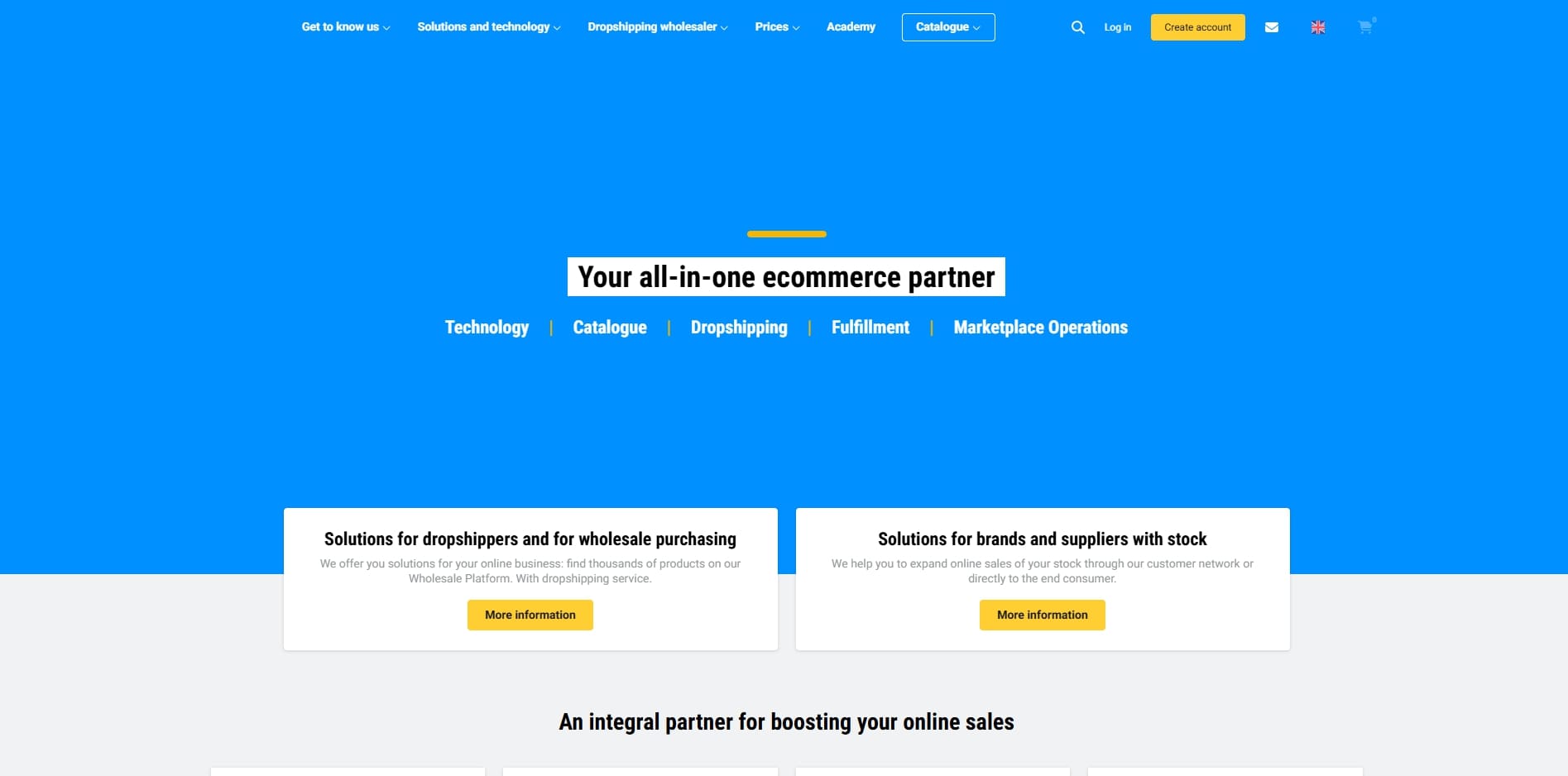
BigBuy is a Spain-based B2B dropshipping and wholesale platform offering over 200,000 products from thousands of European brands.
It focuses on categories like home goods, electronics, beauty, toys, and small appliances.
BigBuy manages warehousing and fulfillment from EU facilities and provides deep integrations with Shopify, WooCommerce, and major marketplaces.
Its system is designed for automation-heavy sellers who want centralized inventory management and EU-wide delivery without handling logistics themselves.
Pros
- Very large, brand-focused catalog suitable for European markets
- EU-based warehousing enables relatively fast delivery across Europe
- Strong platform and marketplace integrations for automation
- Wholesale pricing and volume-based discounts
Cons
- High upfront and recurring fees (setup + monthly subscription)
- Limited customization and branding options
- Returns and support can be rigid during peak demand
- Cost structure makes it less suitable for beginners
Best For: Established EU sellers who prioritize automation and a branded European catalog over maximum margins.
3. SaleHoo
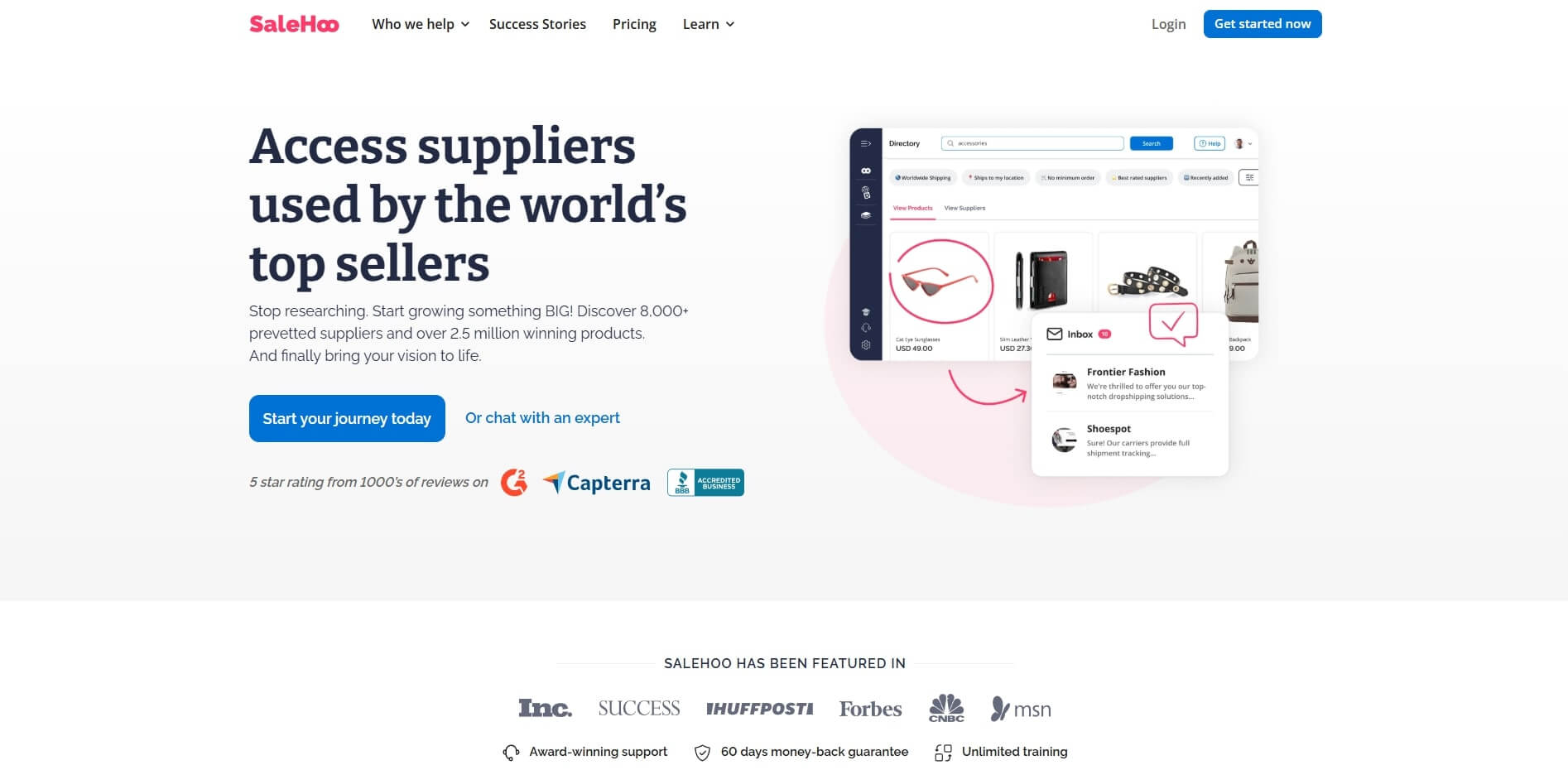
SaleHoo is not a dropshipping supplier itself, but a paid directory that connects merchants with vetted dropshipping and wholesale suppliers worldwide.
Its database includes thousands of suppliers, including many European groothandel and dropshipping providers.
SaleHoo allows filtering by product category, location, shipping terms, and minimum order quantities, helping sellers reduce the risk of working with unreliable suppliers.
It also includes basic market research tools and educational resources for beginners.
Pros
- Access to a large, vetted network of global and EU suppliers
- Useful filters for finding European or local leveranciers
- Market research tools and supplier reviews
- Covers both dropshipping and wholesale sourcing
Cons
- Annual membership fee required
- No fulfillment or automation, you must manage suppliers manually
- Supplier quality and service still vary
- No direct Shopify or API-based integrations
Best For: Entrepreneurs who want a safer way to discover and evaluate EU and global dropshipping or wholesale suppliers.
4. Spocket
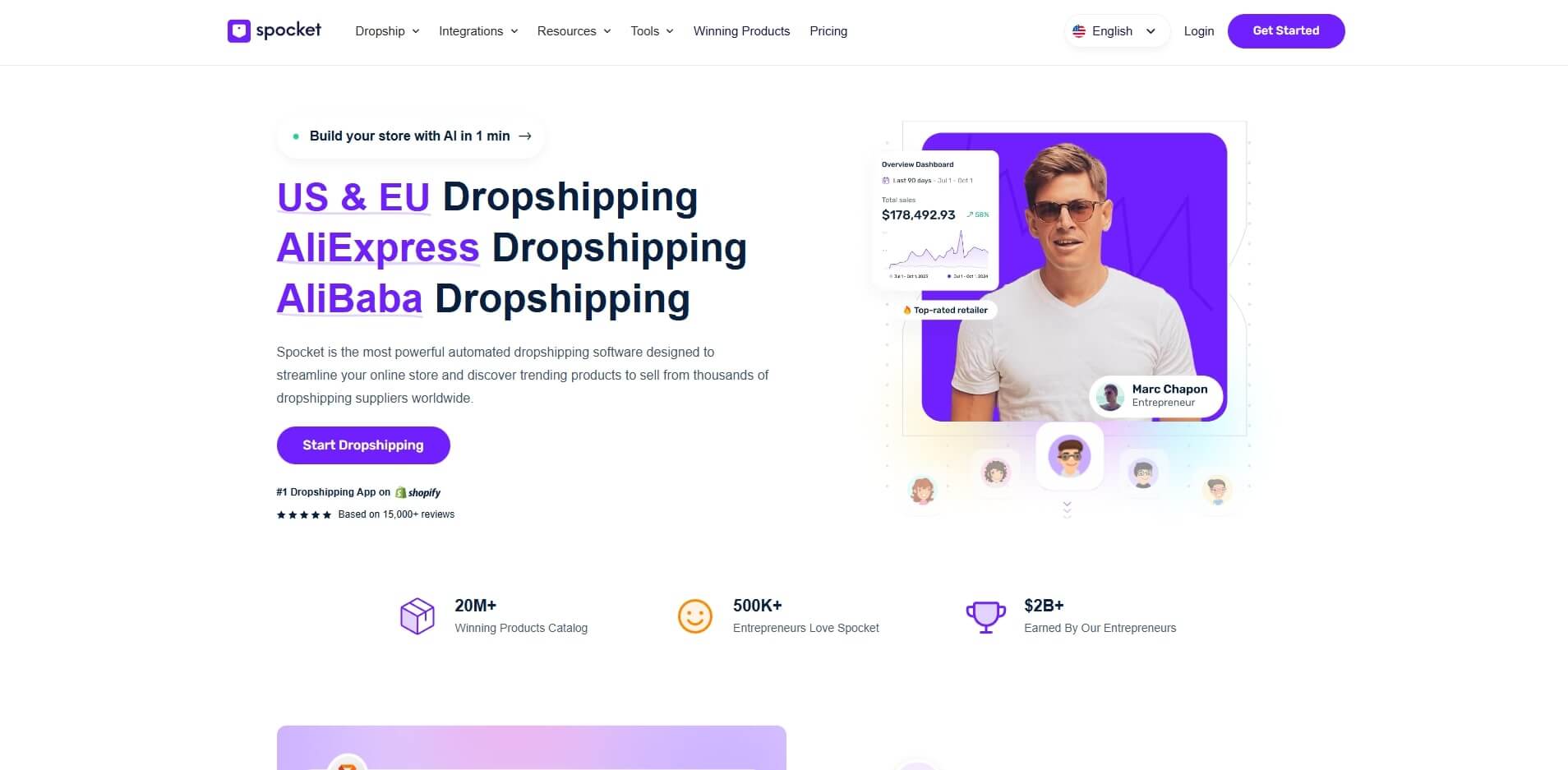
Spocket is a dropshipping platform focused on connecting sellers with suppliers based primarily in Europe and the United States.
A large portion of its catalog ships from EU warehouses, allowing for much faster delivery to Dutch customers compared to Asia-based suppliers.
Spocket integrates smoothly with Shopify, WooCommerce, Wix, and other platforms, making product import and order fulfillment simple.
It also supports branded invoicing and neutral packaging, which helps sellers maintain a professional storefront.
Pros
- Fast shipping from EU and US suppliers
- Higher-quality products due to strict supplier vetting
- Branded invoices and neutral packaging
- Easy integrations with major ecommerce platforms
Cons
- Smaller catalog compared to open marketplaces
- Higher product costs, leading to tighter margins
- Most useful features require a paid subscription
- Not Netherlands-specific, despite strong EU coverage
Best For: Sellers who prioritize delivery speed and product quality for EU customers over low-cost sourcing.
5. CJdropshipping

CJdropshipping is a China-based, all-in-one dropshipping service that combines product sourcing, fulfillment, and optional print-on-demand.
While its roots are in China, CJ operates multiple international warehouses, including a major hub in Poland that serves European customers.
This allows many orders to reach the Netherlands within a few days when fulfilled locally.
CJ integrates with most major ecommerce platforms and offers additional services like custom packaging, private labeling, and even product development for scaling brands.
Pros
- Massive global product selection across most categories
- EU warehouse in Poland enables faster European delivery
- Free to use (pay per product and shipping only)
- Supports private labeling, custom packaging, and POD services
Cons
- Some products still ship from China with longer delivery times
- Quality consistency depends on the chosen supplier or factory
- Platform can feel complex for beginners
- Customer support response times can vary
Best For: Sellers who want flexible global sourcing with the option to scale into branded or private-label products for the EU market.
Best Niche & Print-on-Demand Dropshipping Suppliers for NL
6. Printful
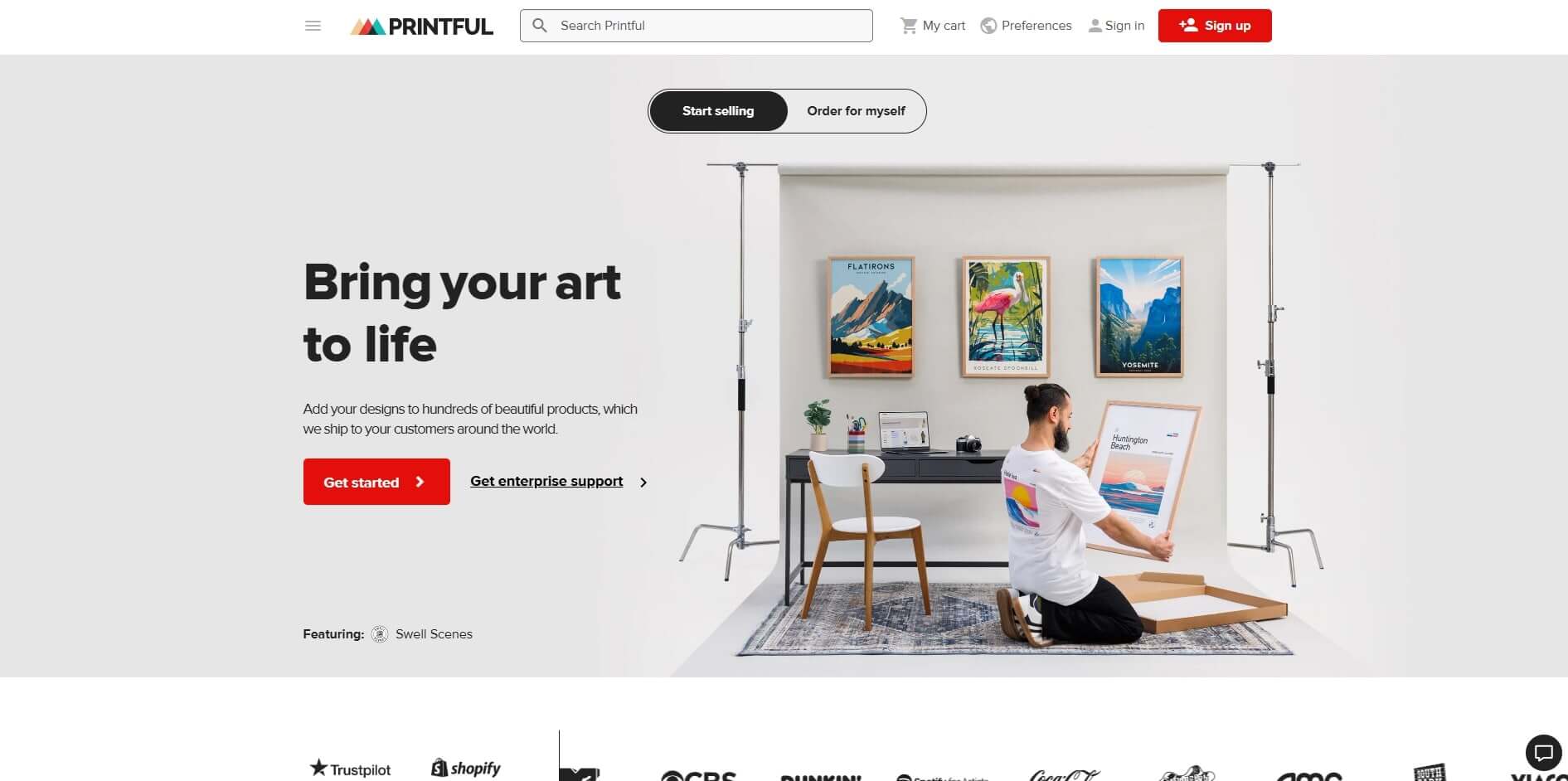
Printful is a leading print-on-demand leverancier that allows sellers to create and sell custom products such as apparel, accessories, and home décor without holding inventory.
It operates its own fulfillment facilities in Europe (including Spain and Latvia) and the United States, enabling reliable delivery to customers in the Netherlands.
Printful is known for consistent print quality, strong quality control, and a wide range of branding options, including custom labels, packing slips, and packaging inserts.
Orders are typically produced within 2–5 business days, making it suitable for EU-focused stores that value reliability over rock-bottom costs.
Pros
- High-quality product output with strict quality control
- True white-label fulfillment (no Printful branding on orders)
- EU production centers support faster delivery to the Netherlands
- Seamless integrations with Shopify, WooCommerce, Etsy, and more
- No monthly fee on the basic plan
Cons
- Higher base product prices compared to some POD competitors
- Smaller overall catalog than Printify, especially outside apparel
- Support is limited to chat and email (no phone support)
- Optional branding features can add to per-order costs
Best For: Sellers who prioritize print quality, brand presentation, and reliable EU fulfillment for custom products.
7. Printify
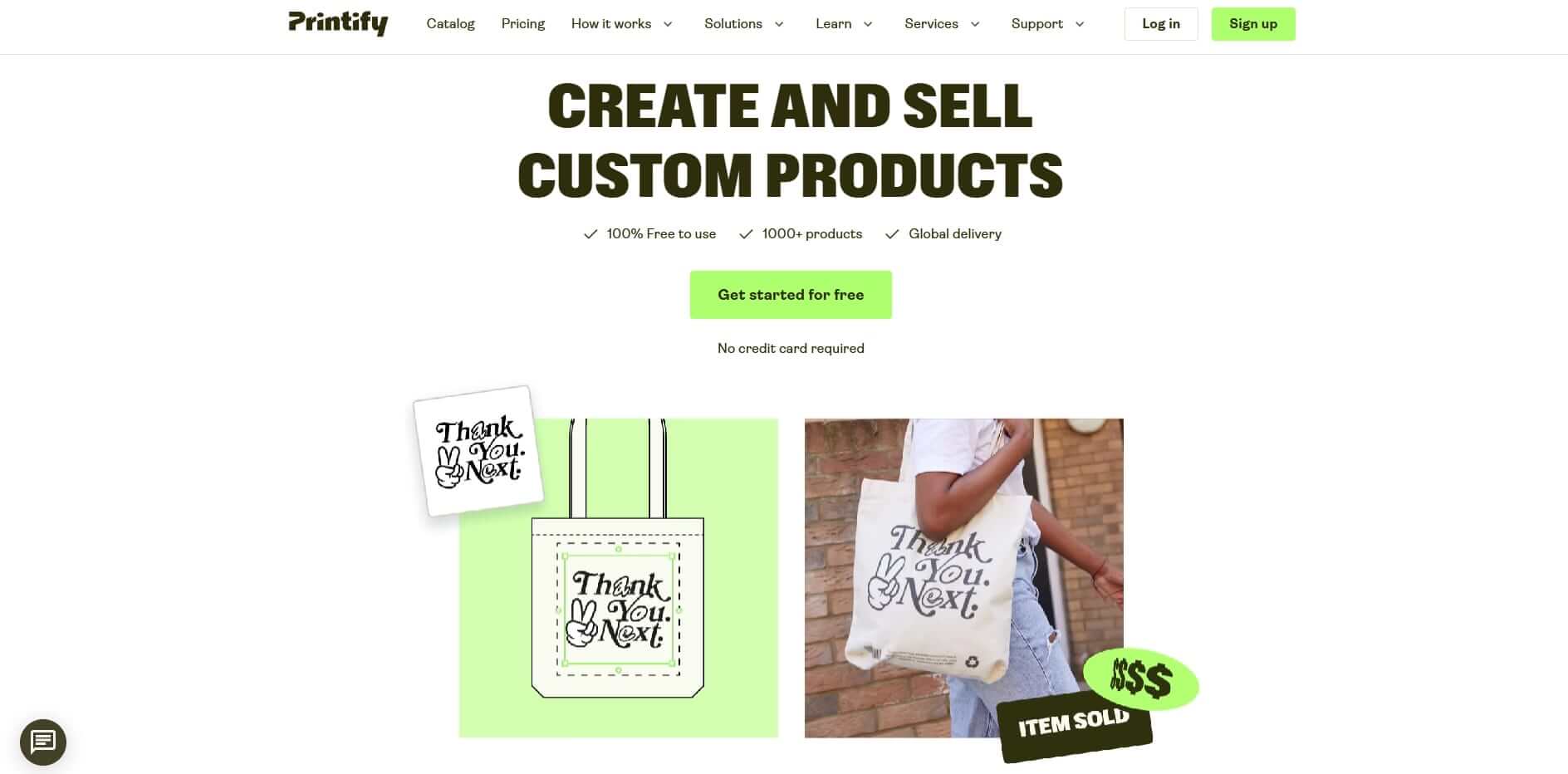
Printify is a global print-on-demand network that connects merchants with a large selection of third-party print providers.
Instead of owning production facilities, Printify lets sellers choose their preferred print partner based on location, price, and reviews, which can significantly reduce costs when targeting the Netherlands or wider Europe.
With over 1,300 customizable products available, Printify offers one of the widest POD catalogs on the market.
The platform is free to use, with an optional premium plan that unlocks discounted base prices for higher-margin sellers.
Pros
- Very large product selection across multiple categories
- Flexible choice of EU-based print providers for faster shipping
- Competitive pricing, especially on the Premium plan
- Easy product creation and publishing to major ecommerce platforms
- Free plan available with pay-per-order pricing
Cons
- Product quality can vary depending on the chosen print provider
- Requires time to test and select reliable suppliers
- Fewer built-in branding options compared to Printful
- Support experience depends on both Printify and the print partner
Best For: Cost-conscious POD sellers who want flexibility, variety, and control over production partners.
8. Gelato
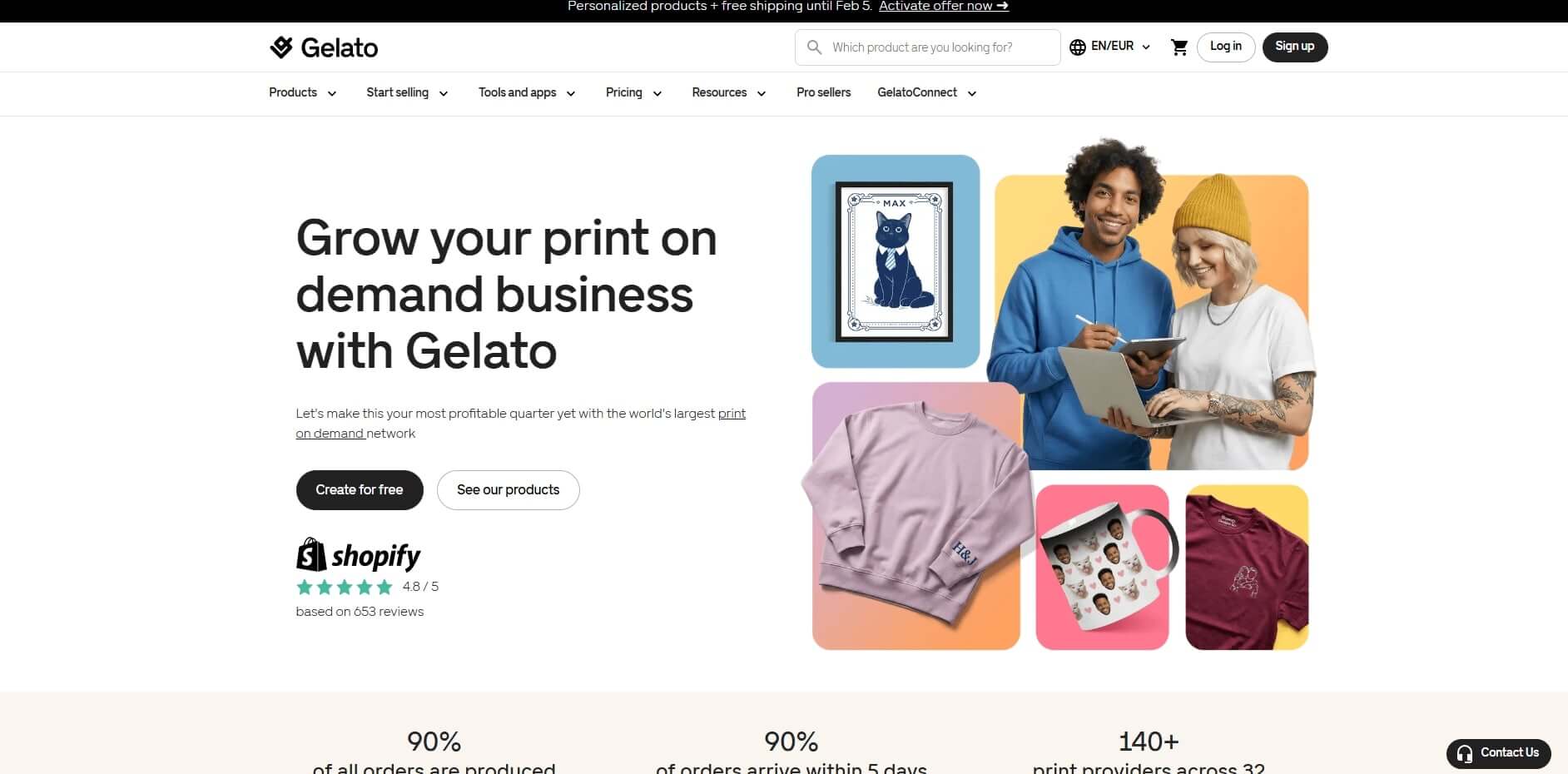
Gelato is a Norway-based print-on-demand network built around the concept of local production.
It partners with print facilities in more than 30 countries, including the Netherlands, allowing products to be manufactured close to the end customer.
This “produce locally, sell globally” approach results in faster delivery times and a lower carbon footprint compared to centralized fulfillment.
Gelato integrates with major ecommerce platforms and offers a growing range of customizable products, along with tools for personalization and sustainable production.
Pros
- Local production in the Netherlands and across Europe
- Faster delivery times and reduced shipping costs for EU customers
- No upfront fees or minimum order requirements
- Strong focus on sustainability and eco-friendly fulfillment
- Integrates with Shopify, Etsy, WooCommerce, and Amazon
Cons
- Smaller product catalog compared to Printful and Printify
- Fewer advanced branding and customization options
- Some features require paid plans
- Per-item pricing can be higher than Printify on certain products
Best For: Sellers targeting Dutch or European customers who want fast, locally produced POD items with a sustainability angle.
The “Hybrid Strategy”: Local Suppliers vs. a China-Based Sourcing Agent
For many sellers targeting the Netherlands, the most sustainable approach is not choosing either local suppliers or overseas sourcing, but using both strategically at different stages of growth.
Local and EU-based leveranciers play an important role, especially in the early stages of a dropshipping business.
Why sellers start local:
- Faster delivery times that meet Dutch customer expectations
- Easier returns within the EU
- Simpler VAT (BTW) handling
- Lower perceived risk when launching a new store
However, local suppliers come with clear trade-offs.
Where local sourcing falls short:
- High product costs that leave little room for paid ads
- Identical catalogs shared across hundreds of stores
- Limited branding options (no private label or customization)
- Margin ceilings that make scaling difficult
At a certain point, speed alone stops being a competitive advantage.
Why Advanced Sellers Shift to a Sourcing Agent
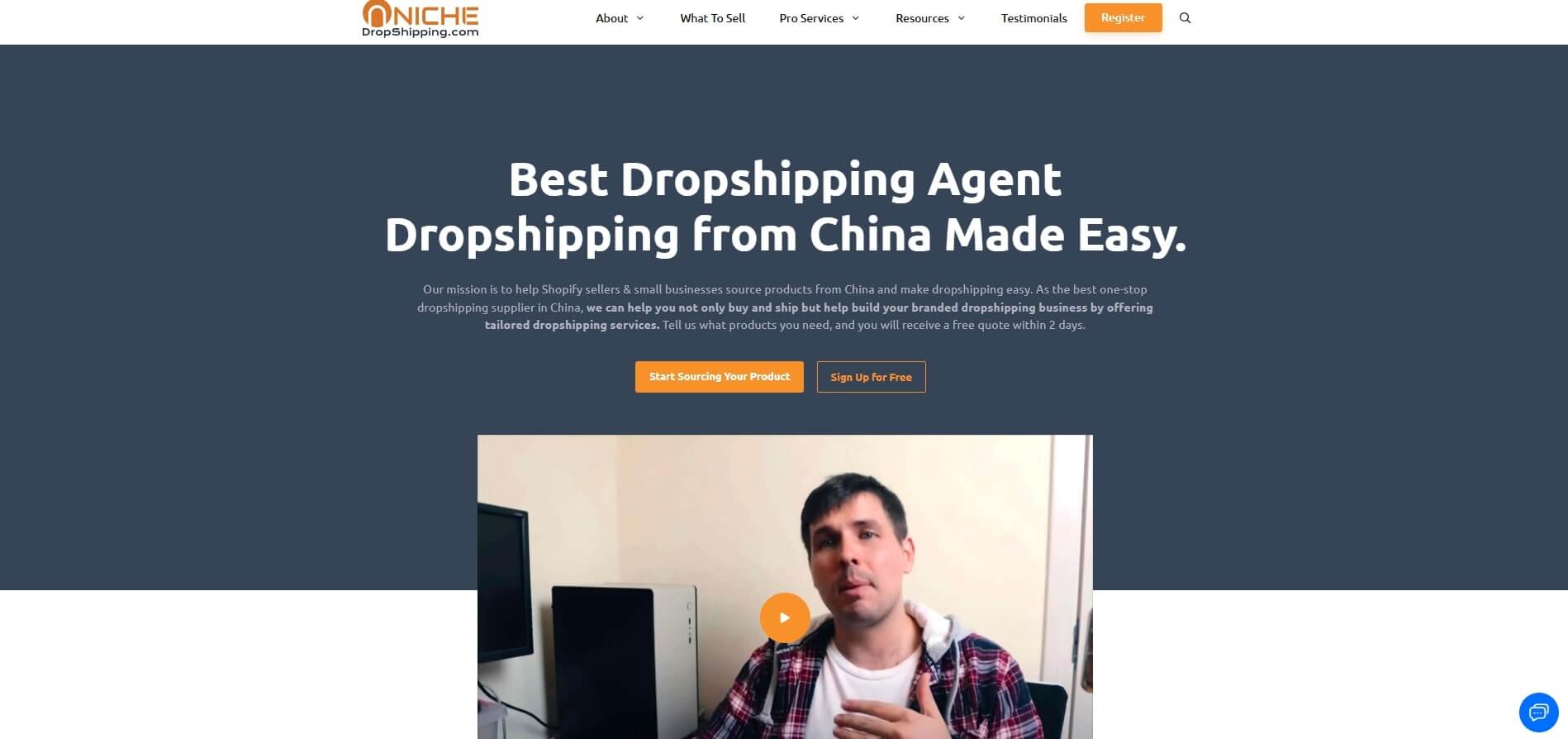
This is where working with a China-based sourcing agent becomes an attractive option.
A professional agent like NicheDropshipping helps sellers move beyond generic catalogs by sourcing products directly from manufacturers.
Key advantages of using a sourcing agent:
- Lower product costs (often 30–60% cheaper than EU wholesalers)
- Access to factories, not just resellers or directories
- Custom branding options such as private labeling and packaging
- More control over quality, materials, and product variants
Modern shipping lines now make this model far more viable for the Dutch market than it used to be.
What About Shipping Times to the Netherlands?
Shipping speed is often the biggest concern, and understandably so.
With optimized shipping lines, many China-sourced products now reach the Netherlands in 5–9 business days, which is acceptable when:
- The product is unique or customized
- The price advantage is clear
- Delivery timelines are communicated transparently
For branded or differentiated products, customers are often willing to wait slightly longer, especially when expectations are set correctly.
How the Hybrid Strategy Works in Practice
Instead of choosing one model exclusively, many successful sellers follow a hybrid approach:
- Step 1: Start with local or EU suppliers. Test demand, validate products, and learn the market.
- Step 2: Identify winning products. Look for consistent sales, strong feedback, and repeat demand.
- Step 3: Switch to a sourcing agent. Reduce costs, add branding, and improve margins on proven products.
This approach balances speed, risk, and profitability, making it especially suitable for the competitive Dutch market.
FAQs
Is Dropshipping Legal in the Netherlands?
Yes, dropshipping is legal in the Netherlands and widely used by ecommerce businesses.
However, it must be operated as a legitimate business, which means complying with Dutch consumer protection laws, tax regulations, and transparency requirements.
Misleading delivery times, unclear return policies, or missing company details can quickly lead to legal or platform issues.
Do I Need to Register with Kvk?
Yes. If you are running a dropshipping business targeting Dutch customers, you are required to register with KVK (Kamer van Koophandel). Registration is necessary to operate legally, open a business bank account, and handle VAT correctly. Even solo founders and small online stores are expected to register.
How Does BTW (VAT) Work for Dropshippers?
VAT (BTW) is one of the most important, and often misunderstood, parts of dropshipping in the Netherlands. If you are registered with the KVK, you generally need to charge VAT on sales to Dutch customers and file regular VAT returns.
When sourcing products from within the EU, VAT handling is usually simpler. When sourcing from outside the EU, VAT and import rules depend on shipment value, supplier setup, and IOSS usage. Because rules can vary, many sellers consult an accountant once they start scaling.
What Supplier Do Most Dutch Dropshippers Start With?
Most beginners start with local or EU-based suppliers such as vidaXL or platforms like Spocket because of fast delivery and easier returns. Some also begin with marketplaces like AliExpress using tools like DSers.
More advanced sellers often move away from generic catalogs and work with private sourcing agents once they want better margins and branding control.
How Do I Find a Reliable Leverancier or Groothandel?
There are several proven ways to find trustworthy suppliers:
- Search Google using terms like “dropshipping leverancier Nederland” or “groothandel dropshipping EU”
- Use vetted directories such as SaleHoo
- Attend trade shows and wholesale events in cities like Utrecht or Amsterdam
- Contact a sourcing agent directly for custom or private-label products
The key is to test suppliers with small orders before committing long term.
Is AliExpress still viable for the Netherlands?
AliExpress can still work for testing products, but it is no longer ideal for building a long-term business in the Dutch market. Delivery times are often longer, branding options are limited, and competition is extremely high.
Many Dutch customers are also more cautious when delivery expectations are unclear. For sustainable growth, most sellers eventually switch to EU suppliers or a sourcing agent that offers faster shipping and better product control.
Final Thoughts
Dropshipping in the Netherlands offers real opportunity, but it is not a shortcut business. Dutch customers expect fast delivery, clear communication, and professional service, while sellers must navigate VAT rules, rising competition, and increasingly tight margins.
Local and EU-based suppliers make sense when you are starting out. They help you validate demand, meet delivery expectations, and reduce early risk. But as your store grows, relying solely on the same shared catalogs often limits profitability and differentiation.
That is why many successful sellers adopt a hybrid approach: test locally, then scale smartly. By combining local speed with better sourcing, branding, and cost control, you move from selling products to building a real ecommerce brand.
If you are selling to the Netherlands and finding it hard to maintain healthy margins with EU suppliers alone, working with a professional sourcing agent can be the next step.
NicheDropshipping helps ecommerce sellers:
- Source products directly from trusted manufacturers
- Reduce product costs and improve margins
- Access fast shipping lines to the Netherlands
- Create private-label and branded products that stand out
Request a sourcing quote and start building a more profitable dropshipping business today.