The best dropshipping suppliers in 2026 depend on what you need right now. Beginners may be better served by low-cost platforms like AliExpress, DSers, or CJDropshipping, while sellers prioritizing faster US/EU delivery may prefer Spocket or Zendrop. If you’re scaling and need stronger QC, branding, or factory sourcing, a private sourcing agent becomes more practical.
Quick Facts
- 14 dropshipping suppliers compared
- 6 supplier types covered, from marketplaces to private sourcing agents
- Options starting from $0
- Supplier ratings and pricing checked for August 2026
- Comparison includes shipping speed, pricing, supplier type, ratings, and ideal use case
Top Picks by Category
If you want the short version, these are the suppliers we’d shortlist by use case. The “best” option changes depending on whether you’re testing products, prioritizing shipping speed, automating fulfillment, or building a branded store.
| Category | Winner | Why |
| Best Overall China Supplier | CJDropshipping | Combines sourcing, fulfillment, store integrations, and global warehouses in one free-to-use platform. |
| Best for Beginners | AliExpress + DSers | Low barrier to entry, huge product selection, and a usable free automation setup for testing products. |
| Best for US/EU Shipping | Spocket | Focuses heavily on US and European suppliers, with many products offering roughly 2–7 day delivery. |
| Best for Print on Demand | Printify + Printful | Printify offers broader provider choice and stronger margin flexibility, while Printful stands out for consistency and branding options. |
| Best for Private Label & Branding | NicheDropshipping | Dedicated sourcing support, pre-shipment QC, custom packaging, private labeling, and warehouse fulfillment for sellers ready to scale. |
| Best for Automation | AutoDS | Supports multiple suppliers and sales channels with automated product importing, stock monitoring, pricing updates, and order processing. |
| Best Supplier Directory | SaleHoo | Gives sellers access to thousands of vetted suppliers for a relatively low annual fee. |
| Best for Budget Product Testing | DHgate | Free to use, low or no MOQs on many listings, and buyer protection make it useful for small-batch testing before committing to larger orders. |
What Types of Dropshipping Suppliers Are There in 2026?
In 2026, dropshipping suppliers generally fall into two broad models: self-serve platforms and private sourcing relationships. Platforms are easier for testing because you can browse products and manage orders through software, while private agents are better suited to sellers who need more control over sourcing, QC, branding, and fulfillment.
The six main supplier types are:
- Private Sourcing Agents
A dedicated sourcing team finds factories, negotiates pricing, checks product quality, and manages fulfillment for you. This model is usually a better fit once you have proven products and want stronger branding, more consistent QC, or a single team managing your supply chain. - All-in-One China Platforms
Platforms like CJDropshipping combine product sourcing, order syncing, fulfillment, and warehouse options in one system. They work well for beginners and intermediate sellers who want more structure than an open marketplace without committing to a private agent. - US/EU Supplier Marketplaces
These marketplaces connect you with suppliers holding inventory in the US, UK, or Europe. They are especially useful when faster local delivery and fewer cross-border shipping complications matter more than getting the lowest possible product cost. - Automation Platforms
Automation tools connect your store with one or more external suppliers and handle tasks such as product importing, inventory updates, price syncing, and order processing. They are most useful when you are managing larger catalogs, several suppliers, or multiple sales channels. - Supplier Directories
Directories give you access to databases of wholesalers and dropshipping suppliers that you contact directly. They can save time during supplier research, but you still need to handle vetting, negotiation, integration, and relationship management yourself. - Print-on-Demand Suppliers
Print-on-demand providers manufacture customized products only after an order is placed. They are a strong fit for apparel, accessories, art, and other design-led products because you can launch branded items without buying inventory upfront.
The 14 Best Dropshipping Suppliers in 2026
We’ve grouped these suppliers by type because comparing AliExpress with Printful or AutoDS directly doesn’t tell you much. Each solves a different supply-chain problem, so the better question is which supplier fits the way you currently run your store?
For every option, we’ve included the strengths, limitations, pricing model, and the type of seller we think it suits best.
All-in-One China Platforms
1. CJDropshipping
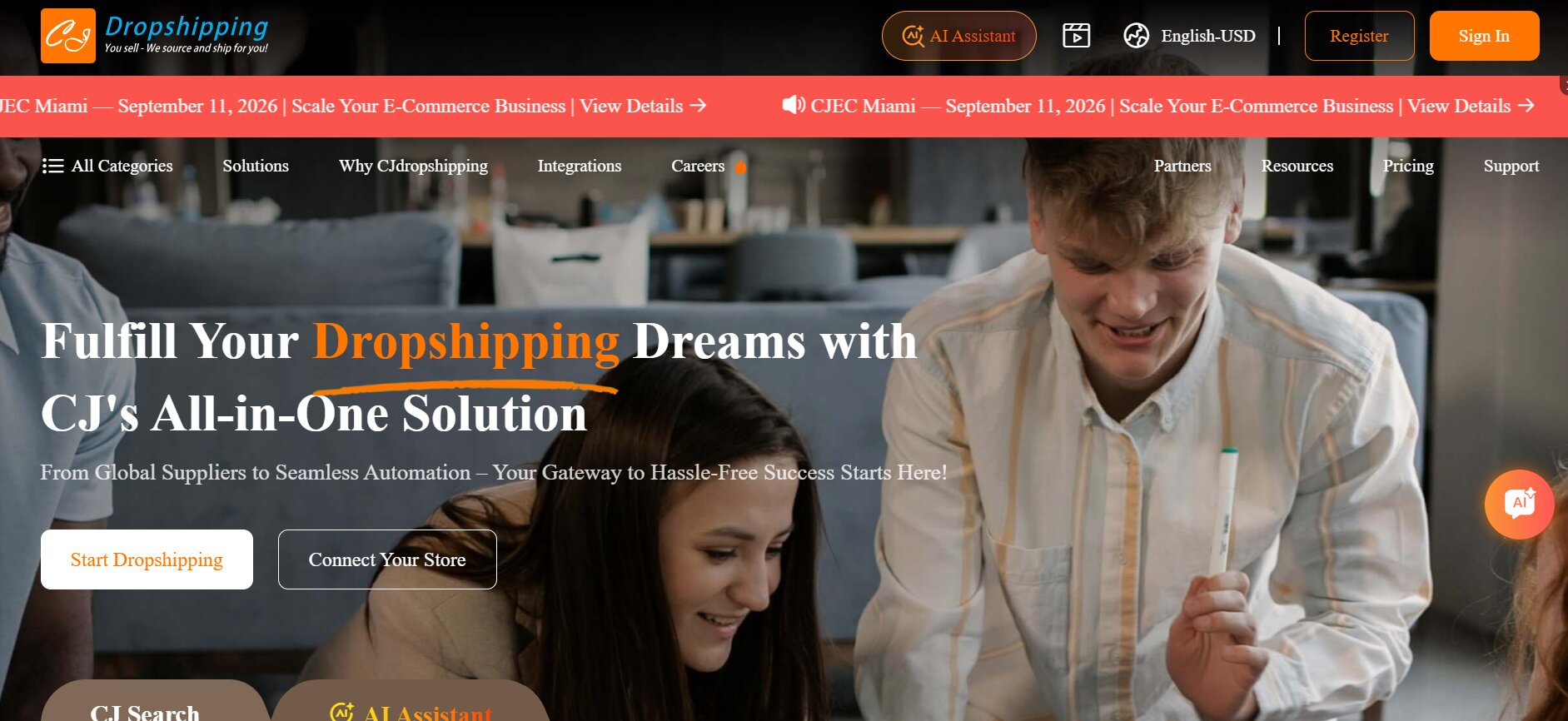
CJDropshipping combines product sourcing, fulfillment, warehousing, print on demand, and store integrations in one system. We see it as one of the more practical stepping stones between basic marketplace dropshipping and working with a dedicated sourcing agent.
The biggest advantage is flexibility. You can start without a monthly subscription and later use sourcing requests, custom packaging, or overseas warehouse stock as your volume grows.
Key Features
- Free platform with per-order product and shipping costs
- Sourcing requests for products outside the existing catalog
- Warehouses in China and several international markets
- Custom packaging and print-on-demand services
- Product photography and video options
- Shopify, WooCommerce, and TikTok Shop integrations
Pros
- Low barrier to entry for beginners
- Covers sourcing, fulfillment, and warehousing in one ecosystem
- International warehouses can shorten delivery when stock is available locally
- Strong Shopify App Store sentiment in the supplied August 2026 data
Cons
- Overseas warehouse availability covers only part of the catalog
- Products that still need to be sourced or processed in China can take longer
- Product and shipping costs need to be evaluated individually because the platform’s economics are built into each order
- Less personal sourcing support than a dedicated agent relationship
Pricing: No recurring platform subscription in the supplied data; sellers pay product and shipping costs per order.
Rating: Shopify App Store listed at approximately 4.9/5 from about 2,585 reviews in the supplied August 2026 data.
Ideal For: Beginners and growing sellers who want a free all-in-one sourcing and fulfillment system with the option to use overseas warehouses.
2. AliExpress
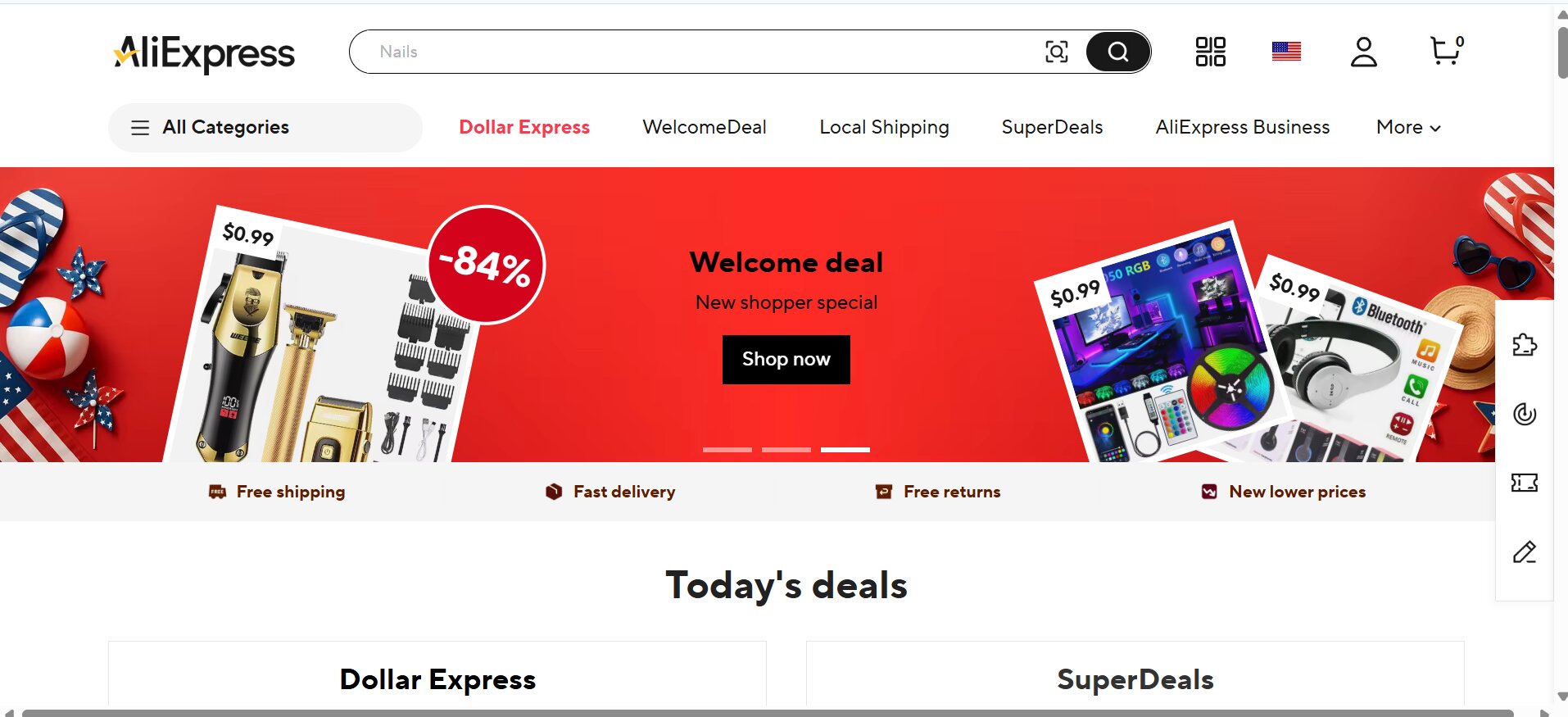
AliExpress remains one of the easiest places to test dropshipping products because there is no subscription and the catalog is enormous. We’d still treat it primarily as a testing environment, rather than the supply chain we’d want to build a mature brand around.
That distinction matters more in 2026 because US sellers also need to consider tariffs and the removal of the previous De Minimis treatment for China-origin shipments.
Key Features
- Very large multi-category product catalog
- No monthly membership fee
- Buyer protection and dispute handling
- Seller ratings and order histories
- Works with automation tools such as DSers
Pros
- Very little capital required to begin testing
- Excellent product breadth for research and validation
- Easy to compare several sellers offering similar products
- Supported by a large ecosystem of ecommerce tools
Cons
- China-direct delivery can be slow
- Supplier quality and service vary significantly between listings
- Limited control over packaging and branding
- US-bound orders require more careful landed-cost calculations in the current tariff environment
Pricing: Free to access. You pay the product and shipping costs associated with each order.
Rating: The supplied research does not provide a verified current third-party score, so we would not publish one without checking it first.
Ideal For: New sellers who want to validate products at low cost before moving proven winners to a more controlled supply chain.
3. DSers
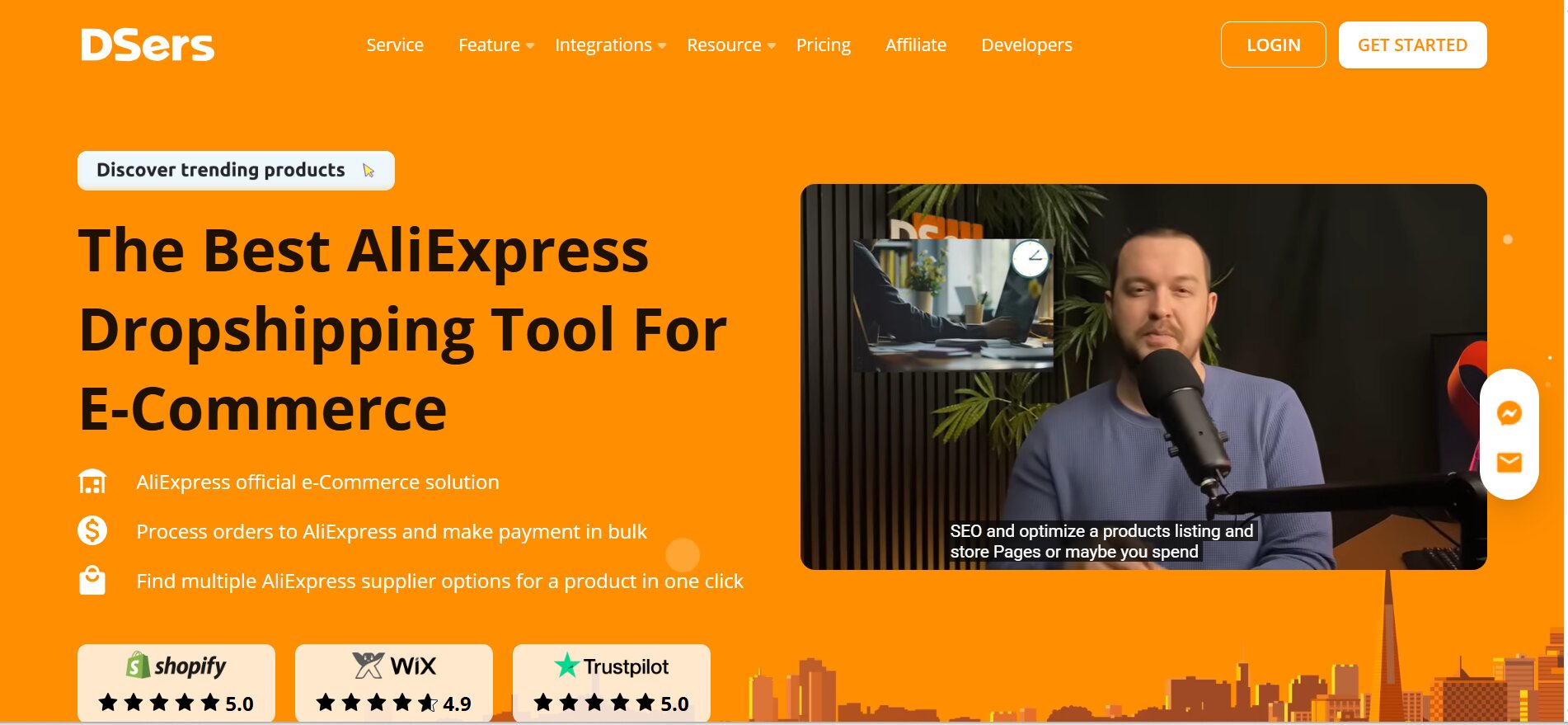
DSers is best understood as an AliExpress automation layer, rather than a supplier itself. It connects your store to AliExpress sellers and handles repetitive work such as bulk ordering, supplier mapping, tracking updates, and product management.
We think that makes it especially useful during the testing stage. You keep AliExpress’s product variety while removing much of the manual order processing that becomes painful once sales start increasing.
Key Features
- Official AliExpress integration
- Bulk order placement
- Supplier mapping and switching
- Automated tracking synchronization
- Supplier comparison tools
- Free plan for smaller stores
Pros
- Makes AliExpress much easier to operate at volume
- Usable free tier for testing
- Supplier mapping helps when a listing disappears or stock runs out
- Strong Shopify app feedback in the supplied research
Cons
- It does not solve AliExpress’s underlying supplier-quality variation
- Shipping speed still depends on the AliExpress seller
- DSers does not provide its own QC, warehousing, or private-label sourcing
- More advanced automation requires a paid plan
Pricing: The supplied data lists a free plan, Advanced at $19.99/month, and Pro at $49.90/month.
Rating: Around 5.0/5 from 5,500+ Shopify App Store reviews in the supplied mid-2026 data.
Ideal For: Shopify sellers testing and fulfilling through AliExpress who want to automate ordering without changing their supplier model.
4. DHgate
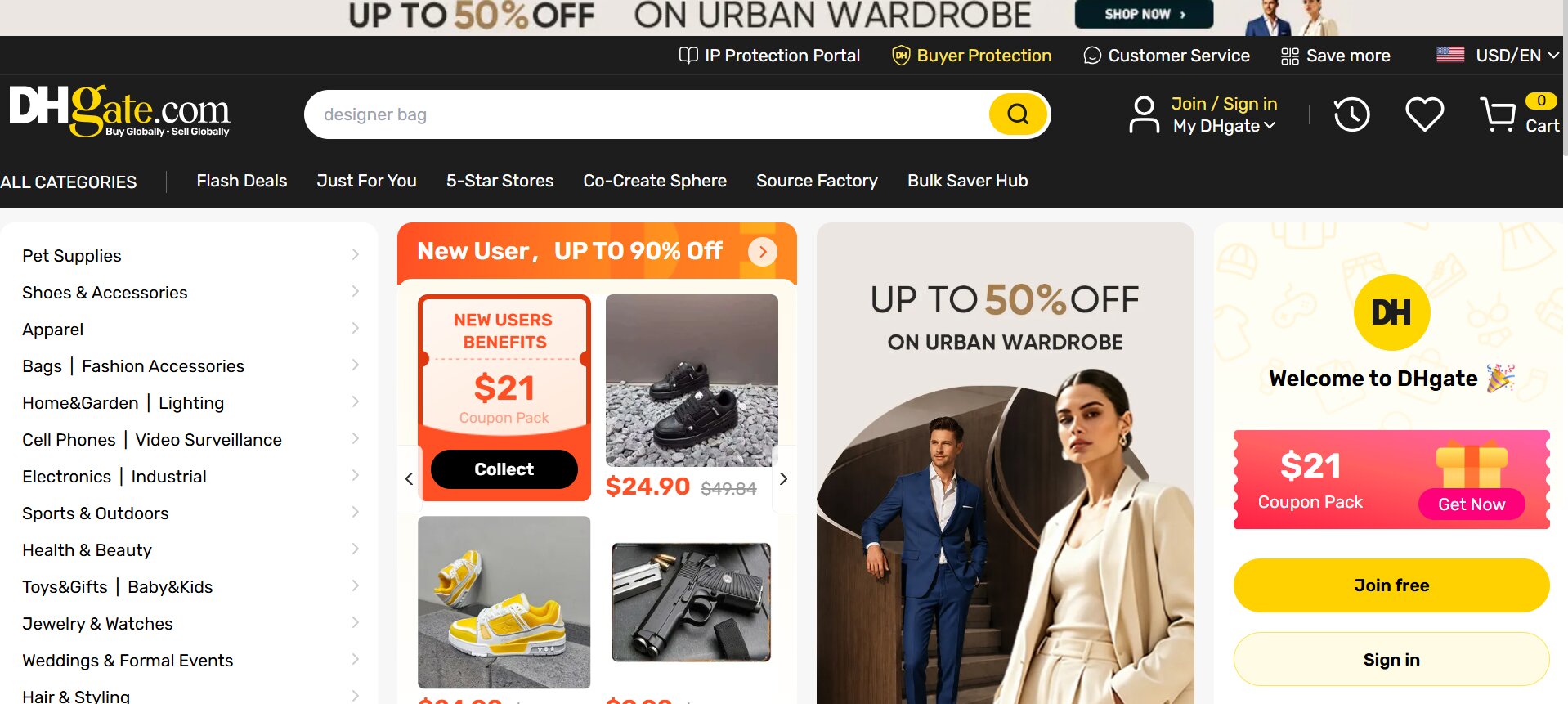
DHgate is a long-running B2B marketplace that sits somewhere between wholesale sourcing and low-MOQ product testing. We see it as more useful as a secondary or testing source than as the operational backbone of a growing dropshipping store.
Its buyer-protection system and low order quantities make experimentation easier, but seller quality varies and some categories require extra caution around replicas and intellectual-property risk.
Key Features
- Free marketplace access
- Buyer protection on transactions
- Low or no MOQs on many listings
- Supplier messaging
- Small-batch and bulk purchasing
- Volume discounts from many sellers
Pros
- Useful for testing products in small quantities
- Buyer protection adds a layer of security to marketplace purchases
- Long operating history
- Can offer attractive unit economics as quantities increase
Cons
- Supplier quality can vary considerably
- Limited unified dropshipping automation compared with dedicated platforms
- Counterfeit and replica risk requires careful product and supplier vetting
- International delivery can take several weeks
Pricing: No platform subscription in the supplied data. You pay product and shipping costs.
Rating: We do not have a verified current third-party rating in the supplied research, so we would leave it unpublished until checked.
Ideal For: Sellers looking for a backup supplier or a low-MOQ way to test products before consolidating them elsewhere.
Private Sourcing Agents
5. NicheDropshipping
NicheDropshipping is a China-based private sourcing agent with warehouses in China, the US, and Europe. Since this is our own service, we want to be clear about the difference: we don’t operate like AliExpress or CJ with a huge public catalog. Instead, our team sources products from factories based on what you need and then manages QC, warehousing, branding, and fulfillment.
This approach becomes more useful once you have products worth scaling and want more control over how they reach customers.
Key Features
- Free product sourcing with quotes in 1–2 working days
- Access to 3,000+ partner factories
- 100% pre-shipment quality inspection
- Private label dropshipping, including custom packaging, inserts, and tag removal
- 90-day free warehousing
- Same-day processing for stocked products
- US warehouse delivery in 2–5 days and China premium lines in 7–15 days
- Shopify and WooCommerce integration
- Support for harder-to-ship categories such as liquids, cosmetics, and battery products
Pros
- No subscription or upfront sourcing fee
- Dedicated human support for sourcing, negotiation, and QC
- Better suited to custom packaging and private labeling than open marketplaces
- Warehousing gives proven products a path to faster local fulfillment
Cons
- Smaller self-serve catalog than CJ or AliExpress because products are sourced on request
- Less convenient for one-off testers who want a completely hands-off software experience
- Non-stocked China-direct products will generally be slower than products already sitting in a US warehouse
Pricing: Registration and sourcing are free. You pay the quoted product and shipping costs when orders are fulfilled.
Rating: No public Trustpilot score is provided in the supplied research; NicheDropshipping states that it has served 3,000+ clients.
Ideal For: Sellers past initial product testing who want stronger QC, branding, and a dedicated sourcing relationship.
US/EU Supplier Marketplaces
6. Spocket
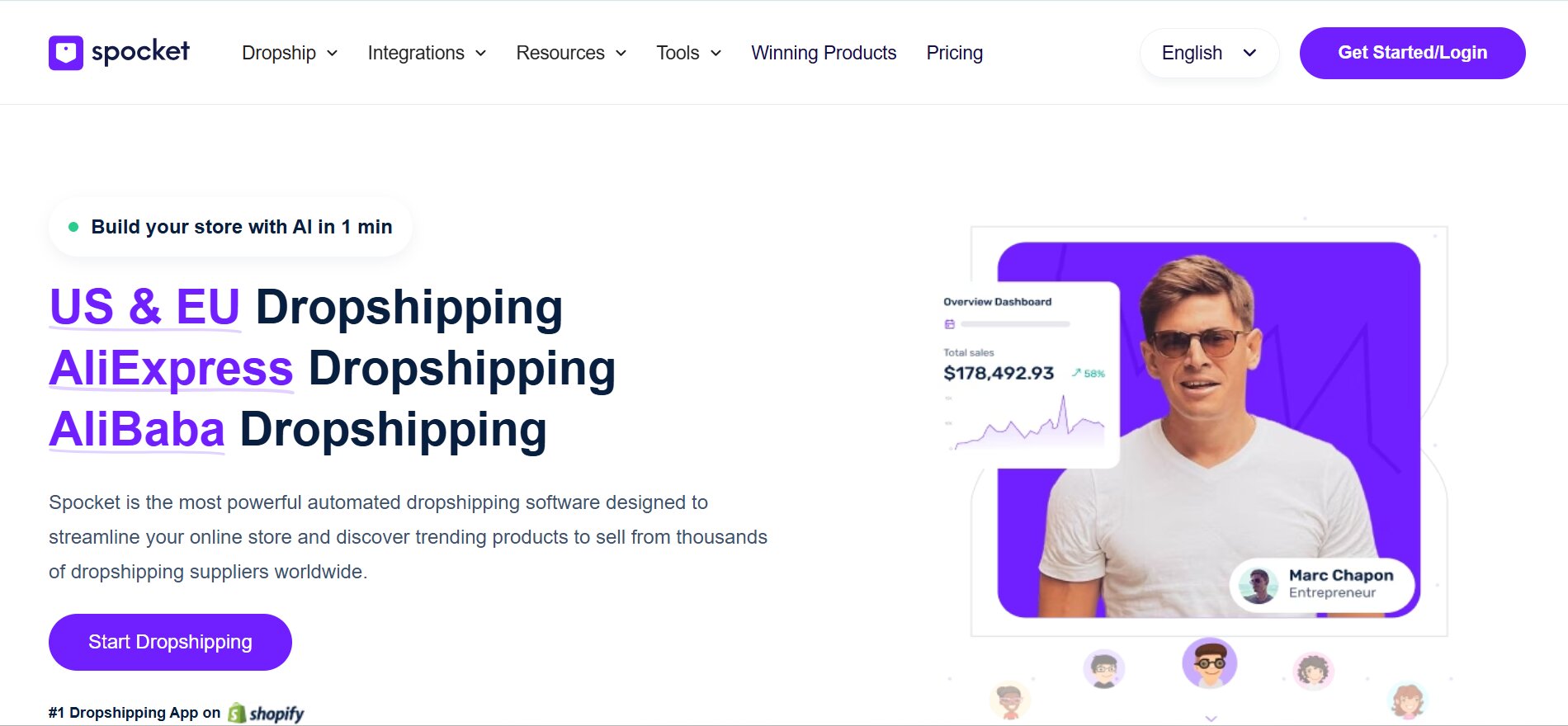
Spocket focuses heavily on suppliers located in the US and Europe, which changes the trade-off compared with China-first platforms. You generally give up some product-cost advantage in exchange for faster local delivery and easier access to suppliers closer to your customers.
For stores competing on customer experience rather than the lowest possible unit price, we think that can be a sensible trade.
Key Features
- Strong concentration of US and European suppliers
- Local fulfillment on eligible products
- Automated inventory synchronization
- One-click product importing
- Sample ordering
- Branded invoicing on qualifying plans
Pros
- Faster delivery than most China-direct marketplace products
- Supplier curation reduces some of the uncertainty found on open marketplaces
- Useful for US/EU-focused stores
- Local inventory can reduce exposure to cross-border shipping complications
Cons
- A meaningful subscription cost is required for most operational use
- Catalog selection is smaller than large China marketplaces
- Not every product ships at the same speed, so each listing still needs verification
- The supplied research notes billing and cancellation complaints that sellers should review before subscribing
Pricing: The supplied data lists a limited free browsing option, Starter at $39.99/month, Pro at $59.99/month, and higher tiers above that. Pricing should be spot-checked before publication.
Rating: The supplied research places Trustpilot around 4.7–4.8/5, although the review count varies by source and date.
Ideal For: Stores targeting US or European customers where faster local delivery is worth paying a subscription for.
7. Zendrop
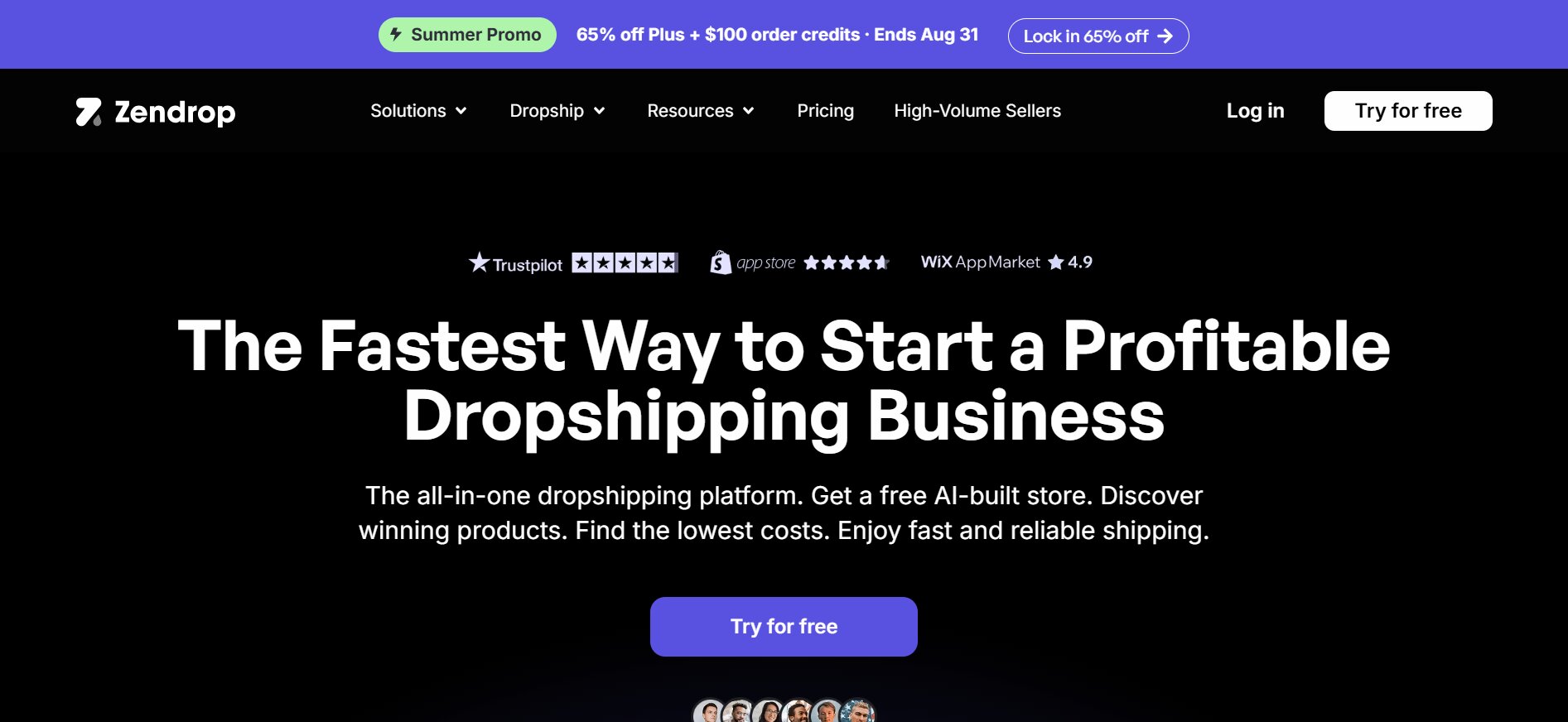
Zendrop is a fulfillment platform built around an easy-to-use interface, automated order processing, US warehouse inventory, and China sourcing. We think its main appeal is simplicity: it gives newer sellers more structure than an open marketplace without requiring them to manage individual supplier relationships.
One important limitation is worth highlighting: according to the supplied 2026 research, the free plan is browse-only and cannot be used to fulfill orders.
Key Features
- US-stocked product selection
- China sourcing
- Automated fulfillment and tracking
- Custom packaging and branded inserts on eligible plans
- Print-on-demand products
- Shopify-focused workflow
Pros
- Beginner-friendly interface
- Fast domestic delivery when the exact product is stocked in the US
- Combines sourcing, fulfillment, and branding features in one system
- Large product catalog
Cons
- Free users cannot actually fulfill orders
- China-sourced products remain slower than US-stocked items
- Branding features depend on the plan and product
- The supplied research notes recurring billing-related complaints in third-party reviews
Pricing: The supplied research lists a free browse-only tier and paid plans around $29–$79/month, but specifically flags current pricing for verification before publication.
Rating: Shopify App Store rating listed at approximately 4.5/5 from around 1,130 reviews in the supplied July 2026 data.
Ideal For: Beginners who want a guided fulfillment platform and the option to use faster US-stocked products. For a deeper comparison, see our in-depth Zendrop review.
8. Syncee
Syncee is a supplier marketplace that connects retailers with suppliers across the US, Canada, UK, Europe, Australia, and other markets. Compared with US-centric platforms, we think its main strength is geographic breadth.
It also includes product and inventory synchronization, which makes it more operationally useful than a basic supplier directory.
Key Features
- Large multi-region supplier network
- Dropshipping and wholesale products
- Free entry-level plan in the supplied research
- Automated product and inventory syncing
- Multiple ecommerce integrations
- AI-assisted product discovery
Pros
- Broad supplier coverage across several major ecommerce regions
- Lets sellers test the marketplace before moving to larger paid plans
- Automated data feeds reduce manual inventory management
- No transaction fee listed in the supplied research
Cons
- Delivery time depends entirely on the supplier selected
- No single fulfillment standard across the marketplace
- Smaller ecosystem and independent review footprint than some larger competitors
- Pricing differs between sources and should be confirmed before publishing
Pricing: The supplied research lists a free plan covering 25 products and paid plans roughly in the $29–$99/month range. Verify current tiers before publication.
Rating: Approximately 4.7/5 from around 830 Shopify app reviews in the supplied research.
Ideal For: Sellers who want access to suppliers across multiple Western markets without limiting themselves to one region.
9. TopDawg
TopDawg focuses specifically on US-based suppliers and combines a supplier catalog with ecommerce automation. That domestic focus makes it particularly relevant for stores whose customers are primarily in the United States and who want to reduce reliance on individual China-direct parcels.
The trade-off is cost complexity. Subscription charges are only part of the picture, so you need to calculate processing fees alongside product margins.
Key Features
- US-based supplier network
- Domestic shipping on listed products
- Free entry-level tier
- Shopify and other ecommerce integrations
- Large multi-category catalog
- Automated product and order management
Pros
- Domestic sourcing simplifies fulfillment for US-focused stores
- Faster delivery than most China-direct options
- Free tier allows basic catalog evaluation
- Strong third-party ratings in the supplied research
Cons
- Subscription fees can be layered with per-order processing charges
- Approximately $3/order is listed in the supplied research
- US-only sourcing is less useful for internationally focused stores
- Additional fees can materially affect margins on low-ticket products
Pricing: Free entry tier with paid subscriptions reaching approximately $159.98/month in the supplied data, plus roughly $3/order and some additional catalog-related charges.
Rating: Supplied research lists Trustpilot at 4.4/5, BBB A+, and Shopify App Store at 4.2/5.
Ideal For: US-focused stores willing to pay additional platform and order-processing fees in exchange for domestic supplier access.
Automation Platforms
10. AutoDS
AutoDS is an automation platform rather than a single supplier. It connects stores with multiple sourcing channels and automates tasks such as product importing, inventory monitoring, price updates, order processing, and tracking.
For a seller managing several suppliers or channels, that consolidation can save significant administrative work. However, we would review its billing and cancellation terms carefully before committing, because the supplied research shows a sharp contrast between its strong Trustpilot rating and its BBB record.
Key Features
- Automated product importing
- Price and inventory monitoring
- Order automation
- Multiple supplier integrations
- Multi-channel support
- AI-assisted product and store tools
- Managed fulfillment options
Pros
- Broad automation coverage
- Useful for managing several supplier sources from one system
- Can reduce repetitive operational work substantially
- Large Trustpilot review volume in the supplied research
Cons
- Supplied research lists a BBB rating of F
- A 15% fee on certain refund cancellations is also noted
- No permanent free plan
- Managed fulfillment features can involve additional costs beyond the base subscription
Pricing: Approximately $26.90–$66.90+/month in the supplied data, with lower effective pricing on annual plans and a $1 trial. Plans vary by channel and should be checked before publishing.
Rating: Supplied data lists Trustpilot at 4.8/5 from 26,000+ reviews, Shopify at 4.5/5, alongside the BBB F rating.
Ideal For: Established sellers managing multiple suppliers or channels who value automation enough to justify the subscription and additional fees.
Supplier Directories
11. SaleHoo
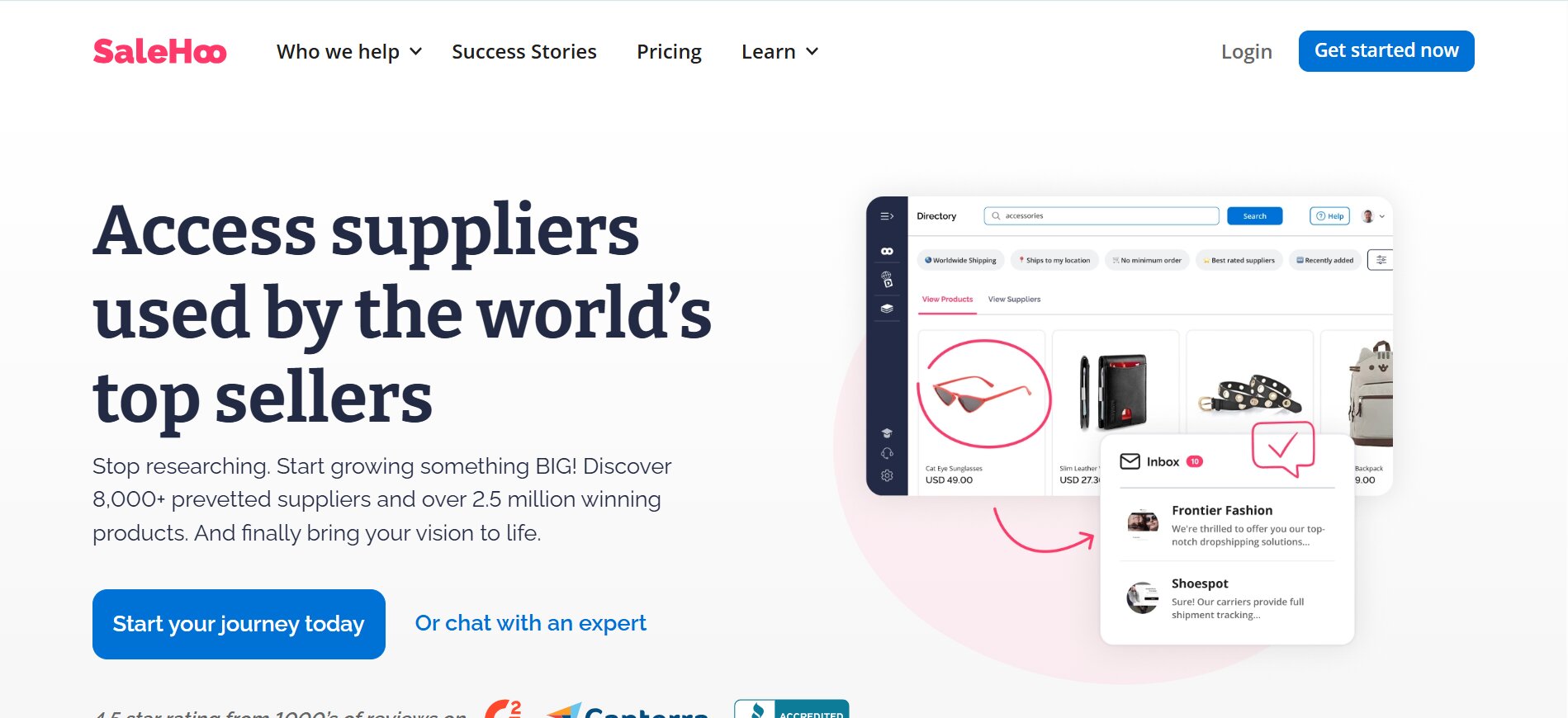
SaleHoo is a supplier directory rather than a fulfillment service. You use it to research vetted wholesalers and dropshipping suppliers, then contact and negotiate with those suppliers yourself.
We think this model works best for sellers who want more control over supplier selection but don’t want to start their search from random Google results or unverified directories.
Key Features
- 8,000+ vetted suppliers in the supplied research
- Large product database
- Market research tools
- Filters for supplier location
- Community and educational resources
- Optional ecommerce tools and add-ons
Pros
- Vetting reduces some of the risk involved in supplier discovery
- Low annual cost compared with many monthly marketplace subscriptions
- Long operating history
- Useful for locating wholesalers that may not appear on mainstream dropshipping platforms
Cons
- SaleHoo does not handle fulfillment for you
- You still need to contact, vet, negotiate with, and manage suppliers yourself
- Some suppliers may work primarily with wholesale quantities rather than true one-unit dropshipping
- Optional tools and add-ons create additional costs
Pricing: The supplied entity data confirms $67/year for directory access and also lists a $127 lifetime option. Other add-on pricing should be verified separately before publication.
Rating: Trustpilot approximately 4.2–4.3/5 from around 459 reviews in the supplied data.
Ideal For: Sellers who prefer building direct supplier relationships but want a vetted directory to shorten the research process.
12. Doba
Doba aggregates products from multiple suppliers into a single interface, with a strong emphasis on US-oriented sourcing. On paper, that makes supplier discovery and order management simpler.
However, this is one of the entries where we think third-party sentiment should heavily influence the decision. The supplied research shows considerably weaker customer ratings than most other suppliers in this article, so we would test the service and margins carefully before committing to a larger plan.
Key Features
- Aggregated supplier catalog
- US-heavy supplier selection
- Ecommerce integrations
- Centralized product management
- AI-assisted sourcing tools mentioned in the supplied 2026 research
- No per-order transaction fee listed
Pros
- One dashboard for accessing products from multiple suppliers
- Domestic supplier options can support faster US fulfillment
- Long operating history
- Active product development is indicated in the supplied research
Cons
- Supplied late-2025 research places Trustpilot around 2.8/5
- Complaints cited in the research include pricing, support, dashboard usability, and refund issues
- No permanent free plan
- Higher subscription tiers become expensive quickly
Pricing: The supplied data places plans roughly between $24.99 and $299.99/month, with a $0.99 trial. Current plan names and prices should be verified before publishing.
Rating: Approximately 2.8/5 on Trustpilot according to the late-2025 data supplied for this update.
Ideal For: Sellers specifically interested in a US-heavy supplier aggregator who are prepared to validate product margins and service quality before scaling.
Print-on-Demand Suppliers
13. Printify
Printify uses a network of independent print providers rather than manufacturing every product itself. That gives sellers more choice over product cost, fulfillment location, and provider, which can create better margins than relying on a single production network.
The trade-off is consistency. Since multiple printers can produce the same type of item, we strongly suggest ordering samples from the exact provider you plan to use before sending paid traffic to a product.
Key Features
- Large print-on-demand catalog
- Multiple independent print providers
- Free plan
- Provider ratings inside the platform
- Product discounts on Premium
- Mockup and design tools
- Multiple ecommerce integrations
Pros
- Ability to compare providers on price and location
- Broad product selection
- Free plan is suitable for real product testing
- Competitive model can create stronger POD margins
Cons
- Product and print quality can vary by provider
- Switching providers may change color, sizing, packaging, or print consistency
- Printify does not directly control every production facility
- Premium pricing changed in 2026 according to the supplied research
Pricing: Free plan available. The supplied research lists Premium at $24.99/month when billed annually and reports a monthly increase from $29 to $39 in February 2026. Because that price change comes from a single cited source in the research, it should be verified before publishing.
Rating: A current platform-wide third-party rating was not verified in the supplied research.
Ideal For: POD sellers who prioritize product variety and margin flexibility and are willing to test individual print providers.
14. Printful
Printful takes a more vertically controlled approach to print on demand, with its own fulfillment network and deeper branding options. For us, that makes it particularly relevant to sellers who care more about consistency and presentation than squeezing every possible dollar out of base product costs.
Compared with Printify, you typically have less provider-shopping flexibility, but a more standardized production experience.
Key Features
- Global fulfillment network
- In-house production model
- Custom labels and branded pack-ins
- Custom packaging options
- Free entry-level access
- Growth plan with product discounts
- Ecommerce integrations
Pros
- Greater consistency than a multi-provider POD marketplace
- Strong private-label and packaging options
- Global fulfillment helps route orders closer to customers
- Free to start and pay per order
Cons
- Base product costs are generally higher than marketplace-style POD alternatives
- Branding extras can increase per-order costs
- Smaller catalog than Printify in the supplied research
- Higher production cost can make margin management harder on price-sensitive products
Pricing: Free to start and pay per order. The supplied data lists Growth at $24.99/month and states that qualifying sellers can receive it free after reaching the specified annual sales threshold.
Rating: The supplied research does not provide a verified current Trustpilot score, so we would not add one without checking immediately before publication.
Ideal For: POD brands that prioritize consistent production, branded packaging, and customer experience over achieving the lowest possible base cost.
How Do 2026 Tariffs and the End of De Minimis Affect Dropshipping?
The old assumption that a low-value parcel could enter the US duty-free no longer holds. The US ended De Minimis treatment for China and Hong Kong shipments on May 2, 2025, then suspended it for low-value commercial shipments from all countries from August 29, 2025. That suspension remains in effect in 2026.
For dropshippers, this makes landed cost more important than the supplier’s listed product price. China-direct orders may now face applicable duties and customs processing that previously did not matter for sub-$800 parcels, while tariff exposure varies by product classification and origin. This is why we wouldn’t compare two suppliers on unit price alone in 2026.
Here’s a simplified example. Assume you source a $10 product from China, pay $4 to ship it, and the product is subject to an illustrative 30% duty on its $10 customs value:
| Cost | China Direct | Pre-Stocked US Warehouse |
| Product cost | $10.00 | $10.00 |
| International shipping / allocated bulk freight | $4.00 | $2.00 |
| Illustrative import duty | $3.00 | $3.00 paid during bulk import |
| Domestic fulfillment | — | $4.00 |
| Landed fulfillment cost | $17.00 | $19.00 |
| Customer delivery | Longer cross-border route | 2–5 days when US-stocked |
| Duty surprise for customer | Possible depending on shipping setup | No, import is handled before domestic fulfillment |
This is only a worked example, not a universal tariff calculation. Actual duties depend on the product’s HS classification, origin, customs value, and current trade measures.
US warehousing therefore isn’t always the lowest-cost option per order, but it makes costs and delivery much more predictable. Once you have a proven product, importing inventory in bulk, clearing customs upfront, and fulfilling domestically can give customers 2–5 day delivery without asking them to deal with import charges at the doorstep. This is why USA dropshipping suppliers and warehouse-backed options are especially useful once sales are stable enough to justify holding stock.
Tired of tariff surprises and customs delays eating your margins? That’s exactly why 3,000+ dropshippers switched to NicheDropshipping. We pre-stock your winners in our US warehouses so your customers get 2–5 day delivery with no import-duty surprise. See the difference.
When Should You Switch from a Dropshipping Platform to a Private Sourcing Agent?

We usually see the supplier model change as a store matures. Platforms are excellent for testing, but once a product is generating consistent volume, the priorities shift toward better pricing, QC, branding, and predictable fulfillment.
A practical progression looks like this:
- Test products with AliExpress + DSers.
Start with a low-commitment setup where you can test products without paying for inventory or a sourcing relationship upfront. At this stage, your main goal is finding products that customers actually want. - Move proven winners to a private sourcing agent.
Once a product has repeatable sales, an agent can source directly from factories, compare quotes, inspect products before shipment, and consolidate fulfillment. This is also where custom packaging and private labeling become much easier to manage. - Pre-stock consistent sellers in a US warehouse.
When demand becomes predictable, holding inventory closer to your customers can shorten delivery times and reduce the uncertainty of fulfilling every order individually from China. The trade-off is that you now commit capital to inventory, so we’d only do this with products that have already proven themselves.
How Do You Know It’s Time to Switch?
We’d start considering a private sourcing agent when one or more of these problems appear:
- You’re consistently doing around 30+ orders per day. At this volume, small improvements in product cost, shipping, and processing can have a meaningful impact.
- You want to build a recognizable brand. Custom packaging, inserts, labels, and product modifications are difficult to coordinate across anonymous marketplace suppliers.
- Quality complaints are increasing. If inconsistent materials, sizing, packaging, or defects are causing refunds, you need tighter control over what gets shipped.
- You’re managing several suppliers manually. Consolidating products through one sourcing team can simplify communication, QC, and fulfillment.
- Your winning product keeps going out of stock. An agent can help source alternatives or pre-stock inventory instead of forcing you to switch marketplace listings every time supply changes.
This is where a service like NicheDropshipping becomes more relevant. Rather than replacing platforms during the testing stage, our role is usually to help consolidate products that have already proven demand, then manage sourcing, QC, branding, and fulfillment as the store scales.
Ready to put this into practice? NicheDropshipping handles everything from sourcing to fulfillment, so you can focus on growing your store. Register free and get a dedicated sourcing agent today.
How to Choose the Best Dropshipping Supplier?
We evaluate dropshipping suppliers using seven criteria because the lowest product price rarely tells the full story. A supplier can look attractive on paper and still become expensive once you factor in slow delivery, quality issues, platform fees, or poor support.
- 1. Product quality
Order samples before committing to a supplier, especially for products you plan to scale. Check materials, sizing, packaging, functionality, and whether the delivered product actually matches the listing. - 2. Shipping origin and speed
Always check where the inventory physically ships from. A supplier with US or EU stock may deliver much faster than one shipping every order from China, but warehouse availability often varies by product. - 3. True landed cost
Compare the total cost of getting an order to the customer, not just the unit price. Include product cost, shipping, duties, platform fees, processing charges, and any warehousing or fulfillment costs. - 4. Store and marketplace integration
Make sure the supplier works with the channels you actually use, whether that’s Shopify, WooCommerce, TikTok Shop, Amazon, or another platform. Ideally, orders, inventory, pricing, and tracking should sync automatically. - 5. Support and returns
Test the supplier’s support before you depend on them. Ask how they handle damaged goods, lost parcels, refunds, reshipments, and customer returns so you know who carries the cost when something goes wrong. - 6. Reputation and verified reviews
We look at sources such as Trustpilot, the Shopify App Store, and BBB where available. Don’t focus only on the average score recurring complaints about billing, refunds, shipping, or account access usually tell you more. - 7. Scalability path
Your supplier should still work when your store grows. Look for options such as bulk pricing, private labeling, branded packaging, QC, warehousing, and faster local fulfillment so you don’t have to rebuild your supply chain every time order volume increases.
The weighting also changes with your stage. Product testers should prioritize low commitment, variety, and simple integrations, while established stores usually benefit more from consistent QC, branding, predictable landed costs, and faster fulfillment.
FAQs
How Do I Choose the Best Dropshipping Supplier for My Business?
Choosing the right supplier depends on your business needs. Look for suppliers that offer high-quality products, reliable shipping, competitive pricing, and responsive customer support.
It’s also important to check if they integrate with your eCommerce platform (Shopify, WooCommerce, etc.) to streamline order fulfillment.
If you’re looking for a hands-on sourcing experience with customized solutions, NicheDropshipping is a great option.
Unlike standard dropshipping marketplaces, we offer private labeling, quality checks, warehouse storage, and direct sourcing from top Chinese manufacturers, giving you more control over your brand and profit margins.
Plus, our team helps with one-on-one support to find the best suppliers for your store.
Which Dropshipping Suppliers Offer the Fastest Shipping Times?
Suppliers with warehouses in the US, UK, and Europe tend to offer faster shipping than those shipping directly from China.
Platforms like Spocket, Zendrop, and CJDropshipping provide access to US/EU-based suppliers, significantly reducing delivery times.
Some suppliers also offer express shipping options, but these may come at an additional cost.
Are There Any Free Dropshipping Suppliers With No Membership Fees?
Yes, some dropshipping platforms allow you to source products without paying a monthly fee. AliExpress, DHGate, and CJDropshipping are popular options where you only pay for the products and shipping costs.
However, free plans may come with limited features, such as fewer integrations or restricted access to premium suppliers. If you’re just starting out, these options can be a great way to test dropshipping before upgrading to a paid service.
Can I Use Multiple Dropshipping Suppliers for My Store?
Absolutely! Many successful dropshipping stores work with multiple suppliers to diversify their product range and minimize risks.
Using multiple suppliers allows you to source trending products from different regions, ensuring better availability and faster shipping for different markets.
However, managing multiple suppliers requires careful coordination, as products may ship separately, leading to higher shipping costs or varied delivery times.
What supplier setup makes the most sense for a first product test?
For a first product test, we’d usually start with a low-commitment setup such as AliExpress with DSers or CJDropshipping. The goal at this stage is to validate demand without paying large subscription fees or buying inventory upfront.
Once a product starts generating consistent orders, you can compare sourcing quotes, shipping options, and QC support more seriously. We wouldn’t invest heavily in private labeling or warehousing until the product has shown enough demand to justify that extra commitment.
What costs should I expect from a “free” dropshipping supplier?
A free supplier usually means no monthly subscription, not zero fulfillment cost. You still pay for the product, shipping, and potentially duties, processing fees, packaging, or other services depending on the supplier.
CJDropshipping, AliExpress, DHgate, Printify, Printful, and some other services let you start without a recurring membership fee. We recommend comparing the total landed cost per order instead of choosing based on subscription pricing alone, because a “free” supplier can still be expensive once fulfillment costs are included.
When does using multiple dropshipping suppliers become difficult to manage?
Using multiple suppliers becomes difficult when it starts creating inconsistent shipping, packaging, inventory, or customer-service experiences. During product testing, multiple sources can actually be useful because you can compare pricing and product quality without committing too early.
Problems usually appear once several suppliers are fulfilling orders for the same store at scale. Customers may receive split shipments, tracking becomes harder to manage, and quality can vary.
At that point, consolidating proven products with fewer suppliers or one sourcing partner can simplify operations significantly.
What matters most when choosing a supplier for TikTok Shop?
For TikTok Shop, we’d prioritize inventory reliability and fast fulfillment over catalog size. Viral products can create sudden order spikes, so a supplier that frequently runs out of stock or ships slowly can quickly become an operational problem. Platforms with US-stocked products and automated inventory syncing are generally easier to manage for this sales channel.
Before scaling a TikTok Shop product, confirm where the inventory is stored, how quickly orders are processed, and whether the supplier can maintain stock if demand increases suddenly.
Should US and UK sellers use local suppliers or China suppliers with local warehouses?
Both models can work, and the better option depends on your priorities. Local suppliers can simplify domestic fulfillment, while China-based suppliers with US or European warehousing may offer access to factory sourcing alongside faster local delivery.
For example, marketplaces such as Spocket and Syncee focus heavily on Western suppliers, while CJ and NicheDropshipping also use overseas warehouses.
We’d compare the actual SKU location, landed cost, delivery time, and branding options rather than assuming a supplier’s headquarters determine how quickly your customer receives an order.
What supplier red flags should I take most seriously?
The biggest red flags are repeated complaints about billing, refunds, product quality, shipping, or customer support. We pay more attention to patterns in negative Trustpilot, Shopify App Store, or BBB feedback than to the headline star rating alone.
You should also be cautious if a supplier avoids sending samples, cannot clearly explain its return policy, or gives vague answers about where products are stored.
A supplier may look legitimate online and still be a poor operational partner, which is why small test orders are so important.
Where can I find dropshipping suppliers for specific product niches?
Niche-specific supplier guides are usually more useful when you already know what you want to sell. We have separate resources covering wholesale boutique clothing dropshipping suppliers, pet dropshipping suppliers, and print-on-demand jewelry suppliers. For products that don’t fit neatly into public directories, a sourcing agent can also search factories based on a product link, image, specification, or target price instead of limiting you to an existing catalog.