China is an industrialized country, leading the fray in many industries, including eCommerce.
Products from China are cheap compared to any other country, allowing merchants to earn profit with a healthy and competitive margin.
That is also why a growing number of digital entrepreneurs are searching for China dropshipping suppliers. They have a large variety, with most trending products readily available.
But the problem is – with thousands of suppliers to choose from, it’s hard to tell who to trust.
Well, let’s make that easier for you through this list of the best dropshipping suppliers in China.
Let’s dive straight into it!
Quick Comparison – Best China Dropshipping Suppliers
Before diving into detailed reviews, the table below gives a quick overview of the most popular China dropshipping suppliers.
Each platform has a different role in a seller’s supply chain, some are best for product testing, while others are designed for scaling, branding, or niche categories like electronics.
If you’re unsure which supplier fits your store, start with the “Best For” column. It highlights the type of seller each platform is designed for.
| Supplier | Best For | Shipping Speed (Typical) | QC Level | Price Competitiveness | Integrations |
| NicheDropshipping | Brand builders scaling a store | 5–12 days (US faster with warehouse) | High | High | Shopify, API |
| Wiio | Hands-on sourcing support | 7–12 days | Medium–High | Medium | Shopify |
| HyperSKU | Fast shipping for scaling stores | 5–9 days | Medium–High | Medium | Shopify, WooCommerce |
| Banggood | Electronics and gadget niches | 7–15 days (faster with local warehouse) | Medium | Medium | API tools |
| DHgate | Bulk deals and niche products | 10–35 days | Low–Medium | High | Limited |
| AliExpress | Product testing and beginner stores | 10–30 days | Low–Medium | Medium | Shopify apps |
| CJ Dropshipping | All-in-one sourcing and fulfillment | 7–15 days | Medium | Medium | Shopify, TikTok Shop |
| EPROLO | POD and simple branding | 5–15 days | Medium | Medium | Shopify |
| LightInTheBox | Fashion and trend products | 7–20 days | Medium | Medium | Limited |
| Chinavasion | Electronics and gadget stores | 3–10 days | High | Medium | API |
| 1688 | Factory-level sourcing | Depends on fulfillment partner | Medium–High | Very High | None native |
The 2026 Dropshipping Landscape (Updated Tariffs and Regulations)
Dropshipping from China still works. What has changed is how sellers manage fulfillment, logistics, and supplier relationships.
A few years ago, many stores relied entirely on marketplace sellers shipping directly from China. That approach is becoming harder to sustain.
Changes in customs rules, faster delivery expectations, and the rise of brand-driven ecommerce have forced sellers to rethink their supply chains.
Below are the key shifts shaping dropshipping today.
Stricter Import Rules Are Changing Shipping Economics
Shipping products directly from Chinese marketplaces used to be simple and inexpensive. However, many countries have tightened import policies and reduced tax exemptions on low-value shipments.
This means two things for dropshippers:
- Some orders may now trigger VAT or import duties.
- Shipping methods that used to avoid customs scrutiny are becoming less reliable.
As a result, many sellers now rely on DDP (Delivered Duty Paid) shipping or overseas warehouses to keep delivery predictable.
Faster Delivery Is Now the Baseline Expectation
Customer expectations have changed dramatically. Shoppers who are used to Amazon or local ecommerce platforms often expect delivery within a week.
That puts pressure on suppliers.
Many dropshipping platforms now offer:
- Overseas warehouses
- dedicated logistics lines
- local fulfillment partners
These options allow sellers to deliver in 5–12 days instead of several weeks, which can significantly improve customer satisfaction and reduce refund requests.
Product Quality and QC Matter More Than Ever
Early dropshipping strategies often ignored quality control. Sellers would simply place orders through marketplaces and rely on supplier reviews.
That approach becomes risky as stores grow.
Without proper quality checks, you may encounter:
- inconsistent product quality
- missing accessories or packaging
- supplier branding inside the parcel
More professional sellers now work with sourcing agents or managed suppliers that inspect products before shipping. Even a simple QC process can prevent costly refund cycles.
Dropshipping Is Moving Toward Brand Building
The biggest shift is strategic.
Dropshipping used to focus on quick product testing and short-term sales. Many successful stores now use it as a sourcing and fulfillment model for branded ecommerce businesses.
Instead of selling generic products long term, sellers increasingly focus on:
- custom packaging
- private labeling
- faster fulfillment
- consistent product quality
Suppliers that support these capabilities are becoming more valuable than simple product marketplaces.
What This Means When Choosing a Supplier
Because the market has matured, the best supplier today is not always the cheapest one.
When evaluating China dropshipping suppliers, consider:
- shipping reliability
- quality control processes
- access to overseas warehouses
- branding and packaging support
- ability to scale with your store
The suppliers in the next section are evaluated with these factors in mind, which is why their roles differ, from product testing platforms to full-service sourcing partners.
The 10+ Best Dropshipping Suppliers in China
Here are some of the top dropshipping suppliers in the world. We’ve discussed their key features and compared their advantages and disadvantages in detail below.
Pick the one that suits you best and start dropshipping!
NicheDropshipping – Best for Branded Store Scaling
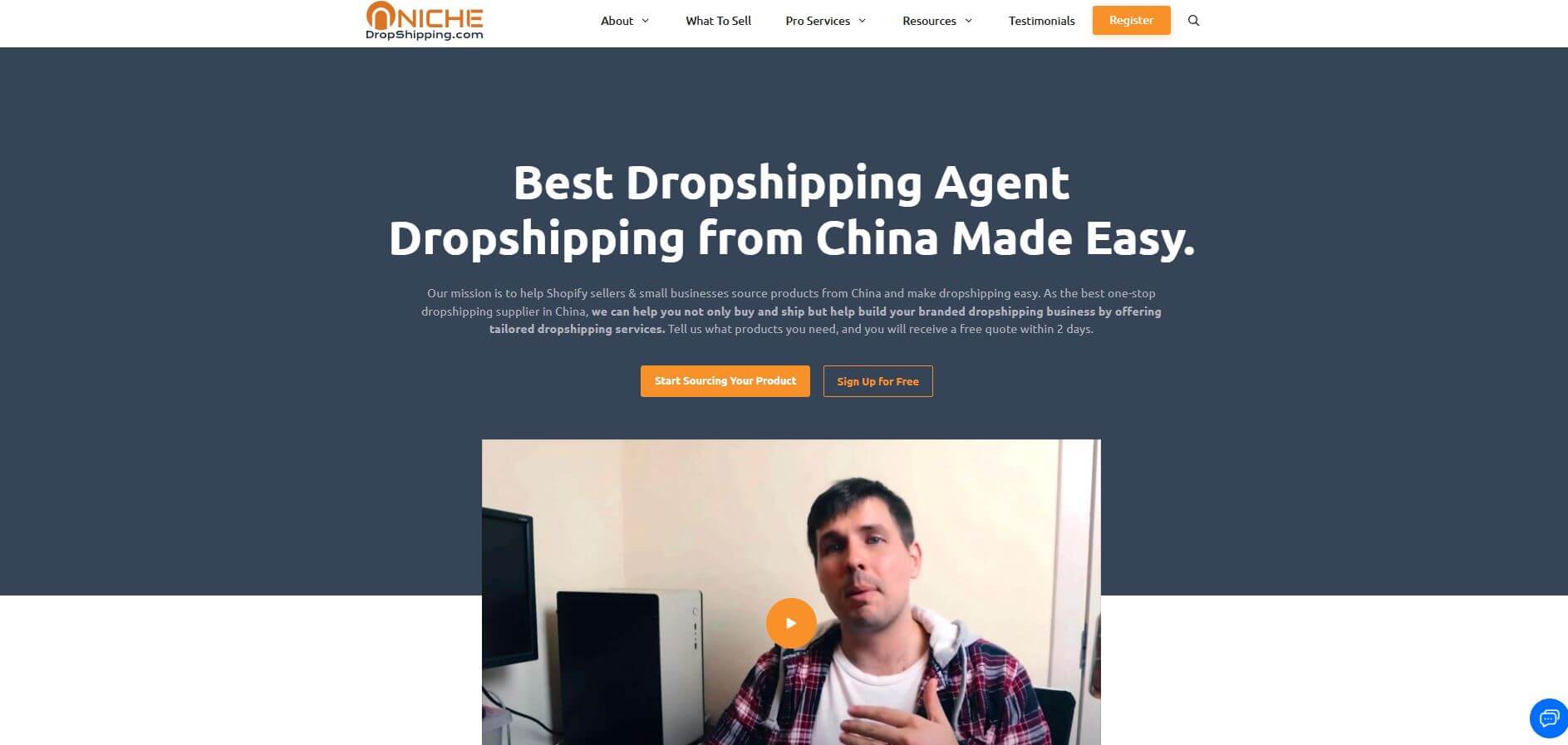
NicheDropshipping is best suited for sellers who are moving beyond basic product testing and want a supply partner that can support branding, quality control, and faster fulfillment.
In 2026, that matters more than ever. As tariffs, customs checks, and customer expectations get stricter, relying on generic marketplace sellers becomes harder to sustain.
NicheDropshipping fills that gap by combining sourcing, private labeling, warehousing, and fulfillment under one system.
Best For: Sellers who want to build a branded store with better quality control, custom packaging, and faster shipping to key markets like the U.S.
Pros:
- Supports private labeling, custom packaging, inserts, and other branding elements
- Offers U.S. warehousing for faster domestic fulfillment on selected products
- Handles product sourcing, fulfillment, and QC in one workflow
- Assigns a dedicated sourcing agent for more personalized support
- Works well for sellers planning to scale beyond simple marketplace fulfillment
Cons:
- More expensive than ordering directly from open marketplaces
- Best pricing usually makes more sense once order volume starts growing
- Requires more planning than plug-and-play supplier platforms
- Standard China-based fulfillment can still be slower if products are not stocked locally
Agents Insider Tip: Many sellers move to NicheDropshipping after proving demand elsewhere. That is usually the right time to switch. If a product is already converting, the next step is not just cheaper sourcing. It is better QC, faster delivery, and cleaner branding before scale starts exposing weak points in your fulfillment.
Wiio – Best for Personalized Sourcing Support
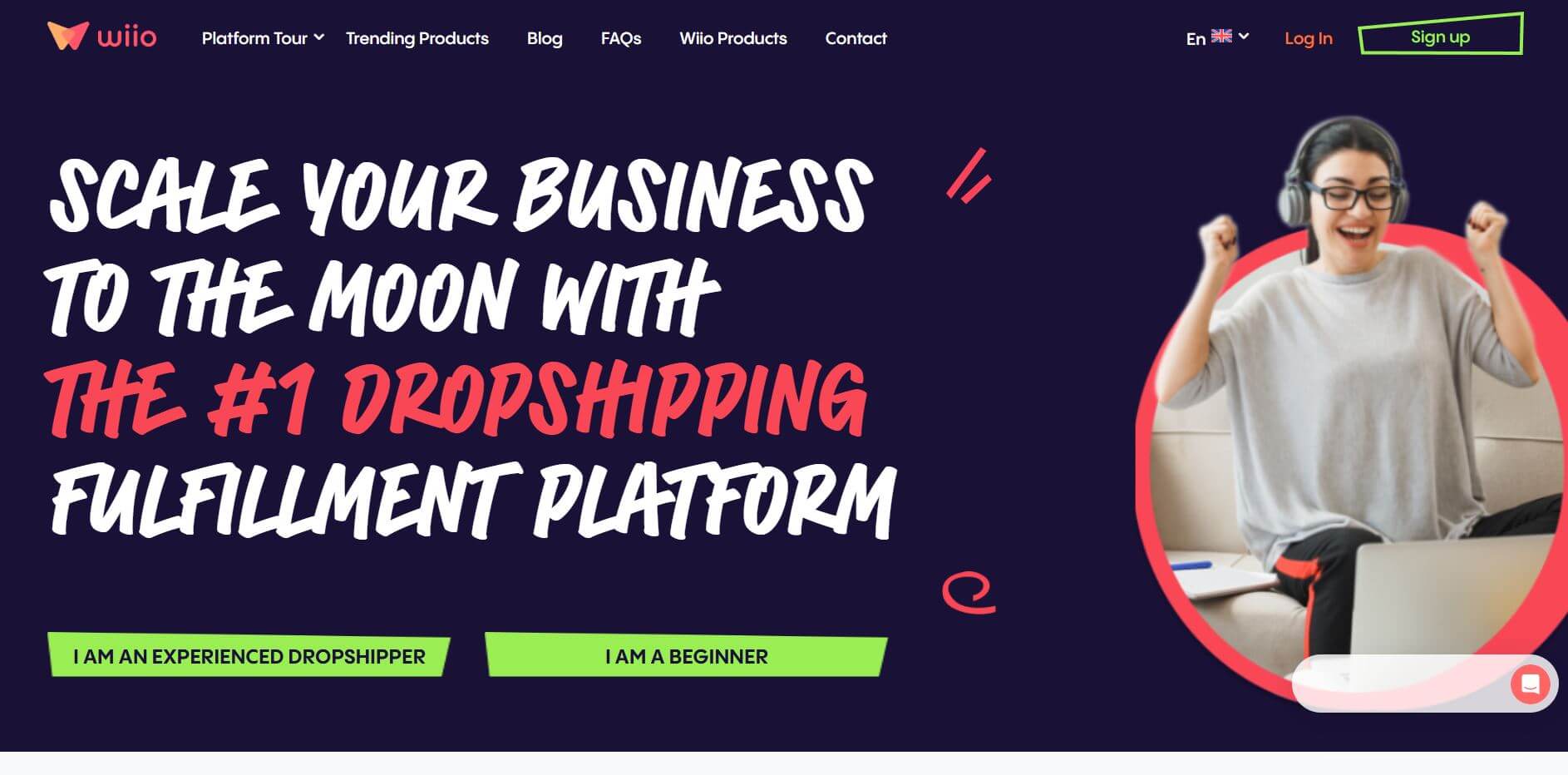
Wiio is a good fit for sellers who want more hands-on sourcing support than a marketplace can offer, but do not necessarily need a fully custom supply chain from day one.
Its biggest strength is that it feels more guided than self-serve. That is useful for stores testing new products quickly while still wanting some control over supplier quality, packaging, and shipping options.
It sits in the middle ground between open platforms and fully managed agents.
Best For: Sellers who want personal sourcing help, flexible product requests, and a more guided fulfillment setup.
Pros:
- Assigns a sourcing agent for one-on-one assistance
- Can source products on request instead of limiting you to a fixed catalog
- Offers branding support such as custom packaging and inserts
- Has China and U.S. warehouse options for faster fulfillment on stocked items
- Can be useful for testing trend-driven products with more support behind the scenes
Cons:
- Smaller default catalog than very large platforms like AliExpress or CJ Dropshipping
- Order top-ups and prepaid workflows may feel less convenient for some users
- Less proven at very large scale than bigger fulfillment ecosystems
- Service-led model can mean slightly higher costs on lower-margin products
Agent’s Insider Tip: Wiio can be useful for finding and launching a product quickly, especially when you need sourcing help. But if the product starts moving in real volume, it is worth reviewing whether a more direct sourcing setup would give you better pricing, more branding control, and stronger backup options.
HyperSKU – Best for Fast Shipping and Stable Fulfillment
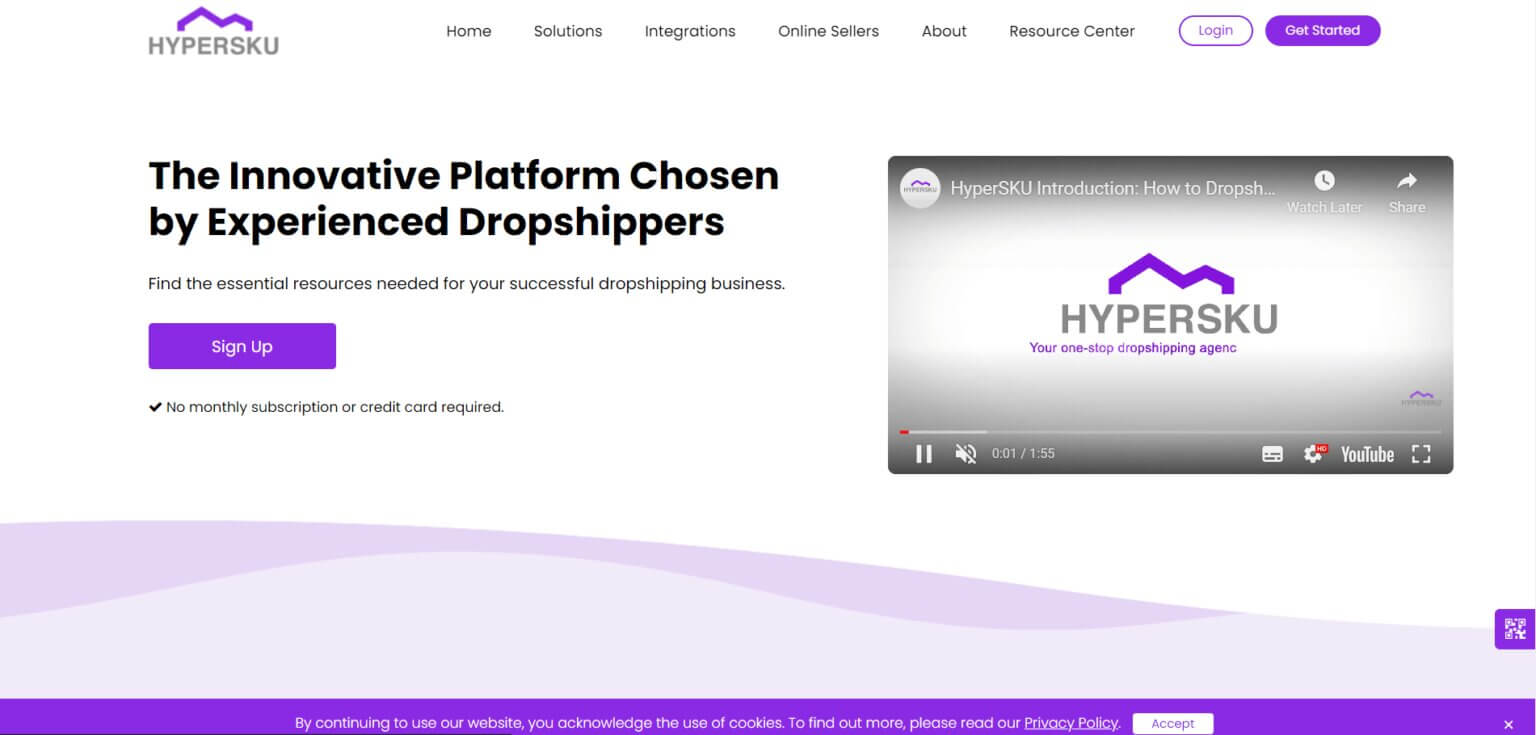
HyperSKU is best for sellers who care more about shipping reliability and backend stability than getting the absolute lowest product cost. That tradeoff makes sense for many stores in 2026.
Fast-moving campaigns, higher-ticket products, and customer acquisition through paid traffic all put pressure on fulfillment. HyperSKU’s value is that it helps reduce fulfillment risk, even if margins are slightly tighter upfront.
Best For: Experienced sellers running paid traffic or high-margin products where fast delivery and stable fulfillment matter more than bargain pricing.
Pros:
- Strong reputation for fast shipping to major markets such as the U.S. and Europe
- Useful automation features for Shopify and WooCommerce workflows
- More curated supplier network than open marketplaces
- Better suited to high-ticket or premium-positioned products
- Can reduce common scaling problems caused by slow fulfillment or poor supplier consistency
- If you’re afraid of out-of-stock issues, you can place a bulk order and store the products in HyperSKUs warehouse. This will keep your business rolling regardless of product availability.
Cons:
- Product pricing is usually higher than open marketplaces
- Product selection is narrower than AliExpress or CJ Dropshipping
- Not ideal if you need a huge variety of niche SKUs
- Some sellers may outgrow it if they need deeper customization or more flexible sourcing arrangements
Agent’s Insider Tip: HyperSKU works well when fulfillment speed is directly tied to ad performance and customer experience. But it is smart to have a backup plan. If one line slows down or a product spikes unexpectedly, a second sourcing partner can protect you from stockouts, missed delivery windows, and rising customer service pressure.
Banggood – Best for Electronics and Gadget Testing
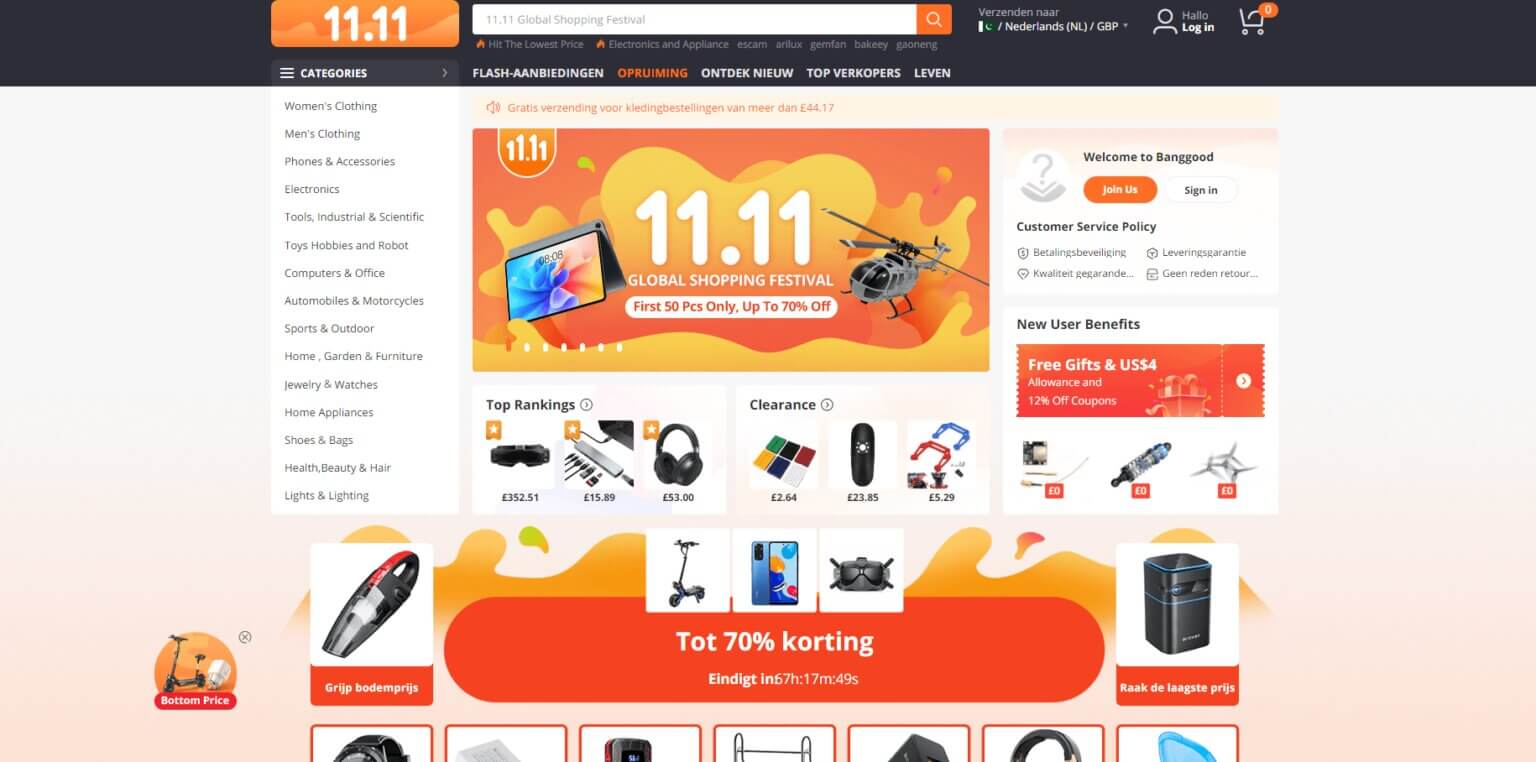
Banggood is still a useful option in 2026 for gadget sellers who want access to a broad catalog and the advantage of overseas warehouse stock on selected items. Its main strength is convenience.
You can test electronics and related products without building a custom sourcing setup first.
The tradeoff is that it functions more like a retail-accessible platform than a true private supply partner, so margins and differentiation can become limited as you grow.
Best For: Dropshippers selling electronics, hobby products, tools, or gadget-focused items who want ready-to-ship inventory and overseas warehouse options.
Pros:
- Strong catalog in electronics, tools, hobby goods, and gadget niches
- Overseas warehouses can shorten delivery times significantly on stocked items
- Easy to join and use without complex onboarding
- Provides dropshipping support tools such as product feeds and bulk ordering
- Helpful for testing demand before moving to direct sourcing
Cons:
- Profit margins can be limited because discounts are modest
- Not all products are stocked in local warehouses, so shipping times vary widely
- Products are not exclusive, so competition is often high
- Branding and customization options are limited compared to agent-based services
Agent’s Insider Tip: Banggood is often best used as a testing channel, not a long-term moat. If a gadget starts selling consistently, that is usually the point where it makes sense to review factory-direct sourcing, custom packaging, or bulk stocking so you are not competing forever on the same public listing.
DHgate – Best for Low-Cost Bulk and Hard-to-Find Products
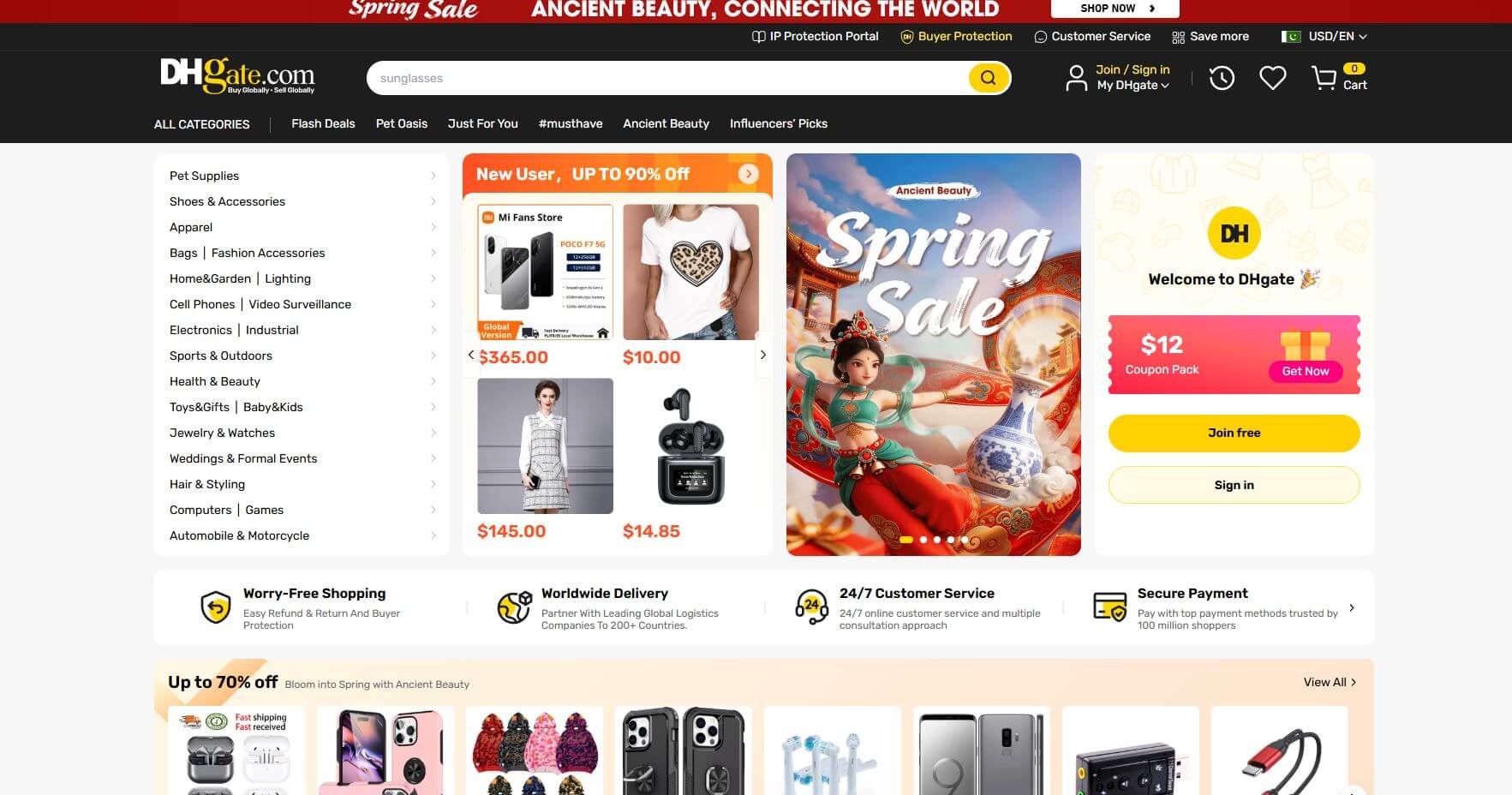
DHgate is most useful as a sourcing marketplace for sellers who know what they are looking for and are comfortable doing more supplier vetting themselves.
In 2026, it is less attractive as a primary fulfillment system and more useful as a pricing and sourcing resource.
Its biggest advantage is access to low-cost suppliers and hard-to-find products. Its biggest weakness is that quality, shipping consistency, and workflow automation can vary a lot from seller to seller.
Best For: Experienced sellers looking for lower-cost sourcing options, niche products, or backup suppliers beyond mainstream dropshipping platforms.
Pros:
- Huge supplier base across many product categories
- Can offer lower prices than more polished dropshipping platforms
- Useful for finding obscure products or bulk deals
- Escrow and platform protections add some security compared to dealing privately
- Good as a secondary sourcing channel once demand is already validated
Cons:
- Quality and reliability vary significantly across sellers
- Shipping can be slow and inconsistent
- Not built around seamless ecommerce automation
- Requires more manual vetting, communication, and order handling
Agent’s Insider Tip: DHgate is better treated as a sourcing database than a complete fulfillment solution. If you find a promising supplier there, the real work starts after that: checking consistency, testing samples, confirming lead times, and making sure the product can actually support repeatable customer experience at scale.
AliExpress – Best for Beginners Testing Products
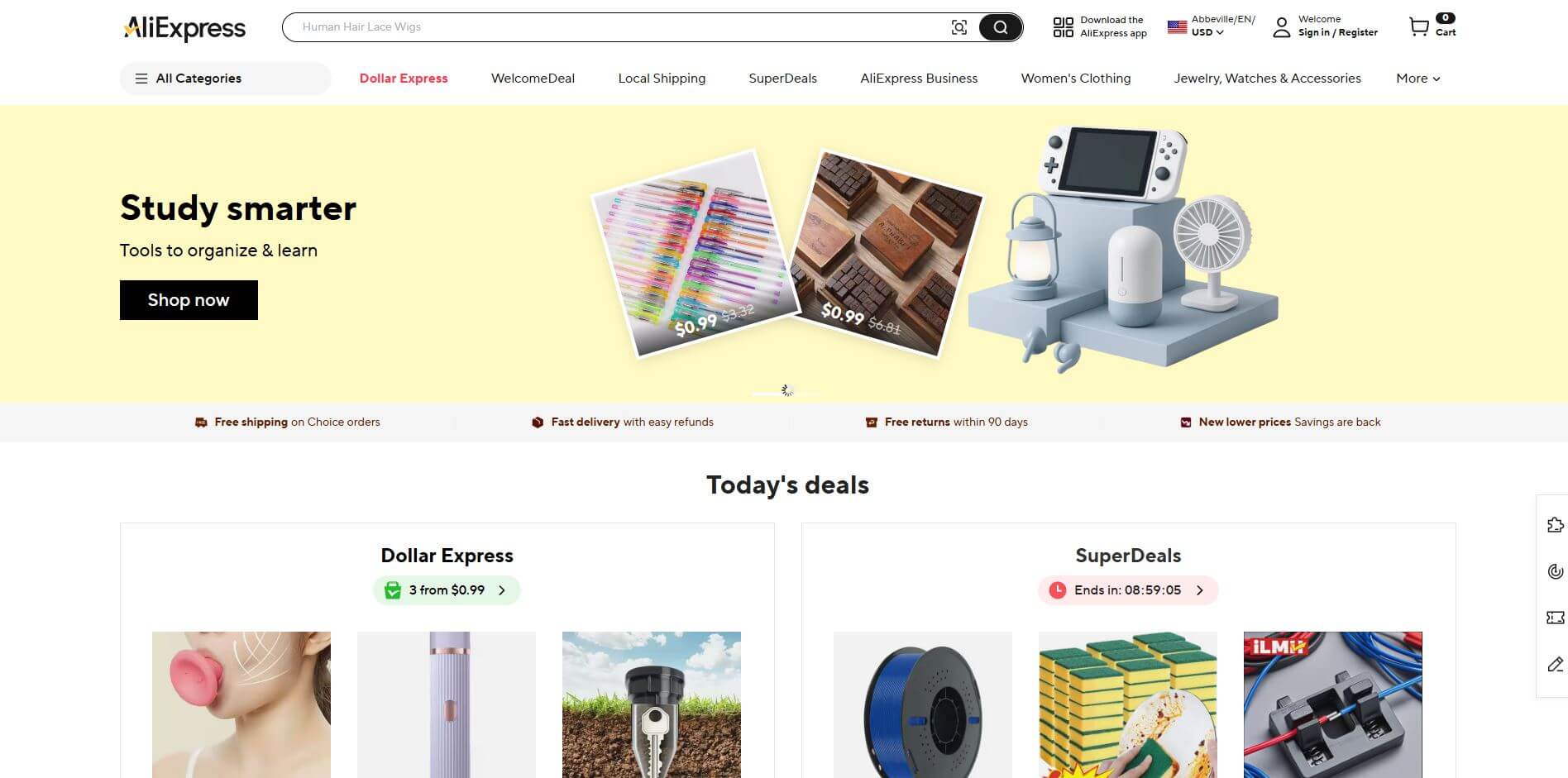
AliExpress is still the easiest place to start if your goal is product testing, not long-term fulfillment. Its biggest advantage is simple: huge product variety, low barriers to entry, and no need to buy inventory upfront.
That makes it useful for validating offers quickly. The downside is that shipping speed, product consistency, and branding control are often too weak for stores that want to scale beyond the testing phase.
Best For: New dropshippers testing product ideas, validating niches, or launching a store with minimal upfront commitment.
Pros:
- Massive product selection across nearly every consumer category
- No MOQ, which makes it easy to test products one order at a time
- Buyer protection and dispute systems reduce some supplier risk
- Works smoothly with popular dropshipping tools and Shopify import apps
- Useful for product research, competitor tracking, and trend spotting
Cons:
- Shipping times are often too slow for a good customer experience
- Product quality varies heavily from seller to seller
- Branding options are very limited or nonexistent
- Import duties, VAT, or customs issues can become a problem depending on destination and order value
- Many sellers are resellers rather than actual manufacturers
Agent’s Insider Tip: Treat AliExpress as a testing tool, not a scaling strategy. It is great for finding early winners, but once a product starts converting consistently, the real opportunity is usually in moving to a better supply setup with stronger QC, faster shipping, and better pricing.
CJ Dropshipping – Best for All-in-One Fulfillment
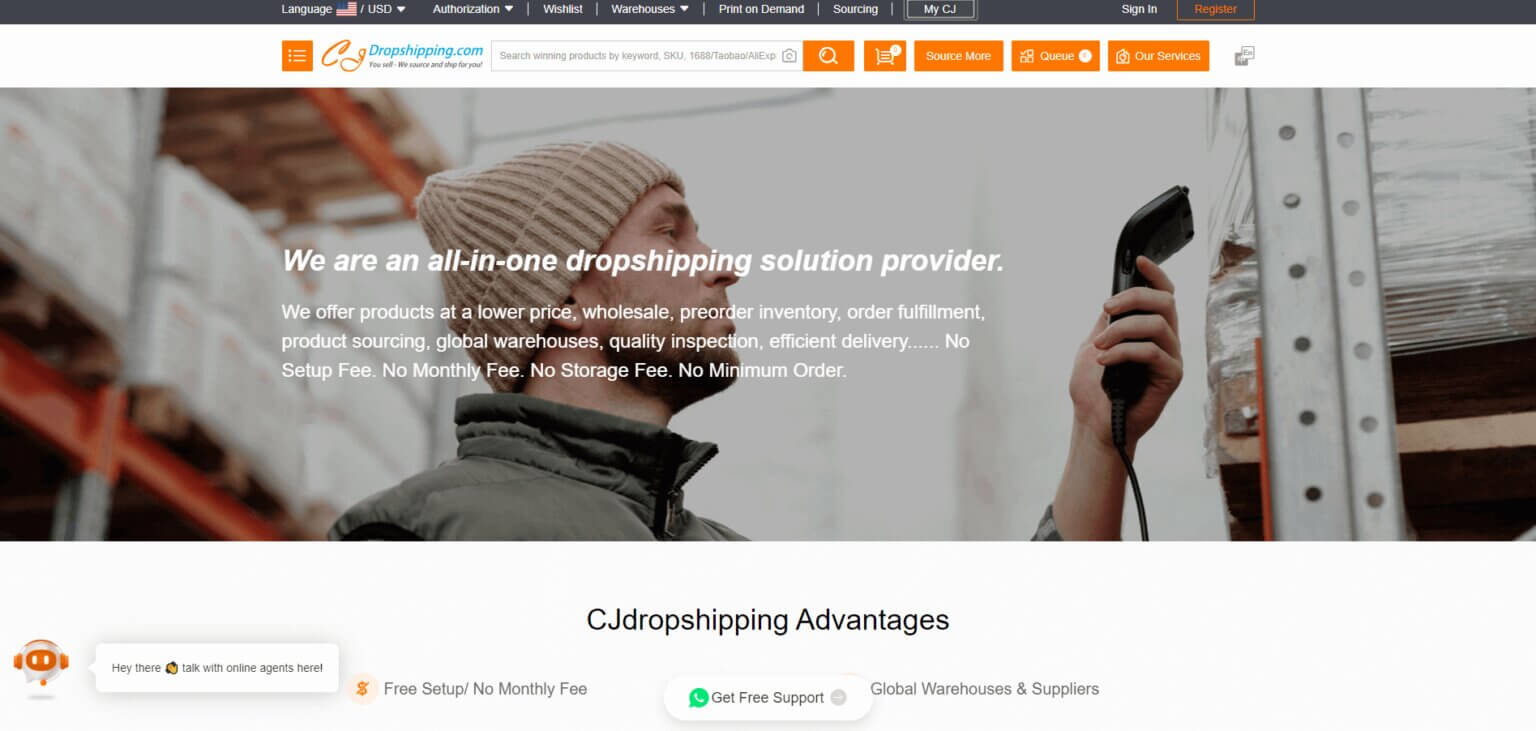
CJ Dropshipping works well for sellers who want more structure than AliExpress but are not ready to build a fully custom supply chain. Its biggest strength is convenience.
You can source products, sync orders, use overseas warehouses, and access branding support within one system.
That makes CJ a practical option for stores that are growing fast and need more operational control without managing multiple vendors manually.
Best For: Growing ecommerce sellers who want an all-in-one platform for sourcing, fulfillment, automation, and warehouse support.
Pros:
- Large product catalog with sourcing support if an item is not already listed
- Overseas warehouse options can shorten delivery times significantly
- Supports custom packaging, POD, product photography, and other value-added services
- Strong integrations with Shopify, WooCommerce, TikTok Shop, and other platforms
- Free to start, which makes it accessible for smaller sellers
Cons:
- The platform can feel overwhelming at first because it offers so many tools and workflows
- Service quality and shipping speed may fluctuate during peak periods
- Product pricing is not always the cheapest compared to direct sourcing routes
- Some advanced perks are tied to paid plans or higher usage levels
- Large-system setup can feel less flexible for sellers with unusual customization needs
Agent’s Insider Tip: CJ is often a strong middle step between marketplace sourcing and a more tailored agent setup. It helps standardize operations early on, but once a product becomes a real growth driver, it is worth reviewing whether a more dedicated sourcing model would give you better cost control, branding flexibility, and supplier backup.
EPROLO – Best for POD and Entry-Level Branding
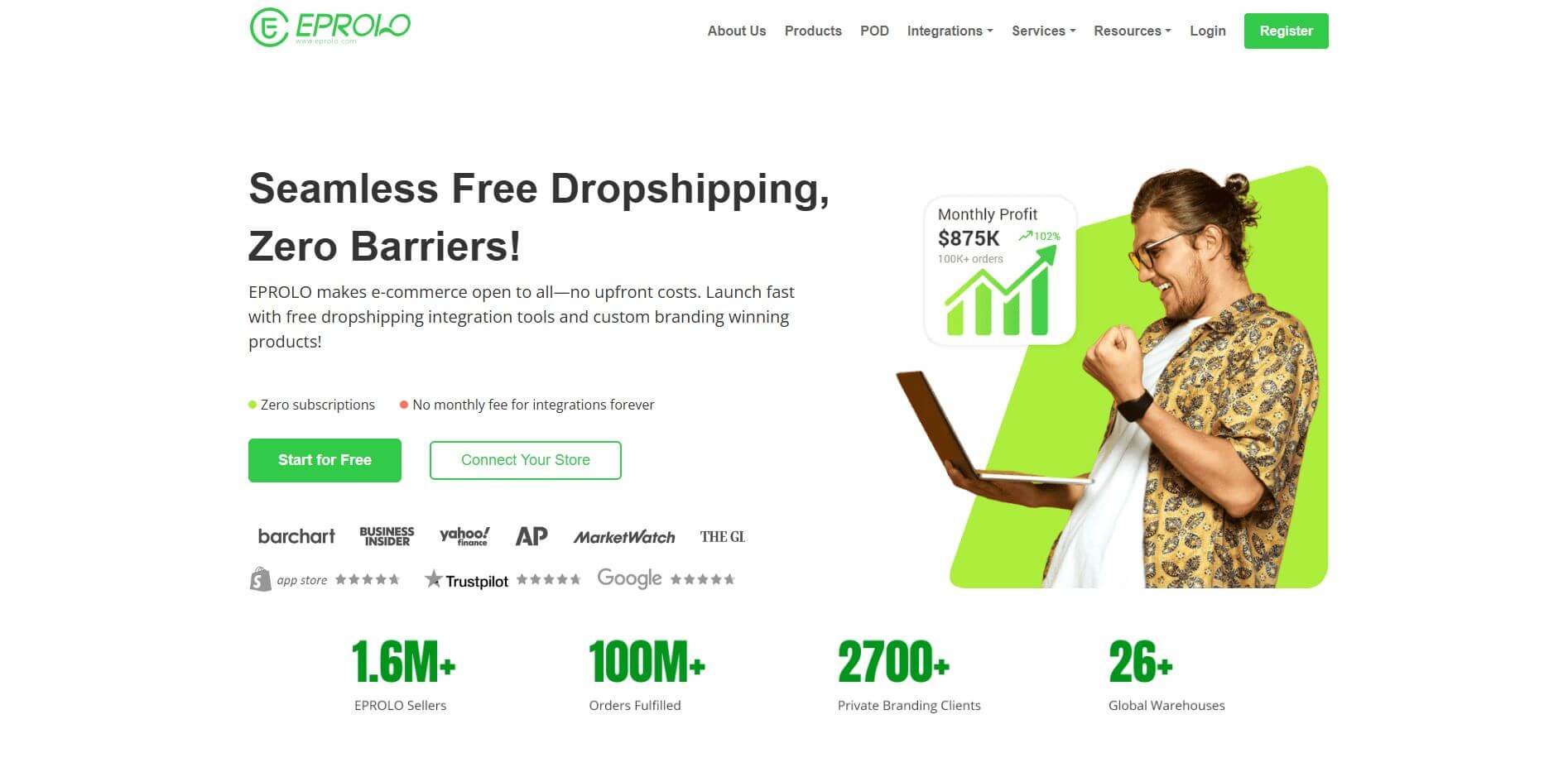
EPROLO is a practical option for sellers who want to combine dropshipping with early brand-building, especially in apparel, accessories, and lifestyle products.
Its appeal is that it lowers the barrier to trying print-on-demand, logo customization, and branded packaging without requiring a fully custom manufacturing setup.
That makes it useful for stores that want to move beyond generic product reselling but are still in an early or mid-growth phase.
Best For: Apparel, accessory, and lifestyle sellers who want to test branded products or simple private-label ideas without committing to large inventory orders.
Pros:
- Combines dropshipping with print-on-demand and entry-level branding support
- Offers custom packaging and logo options on selected products
- Provides warehouse and shipping support beyond China-only fulfillment
- No subscription fee to start using the platform
- Useful for sellers experimenting with simple branded bundles or custom product lines
Cons:
- The standard catalog can overlap heavily with products already found on AliExpress
- Custom sourcing requests may take extra time
- Inventory sync and scaling workflows may need closer monitoring as order volume grows
- Better suited to branding existing products than developing highly customized ones
- Less robust than a more dedicated supply chain once scale increases significantly
Agent’s Insider Tip: EPROLO works well as a low-risk way to start building a branded offer. But once a product line proves demand, the next improvement usually comes from tightening the supply chain itself. Better factory pricing, stronger QC, and more control over packaging often matter more than staying inside a convenient app.
LightInTheBox – Best for Fashion and Trend-Led Product Testing
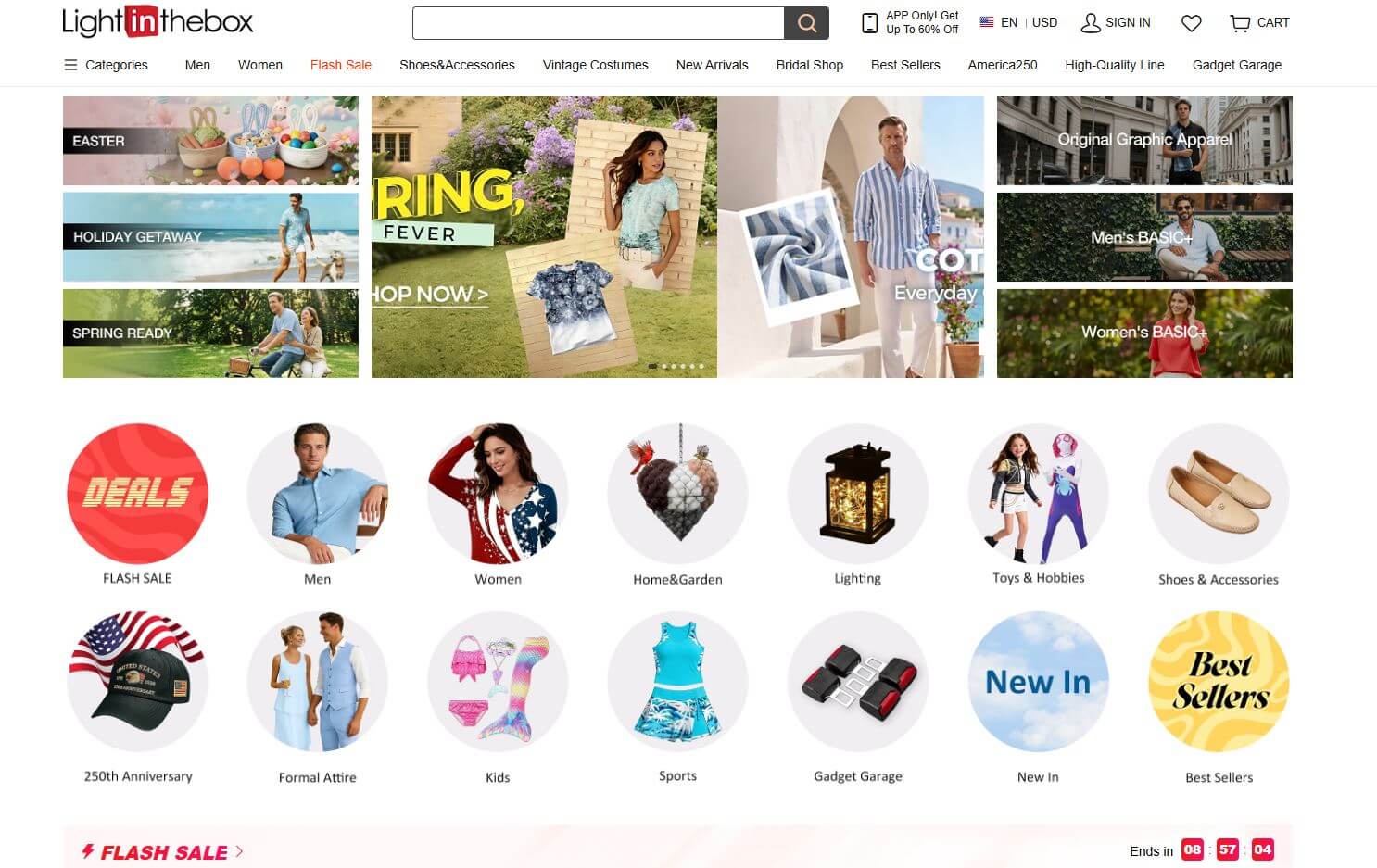
LightInTheBox is most useful as a fashion-focused sourcing option for sellers who want access to a wider variety of styles than they may find on typical dropshipping apps.
It is especially relevant for trend-driven categories like occasion wear, accessories, and visually distinctive fashion products. Its value is less about brand control and more about quick market access to styles that can perform well if presented and targeted properly.
Best For: Boutique fashion stores, accessory sellers, and trend-based brands testing visually distinctive products.
Pros:
- Strong selection in fashion, occasion wear, costumes, and other style-led categories
- Easy to start using without formal onboarding or supplier outreach
- Can offer wholesale-style pricing on selected products without MOQ pressure
- Some warehouse options help reduce delivery times on stocked items
- Useful for testing fashion trends that are harder to find on standard supplier platforms
Cons:
- Shipping speed depends heavily on where the item is stocked
- Sizing inconsistencies can increase refund and return risk
- Branding control is minimal, which makes long-term differentiation harder
- Customer support is built more for retail buyers than dropshipping businesses
- Not ideal if your goal is building a highly branded customer experience
Agent’s Insider Tip: LightInTheBox can be useful for spotting and testing fashion winners quickly. But if one starts performing, it is usually smarter to treat that as a sourcing lead rather than a permanent fulfillment solution. That is where direct sourcing, better labeling, and more reliable sizing control start to matter.
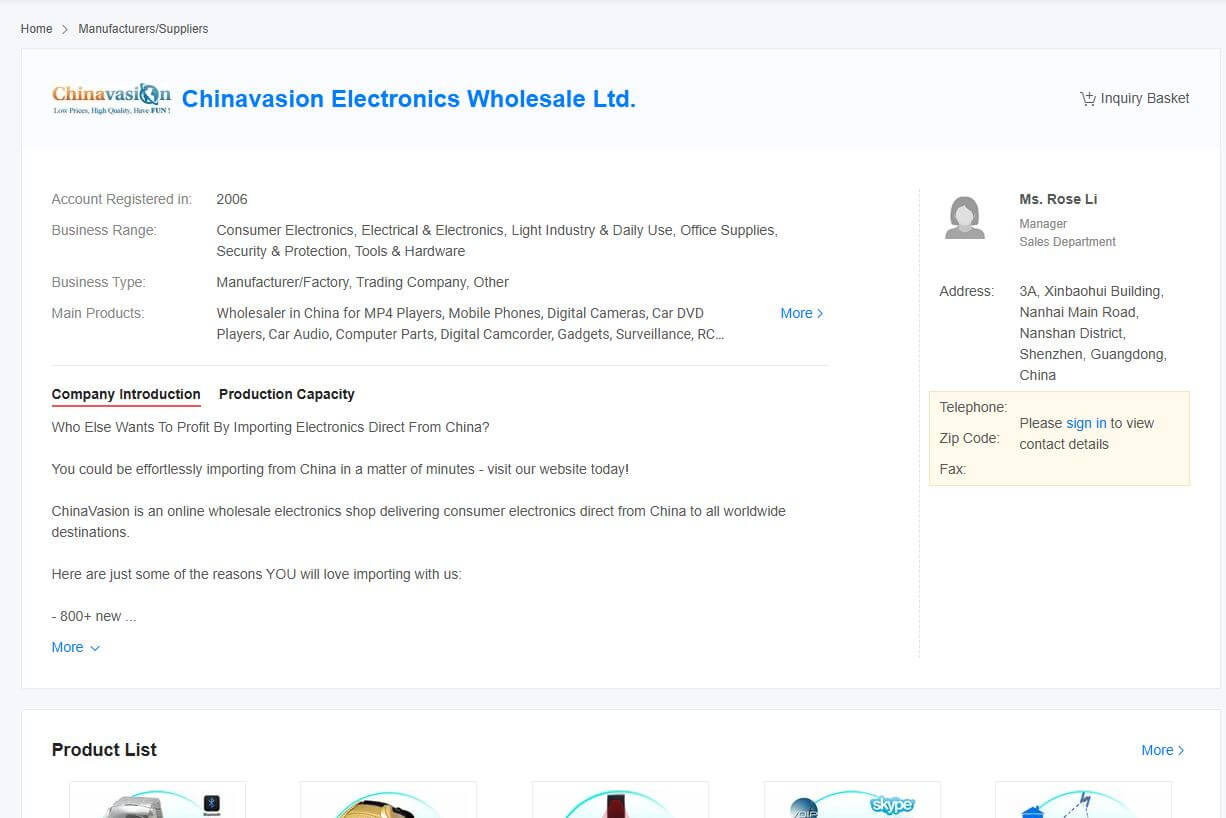
Chinavasion is a strong niche option for sellers focused on electronics and gadget categories where quality issues can quickly damage trust and increase returns. Its advantage is not breadth across every product category.
It is a specialization. For stores selling tech accessories, smart devices, or niche gadgets, a supplier with better QC and more consistent electronics handling can be worth more than chasing the absolute lowest price.
Best For: Electronics and gadget sellers who want more dependable product quality and better control over fulfillment risk.
Pros:
- Focuses on electronics, accessories, and gadget-related categories
- Stronger QC positioning than many open marketplaces
- No MOQ, which helps with testing products one order at a time
- Offers plain packaging that is more dropshipping-friendly
- Faster shipping options and some U.S. warehouse availability on selected items
Cons:
- Limited if your store also sells outside the electronics category
- Interface and integrations feel more dated than newer supplier platforms
- Stock levels on trending products can shift quickly
- Some products still face price competition from larger public marketplaces
- Less convenient for sellers who want plug-and-play Shopify workflows
Agent’s Insider Tip: For electronics, lower price is not always the real win. A cheaper supplier stops looking cheap once refund rates, defects, and customer complaints start climbing. If you are selling products where reliability matters, stronger QC often protects margin better than squeezing out a few extra dollars on the buy price.
1688 – Best for Factory-Level Product Pricing
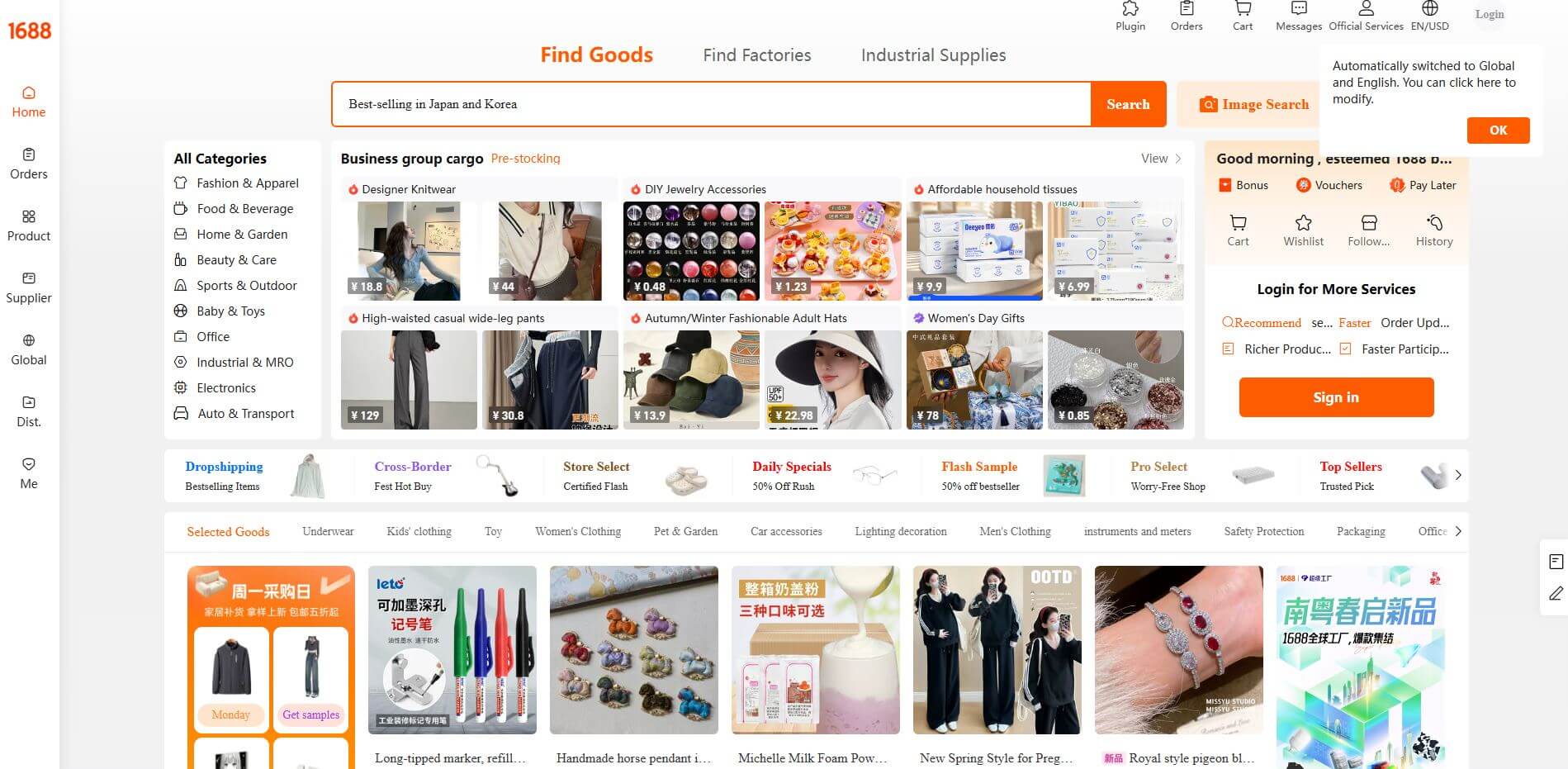
1688 is one of the most powerful sourcing platforms for sellers who want factory-level pricing instead of marketplace markups. Unlike AliExpress, which targets international buyers, 1688 primarily serves the Chinese domestic wholesale market.
That means prices are often significantly lower. However, the platform is not designed for overseas dropshippers, which is why many sellers access it through sourcing agents or fulfillment partners who handle communication, payments, quality checks, and international shipping.
Best For:Experienced sellers who want lower product costs and are ready to build a more structured supply chain.
Pros:
- Products are often much cheaper than on AliExpress because many suppliers sell directly to domestic wholesalers or retailers.
- Thousands of factories and wholesalers across nearly every consumer category.
- Once a product proves demand, sourcing from 1688 can significantly improve profitability.
- Many suppliers support custom packaging, branding, and product modifications.
- You can often find the original manufacturer behind popular marketplace products.
Cons:
- Many sellers do not offer global shipping or English support.
- Most communication happens in Chinese, which makes negotiation and product verification harder.
- Some suppliers prefer local payment methods rather than international buyer protections.
- Without vetting, you may encounter inconsistent suppliers or misleading listings.
- Consolidation, quality checks, and shipping usually need to be handled by a third party.
Agent’s Insider Tip: The biggest mistake beginners make is treating 1688 like a cheaper AliExpress. It is not a plug-and-play dropshipping platform. Professional sellers use it as a sourcing engine. They identify the right factory, verify samples, and then route orders through a fulfillment partner that handles QC, consolidation, and international shipping.
What to Look for When Choosing Reliable China Dropshipping Suppliers?
The Chinese market not only possesses a large variety of products but also has many dropshipping suppliers.
In this competitive market, a good supplier gives you the edge your online business needs.
Finding reliable suppliers in China can be frustrating, with so many options.
Let’s go over a couple of things to consider when you’re searching for a dropshipping supplier in China.
1) Timely Communication
Your dropshipping business is only as good as your supplier.
Keeping that in mind, the response rate of a supplier is enough to determine whether they’re trustable or not.
The supplier should ideally respond to your queries within 12 to 15 hours on working days.
If they take a long time to respond to basic queries, then don’t expect them to provide a premium after-sales service either.
Even if you have to slightly stretch your budget, you should only work with suppliers that offer premium quality products.
Selling inferior products might make you some bucks at the start, but in the long run, it’s a recipe for disaster.
Sooner or later, your customers will notice that you’re cutting corners and they will stop buying from you.
This will also waste all the money you’ve invested in marketing, so you don’t really earn much anyway.
3) Reliable and Fast Shipping
One of the biggest issues with dropshipping is long shipping times.
If you’re working with a supplier from AliExpress, then shipping to some countries can even take up to 60 days.
Customers don’t want to wait that long, so if that happens, then say goodbye to recurring sales.
Opting for faster shipping methods normally comes at the cost of paying higher shipping fees, which will slash your profits.
The only solution is to search for suppliers who have warehouses in major countries like the EU and U.S.
You can then store the products in their warehouses to significantly reduce the delivery time.
4) Custom Packaging
Dropshipping suppliers often use random packaging, which honestly, won’t contribute much to building a brand.
If you want your business to grow, you have to consider private labeling sooner or later.
Although not necessary, it’s advisable to prioritize suppliers that offer custom packaging.
Otherwise, you’d have to look for a new supplier down the lane, which can potentially disrupt the flow of your business.
5) Competitive Pricing
It’s true that pricing isn’t a core factor when choosing a supplier; quality should always be your top priority.
But that doesn’t mean pricing shouldn’t matter at all.
Don’t settle too early, and try negotiating with the sellers. Avoid making decisions based on the listing price alone.
Most suppliers are often ready for negotiations in private messages, especially if your business shows potential for bulk orders.
6) Integration
This is a bonus, but if your dropshipping supplier offers integrations, then that can save a huge chunk of your time.
You won’t have to micromanage your business as you can automate basic day-to-day tasks such as importing new products and forwarding customer details.
Manually doing these things won’t bother you much at the start, but as your business grows, it can become a nightmare.
That’s the reason we offer an automated dropshipping solution, so you can streamline your business.
Final Thoughts
Each dropshipping supplier has its strengths and weaknesses. Even pitted against each other, they come out on top in different areas.
You should be looking for the area/specialization you expect to benefit from most.
Some dropshipping platforms provide an extensive inventory option; some have broader warehousing networks, while others have lower prices.
You can find sites that allow you to perform very specialized product analysis, while others may offer automated services. Ultimately, the choice is yours.
You need to consider your needs and what company can meet them most. However, always check the credibility and customer reviews of the site you’re interested in.
If you’re looking for a company that checks all of these boxes, then NicheDropshipping is a viable option. Our services are tailored to support you through each step of your dropshipping journey.
All you have to do is give us a call and communicate your requirements and our dedicated agents will guide you.
FAQs about China Dropshipping Suppliers
Why Do You Need A Dropshipping Supplier In China?
China offers cheaper goods than most of the world, as there’s a surplus of workers, and average wages are lower. These conditions make it less expensive for the manufacturer, which reduces their product cost.
In addition, with the tremendous amount of dedicated industrial infrastructure and supportive government policies, Chinese suppliers have flexible prices for the same quality product.
All of this makes Chinese suppliers a clear choice for dropshippers trying to make lucrative profits.
What Are Some Ways to Find Reliable Suppliers for Dropshipping?
There are multiple ways to search for a dropshipping supplier.
One of them is to sort the suppliers based on their ratings on AliExpress and then evaluate their response time, shipping, and pricing.
Other than that, you can also search on dropshipping directories, or by directly entering the keywords on a search engine with dropshipping supplier + the product’s name.
How Can I Dropship from Taobao?
First, sign up for your account and choose a niche. Try scouting the competition to get a better overview.
After finding the best supplier in your chosen niche, work closely with the Taobao professional agents, so you don’t make any mistakes and always stay on point.
Taobao has an excessive inventory and enormous potential for starting any eCommerce business.
How to Stop Fake Wholesale Dropshipping Suppliers?
Many retailers disguise themselves as wholesale suppliers.
Wholesale suppliers don’t sell to the general public without submission of a formality or some other proof.
There’s no real way to identify fake suppliers other than by checking online reviews. If a supplier doesn’t have too many reviews, then it’s more of a gamble and we wouldn’t recommend placing a bulk order.
Some fake suppliers also often send low-quality products and usually have bad management, leading to issues mid-business.