The best dropshipping suppliers in India help sellers source products, automate order fulfillment, support local payment methods, and reduce delivery times. In this guide, we compare Indian dropshipping suppliers by business model, niche, COD support, Shopify compatibility, and scaling potential so you can choose the right option for your store.
Quick Facts
| Factor | What to Know |
| Best for local delivery | Indian suppliers can offer faster domestic shipping and broader pincode coverage |
| COD support | Available with some suppliers, but remittance terms and RTO fees vary |
| GST requirements | Depend on your business model, turnover, marketplace, and supplier arrangement |
| Shopify integration | Some suppliers support direct integration; others require apps, CSV files, or manual processing |
| Best supplier type | Depends on whether you need a marketplace, dedicated platform, POD service, or fulfillment agent |
| Main operational risk | COD returns, stock mismatches, inconsistent dispatch times, and limited automation |
| Best for scaling | Suppliers with inventory visibility, reliable fulfillment, QC, and private-label support |
What Is a Dropshipping Business?
Dropshipping is a streamlined form of retail business where you, the seller, don’t keep products in stock.
Instead, when your store sells a product, it purchases the item from a third party and has it shipped directly to the customer. As a result, you never see or handle the product.
Advantages of Dropshipping
- Low Overhead: You don’t need to invest heavily in inventory.
- Flexibility: Run your business from anywhere with an internet connection.
- Wide Selection of Products: Offer a vast range without storing anything.
Disadvantages of Dropshipping
- Less Control Over Stock: Dependency on suppliers’ inventory.
- Lower Margins: Competitive pricing can reduce profit margins.
- Shipping Complexities: Dealing with shipments from multiple suppliers can be complex.
Finding the right supplier is paramount in dropshipping because they are responsible for the quality and delivery of your products.
With its burgeoning market and adoption of online retail, dropshipping in India has become an attractive opportunity. Products in high demand range from apparel to electronics, offering a vast market to tap into.
This business model suits aspiring entrepreneurs due to its low entry barriers and the potential to scale rapidly. When considering a foray into dropshipping, weigh the pros and cons carefully to determine if this model aligns with your business goals.
Why Dropship to India?
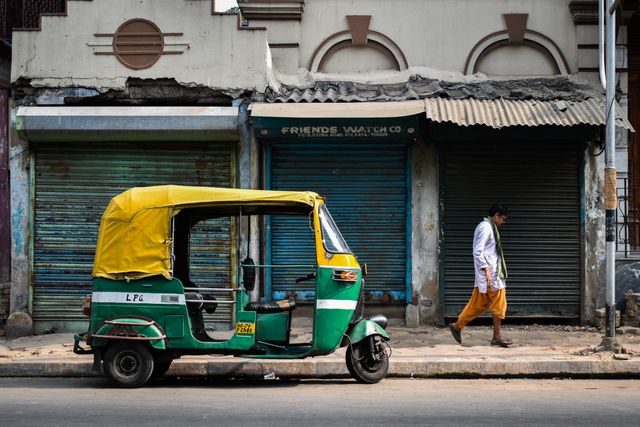
India’s booming eCommerce industry presents a major opportunity for dropshippers. With over 800 million internet users and a growing appetite for online shopping, the Indian market is ideal for launching a low-risk, high-potential dropshipping business.
Dropshipping in India offers several key advantages:
- Minimal Upfront Investment – You can partner with free dropshipping suppliers in India and launch your store without holding inventory or managing logistics.
- Wide Product Variety – Whether you’re into niche dropshipping or want to sell across multiple categories, Indian suppliers offer everything from fashion and electronics to beauty, decor, and beyond.
- Private & White Label Options – Many top dropshipping websites in India support white label and private label dropshipping, allowing you to create a branded experience for your customers.
- Localized Fulfillment – Working with Indian suppliers means faster shipping times, better pricing for local customers, and easier returns or replacements.
In addition, most Indian dropshipping platforms integrate smoothly with tools like Shopify, WooCommerce, and Amazon, simplifying store setup and daily operations.
With the right supplier and strategy, dropshipping to India can be a scalable and sustainable business model in one of the world’s most exciting digital markets.
Why Do You Need a Dropshipping Supplier in India?
Local Market Knowledge
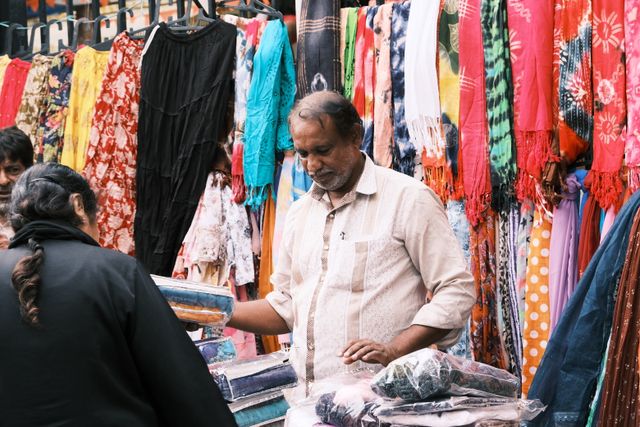
Indian suppliers are more familiar with regional demand, seasonal buying patterns, price sensitivity, and category trends. This can help you choose products that are better suited to Indian customers instead of relying on generic global bestsellers.
Faster Domestic Shipping
Suppliers holding inventory in India can usually deliver faster than overseas sellers. This is especially useful when targeting major cities and serviceable pincodes where customers expect shorter delivery windows.
Simpler COD and RTO Management

Many Indian dropshipping suppliers already work with cash-on-delivery orders. They may also provide clearer processes for COD remittance, failed deliveries, return-to-origin charges, and reattempts.
Easier Domestic Logistics
Local sourcing reduces the need to manage customs clearance, import duties, and cross-border documentation for individual orders. Returns can also be easier when the supplier provides an Indian return address.
Products Suited to Indian Buyers
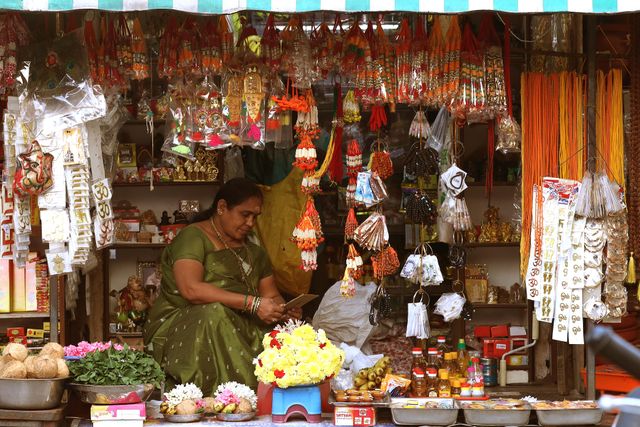
Indian suppliers often carry products aligned with local preferences, climate, festivals, fashion trends, and spending habits. This makes them useful for categories where demand differs significantly from Western markets.
More Accessible Customer Support
Working in the same time zone can make stock checks, order issues, and delivery follow-ups easier. Communication may also be smoother when suppliers support familiar channels such as phone, WhatsApp, and local payment methods.
How to Choose a Reliable Dropshipping Supplier in India?
Choosing the right supplier requires more than comparing product prices. We suggest evaluating how well each supplier fits your target market, tax setup, delivery model, and store operations before adding their products to your catalog.
1. Define Your Dropshipping Requirements
Start by deciding what you need from the supplier. Consider your product category, target price range, expected order volume, branding needs, sales channels, and whether you plan to offer prepaid payments, COD, or both.
2. Search Within the Right Supplier Type
A B2B marketplace, dedicated dropshipping platform, POD supplier, and fulfillment agent serve different purposes. Marketplaces may offer more variety, while dedicated platforms usually provide stronger order automation and fulfillment support.
3. Verify the Supplier’s Business Details
Check the company’s registered business name, GST information, office or warehouse address, contact details, and published policies. Be cautious when a supplier avoids sharing basic documentation or requests payment through an unrelated personal account.
4. Check COD and Remittance Terms
Confirm whether COD is supported across your target pincodes and how frequently collected payments are transferred to you. Ask about COD fees, payout delays, reserves, deductions, and whether remittance is released before or after the return period.
5. Review the RTO Policy
Return-to-origin charges can significantly reduce margins, especially in COD-heavy stores. Confirm who pays the forward and return shipping fees, whether delivery reattempts are available, and how rejected or undelivered products are handled.
6. Confirm GST and IEC Requirements
Check whether the supplier provides valid GST invoices and how taxes appear on each transaction. An Importer Exporter Code is generally relevant when products cross international borders, while domestic arrangements may follow different requirements. Tax and import obligations depend on your setup, so verify them with a qualified professional.
7. Verify Pincode and Courier Coverage
Ask for the supplier’s serviceable-pincode list rather than relying on a claim of nationwide delivery. Check whether COD, reverse pickup, and standard delivery times are available in the regions you plan to target.
8. Compare Store Integrations
Look for features such as Shopify or WooCommerce integration, automated order forwarding, inventory syncing, product mapping, tracking updates, and order-status notifications. Manual processing may be manageable initially but becomes error-prone as order volume grows.
9. Order Samples
Place test orders to your own address and, where possible, to different regions. Review the actual product, packaging, invoice, tracking communication, dispatch time, and final delivery experience.
10. Compare the Total Cost
Calculate the product cost alongside shipping, COD charges, GST, subscriptions, returns, RTO exposure, packaging, and transaction fees. A lower catalog price does not always result in a stronger profit margin.
11. Test Customer Support
Contact the supplier with realistic questions about stock, returns, damaged products, and order delays. Their response time and clarity will indicate how well they may handle problems once customers are waiting.
12. Create a Shortlist and Run a Trial
Shortlist two or three suppliers and process a limited number of orders before committing. Track inventory accuracy, dispatch speed, delivery success, RTO rates, support quality, and customer complaints to identify the most reliable option.
Types of Indian Dropshipping Suppliers
Indian dropshipping suppliers operate under different business models. Choosing the right type depends on how much product variety, automation, branding, and fulfillment support your store needs.
| Supplier Type | How It Works | Best For | Main Trade-Off |
| B2B Marketplace | Connects you with manufacturers, wholesalers, and traders across multiple categories | Sellers comparing products and negotiating directly with suppliers | Many listings are not built for automated dropshipping, so order handling may be manual |
| Dedicated Dropshipping Platform | Provides a ready-made catalog, order processing, shipping, and sometimes store integrations | Beginners and sellers who want a simpler domestic setup | Product control, branding options, and margins may be limited |
| Print-on-Demand Supplier | Produces customized items only after a customer places an order | Apparel, accessories, gifts, and creator-led brands | Production time and print consistency must be monitored |
| Social Commerce Platform | Allows resellers to share products and earn a margin without holding stock | Beginners testing demand through social media or messaging apps | Limited control over packaging, customer data, and brand presentation |
| Fulfillment Agent | Sources products, stores inventory, inspects orders, and ships on the seller’s behalf | Growing stores that need sourcing, QC, private labeling, or cross-border fulfillment | Usually requires more coordination and may be better suited to consistent order volume |
B2B Marketplaces
B2B marketplaces give you access to a broad network of Indian manufacturers and wholesalers. They are useful for product discovery and supplier comparison, but you must confirm whether each seller supports single-order fulfillment, neutral packaging, returns, and direct customer shipping.
Dedicated Dropshipping Platforms
Dedicated platforms are designed to manage more of the dropshipping workflow. Depending on the provider, this may include catalog access, inventory updates, order forwarding, COD support, tracking, and Shopify or WooCommerce integration.
Print-on-Demand Suppliers
POD suppliers manufacture customized products after an order is received. This reduces inventory risk and supports branded designs, but sellers should test print durability, garment quality, color accuracy, packaging, and production timelines before launching.
Social commerce apps are built for low-barrier reselling. They can help beginners test products quickly, although they generally provide less control over the storefront experience, customer ownership, pricing, and branded packaging.
Fulfillment Agents
A fulfillment agent offers more hands-on supply chain support than a marketplace or catalog platform. Services may include factory sourcing, quality inspection, inventory storage, custom packaging, and automated order fulfillment. This model is often more suitable when you want to build a branded store or source products beyond standard Indian catalogs.
A List of Top Dropshipping Suppliers in India
The suppliers below include B2B directories, dedicated dropshipping services, print-on-demand companies, and social commerce apps. Their business models differ significantly, so we suggest comparing fulfillment terms directly rather than assuming every listed seller supports single-unit dropshipping.
B2B Marketplaces
B2B marketplaces connect you with independent manufacturers, wholesalers, and exporters. IndiaMART, ExportersIndia, TradeIndia, and TradeFord primarily facilitate supplier discovery rather than managing fulfillment on your behalf.
1. IndiaMART
Type: B2B marketplace
Best for: Finding and comparing Indian manufacturers across multiple categories
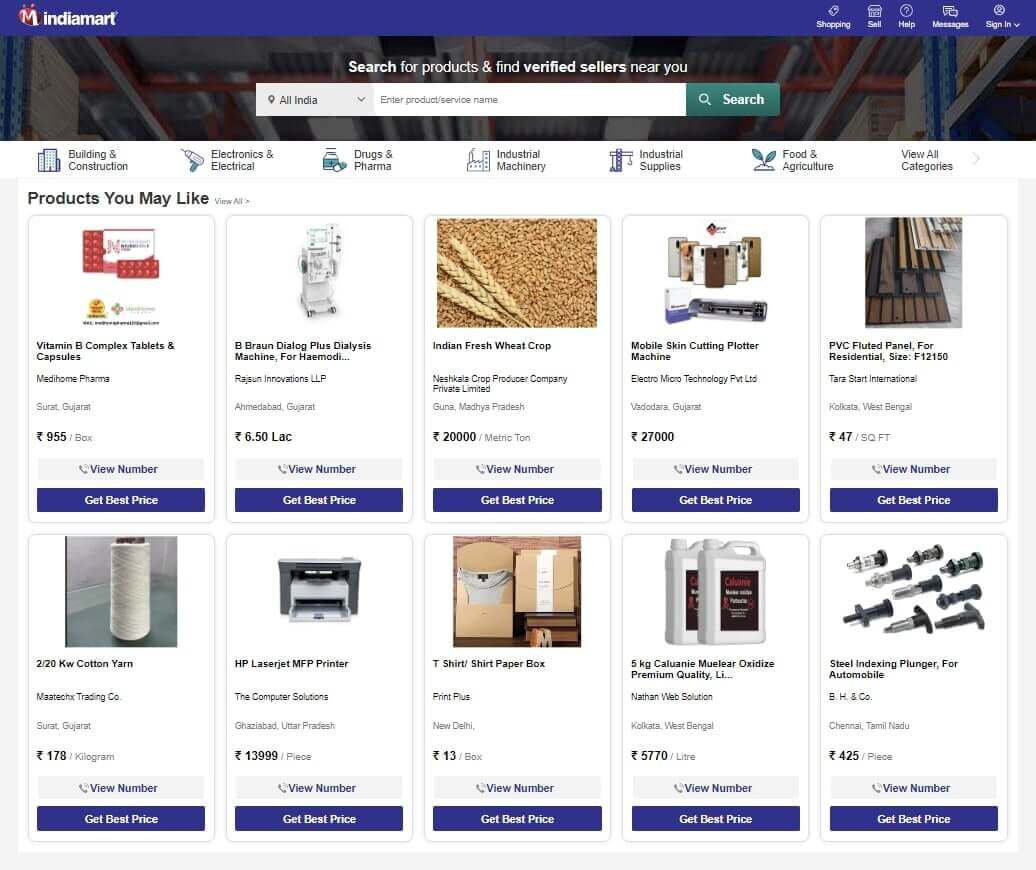
IndiaMART offers access to a large network of manufacturers, wholesalers, and traders. We see it as a sourcing directory rather than a ready-made dropshipping service because fulfillment terms depend on the individual seller.
Before placing orders, ask whether the supplier supports single-unit shipping, neutral packaging, GST invoices, and direct delivery to customers.
Pros
- Extensive product selection
- Direct supplier negotiations
- Useful for finding manufacturers and private-label options
Cons
- Dropshipping support varies by seller
- Orders and inventory may require manual coordination
- Supplier quality must be evaluated independently
2. ExportersIndia
Type: B2B marketplace
Best for: Finding Indian manufacturers and export-oriented suppliers
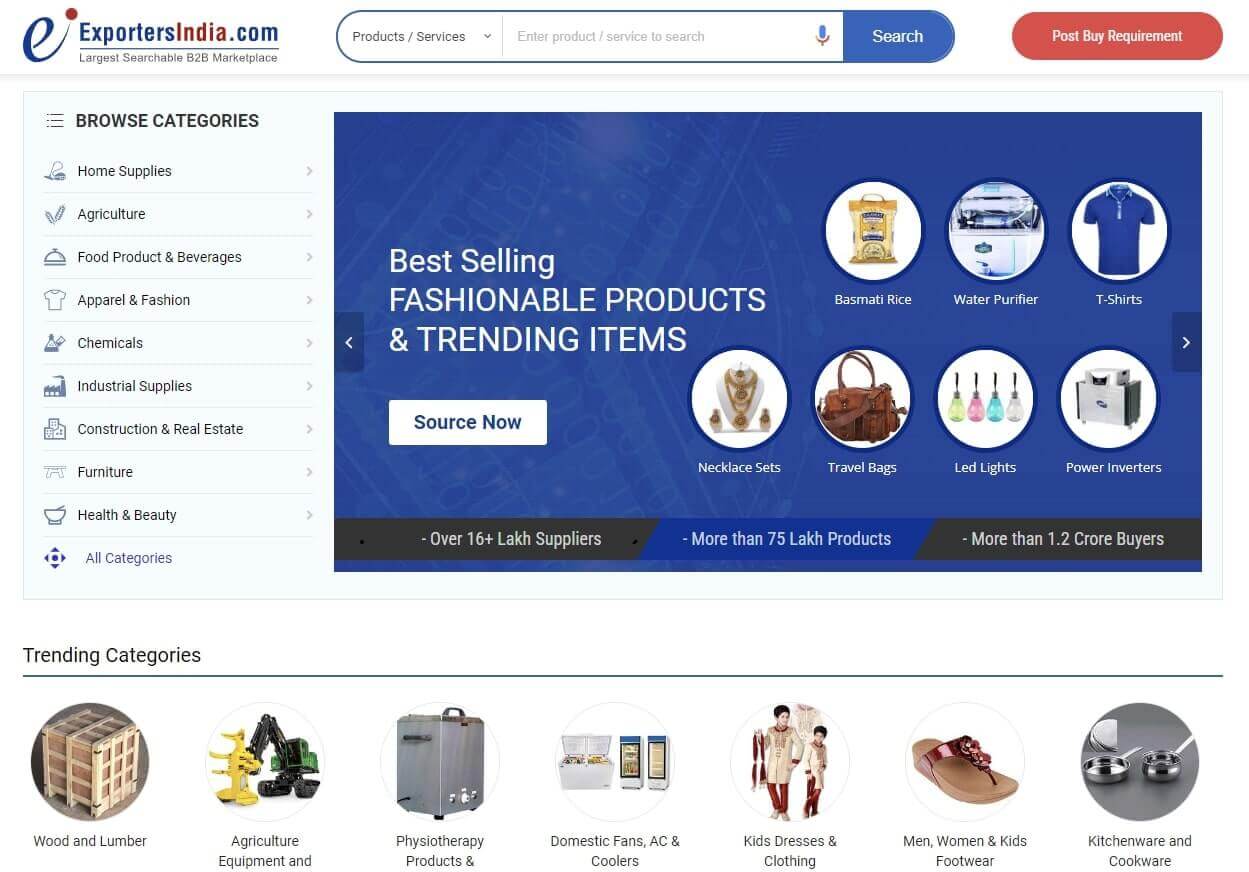
ExportersIndia connects buyers with manufacturers, suppliers, and exporters across consumer and industrial categories. Its international focus can be useful when you want to source Indian-made products for customers outside India.
However, listings do not automatically include dropshipping fulfillment. Contact shortlisted suppliers to confirm minimum order quantities, export documents, private labeling, and direct-to-customer shipping.
Pros
- Access to domestic and export-focused suppliers
- Broad category coverage
- Direct communication with manufacturers
Cons
- Limited built-in dropshipping automation
- Supplier terms vary considerably
- Export logistics may need separate coordination
3. TradeIndia
Type: B2B marketplace
Best for: Comparing Indian wholesalers, manufacturers, and MSMEs
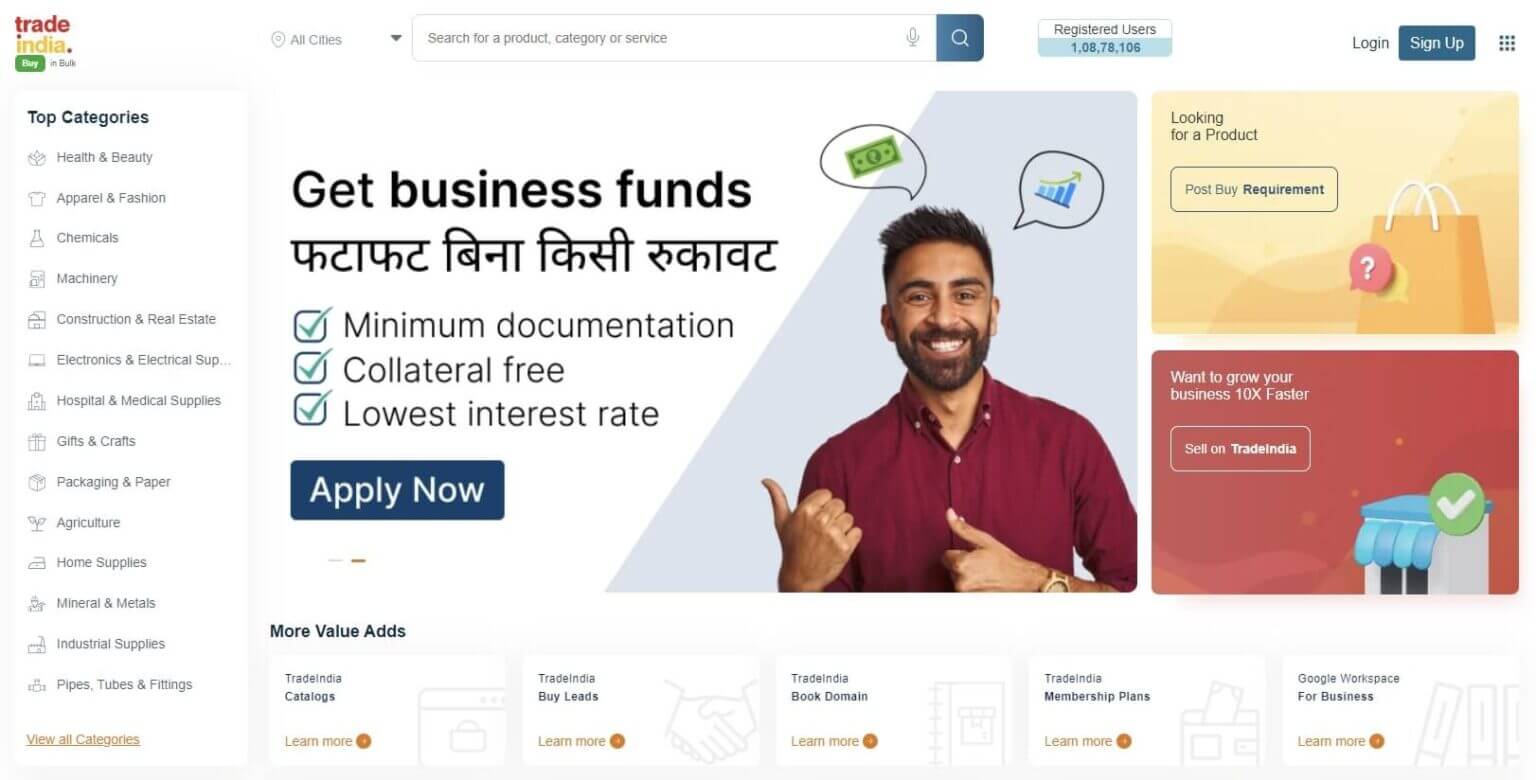
TradeIndia helps buyers find suppliers across India and international markets. It is useful for product research, wholesale negotiations, and identifying manufacturers that may support customized sourcing.
Because it is a general B2B marketplace, you must negotiate dropshipping arrangements directly. Confirm dispatch times, GST invoicing, sample availability, packaging, and whether the supplier can ship without including its own branding.
Pros
- Wide range of products and supplier types
- Direct manufacturer inquiries
- Potential for wholesale and custom sourcing
Cons
- No standardized dropshipping terms
- Automation depends on the individual seller
- Supplier vetting remains your responsibility
4. TradeFord
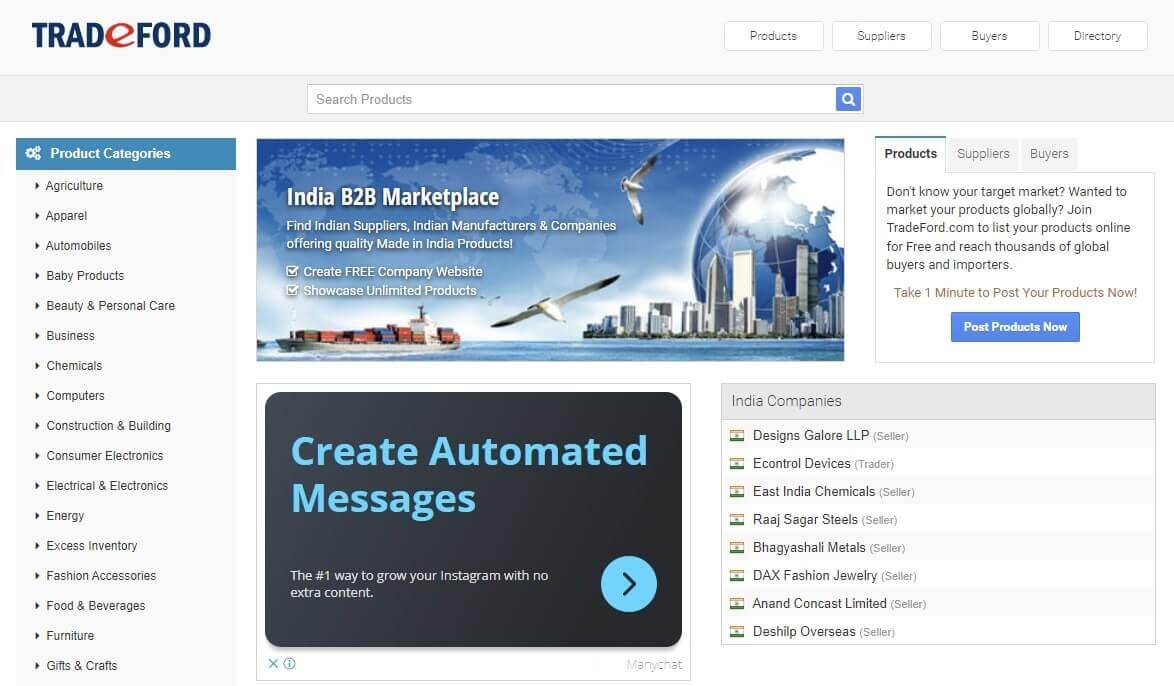
Type: Global B2B directory
Best for: Discovering Indian and international exporters
TradeFord connects buyers with manufacturers, exporters, and suppliers from multiple countries. It may help sellers compare Indian suppliers with overseas alternatives, particularly for bulk sourcing and export-oriented products.
Its main limitation is that it is not designed specifically for automated dropshipping. You will need to confirm product authenticity, minimum quantities, shipping terms, and fulfillment capabilities directly with each company.
Pros
- Access to international supplier listings
- Useful for import-export research
- Broad product coverage
Cons
- Limited dropshipping-specific infrastructure
- Supplier verification requires extra work
- Direct integrations are generally not the core offering
Dedicated Dropshipping Platforms and Fulfillment Providers
These businesses are more closely aligned with dropshipping operations than general marketplaces. Available services may include product catalogs, order processing, COD, store integrations, sourcing, and delivery management, but current terms should be confirmed before registration.
5. Baapstore
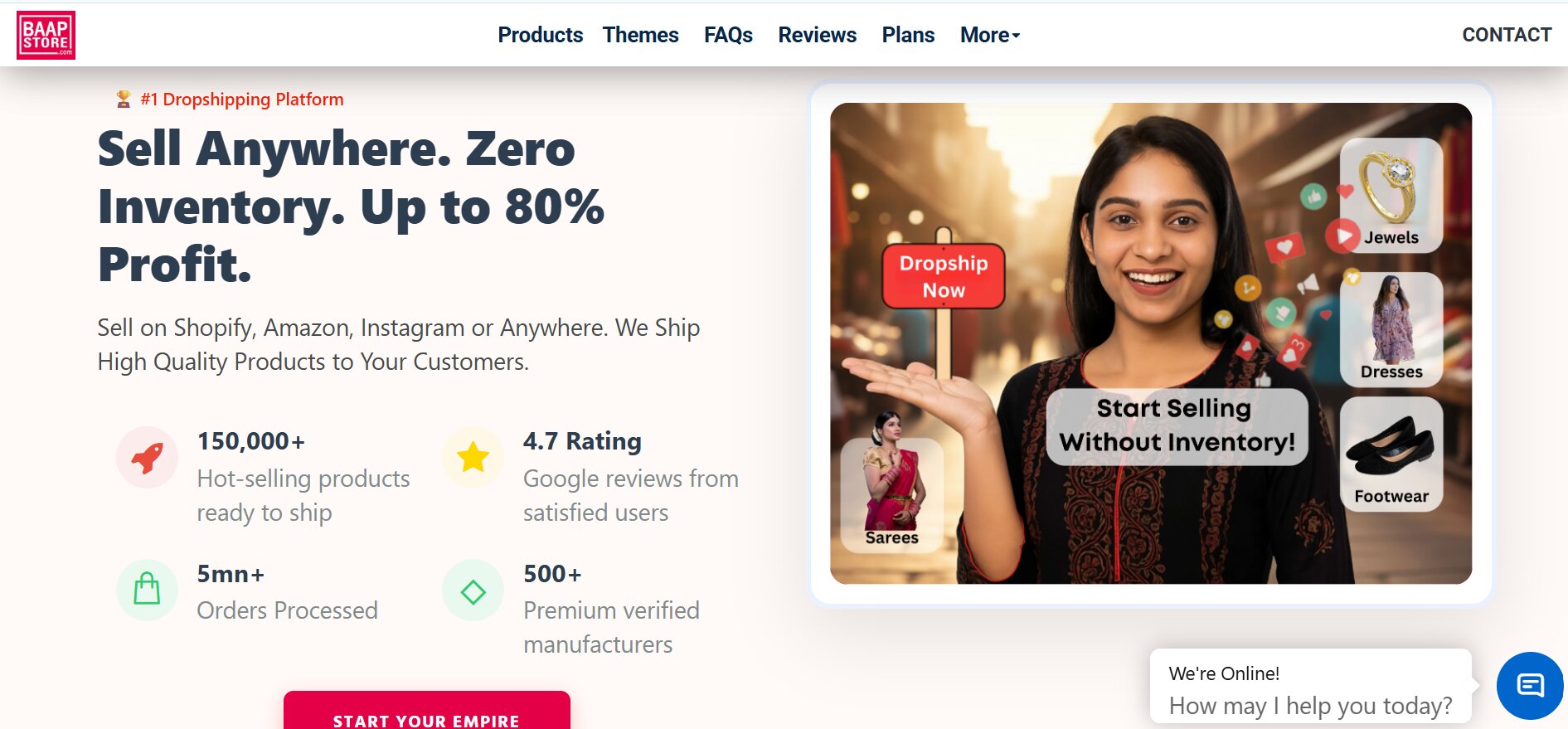
Type: Dedicated dropshipping platform
Best for: Beginners seeking a ready-made Indian product catalog
Baapstore provides access to products that sellers can add to their online stores without purchasing inventory upfront. It has historically promoted store integrations and fulfillment support, making it more structured than sourcing independently through a B2B directory.
We suggest checking its current subscription plans, COD availability, return terms, and catalog competitiveness before committing.
Pros
- Beginner-friendly product access
- Domestic order-fulfillment model
- May reduce manual supplier coordination
Cons
- Subscription or service costs may apply
- Sellers may compete using similar catalogs
- Branding flexibility can vary by product
6. Dropship India
Type: Dedicated dropshipping service
Best for: Sellers looking for domestic sourcing and fulfillment assistance
Dropship India positions itself around helping online sellers access products without maintaining their own inventory. The value depends on its current catalog, delivery coverage, integration options, and supplier relationships.
Before using it, ask for sample orders and written details covering COD remittance, RTO charges, GST invoices, inventory syncing, and return handling.
Pros
- India-focused fulfillment model
- Potentially simpler than managing several wholesalers
- May support multiple product categories
Cons
- Service scope should be confirmed directly
- Product differentiation may be limited
- Current pricing and integration details require verification
7. DeoDap
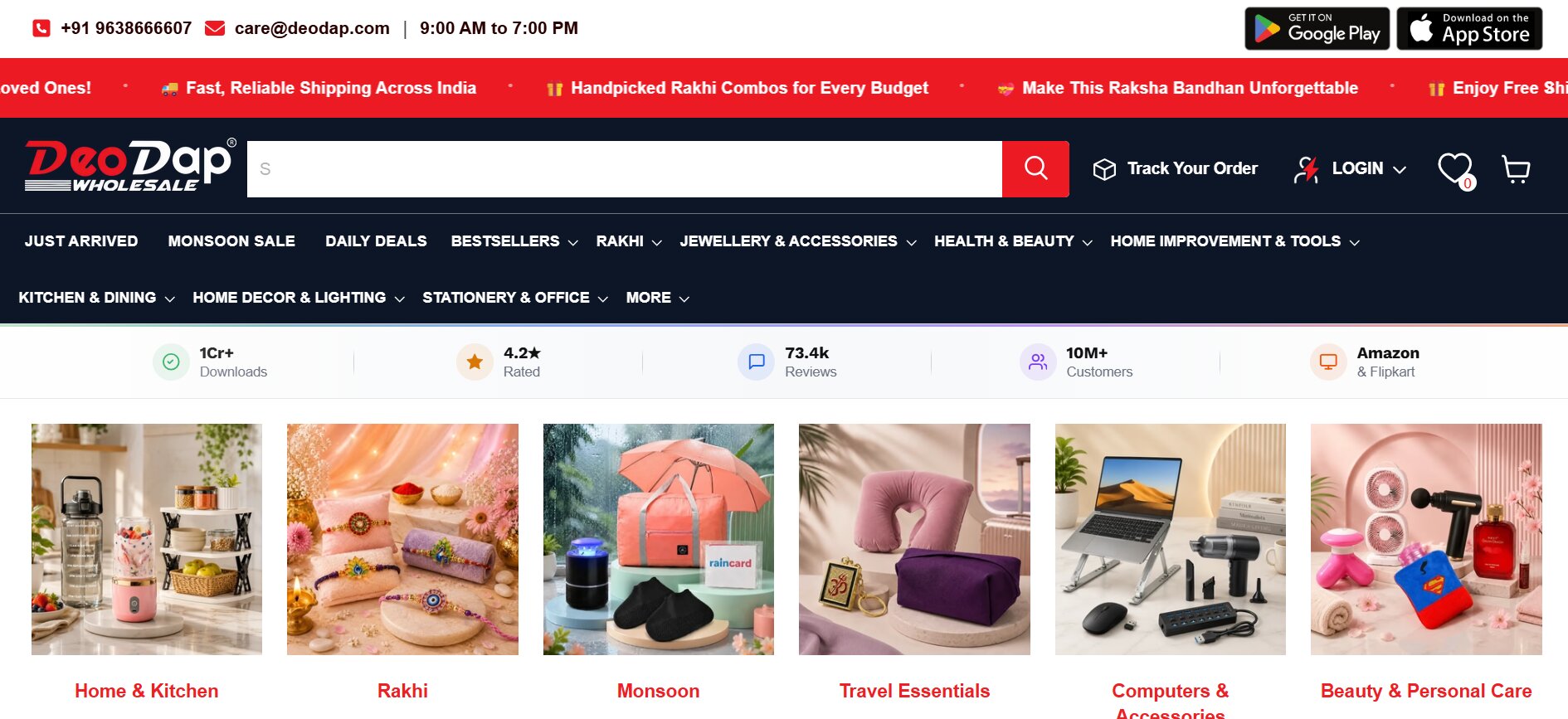
Type: Ecommerce wholesaler and dropshipping supplier
Best for: Low-ticket household, utility, lifestyle, and general merchandise
DeoDap is commonly associated with a large catalog of value-focused consumer products. This can help sellers test several categories, particularly household accessories, tools, toys, and general merchandise.
The main operational concern is differentiation. Many resellers may have access to the same products, so calculate advertising costs, COD fees, and RTO exposure before setting your retail prices.
Pros
- Broad general-merchandise catalog
- Useful for testing low-ticket products
- Domestic sourcing can simplify delivery
Cons
- Highly competitive product selection
- Low selling prices can create tight margins
- Product and packaging consistency should be sampled
8. Solfru
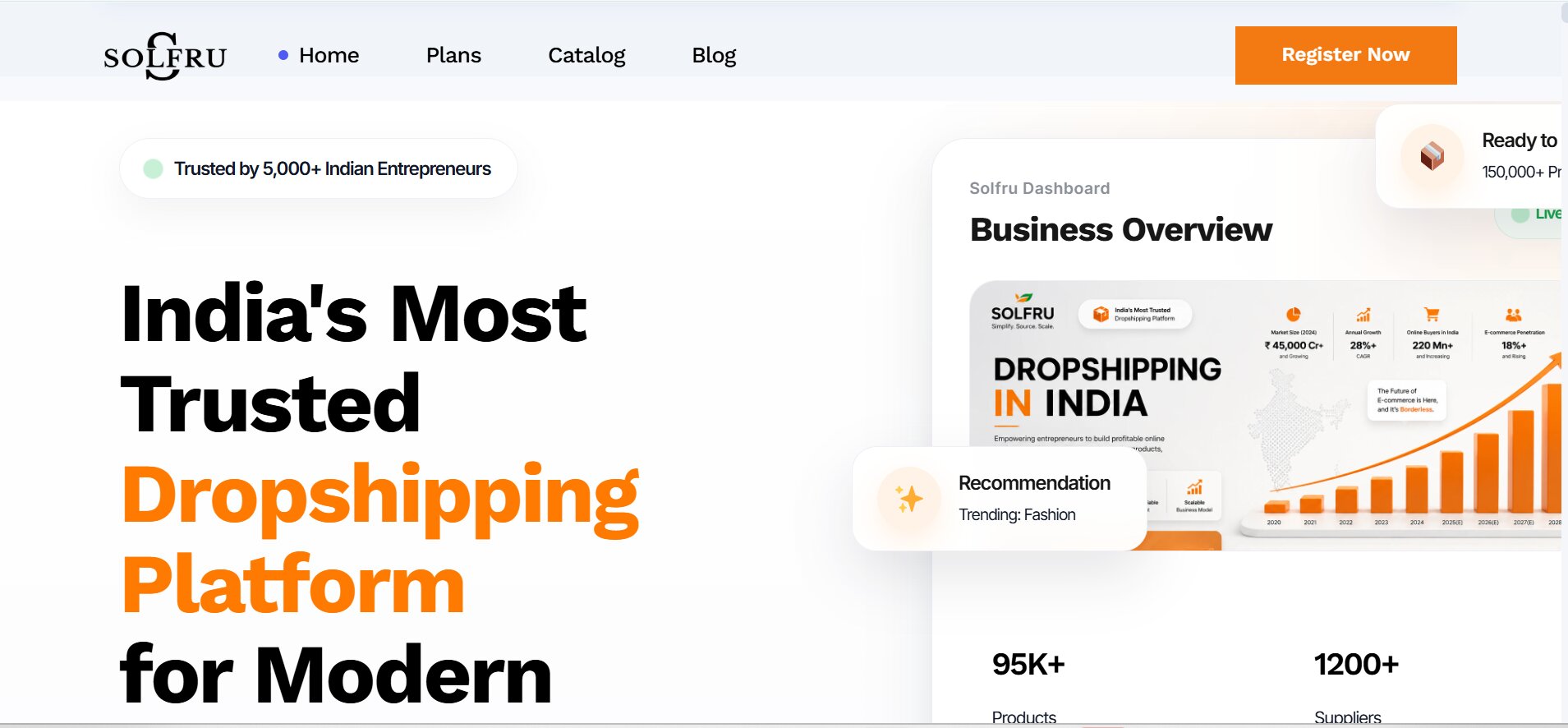
Type: Indian dropshipping and ecommerce service provider
Best for: Sellers who want domestic catalog and fulfillment support
Solfru promotes India-focused dropshipping services and may suit sellers looking for a more guided setup than a general marketplace offers. Depending on its current service package, support may cover products, order processing, integrations, or business setup.
We would verify every operational detail directly, particularly COD remittance, RTO liability, pincode coverage, GST treatment, and monthly platform costs.
Pros
- Focused on Indian ecommerce operations
- Potential support for store setup and fulfillment
- More structured than negotiating with individual wholesalers
Cons
- Features may depend on the chosen package
- Catalog overlap may limit differentiation
- Sellers should validate costs through a controlled trial
9. DropshipZone
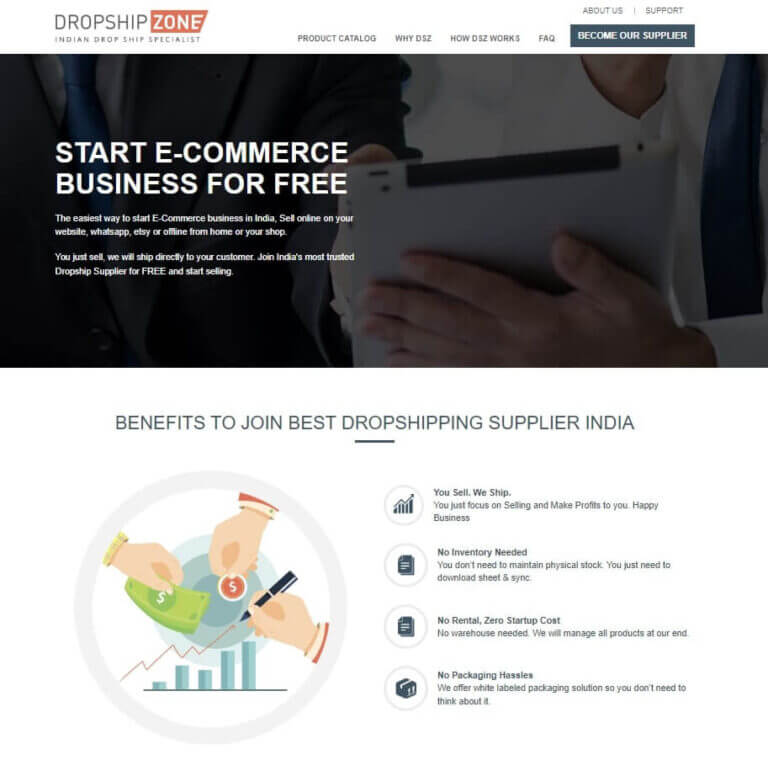
Type: Dropshipping catalog and fulfillment provider
Best for: Sellers seeking access to preselected products
DropshipZone may help reduce the time needed to contact individual suppliers and arrange fulfillment independently. Its suitability depends on the depth of its catalog and how accurately inventory, orders, and tracking information are managed.
Ask for a live product feed or demonstration before joining. Also test whether stock levels update quickly enough to prevent cancellations.
Pros
- Centralized product access
- Potentially simpler order processing
- May suit early-stage product testing
Cons
- Current integration support needs verification
- Shared products can create price competition
- Inventory accuracy should be tested
10. vFulfill
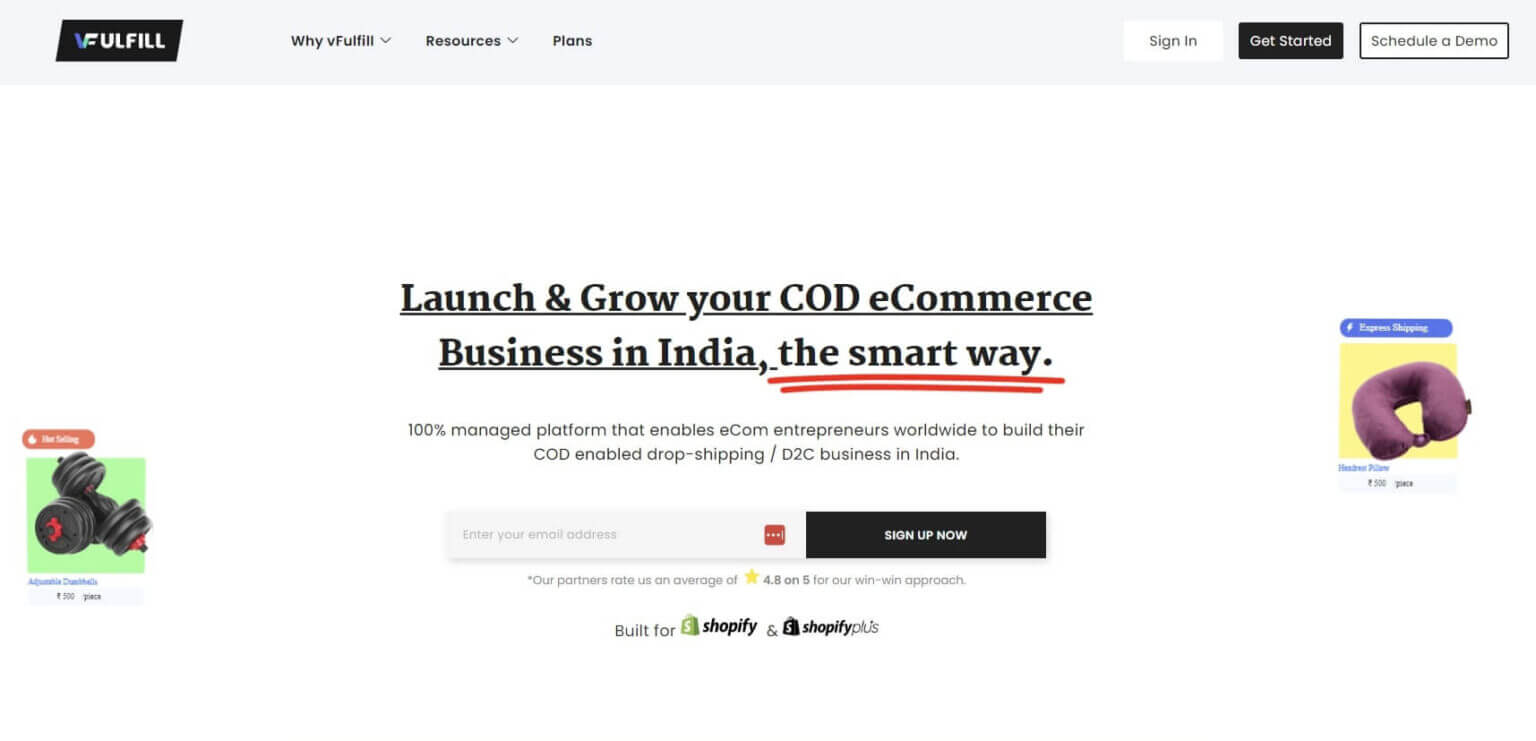
Type: COD fulfillment and ecommerce operations provider
Best for: Sellers running COD-focused campaigns in India
vFulfill is more operationally focused than a standard supplier directory. Its model is associated with sourcing, order fulfillment, COD collection, and support for ecommerce sellers targeting the Indian market.
This can be useful because successful COD selling depends on more than shipping. NDR management, confirmation calls, remittance timelines, and RTO control can have a direct effect on profitability.
Pros
- Designed around Indian COD operations
- May consolidate sourcing and fulfillment
- Useful for performance-marketing-led stores
Cons
- Total costs may exceed basic supplier sourcing
- Profitability depends heavily on RTO performance
- Service terms and product availability require direct confirmation
11. Shopperr
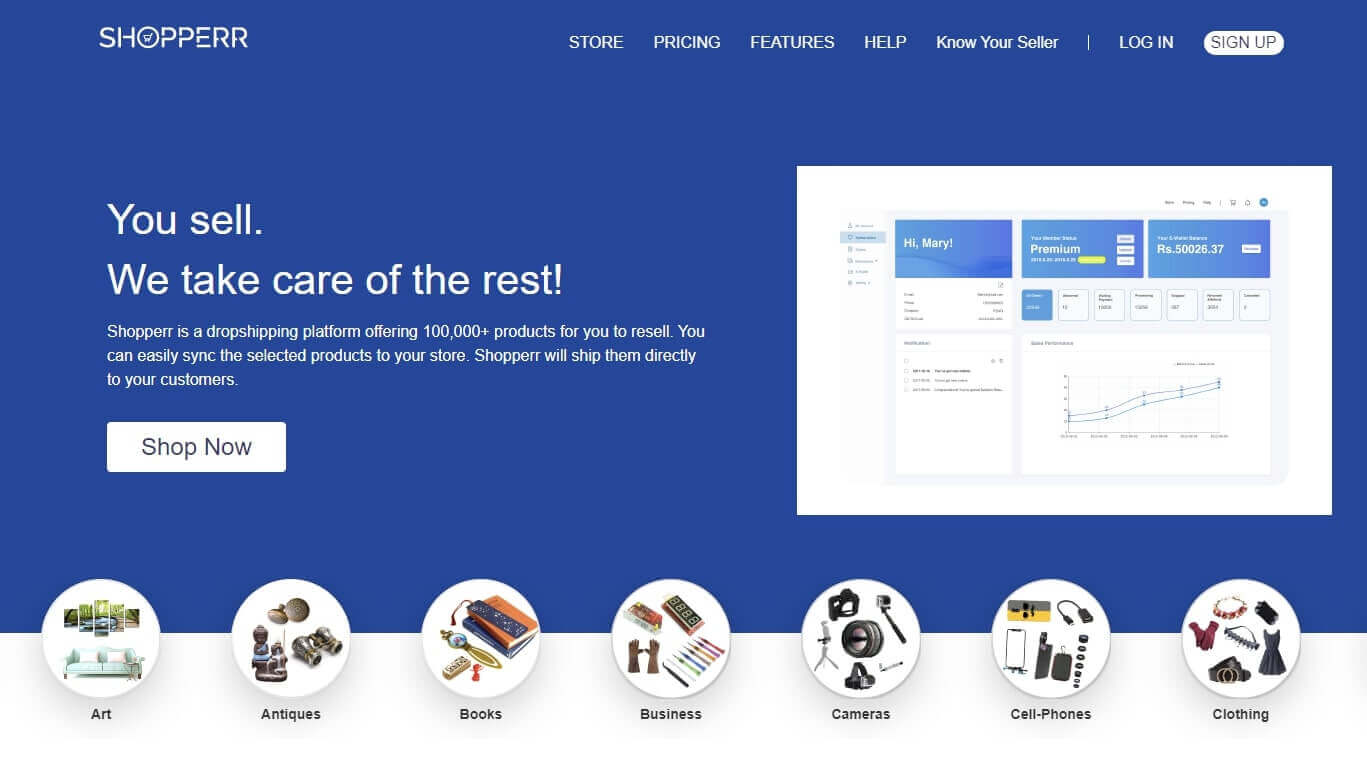
Type: Dropshipping and ecommerce sourcing provider
Best for: Sellers evaluating managed product fulfillment
Shopperr may appeal to sellers who want product access and fulfillment support without coordinating with multiple wholesalers. However, we could not confidently verify every current service parameter from the supplied material alone.
Confirm that the company is actively onboarding sellers and request details about integrations, COD, GST invoices, returns, shipping coverage, and support before making any payment.
Pros
- Potentially reduces supplier coordination
- May offer India-focused product fulfillment
- Could suit sellers testing a managed model
Cons
- Current service details require verification
- Limited public information may make comparison difficult
- A trial order is essential before scaling
Niche and Fashion Suppliers
12. Snazzyway

Type: Women’s fashion and lingerie supplier
Best for: Lingerie, nightwear, shapewear, and women’s fashion stores
Snazzyway focuses on women’s apparel categories rather than operating as a broad general marketplace. This specialization can make product selection easier for stores targeting a clearly defined fashion audience.
Fashion sellers should still pay close attention to sizing charts, fabric details, hygiene-related return restrictions, product photography, and stock availability.
Pros
- Specialized women’s fashion catalog
- Easier niche positioning than a general store
- Potential access to white-label or reseller arrangements
Cons
- Narrow category focus
- Apparel returns can be difficult to manage
- Sizing and product consistency require testing
13. WholesaleBox
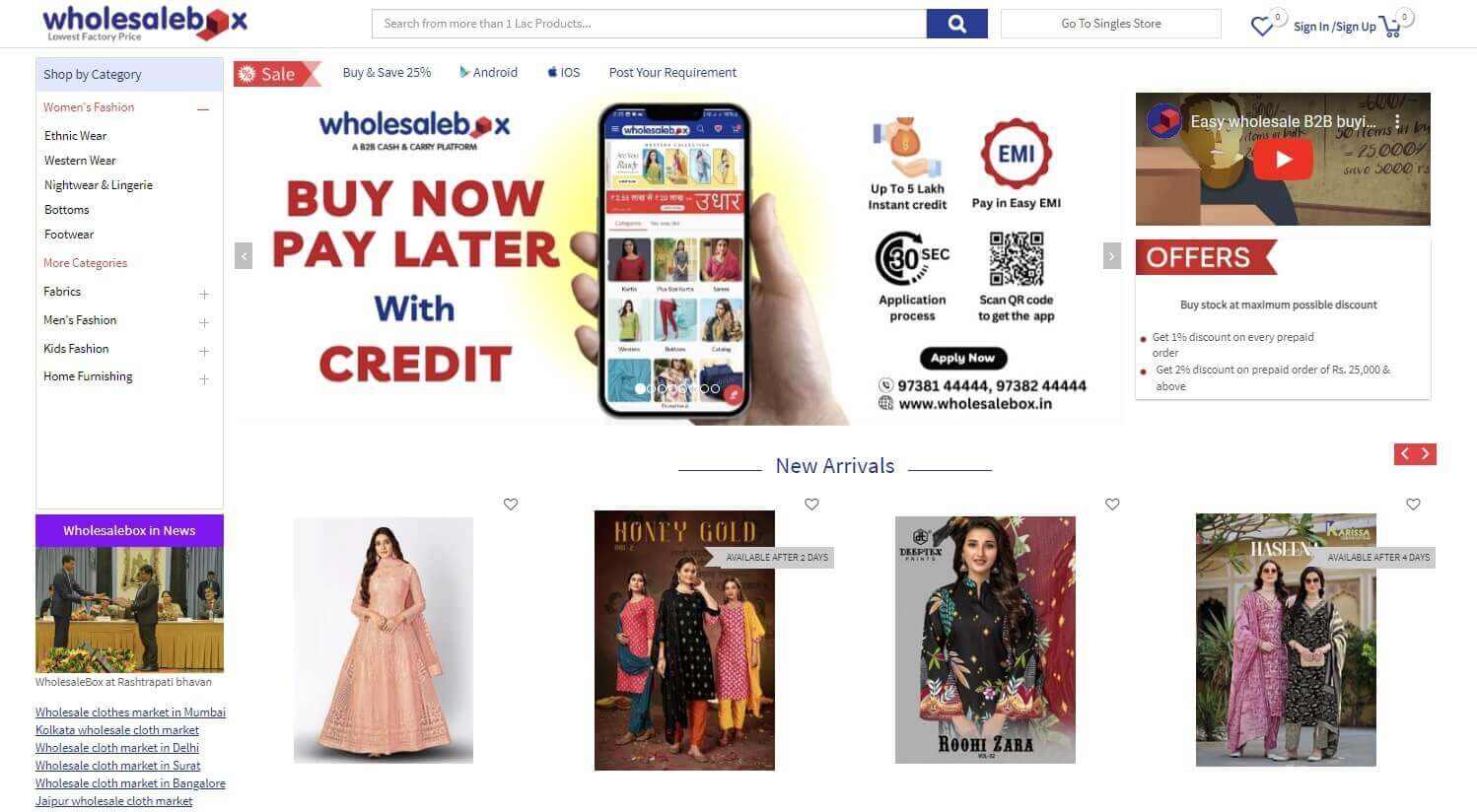
Type: Fashion wholesale marketplace
Best for: Indian ethnic wear and women’s apparel sourcing
WholesaleBox connects fashion retailers with products from Indian wholesalers and manufacturers. Its catalog can be useful for boutiques and online sellers sourcing women’s clothing, ethnic wear, and related fashion products.
Do not assume every listing supports one-piece dropshipping. Confirm minimum quantities, shipping labels, return rules, and whether inventory can be synced with your store.
Pros
- Strong fashion and ethnic-wear selection
- Access to Indian wholesalers
- Useful for boutique-style catalogs
Cons
- Some products may be wholesale-only
- Fulfillment terms vary
- Fashion inventory can change quickly
Print-on-Demand Suppliers
14. Qikink
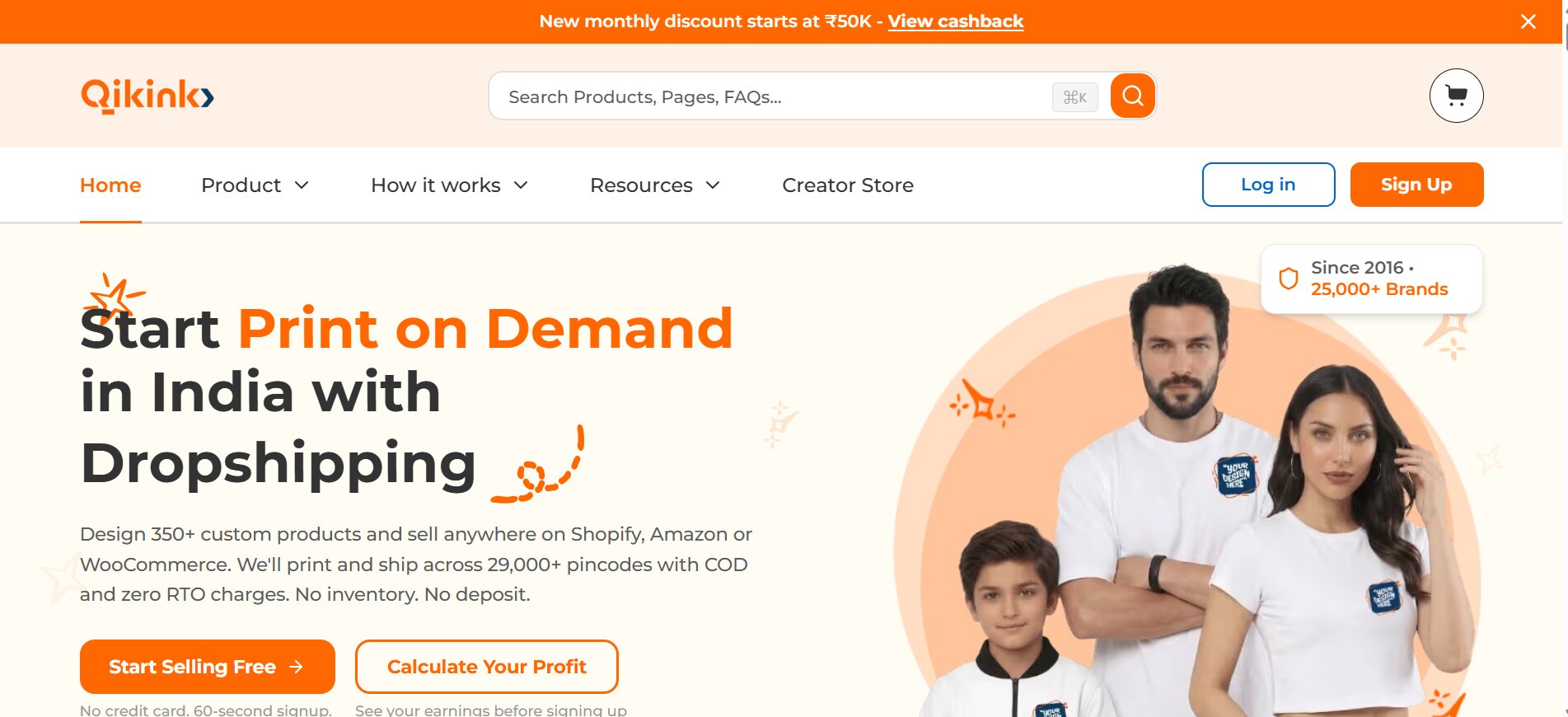
Type: Print-on-demand supplier
Best for: Custom apparel, merchandise, and branded Shopify stores
Qikink allows sellers to create customized products that are produced after an order is placed. This reduces the need to hold finished inventory and makes it useful for apparel brands, creators, and niche merchandise stores.
Before launching, test fabric quality, print durability, color accuracy, sizing, packaging, and production time.
Pros
- No finished-product inventory required
- Supports custom designs and branding
- Suitable for niche apparel stores
Cons
- Production time extends the fulfillment window
- Print results can vary by design and fabric
- Product costs are higher than bulk manufacturing
15. Printrove
Type: Print-on-demand fulfillment provider
Best for: Customized apparel, accessories, and merchandise
Printrove supports businesses selling products printed after purchase. Its model can help creators validate designs before investing in bulk inventory, while integrations may reduce manual order processing.
The key decision factors are base product pricing, printing methods, branding options, production times, and COD or return policies.
Pros
- Supports low-inventory brand testing
- Customizable product range
- Can automate parts of the fulfillment process
Cons
- Margins may be narrower than bulk production
- Customized products have limited return flexibility
- Samples are needed to verify output quality
16. Blinkstore
Type: Print-on-demand storefront service
Best for: Creators and beginners launching merchandise with minimal setup
Blinkstore combines product customization with storefront and fulfillment functions. It may suit creators who want to launch merchandise without independently building a full ecommerce operation.
The trade-off is reduced control. Sellers should review domain options, customer ownership, store customization, pricing control, branding, and platform policies before relying on it as a long-term solution.
Pros
- Low barrier to launching merchandise
- No need to manage production directly
- Suitable for testing creator-led products
Cons
- Less storefront control than an independent store
- Platform dependency
- Limited flexibility for advanced brand experiences
17. Meesho

Type: Social commerce and marketplace app
Best for: Beginners testing value-focused products in India
Meesho provides access to a large consumer marketplace and is widely associated with value-focused ecommerce in India. It can help beginners understand product demand without first building a fully independent supply chain.
However, using a marketplace is different from building a branded dropshipping store. You may have less control over customer relationships, packaging, pricing, and long-term brand equity.
Pros
- Accessible to new online sellers
- Broad consumer-product selection
- Strong exposure to Indian value-conscious buyers
Cons
- Limited brand control
- Marketplace competition can pressure margins
- Seller policies and eligibility may change
18. GlowRoad
Type: Social commerce and reselling platform
Best for: Social sellers and home-based resellers
GlowRoad became known for helping resellers promote supplier products through social channels. However, sellers should verify its current operating status and onboarding availability before including it in their business plan.
We would not build a store around any social commerce app until its current seller access, catalog, payment terms, and support channels have been confirmed.
Pros
- Historically offered low-barrier reselling
- Designed for social selling
- Reduced need to hold inventory
Cons
- Current availability must be verified
- Limited branding control
- Heavy dependence on the platform
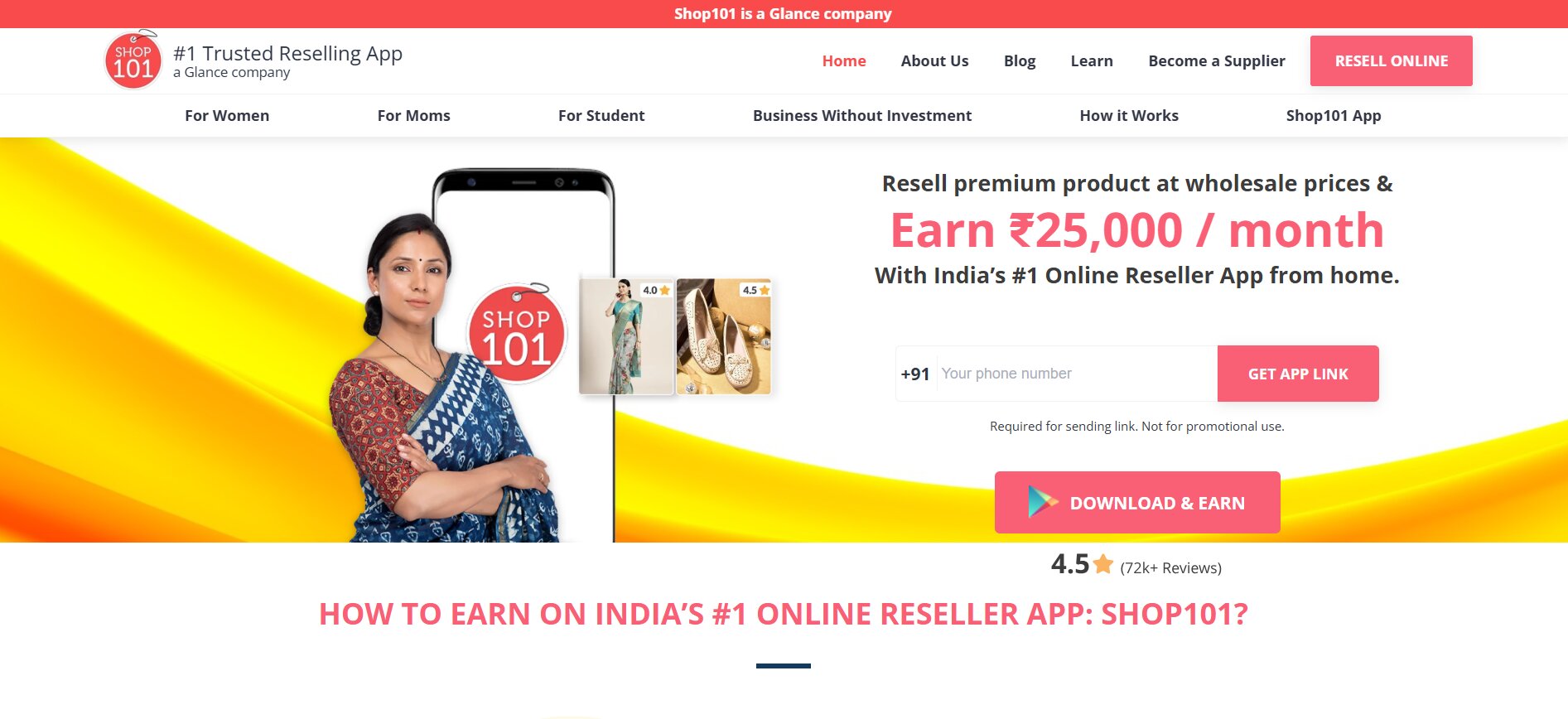
19. Shop101
Type: Social commerce and reseller app
Best for: Sellers testing products through social networks
Shop101 has been associated with enabling resellers to create online storefronts and promote products through channels such as WhatsApp and social media.
Because social commerce services can change ownership, features, or operating models, confirm whether seller registration and fulfillment remain active before listing it as a primary supplier.
Pros
- Simple social-selling model
- Low initial inventory requirements
- Accessible for first-time resellers
Cons
- Current operations require verification
- Limited supply-chain control
- Less suitable for building a differentiated brand
India vs China Dropshipping: Which Is Better for You?
Indian suppliers are usually better for domestic delivery, COD, and locally relevant products. China-based suppliers and agents are often stronger for product variety, factory-direct pricing, private labeling, and international growth.
| Factor | Indian Suppliers | China-Based Suppliers or Agents |
| Best for | Stores mainly selling within India | Stores targeting global markets or building a brand |
| Delivery | Faster when stock is held locally | Slower cross-border unless inventory is warehoused nearby |
| COD and RTO | Better suited to Indian courier and payment workflows | Usually limited without a local partner |
| Product range | Strong for local fashion, homeware, and value-focused goods | Broader access to global trends and factory catalogs |
| Pricing | Competitive for domestic products | Factory-direct sourcing may lower costs at scale |
| Private labeling | Available from selected manufacturers and POD suppliers | Usually more flexible for custom products and packaging |
| Quality control | Often depends on your own sample checks | Agents may inspect products before shipment |
| Customs | Minimal for domestic orders | Import duties and customs may apply |
| Integrations | Vary by platform | Established agents may offer stronger automation |
Choose Indian Suppliers When:
- Your customers are mainly in India.
- COD and domestic returns are important.
- You need faster local delivery.
- You are testing products with lower supply-chain complexity.
Choose China-Based Sourcing When:
- You need more product variety.
- You want private-label products or branded packaging.
- You sell internationally.
- You need sourcing, QC, warehousing, and fulfillment support.
A hybrid model can also work well: Indian suppliers for domestic bestsellers and a China-based agent for differentiated products and international expansion.
NicheDropshipping: A Cross-Border Alternative
Indian suppliers are often a strong fit for domestic COD and faster local delivery. However, once you need a wider product range, private labeling, or international fulfillment, working with a China-based dropshipping agent can give you more supply-chain control.
NicheDropshipping helps sellers source directly from 1688, Taobao, Yiwu markets, and factories. Our team can manage product sourcing, quality inspection, warehousing, Shopify integration, branded packaging, and worldwide shipping from one account.
| Marketplace Supplier Issue | NicheDropshipping Approach |
| Inconsistent stock updates | Dedicated inventory monitoring |
| Limited branding options | Custom packaging, inserts, and labels |
| Several days of processing | Same-day processing for stocked items |
| Variable product quality | Quality inspection before shipment |
| Multiple supplier contacts | One dedicated sourcing agent |
| Higher reseller markups | Factory-direct sourcing |
Tired of long processing times and inconsistent packaging from marketplace sellers? That’s exactly why 3,000+ dropshippers switched to NicheDropshipping. We offer same-day processing and custom branded packaging.
Get a free sourcing quote with no upfront cost or credit card required. Our team will review your product requirements and reply within 1–2 working days.
Frequently Asked Questions
Is Dropshipping Profitable in India?
Yes, dropshipping can be profitable in India. With a growing e-commerce market, low initial costs, and increasing internet penetration, you have the potential to reach a wide customer base and leverage cost-effective supply chains.
How to Start a Dropshipping Business in India?
To start a dropshipping business in India, follow these steps:
Identify Your Niche. Begin by choosing a product category that interests you. It could be anything from fashion accessories to tech gadgets. Make sure there’s a demand for these products in the Indian market.
Find Reliable Suppliers. Look for Indian dropshipping suppliers who can provide quality products. Websites like IndiaMART and TradeIndia can be great places to start your search. Check for their reliability and delivery times
.
Register Your Business. To operate legally, register your business in India. You may need a GST number, depending on your turnover.
Create an Online Store. Set up your e-commerce website using platforms like Shopify or WooCommerce. Ensure your site is easy to navigate and visually appealing.
List Your Products. Add your selected products to the store with clear descriptions and high-quality images. Price your products competitively, considering both your costs and market rates.
Market Your Store. Promote your store through social media, SEO, and digital marketing. Platforms like Facebook and Instagram can be effective for reaching potential customers.
Manage Orders and Customer Service. Process orders efficiently. Your supplier will ship the products directly to your customers. Providing excellent customer service is key to retaining customers and handling any issues.
Analyze and Adapt. Review your business performance regularly. Use customer feedback and sales data to adapt and improve your strategies.
How to Pay Dropshipping Suppliers in India?
You can use several payment methods to pay for your dropshipping business in India. Thanks to technology.
1. Credit Card/Debit Card: A credit or debit card is one of the best and top accepted payment modes. Many Indian dropshipping suppliers accept online card payments. It is convenient and easy to use.
Yet, card payments can be costly to resellers because of excess fees. Besides, potential fraudsters can easily target genuine resellers.
2. Bank Transfers: Bank transfers let you transfer money directly from your bank account. The supplier receives the money in their bank account.
It’s another method that most suppliers accept and that is also less costly. The cost of the transfers will depend on the rates of the bank you are using.
3. PayPal: Paypal is a bit costly to the suppliers and, therefore, not preferred a lot. But it’s one of the methods to make easy payments to your suppliers. Even if the payment charges are pretty high, it’s a convenient way of payment.
4. Google Pay: Using your mobile device, you can use the Google Pay app to pay your dropshipping suppliers in India.
You only need an internet connection, an Indian bank account number, and this app installed on your phone.
You will also need an Indian phone number for a complete transfer. This method is very convenient as there are no charges.
How to Spot Fake Indian Dropshipping Suppliers?
To spot fake dropshipping suppliers, check for a lack of contact information, poor customer reviews, and absence of a legitimate web presence. Genuine suppliers should have transparent business practices and verifiable testimonials.
What Dropshipping Products Are in Demand in India?
Fashion items, electronics, home decor, and health and wellness products are in high demand for dropshipping in India.
Trends can shift rapidly, so staying informed on market research will help you identify the best dropshipping products for your business.
Can I Use More Than One Dropshipping Supplier in India?
Yes. Many sellers use multiple suppliers to reduce stock risk and expand their catalog. The main challenge is keeping shipping times, return policies, invoices, and tracking updates consistent across orders.
Using several suppliers can also create split shipments when a customer buys multiple products.
Start with a small number of dependable suppliers, document each workflow clearly, and avoid adding new partners until your current fulfillment process is stable.
Can Indian Dropshipping Suppliers Ship Products Internationally?
Some can, but international shipping support varies significantly. A supplier that handles domestic orders well may not have experience with export documentation, customs declarations, duties, or cross-border returns.
Before listing products abroad, confirm supported destinations, shipping methods, tracking quality, product restrictions, and who manages export paperwork.
For regular international volume, a supplier or fulfillment agent with established cross-border logistics is usually easier to manage than arranging each shipment separately.
Can I Add My Own Branding to Products from Indian Suppliers?
Some Indian manufacturers, POD companies, and private-label suppliers support branding, while general marketplaces and reseller apps often offer limited customization.
Branding options may include printed logos, custom labels, packaging, inserts, and product modifications. Most suppliers require minimum quantities for custom production.
Ask for samples, artwork requirements, setup fees, lead times, and ownership of molds or designs before committing to a branded order.

Can I dropship on establish platform like Amazon and flipkart.
I am from Hyderabad, India
Thanks
Daniel Solomon
Hi Albert,
Thanks for your interest. You can dropship on platform like Amazon and flipkart. We have a blog post about Amazon dropshipping. https://nichedropshipping.com/amazon-dropshipping/ If you have more questions regarding this topic, feel free to contact us. The link to our contact page is https://nichedropshipping.com/niche-dropshipping/. Alternatively, our contact email is [email protected]. Looking forward to your message.