Dropshipping has turned regular people into millionaires – sometimes in just a few short years.
But what does it really take to reach that level? And who are the people who’ve done it best?
In this article, we’re diving into the journeys of 12 of the world’s most successful dropshippers.
We’ll talk about how they started, their breakthrough moments, and where they are today.
Here’s a quick overview of these top earners before we dive into their stories:
The Quick Answer: Who Are the Richest Dropshippers in 2026?
If you are looking for the richest dropshippers in 2026, the clearest name at the top is Davie Fogarty, founder of The Oodie. Public reporting has linked his business to more than $600 million in sales, with Forbes Australia estimating his personal net worth at around $150 million — a very different league from the usual seven-figure Shopify case studies.
After that, the picture gets less clean. Most posts mix together two very different groups:
- operators with documented store or brand revenue
- creators and mentors whose numbers are mostly self-reported
That distinction matters. A lot of “richest dropshippers” lists sound impressive, but they often combine verified business performance with rough estimates, old case studies, or unverified guru claims.
Based on the most credible public reporting, the strongest names on this list include:
Estimated net worth of the richest dropshippers (2026 snapshot):
| Dropshipper | Estimated Net Worth | Documented Business Figure | Source |
|---|---|---|---|
| Davie Fogarty | ~$150 million | $600M+ in sales (The Oodie) | Forbes Australia |
| Aimee Smale | Not disclosed | £22.5M sales, targeting £35M+ in 2025; £3M pre-tax profit (2024) | Drapers |
| Kevin Zhang | Not disclosed | $20M+ in first-year sales (publicly profiled) | The Business Method |
| Andreas Koenig & Alexander Pecka | Not disclosed | ~$10M/year pet business | Self-reported case study |
| Alex & Mimi Ikonn | Not disclosed | Brand acquired in 2018 (250K+ customers) | ikonns.com |
| Kamil Sattar | Est. $10–12M (unverified) | $1.7M in documented Shopify sales; claims $20M+ combined across 6+ companies | Shopify; Inc. |
Note: Only Fogarty’s net worth comes from a major publication. Every other figure above is either documented business revenue or a third-party estimate — treat exact personal wealth numbers with caution.
Below we will also dive into our more “detailed” list and discuss how each dropshipper rose to success and what you can learn from their strategies. Let’s start with:
1) Davie Fogarty — The Oodie ($600M+ in Sales)

Davie Fogarty is one of the clearest examples of what happens when product validation turns into brand-building at the right time. Public reporting ties The Oodie to more than $600 million in sales, which puts him in a very different league from the average seven-figure dropshipping case study.
More recently, Domain reported in 2026 that Fogarty has reportedly earned $1 billion in total e-commerce sales, with Forbes Australia estimating his personal net worth at around $150 million.
What stands out is how he approached product opportunities. Instead of looking for completely undiscovered ideas, he looked for products where demand already existed but the branding was still weak. He used that approach first with weighted blankets, then scaled it into The Oodie.
What to learn from him:
- Look for demand that already exists, but where no brand clearly owns the category
- Build around one product customers can understand instantly
- Treat testing as a way to discover demand, not as a permanent business model
2) Aimee Smale — Odd Muse (£22.5M in 2024 Sales)
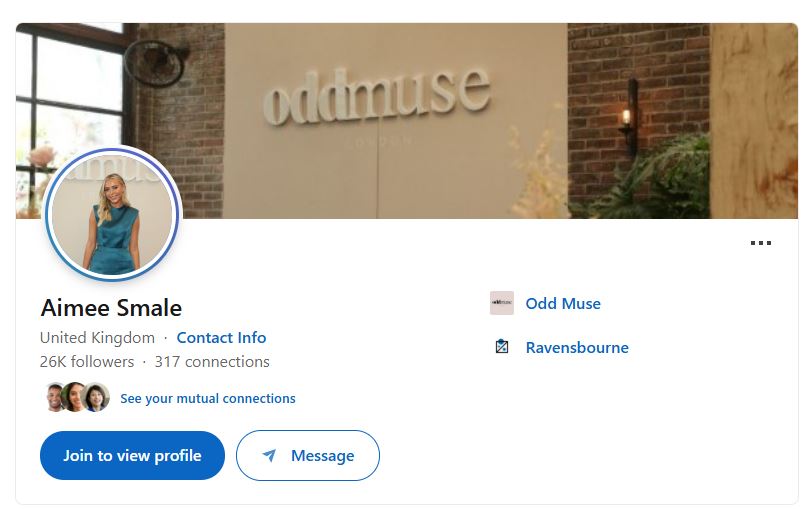
Aimee Smale’s story is useful because it shows a very different route to ecommerce wealth. She did not rely on endless product testing. She started with limited capital, managed cash carefully, and used strong founder-led content to build demand before overcommitting on inventory.
Research notes linked Odd Muse to £22.5 million in 2024 sales and £3 million in pre-tax profit, without external investment.
That makes her especially relevant for sellers who do not have large budgets. Her growth came from tight cash flow control, clear product context, and a brand customers could quickly understand and trust.
Where she is today: Odd Muse has since expanded into the U.S. — Drapers reports the brand launched U.S. fulfillment from its New York store in June 2025, opened a second London store on Bond Street in October, and is targeting £35 million-plus turnover across all channels for 2025.
What to learn from her:
- When cash is tight, funding the next inventory cycle matters as much as picking the right product
- Founder-led content can reduce reliance on expensive ad creatives
- Social-first brands work best when the product is easy to style, explain, and repeat across content
3) Kevin Zhang — Kreator eCommerce ($20M+ in First-Year Sales)

Kevin Zhang is a good example of how fast ecommerce growth becomes an operations game. His business was profiled at $20 million-plus in sales, 250,000+ customers, and a team of 60+ people within the first year. He has never publicly disclosed his net worth — figures circulating on net-worth aggregator sites are unverified estimates.
The real lesson here is not just revenue. It is the fact that scale came through reinvestment, hiring, and process. Once a store gets past the early stage, the bottleneck is rarely just product or ads. It becomes people, systems, and execution.
Where he is today: Zhang no longer runs stores day-to-day. He now leads Kreator eCommerce, and his eCommerce Millionaire Mastery program — interviewed here — has become his main focus, alongside consulting for founders and creators launching ecommerce brands.
What to learn from him:
- Reinvest early wins into operations, not just more ad spend
- Build systems before the founder becomes the bottleneck
- If you want to grow past one store, team structure becomes part of the business model
4) Andreas Koenig & Alexander Pecka — Doggykingdom ($10M+ per Year)
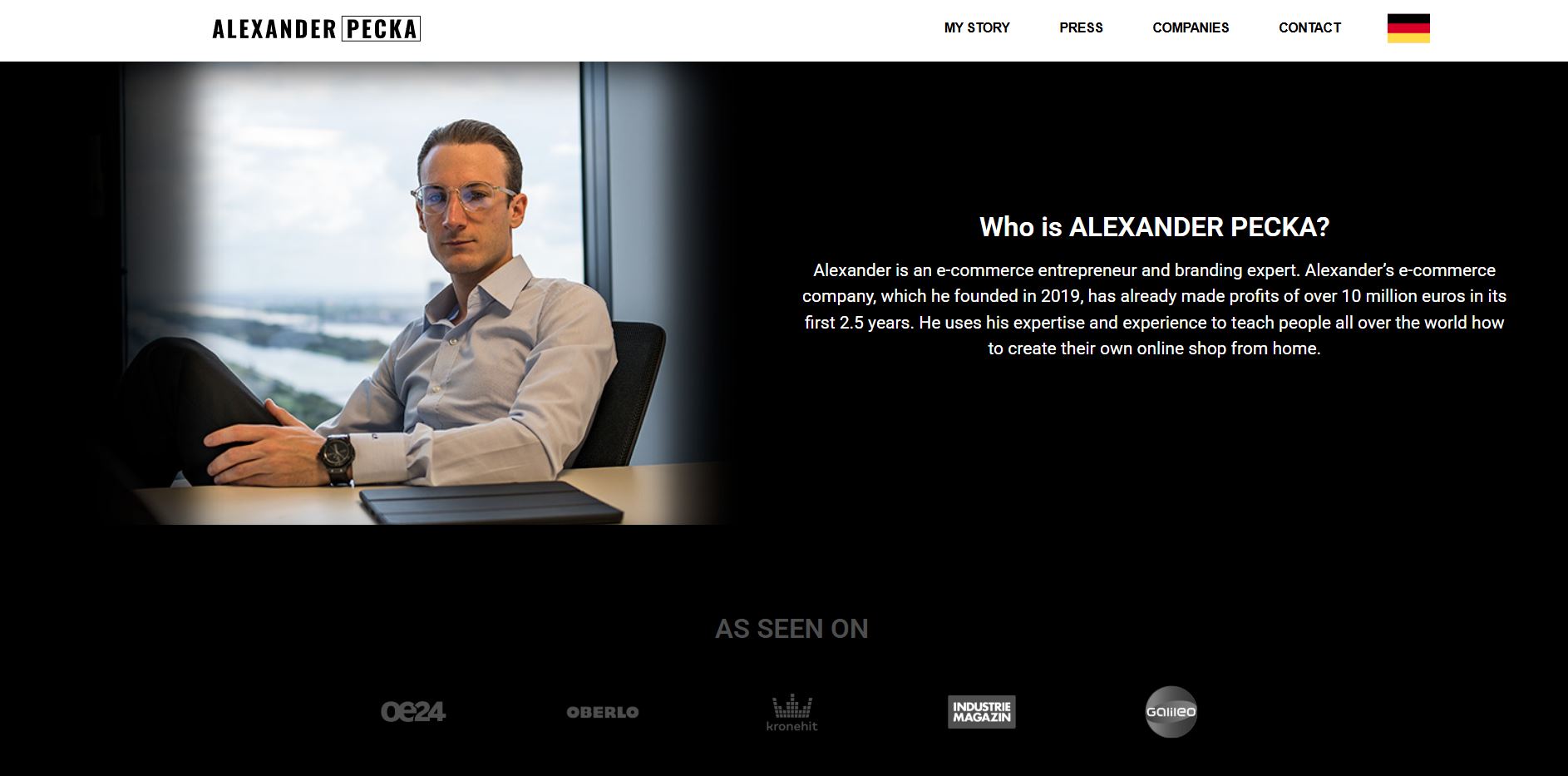
Andreas Koenig and Alexander Pecka built one of the stronger niche-store stories in this space. Research tied their pet business to roughly $10 million a year, after scaling from around $500,000 per month and building a team of about 50 people.
What made this work was not just that they sold pet products. It was that they chose a category where customers are emotionally invested. That made branding easier, repeat purchases more natural, and paid acquisition more forgiving.
What to learn from them:
- Emotional niches tend to support stronger branding and better customer retention
- Once order volume rises, supply chain reliability matters as much as marketing
- A real edge at scale often comes from better backend systems, not just better ads
5) Alex Ikonn & Mimi Ikonn — Luxy Hair (Multi-Million-Dollar Brand Exit)

Alex and Mimi Ikonn took a very different path from classic dropshipping operators.
Luxy Hair was acquired by Beauty Industry Group in late 2018, with the brand having grown to 250,000+ customers across 165+ countries and a YouTube audience of over 3 million subscribers. The sale price was never publicly disclosed, though a bootstrapped brand at that scale typically commands a multi-million-dollar exit. Their combined net worth is not public, but the couple went on to build Intelligent Change — its Five Minute Journal alone has sold more than 1.7 million copies.
The important part here is that they built a media engine around the product. Their content answered real buyer questions, built trust, and lowered customer acquisition costs over time.
What to learn from them:
- Educational content can become a long-term acquisition asset
- A strong audience lowers dependence on paid traffic
- The biggest exits usually come from brands with content, trust, and operational maturity
6) Adam Greenspan — Wallplate Warehouse (~$102K/Month in Sales)

Adam Greenspan is one of the best examples of a less glamorous but more durable ecommerce model. Wallplate Warehouse gets roughly $102,000 a month in sales and about $12,000 a month in profit, competing in a narrow category against much larger retailers.
He did not win with a trendy product. He won by going extremely narrow, owning clear search intent, and using both SEO and PPC where they made sense.
What to learn from him:
- Boring products can be excellent businesses if search demand is stable
- A narrow category often gives you clearer positioning and better conversion
- Dropshipping still requires real marketing and supplier management, even without holding inventory
7) Harry Coleman — Beast of Ecom ($5M+ Revenue in 2018)

Harry Coleman’s case is useful because it shows a more repeatable operator model. His stores have more than $5 million in combined revenue, with up to 10 staff across multiple stores.
What he did well was use a constrained testing setup. Instead of running a truly random general store, he tested within a few defined niches, then moved winning products into more focused stores. That gave him speed without total chaos.
What to learn from him:
- Product testing works better when it happens inside clear boundaries
- Once support, email, and ad processes are standardized, stores become easier to replicate
- Wealth in dropshipping often comes from repeatable systems, not one lucky winner
8) Cole Turner — $2.1M+ in Sales
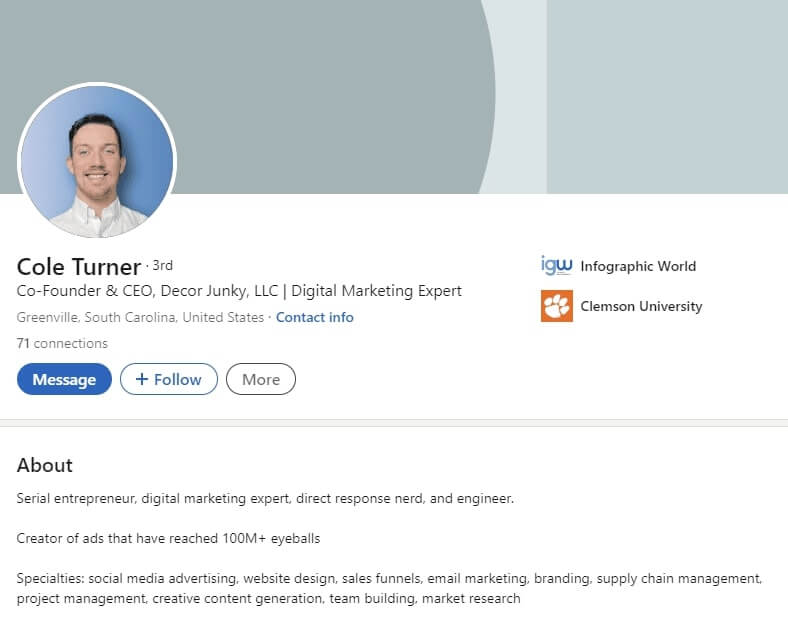
Cole Turner’s store was reported at $2.1 million-plus in sales, with much of the growth tied to disciplined Facebook ad testing and steady reinvestment once the data supported scaling.
What makes his story practical is that he did not scale based on instinct. He scaled after the numbers gave him enough confidence.
He also paid attention to trust signals like fast support and visible contact details, which matter more than many sellers realize.
What to learn from him:
- A simple ad testing process is better than relying on product intuition
- Do not scale because you feel excited; scale because the data is clear
- Small trust signals can have a major impact on conversion rate once paid traffic is involved
9) Kamil Sattar (The Ecom King) — Est. $10–12M Net Worth, $1.7M in Shopify Sales

Kamil Sattar — better known as The Ecom King — is one of the cleaner examples of a one-product, systems-first approach. In an interview on Shopify’s official blog, he described losing a few thousand dollars in his first year, then turning the business around to over $1 million in revenue the next. Research has also linked him to $1.7 million in Shopify sales within a year, with documentation reportedly reviewed by the source.
Kamil Sattar’s net worth is not publicly disclosed. Third-party estimates from 2025 generally put it between $10 million and $12 million — though these figures are unverified, and his own claim of $20 million-plus in combined sales across six-plus companies includes partner and client results, not personal income. The $1.7M Shopify sales figure remains the only one backed by reviewed documentation.
What stands out in his approach is that he emphasizes store quality, one clear narrative, and early automation. That matters because customer expectations are much higher now than they were a few years ago. A weak-looking store tends to kill trust before the product gets a fair chance.
What to learn from him:
- One product and one clear story is often enough in the early stage
- Professional presentation matters more than many beginners think
- Automating support, tracking, and retention early saves time later
10) Irwin Dominguez — $1M in 8 Months
Irwin Dominguez’s story is still one of the stronger examples of fast execution. He made $1 million in sales in eight months, with the first sale arriving just three days after launch through Facebook ads.
What makes his case useful is the mindset behind it. He highlights a problem a lot of sellers still have: they spend too much time consuming content about ads and not enough time learning through live campaigns.
What to learn from him:
- Launch sooner and learn from real ad data
- If paid traffic is your main growth engine, media buying is a core skill
- Progress usually comes from iteration, not from waiting until everything feels perfect
11) Sarah & Audrey — $2.5M in Four Months

Sarah and Audrey scaled through influencer marketing in a much more structured way than most sellers do. They generated $1 million in sales within a few weeks and $2.5 million across two brands in four months, with margins around 45%.
The important part is not just the headline number. It is how they ran the channel.
They treated influencer outreach like a repeatable sales process, focused on site quality so creators would actually want to work with them, and used U.S. warehousing to keep delivery times competitive.
What to learn from them:
- Influencer marketing works better when outreach is systemized
- Store quality affects whether creators trust your brand enough to promote it
- Faster shipping can directly improve marketing performance, not just customer satisfaction
12) Margarita Schneider — ~£800K/Month Claimed Scale (Net Worth Unverified)

Margarita Schneider reflects a newer version of the dropshipping model: TikTok-led growth, faster creative iteration, and heavier use of automation. The research notes mention claims of around £800,000 per month combined with her partner, though that figure is not documented as cleanly as the more established case studies above.
Her personal net worth is not publicly documented. Given the claimed ~£800,000 monthly scale (combined with her partner), any specific figure you see on net-worth aggregator sites should be treated as unverified.
What is still useful here is the operating model. In short-form commerce, the limiting factor is often not product sourcing or even store design. It is content volume, creative refresh rate, and the ability to keep testing without slowing down.
What to learn from her:
- On TikTok-first stores, creative output is often the real bottleneck
- Once the store is good enough, content cadence matters more than design tweaks
- Automation becomes necessary quickly if you want to keep up with content-led scaling
Proven Product Selection Tactics of Millionaires
The richest dropshippers usually do not succeed because they found a secret product no one else knew about. What they do better is choose products that are easier to sell, leave enough room for profit, and will not create major issues once order volume starts increasing.
Beginners treat product selection like trend hunting. More experienced sellers look at it more practically. They are not just asking whether a product might get clicks. They are asking whether it can hold up as a business.
In most cases, the products that scale well tend to have a few things going for them:
- They solve a clear problem
- They show well in video or images
- They are easy to explain in a few seconds
- They have enough markup to absorb ad costs
- They are not overly fragile, bulky, or refund-prone
That last part matters more than most people think. A product can look great in ads and still become a poor choice once fulfillment starts putting pressure on the business.
Slow shipping, inconsistent quality, weak packaging, and high return rates can quietly wipe out profit even when sales look strong on the surface.
That is why stronger sellers usually evaluate products from two sides at once:
- Marketing side: Will this convert through ads, content, or influencer traffic?
- Operations side: Can this be sourced reliably and delivered without creating constant problems?
This is also one reason many successful dropshippers eventually move beyond random marketplace sourcing. Once a product starts working, the real challenge is maintaining consistency. At that stage, better supplier control, branding options, and fulfillment support start to matter much more than simply finding the next trendy item.
Actionable Lessons from the World’s Wealthiest
The richest dropshippers usually get good at one channel first, then expand. They do not try to grow through TikTok, Meta, Google, influencers, email, and SEO all at once. They start where the product has the best chance to convert, then add other channels once the store is working.
A few common patterns show up repeatedly:
- TikTok works well for visually demonstrable, impulse-friendly products
- Meta is still strong for broader audience targeting and structured scaling
- Google Shopping fits products with clearer buying intent
- Influencers and UGC help when the product benefits from social proof or lifestyle positioning
The key is fit. A product does not fail just because the channel is “bad.” It often fails because the channel and the product do not match.
Another thing top sellers understand is that creative matters more than people expect. At scale, performance usually drops because the ad angle gets tired, not because the product suddenly stopped being viable.
That is why experienced operators keep testing new hooks, formats, landing page angles, and UGC-style content instead of relying on one winning ad.
Once the store becomes more stable, they usually diversify:
- Email and SMS for retention
- Organic social for brand visibility
- SEO for compounding, lower-cost traffic over time
SEO is not usually the first growth lever in dropshipping, but it becomes more valuable once you want more durable traffic and less dependence on paid ads.
The broader lesson is simple: use paid traffic to validate demand, then build additional channels so the business is not relying on one platform to survive.
FAQs about Richest Dropshippers
Who Is the Richest Dropshipper in the World?
Based on publicly documented business scale, Davie Fogarty is the strongest current answer.
Forbes Australia reported that The Oodie surpassed $600 million in sales and estimated Fogarty’s personal net worth at about $150 million.
That is a much more supportable benchmark than the vague net-worth claims often repeated in dropshipping roundups.
What Is Kevin Zhang’s Net Worth?
Kevin Zhang has never publicly disclosed his net worth, and no major publication has estimated it. What is documented: his business generated $20 million-plus in sales, 250,000+ customers, and a 60-person team in its first year, making him a self-made millionaire by age 23. Any specific net-worth figure you see elsewhere is an unverified estimate.
What Is Kamil Sattar’s Net Worth?
Kamil Sattar (The Ecom King) does not publish his net worth. Third-party estimates from 2025 put it between $10 million and $12 million, spanning his stores, education business, YouTube channel, and affiliate income — but none of these figures are independently verified. The only documented business number is $1.7 million in Shopify sales within a year, which he discussed in an interview on Shopify’s official blog. He also claims $20 million-plus in combined sales across more than six companies, though that figure includes partner results.
How Much Do Top Dropshippers Make?
There is no fixed income range because the top end of dropshipping is extremely uneven.
Some well-known operators have built stores or brands doing seven figures a year, while the most successful founders have gone far beyond that into eight- and nine-figure cumulative sales.
For example, Odd Muse was reported at £22.5 million in 2024 sales, while The Oodie has been linked to $600 million+ in sales.
How Much Can You Earn from Dropshipping?
The amount you can make from dropshipping depends on factors like the choice of product and marketing budget. However, an average dropshipper can make around $500 per month, which can go much higher for branded products.
What Are the Best High-Ticket Dropshipping Niches?
Some of the best high-ticket niches in 2026 include:
- Home fitness equipment
- Standing desks and ergonomic furniture
- Smart home devices
- Outdoor grills and patio gear
- Electric bikes and scooters
- Industrial tools and machinery
These niches typically have higher profit margins and attract more serious buyers.
Final Thoughts
The stories of these successful dropshippers provide valuable insights for anyone aspiring to enter the eCommerce world.
It teaches us that success doesn’t come overnight. And if you want to make it as a dropshipper, then there are numerous factors to consider.
Aside from product selection and effective marketing, you need to have the patience, and the determination to learn from your failures.
Remember that each entrepreneur’s journey is unique, and there’s no one-size-fits-all formula for success in dropshipping.
But one thing that is always required to make your dropshipping business a success is high-quality products.
So if you’re ready to put these insights into action, then let NicheDropshipping be your trusted partner.
Our dedicated agents are here to help you source high-quality products. Get started today by requesting a free quote!

Hi Stanley,
Andreas Koenig here, I found your article, nice work and thanks for putting me and Alexander on the top.
What is your business in detail? May we have some points to work togehter in the future. Looking forward to hear from you.
All the best from Vienna
Andreas
My dream is to sale woman s clothing, makeup, or any aging products for men and women
Hello Andrea.
My name is Renee, I am 62 and researching ways to supplement my SSI in order to live comfortably.
I know I must start on online business and it will, at very least, include dropshipping. I am new to all of this but must do it quickly as I have nearly emptied my IRA account and will soon be forced to use credit cards in order to pay my monthly bills (which I do not wish to do).
I would love to speak with you to learn from both your successes as well as any failures and mistakes to avoid.
Would this be possible?
My email is [email protected]
Thank you and God bless you.
Hi Andreas,
You probably won’t see this, but I’m really hoping you will.
My name is Cami, I’m a young entrepreneur from Australia who is very interested in learning about drop shipping and finding a way to successfully break the 9-5 chain.
I would really love it if you could mentor me, or atleast give me some advice?
Thanks,
Cami Graham
I need help starting a dropship ship