A free dropshipping supplier lets you start without paying a signup or recurring membership fee. You normally pay the product cost and shipping only when a customer places an order. Some platforms are fully usable for free, while others only let you browse products or test limited features before requiring a paid plan.
For US sellers in 2026, we think the word “free” matters less than what happens after the order comes in. Fast US fulfillment, reliable inventory, realistic landed costs, and clear free-plan limits can affect your margins far more than saving $20–$50 per month on software. Changes to US de-minimis rules have also made China-direct fulfillment less predictable, which makes US warehouse availability an important filter when comparing suppliers.
Quick Facts
- 16 suppliers and platforms compared, including agents, POD companies, marketplaces, directories, and direct US wholesalers
- 2–5 day delivery is achievable with several suppliers when inventory is already stocked in the US
- $0 membership options are available, but some platforms only offer free browsing or limited functionality
- US warehouse stock matters more in 2026 because China-direct orders can face additional customs costs and delays
- We compare free-plan limits, US shipping, integrations, drawbacks, and ideal use cases, rather than ranking suppliers on price alone
Our goal here is to help you choose the supplier model that fits your store.
Which Free Dropshipping Supplier Should You Start With?
| If you want… | Start with |
| Best overall free all-in-one platform | CJDropshipping |
| Free sourcing, QC, branding, and US fulfillment for scaling | NicheDropshipping |
| Print-on-demand with lower base-cost options | Printify |
| Print-on-demand with more standardized production | Printful |
| Women’s fashion with fast US shipping | Trendsi |
| Vetted US/EU supplier access | Spocket |
| US/Canada-only supplier network | DropCommerce |
| Direct relationships with US wholesalers | Wholesale Central |
| Product research and low-cost validation | AliExpress + DSers |
If you are still testing products, a large free platform usually gives you the most flexibility. Once you have consistent orders, supplier consistency, quality inspection, branding, and US inventory become much more important than simply avoiding a monthly fee.
What Does a “Free Dropshipping Supplier” Really Mean in 2026?
A free dropshipping supplier generally means you can access the supplier or platform without paying a recurring membership fee. You still pay for the product, shipping, and any optional fulfillment or branding services when an order is placed.
Based on the suppliers we compared, however, “free” can mean very different things.
1. Some suppliers are genuinely free to use
Several options on this list let you operate without a monthly subscription.
For example, CJDropshipping offers free sourcing and fulfillment with no recurring platform fee, while Eprolo operates on a forever-free model. Printful and Printify both have usable free plans for print-on-demand sellers, and Trendsi charges no membership fee for its fashion dropshipping service.
AliExpress paired with DSers is another genuine $0 option for product research and order management. DSers offers a free plan, while AliExpress itself does not charge sellers a dropshipping membership fee.
These platforms still make money when you order products, pay shipping, or purchase optional services.
2. Other “free” plans are mainly for evaluation
This is where we think sellers need to read the pricing page carefully.
Some platforms advertise free access but restrict what you can actually do without upgrading:
- Zendrop: The free tier is primarily for browsing. Importing products and fulfilling orders requires a paid plan.
- Spocket: Free access is useful for exploring the marketplace, while most practical sourcing features sit behind paid plans.
- Syncee: Free-plan functionality has changed over time, so we would treat it as free to evaluate and confirm the current importing and fulfillment limits before building around it.
- Inventory Source: Its supplier directory can be accessed for free, but inventory and order automation starts at a substantial monthly cost.
- Modalyst: Its free Hobby plan is usable, but limits you to roughly 25 products.
So when we say “free supplier,” we are not assuming every platform below can run an unlimited store at $0.
3. Direct wholesalers work differently
Free access also looks different when you deal directly with a US wholesaler.
BryBelly, for example, does not charge a membership fee for its dropshipping program, but it has an approximately $50 minimum order value and uses a more manual ordering workflow.
Pet Stores USA is harder to classify. Its current pricing is provided after a reseller application, and the available supplier data does not confirm that its present program is completely free. We would therefore describe it as pricing on application, rather than promising a no-fee program.
Directories such as Wholesale Central are different again. The directory itself is free, but individual wholesalers listed there can set their own MOQs, account requirements, and pricing.
4. “Free” does not tell you what an order will actually cost
This is the number we care about more:
Landed cost = product cost + shipping + platform/supplier fees + duties and taxes + optional fulfillment or branding costs
A supplier with no monthly fee can still leave you with weaker margins if its product markup or shipping costs are high.
The opposite can also happen. A paid plan may eventually reduce your per-order cost enough to justify the subscription. Printify, for example, offers an optional Premium plan that provides product discounts, while Inventory Source charges for the automation that removes much of the manual work involved in managing multiple suppliers.
That is why we suggest comparing suppliers using cost per fulfilled order, rather than simply sorting them by monthly price.
5. US warehouse inventory matters much more in 2026
The fulfillment location also deserves more attention than it did a few years ago.
The US $800 de-minimis exemption has been removed under the tariff changes reflected in our 2026 supplier research. This makes China-direct parcels more exposed to customs procedures and import costs, reducing one of the traditional advantages of shipping very low-cost products individually from China.
For a US store, we would therefore check where the individual SKU ships from, not simply where the supplier operates.
Several suppliers on this list offer domestic fulfillment:
- NicheDropshipping: 2–5 day delivery for inventory stocked in its US fulfillment centers
- CJDropshipping: approximately 2–8 days for qualifying pre-stocked US inventory
- Printful and Printify: US production or US-based print providers
- Trendsi: approximately 2–5 days for US-stocked fashion products
- DropCommerce: supplier network based entirely in the US and Canada
- BryBelly: fulfillment from its Indiana warehouse
- Pet Stores USA: fulfillment from Ohio
Platforms such as AliExpress can also have products listed as shipping from the US, but warehouse origin varies by seller and SKU. We would verify it for every product before promising domestic delivery.
For a deeper explanation of the tariff side, see our guide to Import Duty from China to USA.
What Should You Compare Besides the $0 Price Tag?
Before choosing any of the suppliers below, we suggest checking:
- Whether the free plan can actually fulfill orders
- Total landed cost per order
- US warehouse availability for your specific products
- Processing and delivery time
- Inventory reliability
- Shopify or other store integrations
- Returns and refund policies
- Branding and private-label options
- Marketplace restrictions such as Amazon selling rules
- How much manual work is required
For product validation, keeping fixed costs close to zero makes sense. Once orders become consistent, though, we would prioritize reliable inventory, margins, quality control, automation, and fulfillment speed over whether the supplier charges a monthly fee.
What Types of Free Dropshipping Suppliers Are Available in the USA?
Free dropshipping suppliers fall into several different models, and the type you choose affects how you source products, how much control you have, and how much work you handle yourself.
Based on the suppliers in this guide, we group them into five main types.
| Type | How It Works | Main Advantage | Main Limitation | Examples |
| Dropshipping agents & all-in-one platforms | Source products, process orders, and often provide fulfillment, sourcing, QC, or branding services | More support across the full supply chain | Catalog depth and service model vary by platform | NicheDropshipping, CJDropshipping, Eprolo, Zendrop |
| Print-on-demand suppliers | Produce customized products only after your customer orders | No inventory needed for branded products | Higher unit costs than bulk manufacturing | Printful, Printify |
| Supplier marketplaces & automation platforms | Give you access to products from multiple suppliers and connect them to your store | Large catalogs and easy product testing | Supplier quality, margins, and free-plan limits vary | Spocket, AliExpress + DSers, Syncee, Modalyst, DropCommerce, Trendsi |
| Supplier directories | Help you find wholesalers or suppliers, then you contact and vet them yourself | Direct supplier relationships and broad research options | Little or no built-in fulfillment automation | Wholesale Central, Inventory Source |
| Direct US wholesalers | A single wholesaler stocks and ships products directly from its own US warehouse | Predictable domestic fulfillment | Account requirements, channel rules, or manual ordering may apply | BryBelly, Pet Stores USA |
Dropshipping Agents and All-in-One Platforms
This model is the closest to having one partner manage multiple parts of your supply chain.
A dropshipping agent such as NicheDropshipping can source products, arrange quality inspection, fulfill orders, and support private-label or custom-packaging requirements. Platforms such as CJDropshipping and Eprolo combine sourcing and fulfillment with catalogs and ecommerce integrations.
We generally see this model becoming more useful once you move beyond basic product testing because you can consolidate sourcing, fulfillment, and supplier communication instead of managing several separate vendors.
The trade-off is that each platform works differently. Zendrop, for example, offers free browsing but requires a paid plan for practical fulfillment, while CJ and Eprolo have more usable free models.
Print-on-Demand Suppliers
Print-on-demand, or POD, is built around customization.
With Printful or Printify, you upload a design and the product is produced only after your customer orders. That makes POD especially useful for apparel, accessories, home décor, and merchandise where the design itself is part of your brand.
The biggest advantage is that you do not need to buy printed inventory upfront. However, per-unit production costs are usually higher than ordering customized products in bulk, so margins can become tighter as sales volume grows.
If your store is centered around original designs, see our guide to print on demand dropshipping.
Supplier Marketplaces and Automation Platforms
Marketplaces give you access to products from many different suppliers rather than sourcing through one manufacturer or wholesaler.
This category includes AliExpress + DSers, Spocket, Syncee, Modalyst, DropCommerce, and Trendsi.
They are useful for product discovery because you can browse catalogs, compare products, and often import listings directly into your store. Some also specialize: Trendsi focuses on fashion, while DropCommerce works with US and Canadian suppliers.
The main thing we watch here is supplier consistency. Shipping speed, product quality, margins, and warehouse location can vary between products. Free access also differs considerably: some platforms are fully usable without a subscription, while others mainly let you browse until you upgrade.
Supplier Directories
Directories work very differently from automated dropshipping platforms.
Wholesale Central gives you access to wholesaler listings and contact information, but you are responsible for contacting suppliers, checking whether they dropship, and confirming their terms.
Inventory Source also offers free supplier-directory access, although its inventory and order automation require paid plans.
We like directories when the goal is to build a more direct supplier relationship. The downside is the additional work: you may need to verify business credentials, request wholesale pricing, check MOQs, and arrange integrations yourself.
Direct US Wholesalers
A direct wholesaler holds its own inventory and fulfills orders from a US warehouse.
BryBelly, for example, ships from Indiana, while Pet Stores USA operates from Ohio. This can give you more predictable domestic fulfillment than sourcing through a marketplace with suppliers scattered across multiple countries.
However, direct wholesalers often operate more like traditional B2B suppliers. You may encounter reseller applications, minimum order requirements, marketplace restrictions, or less automation.
Which Type Should You Choose?
For most beginners, all-in-one platforms and marketplaces are the easiest starting point because they reduce setup work and make product testing faster.
As your store develops, the right model usually depends on what you need next:
- Choose an agent when you need better sourcing, QC, branding, or inventory consolidation.
- Choose POD when your designs are the product.
- Choose a marketplace when catalog breadth and fast testing matter most.
- Choose a directory when you want to find and negotiate with suppliers yourself.
- Choose a direct US wholesaler when domestic stock and direct supplier relationships matter more than automation.
This distinction is important because two suppliers can both advertise “free dropshipping” while offering completely different levels of sourcing, fulfillment, automation, and control.
The 16 Best Free Dropshipping Suppliers in the USA
We grouped these suppliers by how they actually work, because a sourcing agent, POD company, marketplace, and traditional wholesaler solve very different problems. The right choice depends on whether you are testing products, building a brand, prioritizing US shipping, or trying to automate an established store.
Dropshipping Agents & All-in-One Platforms
1. CJDropshipping: Best Free All-in-One Platform
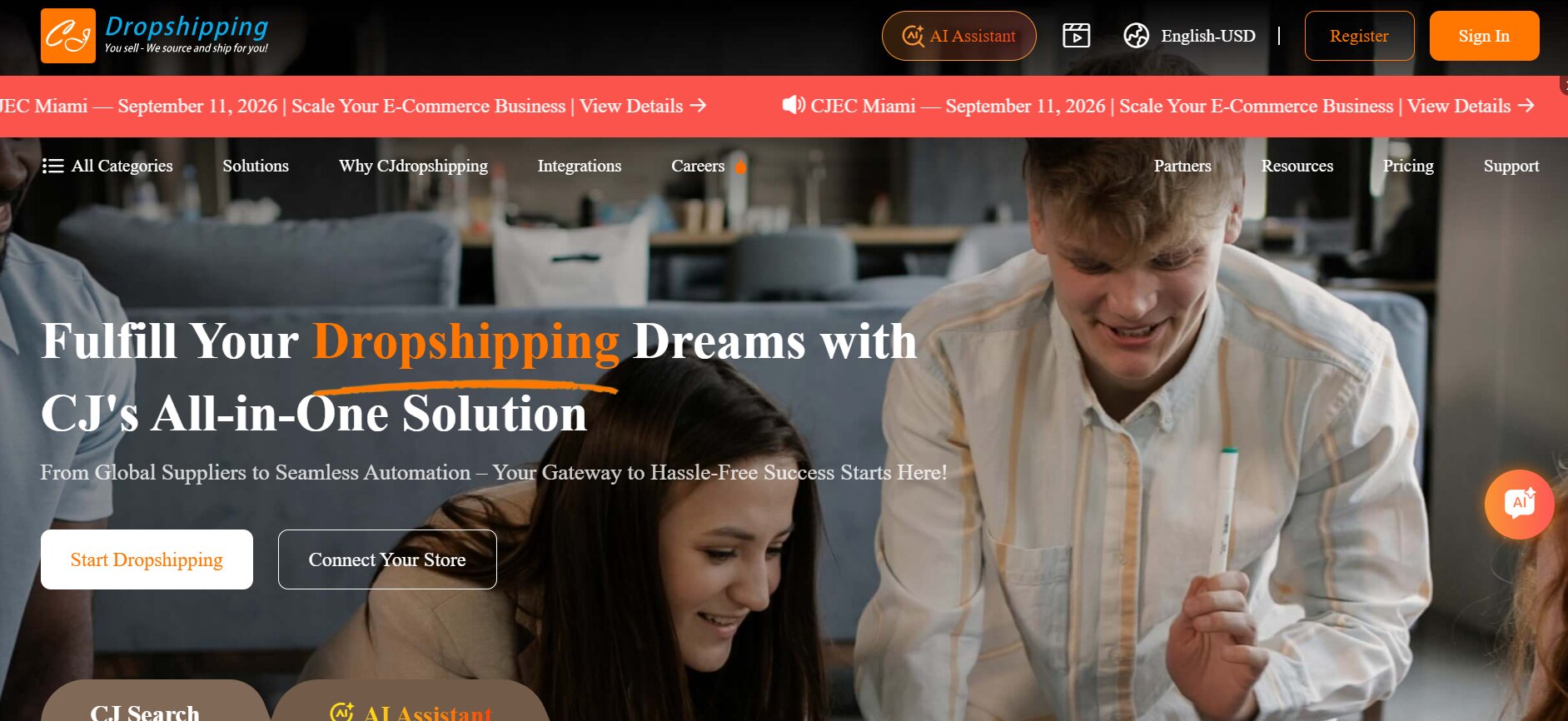
CJDropshipping combines sourcing, product listings, order fulfillment, warehousing, POD, and custom packaging in one platform without requiring a monthly subscription for its core service.
We see CJ as one of the strongest starting points for beginners because you can test products without immediately committing to paid software, then move into US warehousing and branding as your volume grows.
Key Features
- Free core plan with pay-per-order pricing
- Five daily sourcing requests under the free plan
- Unlimited listings and orders
- US warehouse inventory with approximately 2–8 day domestic delivery for pre-stocked products
- Custom packaging, POD, and private-label options
- Integrations with Shopify, WooCommerce, Amazon, eBay, Wix, TikTok Shop, and Etsy
Pros
- Broad product catalog and strong ecommerce integrations
- No MOQ for normal dropshipping orders
- Sourcing requests are useful when a product is not already in the catalog
- Can support the transition from testing to US-warehouse fulfillment
Cons
- Much of the catalog still ships from China, so you need to check warehouse origin at SKU level
- China-direct orders now face a less favorable US customs environment
- The platform has a steeper learning curve than more simplified Shopify-first tools
- Support can be slower during peak periods
Ideal For: Beginners who want one free platform for product testing, sourcing, fulfillment, and eventual US warehousing.
2. Eprolo: Best for Low-Cost Entry into Custom Branding
Eprolo combines sourcing and fulfillment with a free core platform and optional branding services. It is particularly interesting for beginners who want to start adding labels, hangtags, or branded packaging without moving immediately to a high-volume private-label arrangement.
Its supplier data also shows warehouses across the US, UK, EU, and China, giving sellers some flexibility over fulfillment origin.
Key Features
- Forever-free core platform
- 100,000+ products across 107 niches
- Free sourcing requests for products outside the catalog
- Warehouses in the US, UK, EU, and China
- Integrations with Shopify, WooCommerce, eBay, Etsy, and Amazon
- POD support through Inkedjoy
- Branding Lite listed at $19.90 per year
Pros
- Low barrier to testing branded fulfillment
- No MOQ for standard dropshipping
- Broad platform support
- US-stocked products can avoid customer-facing import delays
Cons
- Product search can be less intuitive than larger marketplaces
- Supplier data notes reports of peak-season shipping delays and inventory overselling
- Branding options still carry additional costs even though the platform itself is free
Ideal For: Beginners who want a free sourcing platform with an accessible path into custom branding.
3. Zendrop: Best for Shopify Beginners Planning to Upgrade
Zendrop is a Shopify-focused dropshipping platform known for a relatively simple interface, automation, and US fulfillment options.
The important limitation is its free-plan structure: according to the current supplier data, the free tier is mainly for browsing. Importing products and fulfilling orders requires a paid plan, so we would treat Zendrop as free to evaluate, rather than a fully free operating solution.
Key Features
- Shopify-first workflow
- US warehouse fulfillment
- Automated fulfillment and tracking
- Custom branding and thank-you cards on paid tiers
Pros
- Simple interface for Shopify users
- Strong emphasis on customer support
- Easier onboarding than more complex all-in-one sourcing platforms
Cons
- Free account does not provide the same practical fulfillment access as fully free platforms
- Current supplier data places the Pro tier at $49/month
- Product costs can be higher than agent-sourced equivalents
Ideal For: Shopify beginners who value ease of use and are comfortable upgrading after they validate a product.
4. NicheDropshipping: Best for Scaling with Branding and US Fulfillment
NicheDropshipping is our own service, so we want to be transparent about where we fit. Our 15-person sourcing team works with 3,000+ partner factories, handles sourcing and quality inspection, and can pre-stock proven products in four US fulfillment centers in California, New Jersey, Texas, and Indiana for 2–5 day domestic delivery.
Unlike catalog-first platforms, we are more useful once you already have products worth scaling and want tighter control over sourcing, packaging, QC, and fulfillment.
Key Features
- Free product sourcing with quotes in 1–2 working days
- Factory-direct pricing, with current supplier data indicating potential savings of 3–30% versus existing supplier pricing
- Quality inspection before shipment
- Four US fulfillment centers with 2–5 day delivery for stocked inventory
- 90-day free warehousing
- Custom packaging, private label, and white label options
- Shopify and WooCommerce integration
Pros
- No subscription or upfront sourcing fee
- Dedicated agent rather than relying entirely on platform support tickets
- Stronger branding and QC options than most marketplace-style suppliers
- US pre-stocking can reduce delivery times and customs exposure for proven products
Cons
- We do not have a large public catalog for casual product browsing
- Products that have not been pre-stocked in the US may still need to ship from China
- We are generally a better fit for sellers with validated products than complete beginners browsing for ideas
- Our public app-store footprint is smaller than large platforms such as CJDropshipping
Ideal For: Sellers who have validated products and now need factory sourcing, QC, branded packaging, and faster US fulfillment.
See our USA dropshipping suppliers service for more details.
Print-on-Demand Suppliers
If you are building a store around original designs, POD works differently from conventional dropshipping because the item is produced only after the customer orders.
5. Printful: Best for Brand-Focused POD
Printful operates its own production facilities and handles printing, packing, and fulfillment after each order. That gives sellers more standardized production control than a marketplace model that routes orders across many independent print providers.
We would look at Printful when brand consistency matters more than getting the lowest possible base product cost.
Key Features
- Free core plan
- 470+ customizable products
- US production capabilities
- Inside labels, pack-ins, and custom packaging
- Integrations with Shopify, Etsy, WooCommerce, and 26+ other platforms
- Optional Growth plan listed at $24.99/month in the supplier data
Pros
- More standardized production model
- Strong branding options
- Broad ecommerce integration support
- No need to hold printed inventory
Cons
- Base product costs are generally higher than Printify
- Production adds time before delivery
- Supplier data notes slower support response times following the Printful/Printify merger
Worth Knowing: Printful and Printify merged under parent company FYUL in November 2024, but the two brands still operate with separate accounts, catalogs, and pricing in 2026.
Ideal For: POD stores prioritizing brand consistency and production control over the lowest base cost.
6. Printify: Best for POD Catalog Breadth and Margins
Printify uses a network of independent print providers rather than producing everything itself. That gives you more choice over products, production locations, and base costs, but it also means you need to evaluate the provider behind each SKU.
Its free plan remains one of the more usable POD options for sellers who want to test products before paying for a subscription.
Key Features
- Free plan supporting up to five stores
- 1,300+ products
- US-based print providers
- Integrations with Shopify, Etsy, WooCommerce, TikTok Shop, and eBay
- Print Provider Performance scores for comparing production partners
- Premium plan listed at $39/month as of February 2026
Pros
- Broad POD catalog
- Multiple print providers let you compare base costs and fulfillment locations
- Strong multi-channel support
- Free plan is practical for testing and early-stage stores
Cons
- Product and print quality can vary by provider
- You need to vet individual providers rather than assuming identical output across the platform
- Premium pricing changed in 2026, so sellers should re-check their break-even point before upgrading
Ideal For: POD sellers prioritizing catalog breadth, lower base-cost options, and multi-channel selling.
New to this model? See our guide to print on demand dropshipping.
Marketplaces & Automation Platforms
7. Spocket: Best for Vetted US and EU Supplier Access
Spocket focuses heavily on suppliers in the US and Europe, making it attractive for sellers who care more about domestic or regional fulfillment than having the largest possible product catalog.
Its free access is restricted, however. We would use the free tier to evaluate the catalog and suppliers before deciding whether the paid sourcing features justify the cost.
Key Features
- US and EU-focused supplier marketplace
- Typical 2–7 day shipping for qualifying domestic inventory
- Branded invoicing
- Integrations with Shopify, WooCommerce, Wix, and other platforms
Pros
- Easier access to US/EU suppliers than global marketplaces
- Branded invoicing supports a more professional customer experience
- Supplier vetting reduces some of the screening work
Cons
- Free functionality is limited
- Full sourcing functionality requires a paid plan
- Marketplace markups can reduce margins compared with direct factory sourcing
Ideal For: Sellers willing to pay for a more curated US/EU supplier network after evaluating it for free.
8. AliExpress + DSers: Best for $0 Product Research and Validation
AliExpress still gives sellers one of the largest product catalogs available without a membership fee, while DSers provides the automation layer for importing products and processing AliExpress orders.
In 2026, however, we see this combination as more useful for testing products than scaling them long term. China-direct shipping now comes with additional customs and duty considerations, so the economics are less attractive for US customers unless you can find reliable US-stocked inventory.
Key Features
- No AliExpress membership fee
- DSers free plan with bulk ordering and product import tools
- Large product catalog
- AliExpress Dropshipping Center for product research
- Some sellers offer US warehouse inventory
Pros
- Very low barrier to product testing
- Extremely broad catalog
- Useful for researching variations, demand, and supplier pricing
- DSers simplifies order processing
Cons
- Product quality depends heavily on the individual seller
- Standard China-direct shipping can take 15–45 days according to the supplier data
- Limited branding control
- China-direct orders now face additional US duty and customs considerations
- AliExpress has significantly weaker public review scores than many platforms on this list
Ideal For: Sellers validating product ideas on a very small software budget before migrating proven winners to more controlled fulfillment.
Read our guide on how to find a good dropshipping supplier on AliExpress.
9. Syncee: Best for Stores Outside Shopify
Syncee is a supplier marketplace with a broad international network and integrations beyond Shopify, including Wix, WooCommerce, BigCommerce, Squarespace, and Ecwid.
The current supplier data is less clear about exactly what the $0 plan allows sellers to import and fulfill. We would therefore use the free account to evaluate the platform and confirm its current limits before choosing it as a core supplier system.
Key Features
- 12,000+ suppliers in the current supplier data
- 8M+ products
- US, Canada, UK, EU, and Australian supplier coverage
- 10+ ecommerce integrations
- AI-assisted product sourcing features
- No transaction fees listed in the supplier data
Pros
- Strong platform coverage beyond Shopify
- Large supplier network
- Useful for sellers wanting domestic or regional supplier options
Cons
- Free-plan functionality needs to be verified before committing
- Meaningful automation sits primarily on paid tiers
- Marketplace pricing can reduce margins compared with direct sourcing
Ideal For: Wix, BigCommerce, Squarespace, WooCommerce, and other non-Shopify sellers who want a broad supplier marketplace.
Modalyst focuses on curated brands, independent suppliers, fashion, accessories, and more premium-positioned products.
Its free Hobby plan is useful for testing a small boutique concept, but the roughly 25-product limit means most growing stores will eventually need to upgrade.
Key Features
- Free Hobby plan
- Approximately 25-product free-plan allowance in the supplied data
- Curated fashion and lifestyle catalog
- Independent and name-brand supplier mix
- Shopify and Wix integrations
Pros
- More curated than general marketplaces
- Free plan is usable for a small test catalog
- Strong fit for boutique positioning
Cons
- Product cap is restrictive
- Higher product positioning can mean higher base costs
- Less suitable for broad general stores
Ideal For: Fashion and lifestyle boutiques testing a tightly curated catalog.
11. DropCommerce: Best for US and Canadian Supplier Sourcing
DropCommerce stands out because its supplier network is entirely based in the US and Canada according to the current data.
That makes it particularly relevant in 2026 for sellers who want to reduce exposure to China-direct customs issues and build a store around North American fulfillment.
Key Features
- 100% US and Canadian supplier network
- Domestic North American fulfillment
- Shopify integration
- Automated order routing
- Free plan available
Pros
- No China-direct customs exposure for products sourced through its US/Canadian network
- More predictable domestic fulfillment
- Strong fit for stores emphasizing North American suppliers
Cons
- Smaller catalog than global marketplaces
- North American product costs can be higher
- Current free-plan limits should be verified before publication
Ideal For: Sellers who prioritize US/Canadian suppliers and predictable domestic fulfillment over maximum catalog breadth.
12. Trendsi: Best for Women’s Fashion with Fast US Shipping
Trendsi specializes in women’s fashion, shoes, and jewelry rather than trying to cover every product category.
Its strongest advantage for US boutiques is domestic inventory, including stock in Los Angeles, which can support approximately 2–5 business day delivery for qualifying US-stocked products.
Key Features
- Free to use with pay-per-order pricing
- Women’s apparel, footwear, and jewelry
- US warehouse inventory
- Shopify integration
- Approximately 2–5 day delivery for qualifying domestic stock
Pros
- Strong niche focus
- Faster domestic fulfillment than typical China-direct fashion sourcing
- No recurring membership fee
Cons
- Limited usefulness outside fashion
- Product selection is narrower than general marketplaces
- Sellers still need to verify inventory location per product
Ideal For: Women’s fashion boutiques that want a focused catalog with access to US-stocked inventory.
Supplier Directories
13. Wholesale Central: Best Free Supplier Directory
Wholesale Central is a traditional supplier directory rather than an automated fulfillment platform. Retailers can browse wholesalers and contact them directly without paying a membership fee.
We like this model for sellers who want to build direct wholesale relationships, but it requires considerably more supplier vetting and manual work.
Key Features
- Free retailer access
- US wholesale and dropshipping supplier listings
- Broad category coverage
- Direct supplier contact information
- No required platform layer between you and the wholesaler
Pros
- No directory membership fee
- Direct supplier relationships can avoid marketplace markup
- Useful for finding niche or specialized wholesalers
Cons
- No built-in order automation
- You need to vet suppliers yourself
- Individual wholesalers may have MOQs or account requirements
- Some directory listings may be wholesalers that do not support dropshipping
Ideal For: Sellers comfortable contacting, vetting, and negotiating with wholesalers directly.
14. Inventory Source: Best for Established Multi-Supplier Operations
Inventory Source is better described as a supplier directory and automation platform than a dropshipping supplier.
Its directory can be accessed for free, but the tools that automate inventory synchronization and order routing are paid. This makes it a poor fit for beginners looking for a completely free operating system, but potentially useful for larger stores managing multiple supplier feeds.
Key Features
- Free supplier directory access
- 230+ pre-integrated US suppliers in the supplied data
- 6,500+ suppliers in its broader directory
- US Direct catalog with 200,000+ products
- Real-time inventory synchronization
- Integrations with Amazon, eBay, Walmart, and 30+ channels
Pros
- Large pre-integrated supplier network
- Useful for multi-supplier inventory management
- Strong coverage in furniture, electronics, marine products, and sporting goods
Cons
- Automation starts around $149–$199+ per month according to the supplier data
- Additional supplier integrations can add further monthly costs
- Trustpilot is reported at roughly 2.3–3.0, with slow support appearing as a recurring complaint
- Too expensive for most early-stage sellers
Ideal For: Established operators managing several wholesale suppliers and needing inventory/order automation.
Direct US Wholesalers
15. BryBelly: Best for Toys, Games, and General Merchandise
BryBelly is a traditional US wholesaler based in Greenfield, Indiana, with a dropshipping program that does not charge a membership fee.
It is much more manual than app-based platforms, but that trade-off may be worthwhile if you want inventory shipped directly from a US wholesaler rather than routed through a marketplace.
Key Features
- Approximately 3,000 products
- Toys, games, sports, home, kitchen, pet, beauty, and party products
- Indiana warehouse
- 1–3 day processing
- Blind shipping
- CSV product feeds
- Approximately $50 minimum order value
Pros
- Genuine US warehouse operation
- No recurring dropshipping membership fee
- Broad general-merchandise catalog
- Direct relationship with the wholesaler
Cons
- No Shopify app
- Orders require a more manual or CSV-based workflow
- Approximately $50 minimum order value
- BryBelly does not allow its products to be sold on Amazon
Ideal For: Independent ecommerce stores selling toys, games, home goods, or related products and comfortable with a more traditional wholesale workflow.
16. Pet Stores USA: Best for Established Pet-Niche Stores
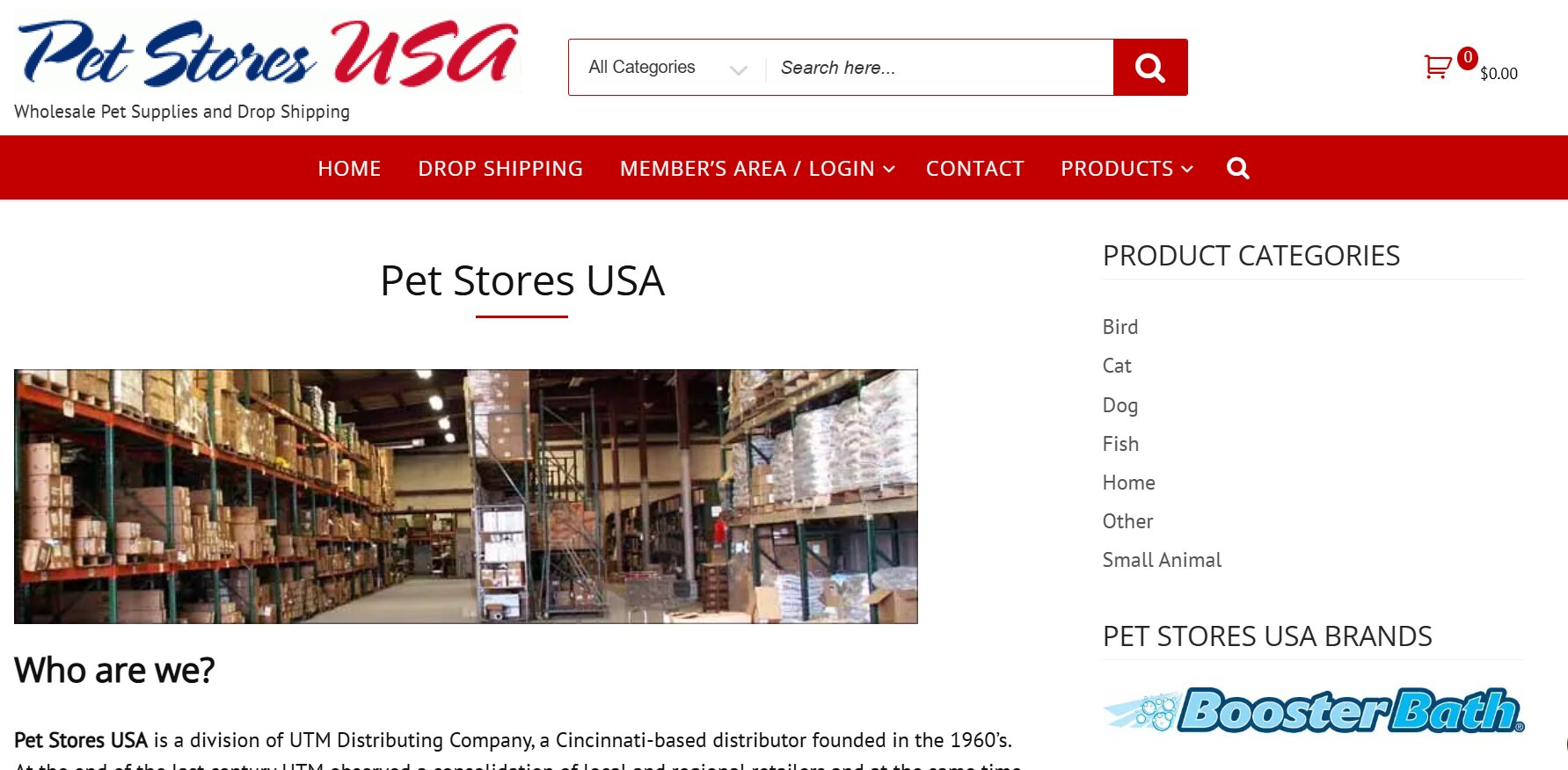
Pet Stores USA is a Cincinnati-based pet product wholesaler with around 2,500 brand-name products and decades of industry history.
We need to be careful with the word “free” here. Current pricing is not publicly available in the supplied data, and terms are provided after a reseller application, so we would not assume there is no membership or program fee until the supplier confirms it.
Key Features
- Approximately 2,500 pet products
- Brand-name pet inventory
- Ohio fulfillment
- Same-day dispatch for qualifying orders placed before 12 PM EST
- Typical 2–5 day US delivery
- Product spreadsheets, images, and data feeds
Pros
- Specialized pet catalog
- Domestic US fulfillment
- Does not compete directly with retailers through its own consumer storefront
- Established wholesale operation
Cons
- Pricing is provided on application
- Approval may require business or tax documentation
- No modern direct ecommerce app
- Shopify and WooCommerce connectivity is handled through third-party platforms such as Doba or Wholesale2B
Ideal For: Established pet stores that want branded US inventory and are willing to complete a traditional wholesale approval process.
Which Free Dropshipping Suppliers Are Best for Different Needs?
There is no single supplier that wins every category. Based on the supplier data, we would shortlist different options depending on whether your priority is product testing, US fulfillment, branding, POD, fashion, or direct wholesale relationships.
Top Picks by Category
| Category | Our Pick | Why It Stands Out |
| Best free all-in-one platform | CJDropshipping | Free core platform covering sourcing, fulfillment, US warehouses, integrations, POD, and branding |
| Best for scaling with branding + QC | NicheDropshipping | Free sourcing, quality inspection, custom packaging, and 2–5 day delivery for US-stocked inventory |
| Best POD for lower base-cost options | Printify | Large 1,300+ product catalog and multiple US print providers on a usable free plan |
| Best POD for production consistency | Printful | More standardized in-house production with strong branding options |
| Best for women’s fashion | Trendsi | Fashion-focused catalog with 2–5 day delivery on qualifying US-stocked products |
| Best for $0 product validation | AliExpress + DSers | Huge catalog with free product research and order automation |
| Best for vetted US/EU suppliers | Spocket | Curated supplier network with domestic and regional fulfillment options |
| Best for US/Canadian supplier sourcing | DropCommerce | Supplier network based entirely in the US and Canada |
| Best for non-Shopify stores | Syncee | Broad support for Wix, WooCommerce, BigCommerce, Squarespace, Ecwid, and Shopify |
| Best free supplier directory | Wholesale Central | Free direct access to US wholesalers without an additional marketplace layer |
| Best for pet products | Pet Stores USA | Specialized pet catalog with US fulfillment, though pricing requires application |
| Best for toys, games, and home goods | BryBelly | Direct Indiana wholesaler with domestic fulfillment and no recurring membership fee |
All 16 Free Dropshipping Suppliers Compared
| Supplier | Type | Free Plan Reality | US Warehouse / Shipping | Integrations | Rating* | Ideal For |
| NicheDropshipping | Dropshipping agent | Free sourcing; no recurring subscription | 2–5 days for US-stocked inventory across four fulfillment centers | Shopify, WooCommerce | — | Scaling stores needing sourcing, QC, branding, and US fulfillment |
| CJDropshipping | All-in-one platform | Fully usable free core plan | 2–8 days for qualifying pre-stocked US inventory | Shopify, WooCommerce, Amazon, eBay, Wix, TikTok Shop, Etsy | 4.8–4.9 Trustpilot | Beginners wanting sourcing, fulfillment, integrations, and warehousing in one platform |
| Eprolo | All-in-one platform | Forever-free core platform; branding add-ons cost extra | US warehouse available; broader delivery quoted around 5–12 days | Shopify, WooCommerce, eBay, Etsy, Amazon | ~4.8 Trustpilot | Beginners wanting sourcing plus an accessible branding path |
| Zendrop | All-in-one platform | Free to browse; fulfillment requires paid plan | US fulfillment; around 5–8.5 days in supplied data | Primarily Shopify | — | Shopify sellers willing to upgrade after validation |
| Printful | POD supplier | Fully usable free plan | US production; typically 2–5 business days production before shipping | Shopify, Etsy, WooCommerce + 26 more | 4.6 Shopify | POD sellers prioritizing production consistency and branding |
| Printify | POD marketplace | Fully usable free plan; up to five stores | US print providers; roughly 2–7 days depending on provider | Shopify, Etsy, WooCommerce, TikTok Shop, eBay | ~4.7 Trustpilot | POD sellers prioritizing catalog breadth and base-cost options |
| Spocket | Supplier marketplace | Restricted free access; paid plan needed for full sourcing | US/EU suppliers; approximately 2–7 days for qualifying domestic stock | Shopify, WooCommerce, Wix + others | ~4.4–4.5 Trustpilot | Sellers wanting curated US/EU suppliers |
| AliExpress + DSers | Marketplace + automation tool | Fully usable $0 entry model | Some US-stocked listings; China-direct shipping can be 15–45 days | DSers connects primarily with ecommerce platforms such as Shopify | AliExpress: ~2.1–2.7 Trustpilot | Low-cost product research and early validation |
| Syncee | Supplier marketplace | Free to evaluate; current importing limits should be verified | US suppliers can offer approximately 2–7 day domestic delivery | Shopify, Wix, WooCommerce, BigCommerce, Squarespace, Ecwid + | 4.7 Shopify | Sellers needing broader platform support beyond Shopify |
| Modalyst | Supplier marketplace | Free Hobby plan with roughly 25 products | Curated US/EU supplier options | Shopify, Wix | — | Boutique fashion and lifestyle stores testing a small catalog |
| DropCommerce | Supplier marketplace | Free plan available; current limits should be verified | Network consists of US and Canadian suppliers | Shopify | — | Stores prioritizing North American supplier relationships |
| Trendsi | Fashion marketplace/platform | Fully free; pay per order | US inventory including Los Angeles; around 2–5 business days for qualifying stock | Shopify | — | Women’s fashion boutiques |
| Wholesale Central | Supplier directory | 100% free directory access | Primarily US wholesalers; delivery varies by supplier | No built-in store integration | — | Sellers who want direct wholesale relationships and can vet suppliers themselves |
| Inventory Source | Directory + automation platform | Directory is free; automation costs $149–$199+/month | US Direct products listed around 3–5 day shipping | 30+ including Amazon, eBay, Walmart | ~2.3–3.0 Trustpilot | Established stores coordinating several wholesale suppliers |
| BryBelly | Direct US wholesaler | No recurring membership fee; approximately $50 minimum order value | Indiana warehouse; 1–3 day processing | Manual / CSV workflow | — | Toys, games, home, party, and general-merchandise stores |
| Pet Stores USA | Direct US wholesaler | Pricing on application; do not assume it is free | Ohio warehouse; around 2–5 day delivery | Connectivity available through Doba / Wholesale2B | 3.7/5 cited by DoDropshipping | Established pet stores wanting branded US inventory |
Ratings reflect the sources and platforms recorded in the supplied August 2026 data. Where we could not establish a reliable comparable public rating, we have left the field blank rather than assigning our own score. Free-plan details for Zendrop, Spocket, Syncee, DropCommerce, and Pet Stores USA should be rechecked immediately before publishing, as their terms are either restricted, unclear, or subject to change.
For suppliers outside the US-focused shortlist, see our guide to free dropshipping suppliers.
Free vs Paid Dropshipping Suppliers: When Does an Upgrade Pay for Itself?
We generally suggest starting with the free plan while validating products. A paid plan makes sense when its monthly fee is lower than the money or time it saves through discounts, automation, faster fulfillment, or fewer order-management problems.
The basic formula is:
Break-even orders = Monthly plan cost ÷ Savings per order
For example, if a $40 plan saves $2.50 per order, it pays for itself at 16 orders per month.
| Supplier | Free Option | Paid Upgrade | When We’d Consider Upgrading |
| Printify | Usable free plan with five stores and full catalog access | Premium: $39/month | At roughly 16–17 orders/month, based on estimated product-discount savings |
| Printful | Fully usable free plan | Growth: $24.99/month | When product discounts outweigh the fee; Growth is listed as free for one year after reaching $12,000 in annual sales |
| Spocket | Mainly useful for browsing and evaluating suppliers | Paid plans unlock sourcing features | Once you have products worth listing and US/EU supplier access justifies the recurring fee |
| Zendrop | Browse-only free access | Pro listed at $49/month | After confirming that its products and fulfillment options fit your store, since fulfillment requires the paid tier |
| Inventory Source | Free supplier directory | Automation starts around $149–$199+/month | When manual feed management costs more in staff time and errors than the automation fee |
| Modalyst | Free Hobby plan with roughly 25 products | Paid plans increase catalog capacity | When the 25-product limit restricts a validated boutique catalog |
Don’t Upgrade Just Because You Start Getting Orders
A few sales are not enough reason to add another monthly expense.
If your free plan still provides the products, integrations, and fulfillment workflow you need, keep using it. Printify, Printful, CJDropshipping, Eprolo, and Trendsi can all support meaningful testing without a subscription.
Consider upgrading when:
- Product discounts save more than the monthly fee.
- Manual order processing takes too much time.
- Product limits restrict expansion into proven categories.
- Automation, inventory synchronization, or supplier access is paywalled.
- A paid tier improves fulfillment or branding for products already generating sales.
Factor in Time and Errors, Not Just Product Discounts
For automation tools, break-even is not always based on product savings.
Inventory Source, for example, can cost $149–$199+ per month, making it impractical for a beginner processing a few orders. However, an established operator managing multiple suppliers may save enough through reduced manual updates, order forwarding, stock mismatches, and errors to justify the fee.
The calculation becomes:
Monthly automation fee vs. staff time + overselling risk + order-processing errors
The same principle applies to curated marketplaces. A Spocket subscription should not be justified simply by its US/EU supplier access. It should improve your product selection, fulfillment, or operating costs enough to outperform free alternatives.
Our Rule: Start Free, Then Upgrade Against a Measurable Bottleneck
We would not pay for a supplier plan just because it offers more features. Upgrade when you can identify the specific bottleneck it removes.
Before subscribing, calculate:
- Current orders per month
- Expected saving per order
- Monthly subscription cost
- Hours of manual work the upgrade removes
- Additional costs for suppliers, stores, or integrations
If the numbers do not show a clear financial or operational benefit, stay on the free plan. Once the subscription saves more than it costs, the upgrade becomes an operating decision rather than another fixed expense.
How Do You Vet a Free US Dropshipping Supplier?
Before adding a supplier’s products to your store, we would verify where the inventory is actually located, what the account requirements are, and how the supplier performs on a real order.
“US supplier” can mean several things. Some companies operate US warehouses, some list third-party US suppliers, and others simply ship to the US. Those are very different fulfillment setups.
Here is the checklist we would use.
1. Confirm the Product Actually Ships From the US

Do not treat “fast US shipping” or “ships to the USA” as proof of domestic inventory.
Ask where the specific SKU is stocked and, where possible, confirm the warehouse location. This matters on mixed networks such as CJDropshipping, AliExpress, Spocket, Syncee, and Printify, where fulfillment origin can differ from one product or provider to another.
For platforms with multiple warehouses, check the fulfillment location again whenever you add a new product.
2. Place a Sample Order
We would never judge a supplier only from its catalog.
Order the product to a US address and check:
- Actual processing time
- Actual delivery time
- Product condition on arrival
- Packaging quality
- Whether invoices or supplier branding appear inside the package
- Tracking accuracy
- Whether the product matches the listing
This is particularly important on marketplaces where different sellers or production partners control product quality.
3. Check Independent Reviews

Supplier testimonials are useful, but they should not be your only source.
Look at recent reviews on platforms such as Trustpilot, the Shopify App Store, BBB where applicable, and relevant seller communities. Pay more attention to repeated patterns than individual complaints.
For example, our supplier research flags Inventory Source’s Trustpilot rating at roughly 2.3–3.0, with support complaints appearing repeatedly. That does not automatically disqualify the platform, but it is something we would investigate before paying $149–$199+ per month for automation.
4. Test Support Before You Need It
Send the supplier a real pre-sale question.
Ask about stock, processing time, returns, or warehouse origin and see how clearly and quickly they respond. If getting a straightforward answer is difficult before you become a customer, resolving a lost shipment or inventory problem later may be harder.
For direct wholesalers, also check whether support is available only during US business hours.
5. Read the Returns and Refund Policy
Returns are where weak supplier relationships become expensive.
Before listing a product, confirm:
- Who pays return shipping
- Where returns must be sent
- Whether restocking fees apply
- How damaged or incorrect items are handled
- How long you have to submit a claim
- Whether the supplier refunds you before or after receiving the return
Your own store policy should not promise customers something your supplier will not support.
6. Ask Whether You Need an EIN or Resale Certificate
Traditional US wholesalers may require more business documentation than platforms such as CJDropshipping, Printify, or AliExpress.
Depending on the supplier, you may be asked for:
- EIN
- State resale certificate
- Sales-tax permit or ID
- Business details or reseller application
The requirements are supplier- and state-specific, so confirm them directly rather than assuming every “free” wholesaler accepts an instant signup.
This is especially relevant when using directories such as Wholesale Central, because every listed wholesaler can set its own account requirements. Pet Stores USA also provides current terms after a reseller application, and its available data indicates that tax documentation may be required.
7. Check Where You Are Allowed to Sell
A supplier can be legitimate and still be unsuitable for your sales channel.
Ask whether it permits selling on:
- Shopify or your own website
- Amazon
- eBay
- Walmart
- TikTok Shop
- Etsy
Also check for MAP policies or other pricing restrictions.
BryBelly is a useful example: its dropshipping program can work for independent ecommerce stores, but the supplier data specifically states that its products cannot be sold on Amazon.
8. Calculate the Real Landed Cost
Finally, calculate what one successful order actually costs you:
Product cost + shipping + supplier/platform fees + payment costs + duties/taxes + expected return allowance
Do this for the exact SKU you plan to sell.
A supplier charging no membership fee can still produce worse margins than a paid alternative if shipping or product markups are high. Likewise, US inventory may cost more upfront but reduce delivery problems, customs exposure, and refunds.
Start Small Before Expanding the Catalog
Once a supplier passes these checks, we would start with 5–10 products rather than importing the entire catalog.
Watch real delivery times, stock consistency, refund rates, and customer feedback. If those products perform reliably, expand gradually.
The goal is not simply to prove that a supplier is legitimate. You are trying to determine whether its inventory, fulfillment, support, and commercial terms are reliable enough for your particular store.
When Should You Graduate from Free Suppliers to a Dropshipping Agent?
Free suppliers are useful for testing products with low fixed costs. We would consider moving to a dropshipping agent once your main problem is no longer finding products, but controlling margins, quality, branding, and fulfillment as order volume grows.
These are the clearest signs that you are ready to make that move.
1. You Are Getting Consistent Daily Orders
Once a product is generating steady volume, marketplace markups and inefficient shipping become more noticeable.
At around 20–30+ orders per day, it becomes worth comparing your current landed cost against direct factory sourcing. An agent can source from manufacturers, negotiate pricing, and consolidate fulfillment instead of relying on the markup already built into a marketplace listing.
The key is to compare actual savings per order. If an agent saves even a small amount on a product selling dozens of units per day, the difference can become meaningful over a month.
2. You Have a Proven Winner Worth Pre-Stocking
Free platforms are ideal when demand is uncertain because you do not want to buy inventory too early.
Once a SKU has stable sales, however, pre-stocking inventory in a US warehouse can improve both delivery speed and cost predictability.
For example, NicheDropshipping can hold proven products in its US fulfillment centers and deliver stocked inventory in approximately 2–5 days. This is very different from testing a product through China-direct fulfillment, where delivery times and customs costs can be less predictable.
The trade-off is that pre-stocking requires more confidence in demand, so we would only make that move after the product has already proved itself.
3. Product Quality Is Becoming a Customer-Service Problem
A few inconsistent products may be manageable during testing. At higher volume, the same issue quickly turns into refunds, chargebacks, and negative reviews.
That is when quality inspection before fulfillment becomes much more valuable.
With a sourcing agent, QC can happen before the product reaches your customer. At NicheDropshipping, for example, our model includes product inspection before shipment, giving sellers another checkpoint before an order leaves the supply chain.
This matters especially when sourcing from factories or when product specifications need to remain consistent across larger order volumes.
4. You Want to Build a Brand Around the Product
Marketplace dropshipping works well for validation, but branding options are often limited or expensive on a per-order basis.
An agent becomes more useful when you need:
- Custom packaging
- Private labeling
- White-label products
- Branded inserts
- Consistent packaging across multiple SKUs
At this stage, you are no longer just testing whether a product sells. You are trying to create a repeatable customer experience.
That usually requires more control over the supplier, packaging, and fulfillment process than a general marketplace can provide.
5. You Are Managing Too Many Suppliers
Supplier sprawl is another common reason to consolidate.
Using several suppliers can mean:
- Different processing times
- Different tracking systems
- Different return policies
- Split shipments
- Multiple support contacts
- Inconsistent packaging
This can work at low volume, but it becomes harder to manage as the store grows.
A dropshipping agent can source several products, consolidate inventory, and coordinate fulfillment through one relationship. That reduces operational complexity and can make the customer experience more consistent.
What Does a Dropshipping Agent Actually Add?
Compared with a typical free marketplace, an agent can add more control over the supply chain.
That may include:
- Factory sourcing and price negotiation
- Product and supplier verification
- Quality inspection
- Inventory consolidation
- US warehouse storage
- Custom packaging
- Private-label support
- Coordinated fulfillment across multiple products
With NicheDropshipping, we also offer bulk inventory storage and private label dropshipping for sellers who have moved beyond basic product testing.
When Should You Stay with a Free Supplier?
We would stay with a free supplier if:
- You are still testing product-market fit
- Daily order volume is low or inconsistent
- You do not yet need custom branding
- Your current shipping times are acceptable
- Product quality is stable
- Your supplier workflow is still easy to manage
Moving to an agent too early can add unnecessary complexity. The right time is when your current supplier model is actively limiting margin, fulfillment speed, quality control, or branding.
That is the point where a dropshipping agent stops being an optional service and starts solving an operational bottleneck.
Ready to Move Beyond Free Suppliers?
Ready to graduate from free suppliers? Contact NicheDropshipping to discuss product sourcing, quality inspection, private labeling, inventory storage, and faster fulfillment options for your growing store. Get started today and find out how an experienced dropshipping agent can support your next stage of growth.
FAQs about Free Dropshipping Suppliers
How Do I Find High-Quality Dropshipping Products?
Start by searching for reputable suppliers if you want high-quality dropshipping products.
Give priority to suppliers that conduct quality checks before dispatching products.
You can also order samples of products and check the product’s quality yourself before finalizing a deal.
Can I Dropship for Free?
Dropshipping can be done for free, but it would be incredibly difficult to stand out from your competitors.
Therefore, it’s not recommended to begin your dropshipping journey for free.
Instead, spend at least $100 on building a presentable website, supplier/product research, and marketing.
Which Dropshipping Website Is Free?
Websites such as NicheDropshipping and CJDropshipping do not charge a signup or monthly fee from dropshippers.
Instead, they charge you for the value of every order you receive from customers.
Choosing products and importing them to your online store is free.
Which Dropshipping Supplier Offers the Cheapest Products?
Platforms such as AliExpress, Wholesale Central, and Doba offer products at wholesale prices from reputable suppliers.
To find independent suppliers, look for those directly dealing with manufacturers.
The smaller the chain of middlemen, the more significant profit you earn through sales.
Do Free Dropshipping Suppliers Have a MOQ?
It varies from supplier to supplier, but in most cases, a free dropshipping supplier will have a minimum order quantity unless your store shows potential for long-term success. Most Chinese suppliers are also open to negotiating the MOQ.
Which Free Dropshipping Suppliers Work Well with Shopify?
Several suppliers in this guide integrate directly with Shopify, but they suit different store models. CJDropshipping is a strong all-round option for general products, while Printify and Printful are better suited to print-on-demand.
Trendsi focuses on women’s fashion, and Spocket, Syncee, Modalyst, DropCommerce, Eprolo, and Zendrop also support Shopify workflows.
For sellers who have already validated products, NicheDropshipping integrates with Shopify while adding sourcing, quality inspection, branding, and fulfillment support. Choose based on your product and fulfillment requirements rather than integration alone.
Can I Use Free Dropshipping Suppliers on Amazon?
Yes, but you must check each supplier’s marketplace policy before listing its products on Amazon. An ecommerce integration does not automatically mean the supplier permits Amazon resale.
CJDropshipping and Eprolo support Amazon integrations according to our supplier data, while BryBelly specifically prohibits sellers from offering its products on Amazon. Direct wholesalers may also impose marketplace or MAP restrictions.
Before listing anything, confirm that the supplier permits your sales channel and that you can meet Amazon’s delivery, tracking, returns, and product-authenticity requirements.
Which Free Dropshipping Suppliers Support TikTok Shop?
CJDropshipping and Printify are two of the clearer options in our supplier data for sellers building around TikTok Shop. CJ combines product sourcing, fulfillment, and TikTok integration, making it more suitable for conventional dropshipping products.
Printify supports TikTok Shop for print-on-demand products, where your own designs are the main differentiator. We would still check the fulfillment location and delivery estimate for every SKU before promoting it heavily.
TikTok can create sudden order spikes, so inventory availability and fulfillment capacity matter just as much as the platform connection.
Which Free Dropshipping Suppliers Are Suitable for Clothing Stores?
For women’s fashion, Trendsi is one of the more specialized options because it focuses on apparel, footwear, and jewelry and carries qualifying US-stocked inventory. Printful and Printify make more sense when your clothing business revolves around original printed designs.
Eprolo also covers apparel within its broader catalog, while NicheDropshipping can source clothing directly once you need more control over suppliers, QC, packaging, or private labeling.
With clothing, we would always sample key sizes first because fit consistency and returns can quickly erode otherwise attractive margins.
Can a Free Dropshipping Supplier Offer Private Label or Custom Packaging?
Yes, some free-to-access suppliers offer branding services, although the branding itself may carry additional costs.
NicheDropshipping supports private label and custom packaging, while CJDropshipping offers custom packaging and private-label options within its platform. Eprolo also provides an accessible branding program, and Printful supports options such as inside labels, pack-ins, and custom packaging for POD stores.
We would separate “free supplier access” from “free branding”: custom packaging, labels, inserts, molds, or minimum production runs can still add costs even when there is no monthly platform fee.
Can I Use More Than One Dropshipping Supplier in the Same Store?
Yes, using multiple suppliers is common, especially while testing different categories. You might use Trendsi for fashion, Printify for branded merchandise, and another supplier for general products.
The challenge is operational consistency. Different suppliers can have different processing times, tracking formats, return addresses, packaging, and stock availability. A two-product customer order may even arrive in separate packages.
We suggest mapping every SKU to a specific supplier and clearly tracking fulfillment rules. Once supplier coordination becomes difficult, consolidating products through fewer suppliers or an agent can simplify operations.
How Should I Handle Returns When Using Multiple Dropshipping Suppliers?
Set your customer-facing return policy only after you understand every supplier’s return process. Different suppliers may require returns to different addresses, impose different claim deadlines, or handle damaged products differently.
If you use several suppliers, document each SKU’s return address, refund rules, required evidence, and restocking fees in one internal system. We also recommend avoiding a policy that promises more than your suppliers can support.
As volume grows, centralized fulfillment can become useful because scattered return procedures often create more operational friction than sourcing the products in the first place.