Germany is one of Europe’s largest ecommerce markets, making it an attractive destination for dropshippers who can meet local expectations around delivery, product quality, payments, and compliance. In this guide, we compare 25 dropshipping suppliers for Germany, including German wholesalers, EU-warehouse suppliers, print-on-demand providers, and global sourcing platforms.
Quick Facts: Dropshipping in Germany
| Market | One of Europe’s largest ecommerce markets |
| Ecommerce penetration | Around 66% in 2025 |
| Typical EU-warehouse delivery | Around 2–5 business days |
| Supplier options | German wholesalers, EU suppliers, POD companies, global platforms, and sourcing agents |
| Key compliance areas | Gewerbeanmeldung, VAT/OSS, LUCID packaging registration, GPSR, GDPR, Impressum, and 14-day withdrawal rights |
| Best fit for beginners | Suppliers with low/no MOQ, Shopify integration, and EU fulfillment |
| Best fit for scaling | Direct suppliers or a dropshipping agent offering sourcing, QC, bulk inventory, and private labeling |
From our perspective, supplier location alone shouldn’t decide your choice. A German or EU supplier usually wins when fast local fulfillment is the priority, while China sourcing can make more sense once you need broader product access, factory-direct pricing, customization, or private labeling.
Types of Dropshipping Suppliers for Germany
When we evaluate dropshipping suppliers in Germany, we don’t put every provider in the same bucket. Some own local inventory, some connect you to third-party suppliers, and others simply help you discover manufacturers. That difference affects your delivery speed, margins, branding options, and how much supplier vetting you need to do yourself.
| Supplier Type | How It Works | Main Advantages | Main Trade-Offs | Examples |
| EU & global platforms | Give you access to large catalogs, store integrations, and EU or German fulfillment options | Easy setup, automated order syncing, broad product range | Monthly fees on some platforms; less control over individual suppliers | CJDropshipping, BigBuy, Spocket, dropshippingXL, Hertwill |
| German local wholesalers | Established German B2B companies ship products directly to your customers | Fast domestic delivery, local returns, German invoicing, niche expertise | Often require business verification; integrations may be more manual | ZooDrop, Manolya, Gallay, CLP Trading, Emporium |
| Print-on-demand suppliers | Produce customized products only after your customer orders | No inventory commitment, easy customization, useful for building a brand | Higher unit costs and a narrower product range | Shirt-King, Printful, Podbase |
| Fashion & luxury platforms | Provide branded or designer fashion through European fulfillment networks | Access to recognized brands and higher-ticket products | Subscription costs and stricter customer expectations around authenticity and returns | BrandsGateway, BDroppy |
| Marketplaces & supplier directories | Help you locate products, wholesalers, factories, or dropshippers rather than operating as one supplier | Huge sourcing range and useful for product discovery | More responsibility for supplier verification, QC, shipping, and compliance | Alibaba/AliExpress, SaleHoo, Worldwide Brands, Dropshipping Marktplatz |
Which Type Should You Choose?
For most sellers, we’d match the supplier model to what you’re trying to accomplish:
- Testing products: Start with a platform or marketplace where you can list products without committing to inventory.
- Selling primarily to German customers: A German wholesaler or EU-stock supplier usually gives you the strongest delivery advantage.
- Launching customized products: POD is the simplest entry point when you want your own designs without manufacturing inventory upfront.
- Selling premium fashion: Specialist fashion platforms give you access to established brands, but you need enough margin to absorb their platform fees.
- Building a private-label brand: Marketplaces can help with initial factory discovery, but once volumes grow, direct sourcing or a dedicated sourcing agent gives you more control over QC, packaging, and fulfillment.
In practice, you may use more than one type as your store grows. We generally see the supplier decision change once a product proves demand: test with minimal commitment, then move proven products toward faster fulfillment and greater supply-chain control.
The 25 Best Dropshipping Suppliers for Germany in 2026
We’ve grouped these suppliers by business model because a German wholesaler, a global sourcing platform, and a supplier directory solve very different problems. When comparing them, we’d pay closest attention to where the order actually ships from, delivery time to Germany, integration options, returns, and whether the supplier fits your current stage of growth.
EU & Global Dropshipping Platforms
1. CJDropshipping Best for Global Sourcing with German Fulfillment
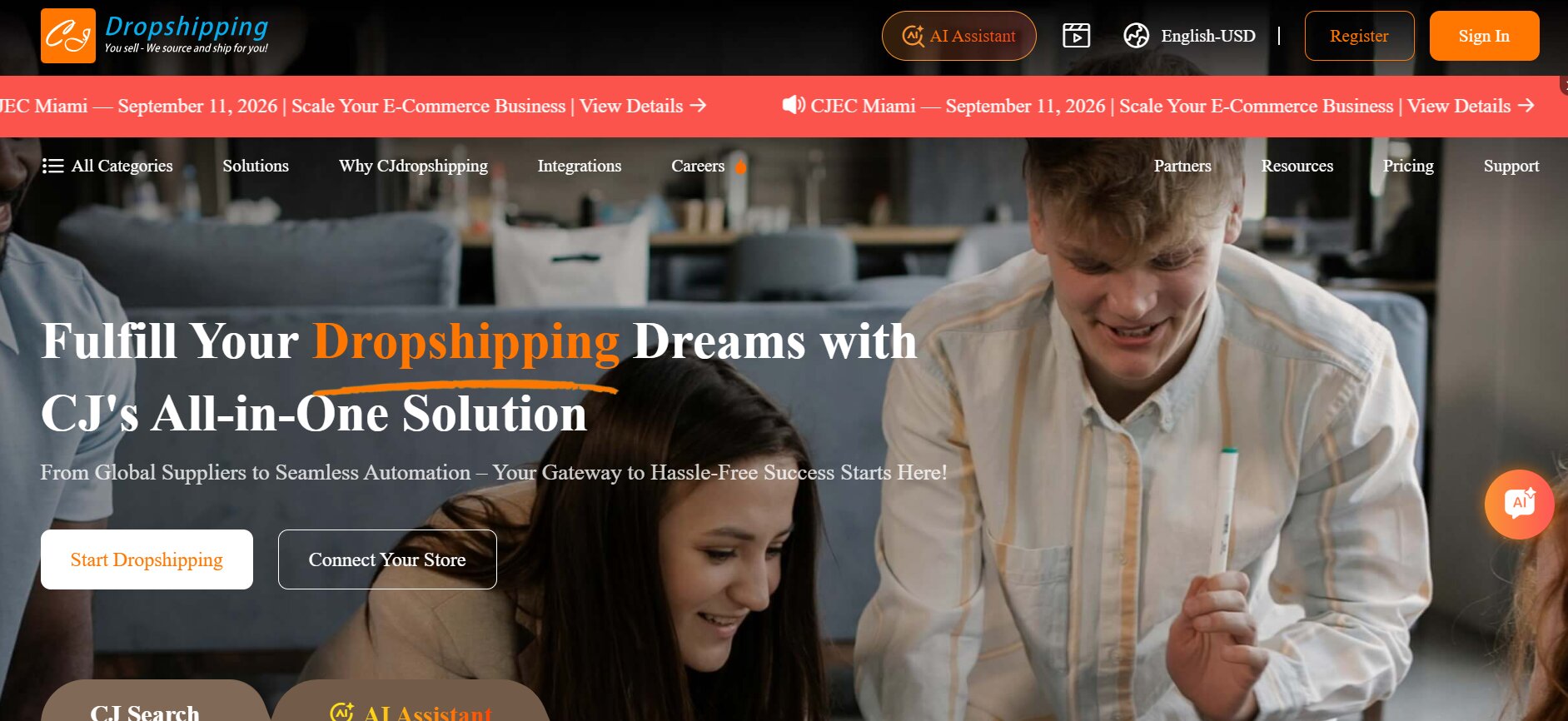
CJDropshipping combines product sourcing, store integration, warehousing, and order fulfillment in one platform. Its European network includes German fulfillment, and sellers can also pre-stock their own products closer to German customers rather than shipping every order individually from China.
- Products: Fashion, electronics, accessories, beauty, home products, POD, and more
- Ships from & delivery: Germany/EU warehouses for stocked products; China for much of the wider catalog
- Pricing: No subscription required for standard platform access; product, shipping, and additional service costs vary
- Ideal for: Sellers who want to test products first and later move proven SKUs into local inventory
- Watch out: German warehouse fulfillment only helps when the product is actually stocked there. CJ’s current overseas warehouse rules also specify inventory requirements for stocking products, so check these before planning local fulfillment.
2. BigBuy: Best for a Large European Catalog
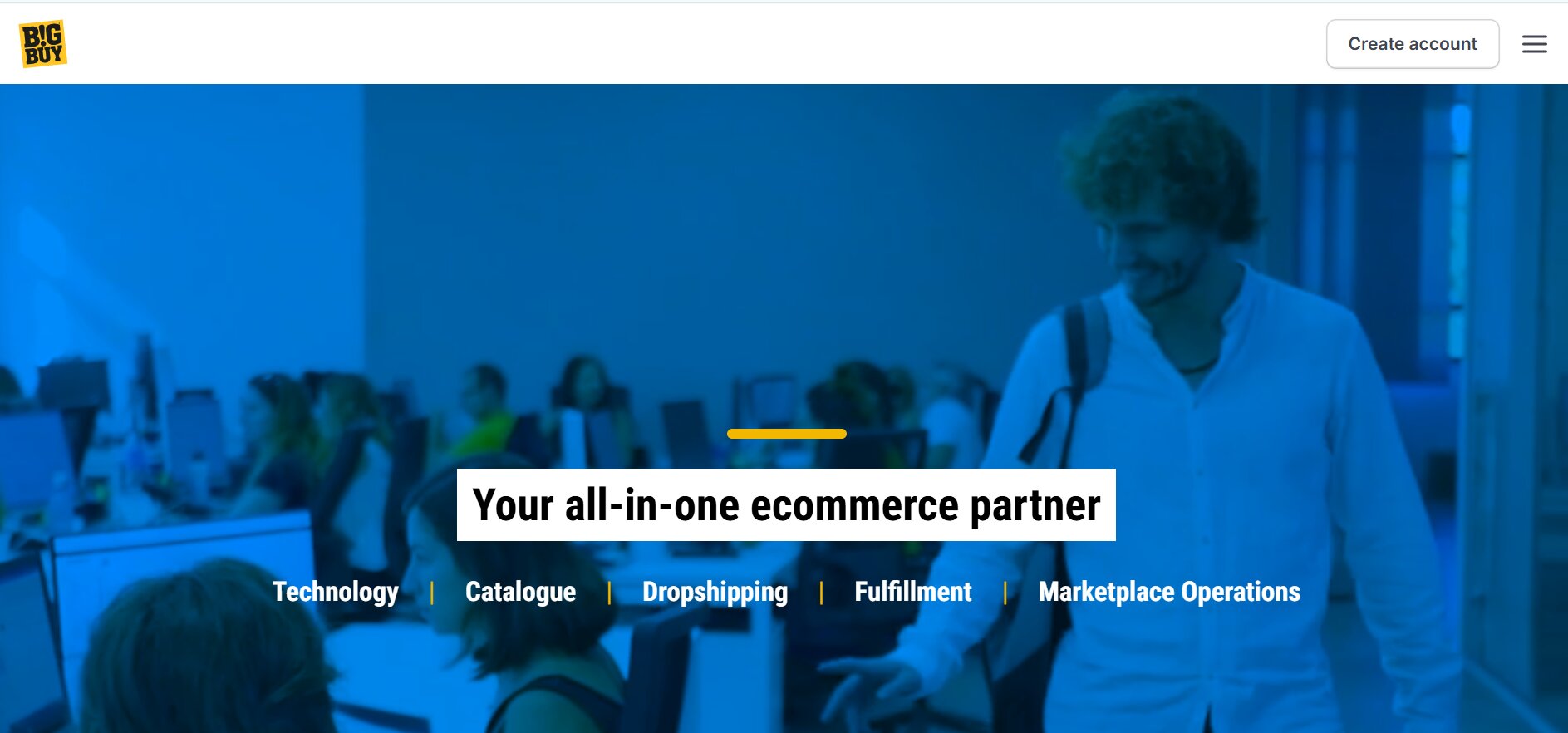
BigBuy is a Spain-based European wholesaler and dropshipping platform covering categories such as home, electronics, beauty, toys, and lifestyle products. We’d consider it when you want a broad EU catalog without building individual relationships with dozens of wholesalers.
- Products: Home, electronics, beauty, toys, lifestyle, gifts, and more
- Ships from & delivery: Spain; typically several business days to Germany
- Pricing: Paid dropshipping plans; exact current plan pricing should be checked before publishing because BigBuy changes its packages
- Ideal for: General stores that value catalog breadth and ecommerce automation
- Watch out: Subscription and fulfillment costs can squeeze margins on lower-ticket products, so calculate landed cost before importing a large catalog
3. Spocket: Best for Curated EU and US Suppliers
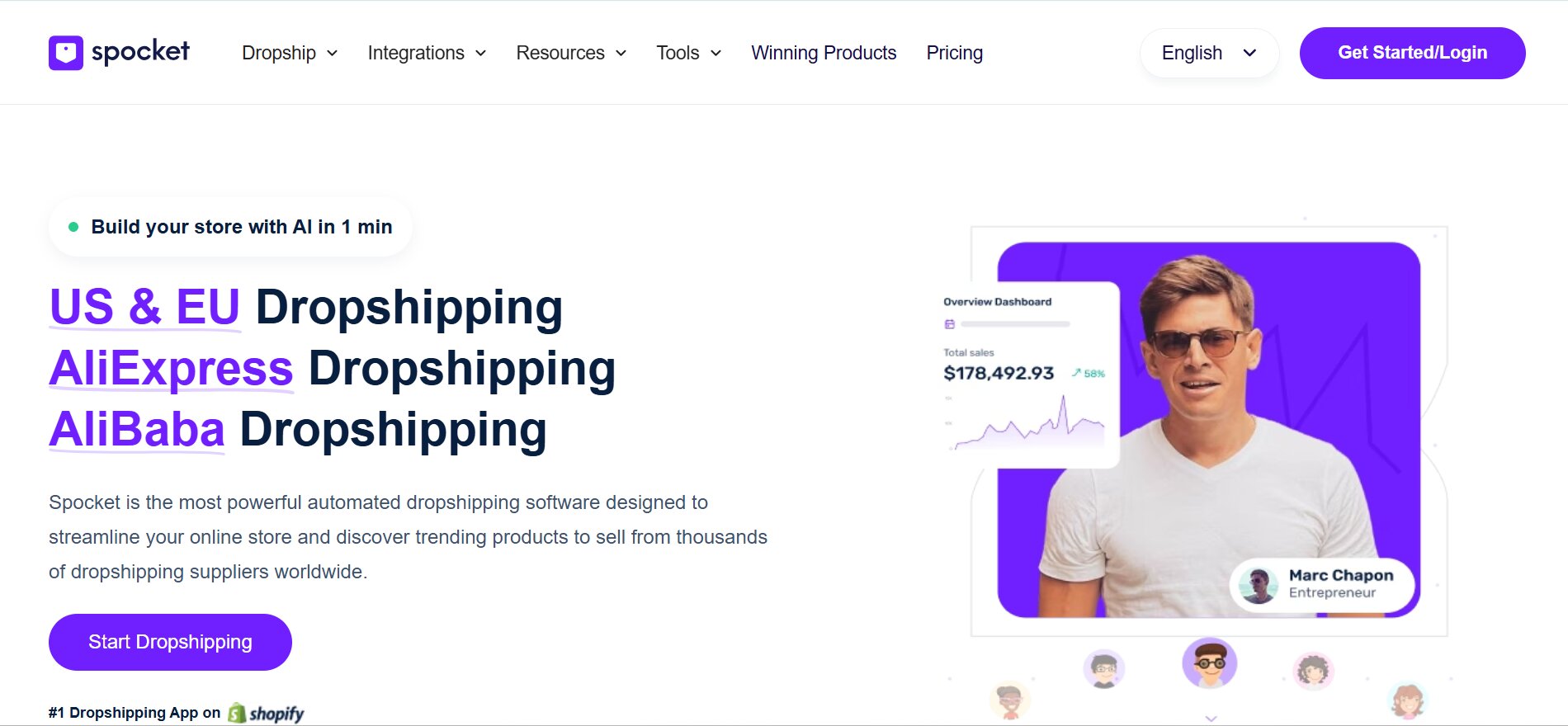
Spocket acts as a supplier platform rather than one centralized wholesaler. You can filter its catalog toward European suppliers, which is useful when delivery speed to Germany matters more than finding the lowest possible unit price.
- Products: Fashion, beauty, home decor, accessories, lifestyle products
- Ships from & delivery: Depends on the individual supplier; EU-stock products can reach Germany much faster than overseas listings
- Pricing: Subscription-based plans
- Ideal for: Boutique stores that want easier supplier discovery and ecommerce integration
- Watch out: Always verify the actual ship-from country at product level. Being listed on an EU-friendly platform does not mean every product is warehoused in Europe
4. dropshippingXL: Best for Home, Garden, and Furniture
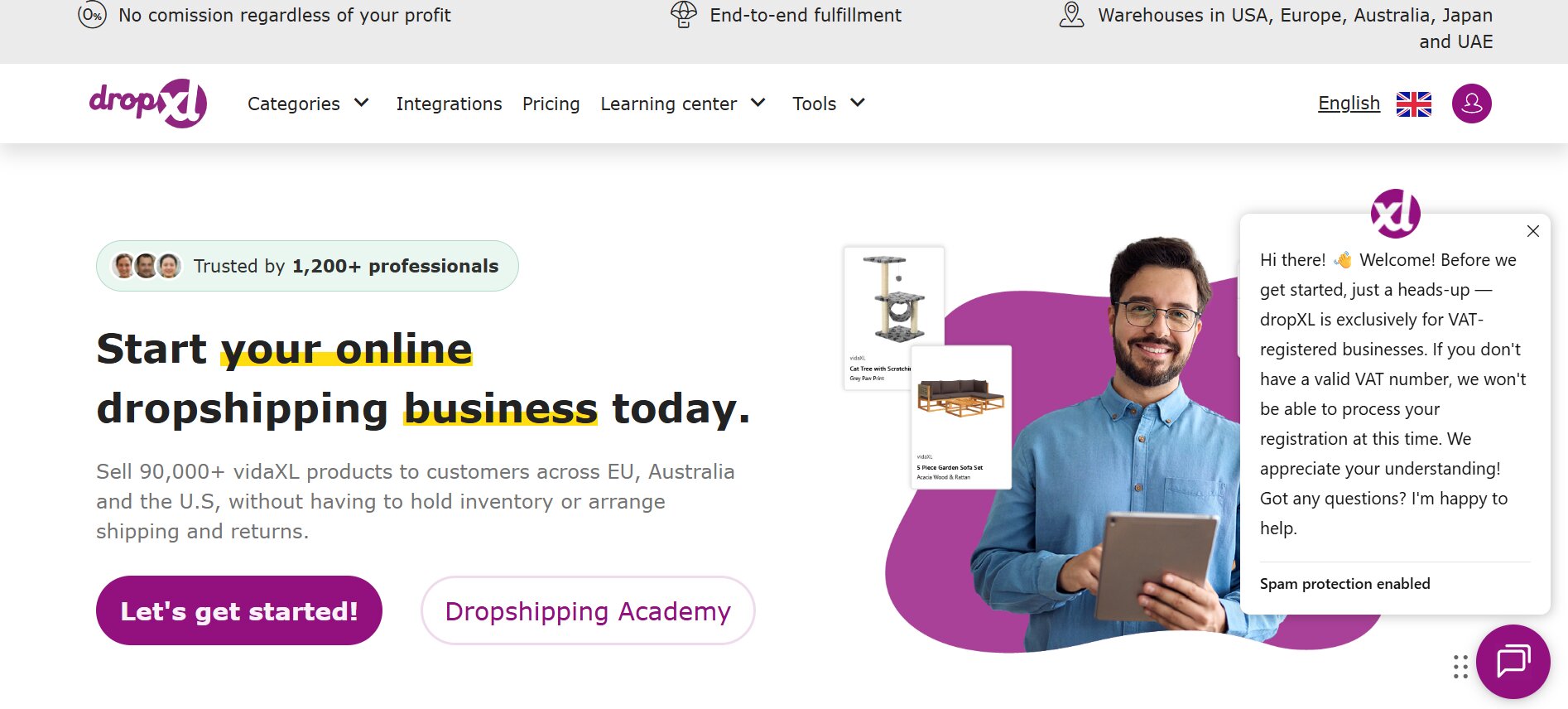
dropshippingXL is vidaXL’s dropshipping program, making it particularly relevant for furniture, garden, home, and DIY-focused stores. Its European logistics footprint can make it easier to serve German customers than sourcing bulky products individually from Asia.
- Products: Furniture, home, garden, sports, DIY, outdoor products
- Ships from & delivery: European fulfillment network; delivery depends on SKU and destination
- Pricing: Subscription-based dropshipping access
- Ideal for: Home-and-garden stores needing a large ready-to-list catalog
- Watch out: Large products create expensive returns. We’d calculate return shipping and damage risk before judging an item by gross margin alone
5. Hertwill: Best for European Brands
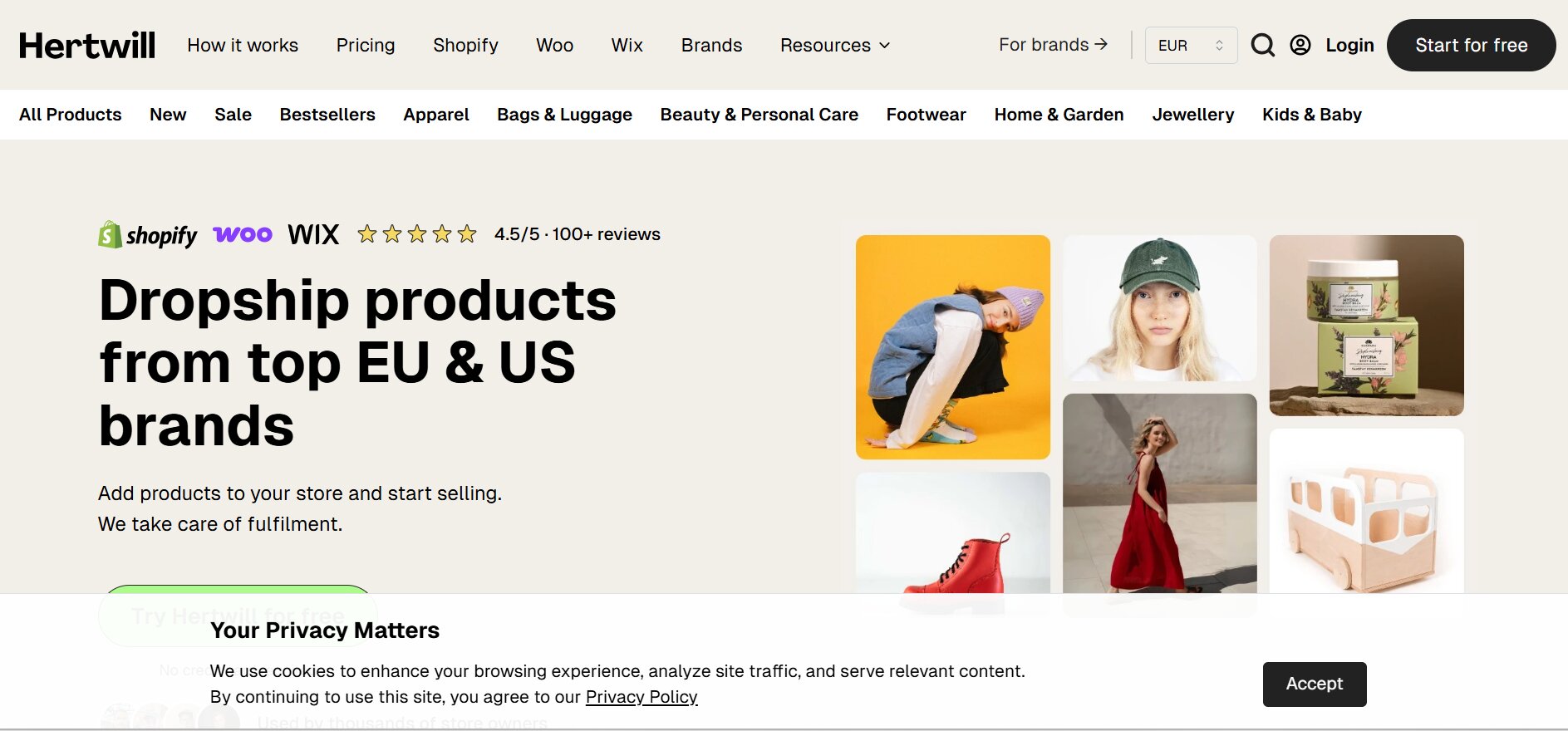
Hertwill focuses on European brands rather than the generic product catalogs common on larger dropshipping marketplaces. That makes it interesting if your positioning revolves around European-made or European-designed merchandise.
- Products: Fashion, accessories, home, gifts, and lifestyle products
- Ships from & delivery: European suppliers; delivery varies by brand
- Pricing: Free and paid plan options are available
- Ideal for: Stores that want a more curated European product assortment
- Watch out: The catalog is naturally smaller than mass-market platforms such as CJ or BigBuy
German Local Wholesalers
This is the group we’d look at first when fast domestic fulfillment and a genuinely German supplier relationship are the priority. The trade-off is that traditional wholesalers often have more formal B2B onboarding and less plug-and-play automation.
6. ZooDrop: Best for Pet Supplies
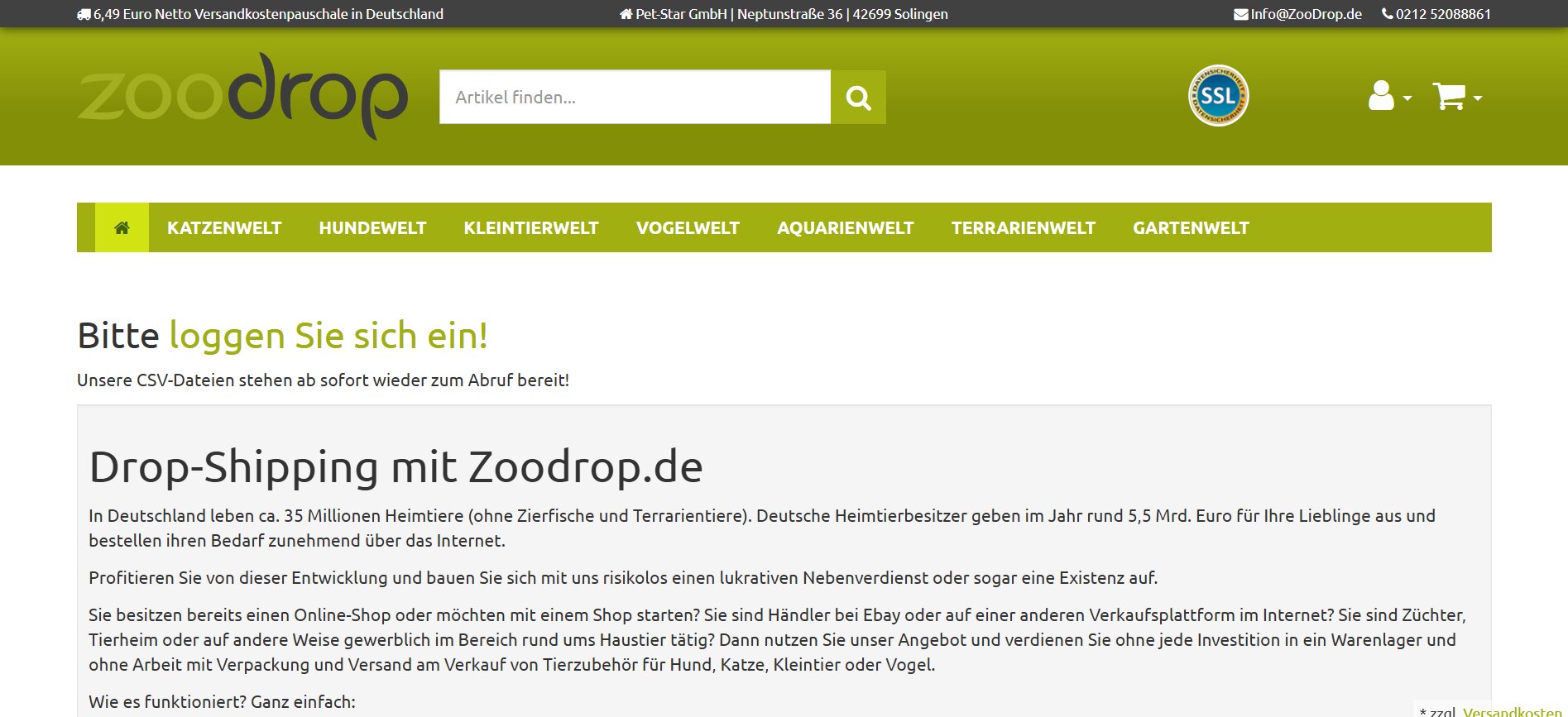
ZooDrop is the dropshipping service of Pet-Star GmbH in Solingen and focuses entirely on pet products. It offers direct customer fulfillment with neutral documentation, making it much more suitable for a specialist pet store than a general marketplace supplier.
- Products: Pet food, toys, grooming products, beds, and accessories
- Ships from & delivery: Solingen, Germany; typically 1–3 business days
- Pricing: B2B wholesale pricing plus fulfillment/shipping charges
- Ideal for: Germany-focused pet stores
- Watch out: Business verification is required, so this is better suited to established commercial sellers than casual product testing
7. Manolya Electronics: Best for Branded Electronics
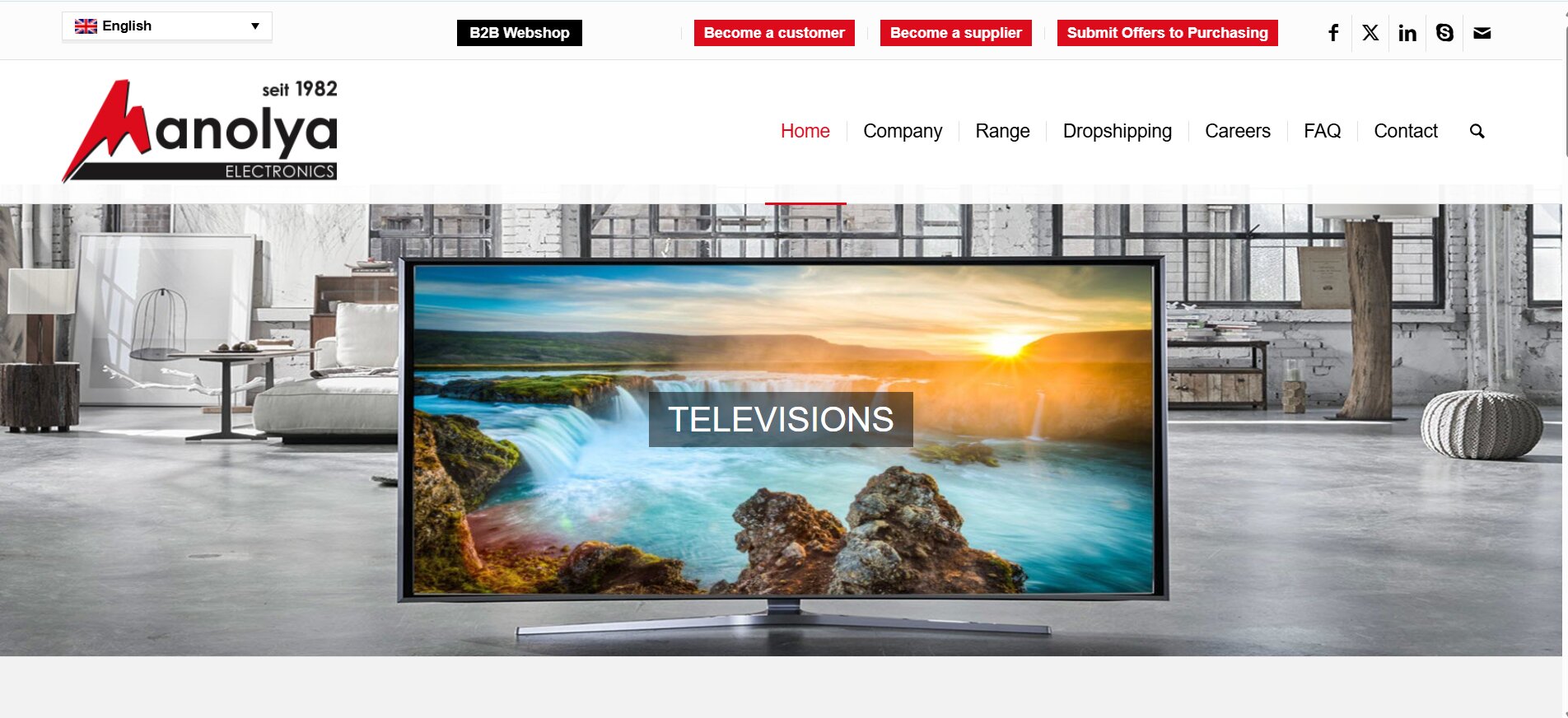
Manolya Electronics is a Berlin-based electronics distributor serving B2B customers. Unlike a typical electronics marketplace, its strength is access to recognized consumer brands with domestic German fulfillment.
- Products: Smartphones, wearables, household electronics, and electronic accessories
- Ships from & delivery: Berlin, Germany; roughly 2–3 working days within Germany
- Pricing: Wholesale pricing
- Ideal for: Electronics resellers targeting German customers
- Watch out: The supplier does not accept returns, the first two orders require prepayment, and sellers need to create their own product presentation rather than relying on a polished dropshipping feed.
8. buXtrade: Best for Food, Spices, and Supplements
buXtrade is based in Buxtehude and specializes in food-related categories rather than electronics, an important correction to some older supplier lists. Its range includes superfoods, supplements, spices, nuts, and sugar alternatives.
- Products: Superfoods, food supplements, spices, nuts, and sugar substitutes
- Ships from & delivery: Buxtehude, Germany; around 2–3 days via DHL
- Pricing: B2B wholesale pricing
- Ideal for: Food, wellness, and specialist grocery stores
- Watch out: Food introduces additional labeling and claims requirements. We’d verify ingredient information and German/EU compliance before importing supplier descriptions directly into your store
9. Gallay: Best for Jewelry
Gallay is a Cottbus-based jewelry wholesaler offering gold, silver, and fashion jewelry. Its dropshipping setup is unusually accessible for a traditional German wholesaler, including product-data feeds and no monthly dropshipping subscription.
- Products: Gold, silver, and fashion jewelry
- Ships from & delivery: Cottbus, Germany; rapid domestic fulfillment
- Pricing: Wholesale pricing plus per-shipment costs; no monthly fee stated in the supplied research
- Ideal for: Jewelry and accessory stores wanting local fulfillment
- Watch out: Expect standard German B2B onboarding and business verification
10. AGI AKKU Service: Best for Batteries and Power Accessories
AGI AKKU Service is a specialist German supplier for rechargeable batteries, chargers, adapters, and related power products. Its dropshipping infrastructure includes product data and inventory updates, which makes it more ecommerce-friendly than many traditional specialist wholesalers.
- Products: Batteries, chargers, power banks, adapters, and power supplies
- Ships from & delivery: Geesthacht, Germany; approximately 2–4 working days
- Pricing: B2B pricing by account/inquiry
- Ideal for: Stores specializing in replacement batteries and power accessories
- Watch out: Batteries and electronics bring additional German/EU obligations such as WEEE and battery regulation requirements; clarify responsibilities before listing products
11. EMPORIUM: Best for Branded Beauty and Perfume
EMPORIUM Handels & Vertriebs GmbH operates in the branded beauty and fragrance segment and is part of B&S Group. We’d look at it primarily as a B2B brand-resale supplier rather than a route into private-label cosmetics.
- Products: Perfume, skincare, makeup, and personal care
- Ships from & delivery: Germany; the supplied research indicates roughly 48-hour dispatch
- Pricing: B2B wholesale pricing
- Ideal for: Stores reselling established beauty and fragrance brands
- Watch out: Dropshipping access is aimed at approved B2B customers, and the model is branded resale rather than private labeling
12. Trends 4 Cents: Best for Low-Ticket Variety Products
Trends 4 Cents focuses on value-oriented household, kitchen, stationery, gift, and general merchandise. It can work for discount-oriented catalogs, but this is one supplier where we’d be especially selective about which products make it into the store.
- Products: Household goods, kitchenware, stationery, gifts, and general merchandise
- Ships from & delivery: Germany; approximately 2–4 days according to the supplied research
- Pricing: Wholesale pricing
- Ideal for: Value stores and stores building bundles of inexpensive products
- Watch out: Very low-ticket products can leave little room after shipping, VAT, payment fees, returns, and advertising
13. WORTMANN: Best for Computers and IT Hardware
WORTMANN AG is an established German IT manufacturer and distributor known for its TERRA range. Direct delivery to end customers is available through its B2B structure, making this a much more specialist option than a typical beginner dropshipping app.
- Products: PCs, laptops, monitors, peripherals, servers, and IT accessories
- Ships from & delivery: Germany; generally fast domestic fulfillment
- Pricing: Reseller/B2B pricing
- Ideal for: Established IT retailers and business-focused ecommerce stores
- Watch out: This is a professional reseller relationship, not a one-click dropshipping marketplace
14. Glamory Hosiery: Best for Plus-Size Hosiery
Glamory specializes in hosiery with an unusually broad size range, including plus-size tights, stockings, and related products. The narrow specialization can actually be an advantage if you want to build a highly focused fashion store rather than compete with large generic apparel catalogs.
- Products: Tights, stockings, hold-ups, socks, and hosiery
- Ships from & delivery: Germany; fast domestic dispatch is available
- Pricing: Wholesale pricing
- Ideal for: Plus-size and inclusive fashion stores
- Watch out: You are reselling Glamory-branded merchandise; it is not a private-label manufacturing solution
15. CLP Trading: Best for Furniture and Bulky Home Products
CLP Trading is a German wholesaler focused on furniture, garden products, sports equipment, and home goods, with an established dropshipping operation. We’d consider it when you specifically want domestic fulfillment for products that would otherwise be expensive and slow to ship individually from China.
- Products: Furniture, garden, home, and sports products
- Ships from & delivery: Germany; approximately 2–5 days
- Pricing: B2B wholesale pricing
- Ideal for: Furniture, garden, and home stores targeting Germany
- Watch out: Bulky-product returns can destroy an otherwise attractive margin. Check dimensions, carrier surcharges, damage procedures, and return costs before listing
Print-on-Demand Suppliers
16. Shirt-King: Best German POD Supplier
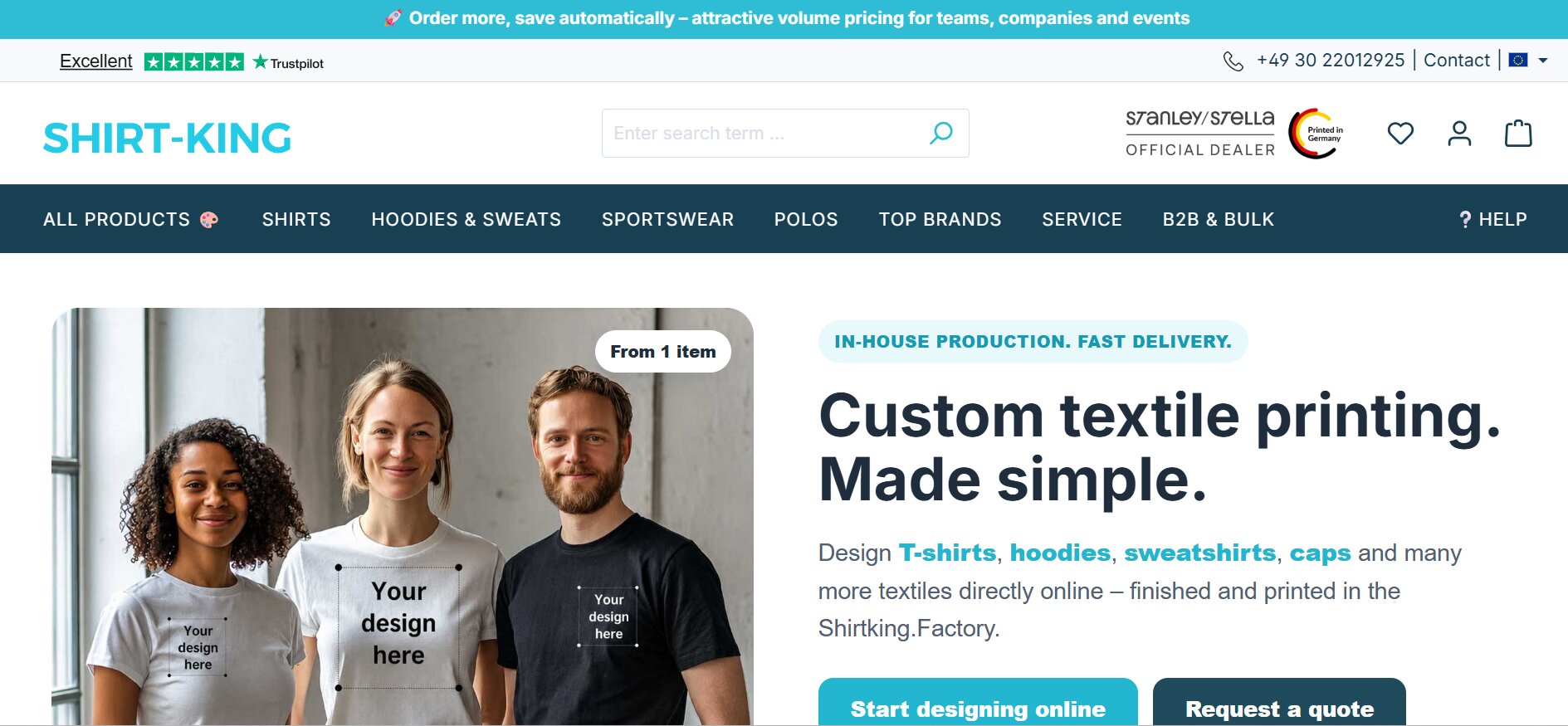
Shirt-King is a German print-on-demand and fulfillment provider based in Teltow, near Berlin. We’d favor it over an international POD provider when domestic production and shorter German delivery routes are important to your positioning.
- Products: T-shirts, hoodies, bags, mugs, and other customizable merchandise
- Ships from & delivery: Teltow, Germany; production time plus domestic delivery
- Pricing: Per-product production and shipping costs
- Ideal for: German-focused apparel and merchandise brands using print-on-demand dropshipping
- Watch out: Request current production and shipping rates before setting retail prices, particularly for low-volume orders
17. Printful: Best for a Broad International POD Catalog
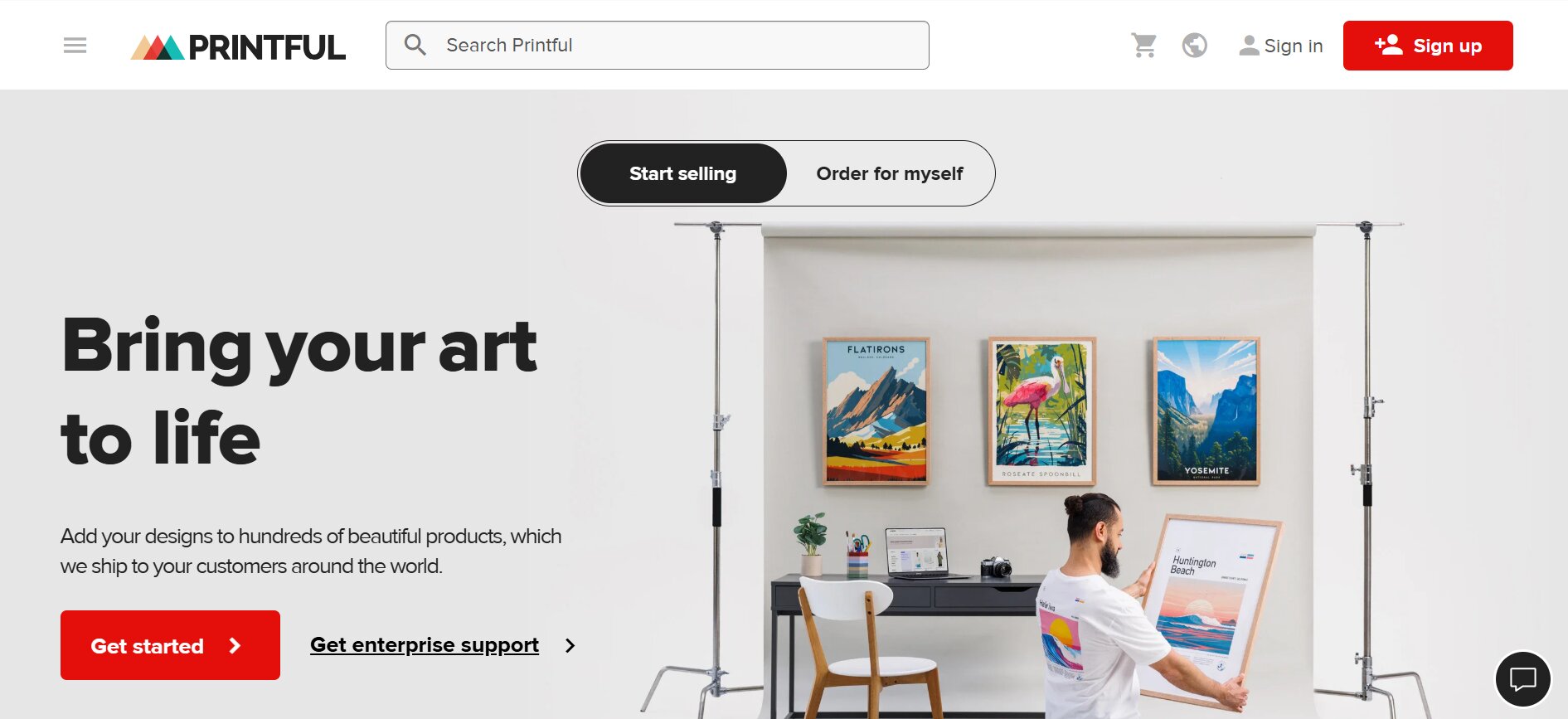
Printful remains one of the easiest POD platforms to integrate with Shopify, WooCommerce, Etsy, and other ecommerce systems. For Germany specifically, however, it is important to correct a common misconception: Printful does not operate a German production facility; European fulfillment comes from facilities elsewhere in the EU, including Latvia and Spain.
- Products: Apparel, posters, mugs, phone cases, accessories, and home products
- Ships from & delivery: EU fulfillment outside Germany; approximately 7–14 days to Germany in the supplied research
- Pricing: Per-product fulfillment pricing; optional paid features
- Ideal for: Brands selling across several European markets
- Watch out: For Germany-only stores, a domestic POD supplier may outperform Printful on delivery time
18. Podbase: Best for Custom Phone Cases and Tech Accessories
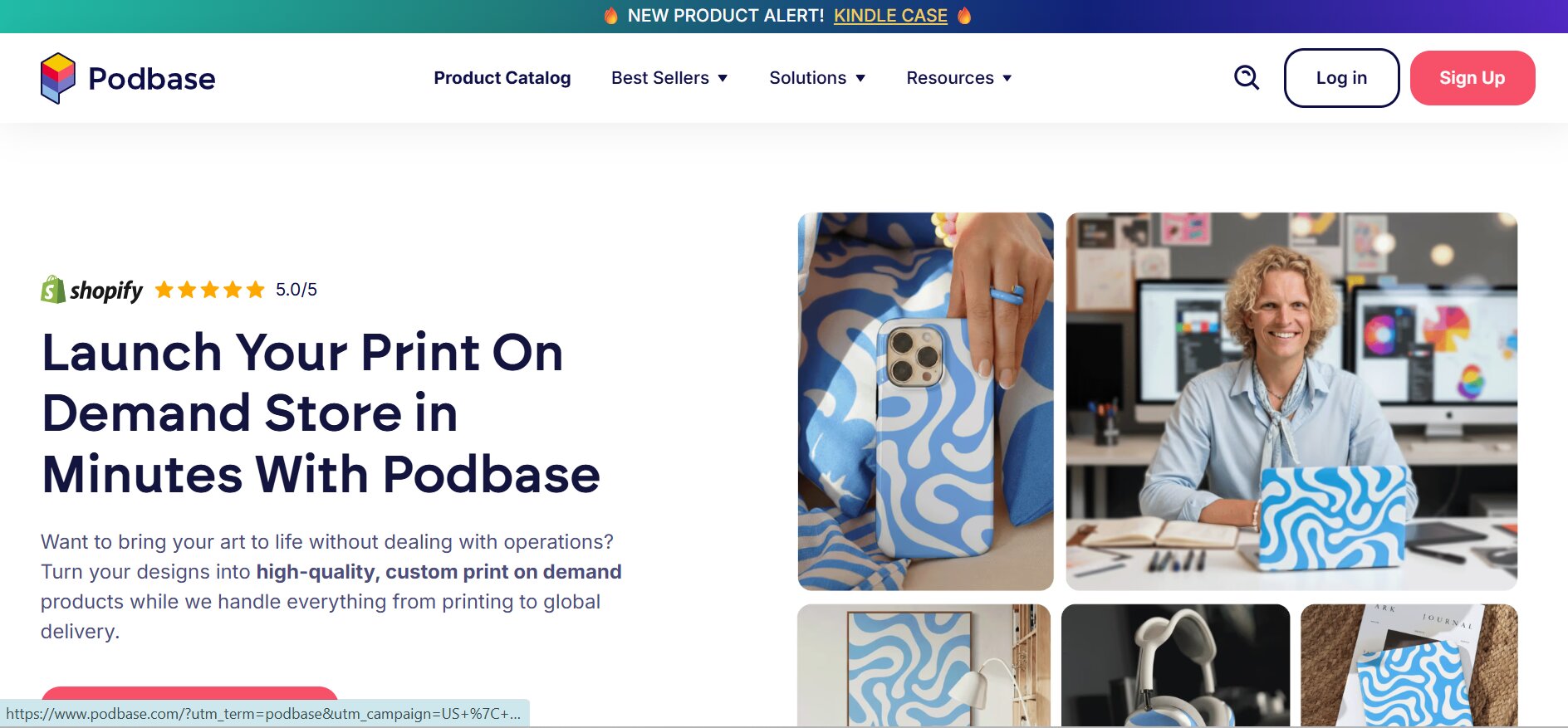
Podbase is a Lithuanian POD provider with a narrower focus on phone cases and technology accessories. We like that specialization for sellers who want deeper customization in one category instead of thousands of unrelated printable products.
- Products: Custom phone cases and selected tech accessories
- Ships from & delivery: Lithuania; approximately 2–6 days to Germany
- Pricing: No subscription required; pay per fulfilled product
- Ideal for: Phone-case and personalized tech-accessory stores
- Watch out: The focused catalog is an advantage for specialists but limiting for broad POD stores
Fashion and Luxury Dropshipping Suppliers
19. BrandsGateway: Best for Luxury Fashion
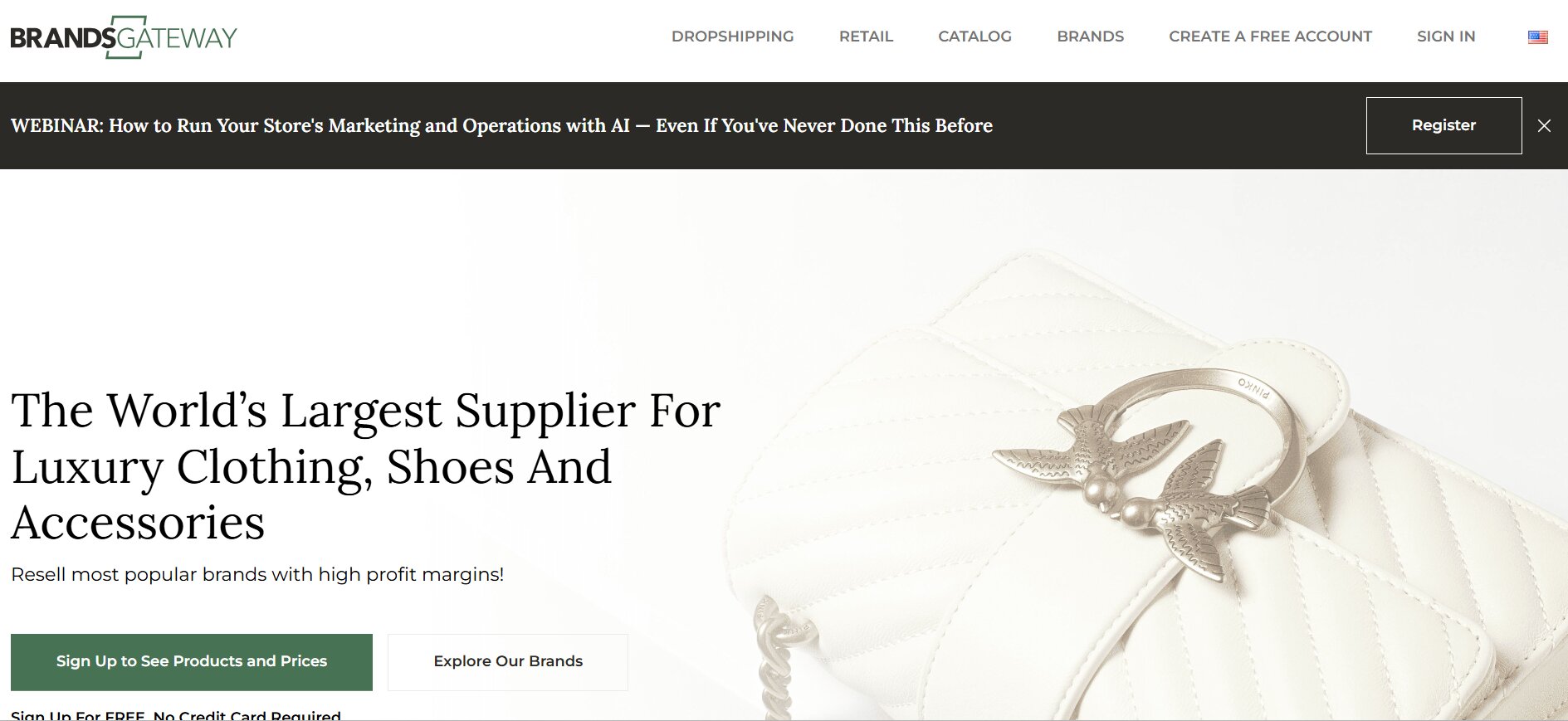
BrandsGateway specializes in designer apparel, shoes, handbags, and accessories with European fulfillment and ecommerce integrations. This is a higher-cost supplier model, so we’d only consider it if your store can support premium pricing and enough order value to justify the subscription.
- Products: Designer clothing, handbags, shoes, and accessories
- Ships from & delivery: EU warehouses; approximately 1–3 days to Germany according to the supplied research
- Pricing: Premium monthly dropshipping subscription
- Ideal for: High-ticket designer fashion stores
- Watch out: Review current subscription fees, returns, brand authorization, and authenticity documentation before building your catalog around it
20. BDroppy: Best Treated as a Trial Before Scaling
BDroppy, connected to BrandsDistribution, gives dropshippers access to European fashion brands and ships from European locations. The catalog is attractive, but we would test the integration before making it central to a store because its Shopify app has carried a very low user rating in the supplied August 2026 research.
- Products: Branded clothing, shoes, handbags, and accessories
- Ships from & delivery: Italy, Spain, and Poland; around 2–4 days within much of the EU
- Pricing: Paid subscription plans
- Ideal for: Fashion resellers willing to pilot the platform before scaling
- Watch out: The supplied research records its Shopify app at approximately 1.7/5, albeit from a limited review base. We would test inventory sync, order routing, and support ourselves before committing hundreds of SKUs.
Marketplaces and Supplier Directories
21. Dropshipping Marktplatz: Best for Discovering German-Speaking Suppliers
Dropshipping Marktplatz is better understood as a German-language supplier marketplace than as one dropshipping wholesaler. Its main value is discovery: it can help you identify Germany- and Austria-based suppliers that may be harder to find through English searches.
- Products: Varies by participating supplier
- Ships from & delivery: Depends on the individual German or Austrian supplier
- Pricing: Supplier-specific
- Ideal for: Sellers searching specifically for Dropshipping Anbieter Deutschland
- Watch out: Marketplace inclusion does not replace due diligence. Verify each supplier separately before listing products
22. Alibaba and AliExpress: Best for Product Testing and Factory Sourcing
We use Alibaba and AliExpress for different jobs. AliExpress is useful for testing products without inventory commitments, while Alibaba becomes more relevant when you’re ready to negotiate factory orders, customize products, or move toward private label.
- Products: Virtually every major consumer-product category
- Ships from & delivery: China and selected EU inventory; delivery varies considerably by seller and warehouse
- Pricing: No membership required to browse; product and shipping prices are supplier-specific
- Ideal for: Product testing, supplier discovery, and eventually factory sourcing
- Watch out: Never assume the platform itself guarantees product quality, EU compliance, or delivery time. Check the individual listing, warehouse, responsible economic operator, and supplier documentation before selling into Germany
23. SaleHoo: Best for a Pre-Vetted Supplier Directory
SaleHoo is a paid directory rather than a supplier. Its role is to narrow supplier discovery by providing access to a database of wholesale and dropshipping companies across different markets.
- Products: Depends entirely on the suppliers you find through the directory
- Ships from & delivery: Supplier-specific
- Pricing: Paid directory membership
- Ideal for: Beginners who want a more structured supplier-search process
- Watch out: You still need to evaluate the supplier’s Germany delivery times, margins, returns, and compliance yourself
24. Worldwide Brands: Best for Sellers Also Targeting the US
Worldwide Brands is another long-running paid supplier directory rather than a fulfillment company. Its database is much more US-oriented, which is why we would not make it our first choice for a Germany-only dropshipping business.
- Products: Broad wholesale catalog across many categories
- Ships from & delivery: Depends on each listed wholesaler
- Pricing: One-time membership model in the supplied research
- Ideal for: Sellers targeting both North America and Europe
- Watch out: Germany fit is relatively weak. Before paying for access, make sure enough suppliers in your intended niche actually ship economically from within Europe
Dropshipping Agents
25. NicheDropshipping: Best for Scaling and Private Label
Once a product is validated, the supplier problem changes. Instead of needing another catalog, you may need factory sourcing, quality inspection, custom packaging, inventory storage, and more control over fulfillment, which is where a dropshipping agent becomes more useful.
At NicheDropshipping, we source products from China and can help sellers move from one-by-one marketplace fulfillment toward bulk purchasing, inspection, branding, and overseas inventory. We would usually suggest this route after you know what is selling rather than using private labeling to test an unproven idea.
- Products: Custom sourcing across multiple consumer-product categories
- Ships from & delivery: China plus overseas warehouse options depending on inventory and fulfillment setup
- Pricing: Free sourcing requests; product and fulfillment costs are quoted according to the project
- Ideal for: Growing stores that need better sourcing control, QC, private label dropshipping, or custom packaging
- Watch out: This model works best once you have reliable sales data. Pre-stocking and customization introduce inventory commitment, so we wouldn’t use them simply because a product looks promising
The main pattern across these 25 options is simple: local German wholesalers usually win on domestic speed, platforms win on convenience, marketplaces win on testing flexibility, and agents become more useful once you need control over a proven product. We’d choose based on the bottleneck your store has today rather than looking for one supplier to handle every stage of the business.

Yes. Germany remains a strong dropshipping market in 2026, especially for sellers who can offer fast delivery, reliable products, and a localized shopping experience. German ecommerce turnover grew 4.3% in the first half of 2026, while the German Retail Federation expects online retail revenue to reach roughly €96.3 billion for the year.
We like Germany because the market is large and mature, but that maturity also raises the bar. German consumers are accustomed to established retailers, transparent policies, and dependable fulfillment. U.S. government trade guidance describes Germany as one of Europe’s largest ecommerce markets and notes that German consumers tend to expect high product quality and German-language online stores.
Why Germany Is Attractive for Dropshipping
- Online spending is still growing: Ecommerce is expanding faster than German brick-and-mortar retail in 2026.
- Large online customer base: Germany had an estimated 47.68 million ecommerce users in 2025, with that figure projected to exceed 51 million by 2029.
- Marketplaces are powerful: Marketplaces accounted for more than half of German online goods spending in Q3 2025, giving sellers channels beyond their own Shopify stores.
- Strong logistics infrastructure: Using German or nearby EU inventory makes short delivery windows practical.
- Multiple selling channels: Besides your own store, Germany gives you access to Amazon.de, eBay.de and local marketplace ecosystems.
What Makes Germany Harder?
The biggest challenge is that German shoppers have relatively little tolerance for a sloppy customer experience.
Slow China-direct fulfillment can make otherwise attractive products difficult to compete with when similar items are already available locally. Payment localization matters too: PayPal remains important, while purchase on account (Kauf auf Rechnung) continues to hold a meaningful place in German ecommerce.
You also need to account for Germany’s stricter ecommerce compliance environment. VAT, packaging obligations, product-safety requirements, legal store pages, returns, and privacy rules all add operational work compared with launching an informal test store in a less regulated market.
| Advantages | Challenges |
| Large, established ecommerce market | Customers expect dependable fulfillment |
| Online retail is still growing | German localization matters |
| High-value niches can support healthy order values | Strong competition from established retailers |
| German and EU warehouses enable fast delivery | Compliance requirements add complexity |
| Shopify plus major marketplaces provide multiple channels | Generic products with long delivery times are harder to differentiate |
Our Verdict
We consider Germany a good market for serious dropshippers, but a poor market for shortcut-driven dropshipping.
If you’re testing products, China sourcing can still give you flexibility and a wider catalog. Once a product proves itself, however, moving inventory closer to Germany can improve delivery times and make the customer experience easier to control.
That’s why we wouldn’t choose a German market simply because it is large. We’d choose it when the margins are strong enough to support fast fulfillment, proper compliance, localized payments, and reliable returns. Those are the operating standards you’re really competing on in Germany.
What Products to Dropship in Germany
Germany is a mature ecommerce market, so we would avoid building a store around generic impulse products with little differentiation. Products that usually make more sense are practical, well-designed, durable, and easy to explain in terms of everyday value.
1. Eco-Friendly Kitchen and Household Products

Sustainability remains a strong positioning angle in Germany, especially when the product also solves a practical household problem.
Fresh product examples include:
- Refillable cleaning bottles
- Reusable silicone food-storage bags
- Compostable dishcloths
- Stainless-steel lunch containers
- Reusable produce bags
- Replaceable-head dish brushes
Why it works: These products fit naturally into a practical, low-waste lifestyle. We’d prioritize items that are lightweight, easy to bundle, and available from an EU warehouse to keep delivery times competitive.
2. Minimalist Home Decor and Wall Art

Germany has a strong design culture, which creates room for simple home decor rather than overly decorative products.
Instead of generic quote posters, consider:
- Bauhaus-inspired geometric prints
- Minimalist city maps
- Architectural line art
- Botanical wall sets
- Typography prints in German
- Personalized family or location prints
Why it works: Print-on-demand makes this niche relatively easy to test because you can create dozens of designs without holding inventory. Localized artwork also gives you more differentiation than simply reselling an existing catalog.

We like pet products because they give sellers plenty of opportunities to move beyond basic commodity items.
Fresh examples include:
- Waterproof dog walking bags
- Orthopedic pet mats
- Lick mats and enrichment toys
- Minimalist feeding stations
- Car-seat protectors for dogs
- Adjustable harnesses
- Travel water bottles for pets
Why it works: Buyers tend to care about comfort, durability, and safety when purchasing for their pets. That gives you more room to build a focused store around quality rather than competing purely on price. You can also explore specialist pet dropshipping suppliers.
4. DIY, Repair, and Balcony-Gardening Products

Germany’s DIY culture makes practical tools a more interesting niche than novelty gadgets.
We’d look at products such as:
- Precision screwdriver sets
- Compact home repair kits
- Cable-management tools
- Miniature cordless screwdrivers
- Seed-starting kits
- Vertical balcony planters
- Self-watering plant pots
- Small indoor herb-growing accessories
Why it works: These products solve obvious problems, which makes their value easier to demonstrate through product videos and ads. Smaller tools and gardening accessories are also easier to ship than heavy power tools.
5. Ergonomic Home-Office Accessories

Rather than large furniture, we’d focus on smaller ergonomic accessories with lower shipping and return risk.
Examples include:
- Adjustable laptop stands
- Monitor risers
- Wrist rests
- Ergonomic footrests
- Cable-management trays
- Desk mats
- Portable standing-desk converters
- Under-desk storage accessories
Why it works: The benefit is easy to communicate: improving comfort and organization during long periods at a desk. For dropshippers, smaller accessories also make more sense operationally than bulky office chairs or desks.
6. Functional Travel and Commuter Accessories

For fashion-related products, we would lean toward utility rather than logo-driven styles.
Fresh examples include:
- Waterproof commuter backpacks
- Compact sling bags
- RFID passport organizers
- Foldable bicycle backpacks
- Reflective accessories
- Cable-organizer pouches
- Laptop sleeves with accessory storage
- Packable rain covers
Why it works: Functional products are easier to differentiate through features such as storage, weather resistance, security, and durability. They can also work across commuters, students, cyclists, and frequent travelers.
7. Compact Home Organization Products
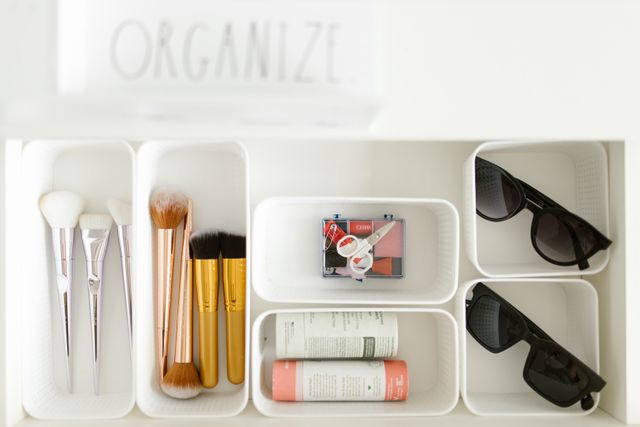
Storage and organization remain strong areas for product discovery because they address everyday problems in apartments and smaller living spaces.
Examples worth testing include:
- Stackable pantry containers
- Under-sink organizers
- Modular drawer dividers
- Foldable laundry baskets
- Slim shoe-storage systems
- Magnetic kitchen organizers
- Bedside storage pockets
- Cable-management boxes
Why it works: These products are highly visual, which makes before-and-after demonstrations effective for ads and social content. We’d favor compact products that ship flat or nest together, because bulky organization products can quickly lose margin through fulfillment costs.
What We Would Prioritize
If we were testing the German market today, we’d start with pet accessories, home organization, ergonomic accessories, and practical eco-friendly household products. These categories are broad enough for product testing, but they also give you room to build a recognizable niche store once you find a winner.
The key is to avoid treating the niche itself as the advantage. Your supplier, delivery speed, product presentation, and positioning will usually matter more than simply choosing a “popular” category.
EU Warehouse vs China Sourcing: When Should You Use Which in 2026?
For Germany, we wouldn’t treat EU warehousing and China sourcing as competing models. They solve different problems.
China is still useful for finding products, testing demand, negotiating factory-direct pricing, and developing private-label products. EU or German warehouses become more valuable once delivery speed, returns, and customer experience start affecting conversion and repeat purchases.
EU Warehouse vs China Sourcing
| Factor | China-Direct Sourcing | German/EU Warehouse |
| Best for | Testing, broad product selection, customization | Proven products and faster fulfillment |
| Inventory commitment | Can be very low or zero | Usually requires pre-stocking |
| Typical advantage | Factory access and lower product costs | Faster delivery and easier EU fulfillment |
| Branding options | Strong once working directly with factories or an agent | Depends on how inventory was prepared before stocking |
| Quality control | Requires active supplier/QC management | Easier once inspected inventory is already stocked |
| Returns | More complicated if items must return overseas | Easier to manage within Germany/EU |
| Main risk | Longer shipping and import complexity | Cash tied up in inventory |
When We’d Use China-Direct Sourcing
China sourcing makes the most sense when you’re still trying to answer one question: Will customers actually buy this product?
We’d use it when:
- You are testing a new product and don’t want to hold stock.
- You need access to a much wider supplier base.
- You want custom colors, packaging, inserts, or eventually private labeling.
- Your order volume doesn’t yet justify stocking inventory in Europe.
- Your margins depend heavily on factory-direct pricing.
The trade-off is fulfillment. Shipping individual parcels from China adds more variables around transit time, customs, tracking, returns, and product compliance.
When We’d Move Inventory to Germany or the EU
Once a product is consistently selling, the economics change.
At that point, we would consider pre-stocking inventory in a German or EU warehouse if:
- Delivery complaints are becoming frequent.
- Repeat purchases matter to the business.
- You’re spending enough on ads that a slow delivery promise hurts conversion.
- You need a practical European returns address.
- You sell bulky, fragile, regulated, or higher-value items where individual cross-border shipments create unnecessary risk.
This is where bulk inventory storage can make sense. You can still source from China, inspect products before export, and then move stock into Europe for local fulfillment.
What Changed on July 1, 2026?
This year made the EU-warehouse calculation more important.
From July 1, 2026, the EU introduced a temporary customs duty on low-value ecommerce imports from outside the EU. Previously, parcels valued below €150 generally benefited from a customs-duty exemption, although VAT still applied. The new interim system imposes a €3 customs duty on low-value consignments, calculated according to the applicable item categories in the parcel.
The measure is temporary and is expected to remain until the EU’s broader customs reform takes over; current EU guidance points to July 1, 2028 for the end of this interim arrangement.
For dropshippers, the practical consequence is straightforward: shipping thousands of individual low-value parcels from China has become slightly more expensive, while importing goods in bulk and fulfilling them from inside the EU avoids applying this small-parcel duty to every customer shipment.
We wouldn’t say this makes China sourcing unattractive. It makes the China → EU warehouse model more compelling once you have enough volume.
The Model We Prefer for Scaling
In practice, the progression we find most sensible looks like this:
Test from China → identify a proven SKU → negotiate better factory pricing → inspect in China → ship inventory in bulk → fulfill from Germany/EU.
That approach keeps the sourcing advantages of China while improving the part German customers actually experience: delivery.
It also gives you more control over dropshipping fulfillment, packaging consistency, stock availability, and returns.
Tired of slow China shipping and compliance guesswork? That’s exactly why 3,000+ dropshippers work with NicheDropshipping. We handle sourcing, quality inspection, and fulfillment from China, US, and EU warehouses. See the difference.
The key is timing. We wouldn’t pay to warehouse an unproven product in Europe, but we also wouldn’t keep fulfilling a proven bestseller one parcel at a time from China just to avoid holding inventory. That middle point is usually where the biggest operational improvement becomes available.
Legal Requirements for Dropshipping in Germany in 2026

Dropshipping is legal in Germany, but the supplier shipping the parcel does not remove your responsibilities as the retailer. If you’re running the store, taking the customer’s payment, and selling into Germany, you need to think about business registration, VAT, packaging, product safety, consumer rights, privacy, and price-display rules.
We’d treat the following as a pre-launch checklist, not something to fix after sales start. This is general guidance rather than legal or tax advice.
1. Register Your Business (Gewerbeanmeldung)
If you operate a commercial dropshipping business from Germany, you generally need to register the trade with your local Gewerbeamt. After registration, the relevant authorities, including the tax office, are informed and you complete the tax-registration process.
For most beginners, this does not mean forming a GmbH. A sole proprietorship can be sufficient, depending on your circumstances.
This matters commercially too: several German wholesalers will ask for proof of business registration before approving a B2B account.
2. Understand VAT and the €25,000 Kleinunternehmer Rule
Germany’s Kleinunternehmerregelung changed in 2025, and this is one area where older dropshipping guides are frequently outdated.
The current thresholds are:
- €25,000 turnover in the previous calendar year
- €100,000 turnover in the current calendar year
If you qualify and use the scheme, your German domestic sales can receive the small-business VAT treatment under §19 UStG. The €25,000 figure therefore should not be described as a simple permanent annual sales ceiling; the current-year threshold also matters.
For cross-border ecommerce, the rules become more complicated. A foreign company can also need German VAT registration where it carries out transactions taxable in Germany—for example, certain setups involving inventory stored in Germany.
3. Know When OSS and IOSS Apply
The EU’s One Stop Shop (OSS) can simplify VAT reporting when you make qualifying cross-border B2C sales within the EU instead of registering separately in every customer country.
For imported orders, IOSS is designed for eligible distance sales of goods imported from outside the EU in consignments of up to €150. It allows VAT to be collected at checkout and reported through one EU registration.
For us, the practical takeaway is simple: your VAT setup depends heavily on where your business is established, where inventory sits, and where the customer receives the goods. This is one area where a German Steuerberater who understands ecommerce is worth the expense.
4. Check Who Is Responsible for LUCID Packaging Registration
This needs more nuance than many dropshipping guides give it.
Under Germany’s Packaging Act (VerpackG), the company legally responsible for first placing the filled packaging on the German market must meet the relevant packaging obligations. However, the official ZSVR specifically states that in a true dropshipping arrangement, the dropshipper is not automatically the producer for the packaging simply because they sold the product. Instead, the dropshipper must verify that the party actually dispatching the goods is properly registered and, where required, participating in a recycling system.
If you import, package, or commission fulfillment of your own goods, the responsibility can shift to you. Businesses responsible for packaging subject to system participation need to:
- Register with the LUCID Packaging Register.
- Join an approved dual system.
- Report the relevant packaging volumes.
So we would never assume, “My supplier handles LUCID.” Ask who is legally responsible for the exact fulfillment flow and obtain evidence.
5. Meet GPSR Product-Safety Requirements
The EU General Product Safety Regulation (GPSR) has applied since December 13, 2024. It strengthened traceability and safety requirements for consumer products offered both online and offline.)
For products covered by GPSR, there must be a responsible economic operator established in the EU, such as an EU manufacturer, importer, authorized representative, or in defined cases a fulfillment service provider.
For a dropshipper, we would verify before listing a product:
- Who is the EU responsible economic operator?
- Are manufacturer and traceability details available?
- Are required safety warnings provided?
- Does the product need additional sector-specific compliance?
Electronics, toys, batteries, cosmetics, and other regulated categories can carry additional requirements beyond GPSR.
6. Set Up Your Impressum Correctly
A German-facing commercial website generally needs legally required provider information under the Digitale-Dienste-Gesetz (DDG).
Section 5 requires information including the business name and address, contact details, and where applicable legal form, representative, commercial-register details, and registration number.
We would use a legally reviewed Impressum rather than copying a template from another dropshipping store. German IHK guidance specifically identifies incomplete or incorrect Impressum information as a recurring ecommerce compliance problem.
7. Respect the 14-Day Right of Withdrawal
For most online consumer purchases in the EU, customers have a 14-day withdrawal period without needing to give a reason. For goods, the period generally starts when the customer receives the order. Certain categories, such as clearly personalized goods and some perishable items, have exceptions.
This is especially important in dropshipping because your supplier’s return policy and your legal obligations to the customer are two different things.
If your supplier says “no returns,” that does not automatically eliminate a German consumer’s statutory rights. We would confirm the return process and costs before working with any supplier.
If your store processes personal data from German customers, the GDPR applies to areas such as customer accounts, email marketing, analytics, payment processing, and order fulfillment.
German stores also need to consider the TDDDG alongside GDPR for technologies that access or store information on users’ devices, including many cookies and tracking technologies.
Operationally, that means your privacy policy, consent setup, marketing tools, analytics stack, and third-party apps should all be reviewed, not just the visible cookie banner.
9. Follow the PAngV for Price Display
Germany’s Preisangabenverordnung (PAngV) governs how prices are shown to consumers. The stated total price must include VAT and other mandatory price components.
Depending on the product and offer, additional requirements may apply, including information about shipping charges or unit pricing.
For dropshippers, this is particularly important when importing supplier feeds. We would not automatically publish a supplier’s raw wholesale data or suggested retail price without checking how the final consumer price must be displayed in Germany.
10. Take Abmahnungen Seriously
An Abmahnung is a formal warning alleging a legal infringement and can arise from issues such as:
- Incorrect or incomplete Impressum information
- Incorrect price displays
- Defective withdrawal information
- Unlawful terms and conditions
- Certain advertising or competition-law violations
German IHK guidance specifically lists these ecommerce mistakes as areas capable of triggering enforcement or an Abmahnung.
This is why we wouldn’t launch a German store by simply translating an English-language Shopify template. The legal pages, checkout, prices, tracking setup, returns process, and product documentation all need to work together.
Germany Dropshipping Compliance Checklist
| Requirement | What We Would Verify Before Launch |
| Gewerbeanmeldung | Business is properly registered where required |
| VAT | Correct registration/treatment for the business and inventory structure |
| Kleinunternehmerregelung | €25,000 previous-year and €100,000 current-year thresholds understood |
| OSS/IOSS | Appropriate scheme used for qualifying cross-border sales/imports |
| LUCID / VerpackG | Exact responsible party identified and registration/system participation verified |
| GPSR | EU responsible economic operator and product-safety information confirmed |
| Impressum | Required DDG business details published |
| Widerrufsrecht | 14-day withdrawal process and exceptions handled correctly |
| GDPR/TDDDG | Privacy, cookies, analytics, and marketing tools configured appropriately |
| PAngV | Consumer prices and required additional price information displayed correctly |
From our perspective, supplier compliance should be part of supplier selection itself. A supplier that is slightly more expensive but can provide traceability information, packaging-status evidence, proper invoices, and product documentation can be considerably safer to scale in Germany than one that simply offers the lowest unit price.
How to Start Dropshipping in Germany in 7 Steps
Starting a dropshipping business in Germany is less about opening a Shopify store and more about getting the business, tax, compliance, supplier, and fulfillment setup aligned before you scale traffic. We’d approach it in this order.
1. Register Your Business
If you’re operating from Germany, start with your Gewerbeanmeldung at the local trade office. A sole proprietorship (Einzelunternehmen) is enough for many beginners; you don’t need to form a GmbH just to test a dropshipping business.
After registration, complete your tax registration and clarify whether you qualify for the Kleinunternehmerregelung or should register for VAT from the start.
2. Set Up VAT, OSS, and Import Taxes Correctly
Your tax setup depends on where your company is based, where stock is stored, and where orders are shipped from.
Before selling, establish whether you need:
- A German VAT number
- The EU OSS scheme for cross-border EU sales
- IOSS for eligible low-value imports from outside the EU
- Additional VAT registrations if you store inventory in another EU country
We wouldn’t guess here. If your setup involves China sourcing plus EU warehousing, it’s worth confirming the structure with an ecommerce-focused tax advisor.
3. Handle LUCID and Product Compliance Before Listing Products
Next, work out your packaging obligations under VerpackG/LUCID and confirm who is responsible within your fulfillment chain.
For every product, also verify:
- GPSR responsible economic operator
- Manufacturer and traceability details
- Required warnings or German-language instructions
- CE documentation where applicable
- Category-specific requirements such as WEEE, battery, cosmetic, food, or toy rules
This is one reason we prefer vetting the supplier before spending money on product pages and advertising.
4. Build a Germany-Ready Store
Your store should feel designed for German customers rather than translated as an afterthought.
At minimum, we’d include:
- German-language product and checkout content
- Prices shown correctly in euros
- Impressum
- Datenschutzerklärung
- Widerrufsbelehrung
- Clear shipping and returns information
- GDPR/TDDDG-compliant consent setup
Shopify is a practical choice for most beginners because of its supplier integrations, but the platform itself doesn’t make your store legally compliant.
5. Add the Payment Methods German Customers Expect
Don’t launch with credit cards as your only serious payment option.
Depending on your payment provider and eligibility, consider:
- PayPal
- Klarna
- Purchase on invoice (Kauf auf Rechnung)
- SEPA-based options
- Major debit and credit cards
For Germany, checkout localization is part of conversion optimization. A perfectly sourced product can still underperform if buyers don’t see a payment method they trust.
6. Choose One or Two Suppliers and Place Test Orders
We wouldn’t connect ten suppliers and import thousands of SKUs on day one.
Choose a small number of suppliers that fit your niche, then place orders to a German address yourself. Check:
- Actual dispatch time
- Tracking quality
- Packaging
- Supplier branding
- Product condition
- German-language documentation
- Invoice contents
- Return instructions
A supplier claiming “2–5 day shipping” is much less useful than knowing what the customer experience actually looks like.
For your first tests, a platform or German/EU wholesaler can minimize inventory risk. Once you find a consistent seller, you can investigate direct sourcing and faster dropshipping fulfillment.
7. Launch Small, Validate, Then Improve Fulfillment
Start with a limited catalog and enough marketing budget to collect useful data. Meta, Google Shopping, organic search, marketplaces, and creator content can all work depending on the product.
The first goal isn’t maximum revenue. We want to learn:
- Which products actually convert
- Your customer acquisition cost
- Refund and return rates
- Real delivery performance
- Contribution margin after VAT, shipping, payment fees, and ads
Once a product proves itself, that’s when we’d negotiate better sourcing, buy in bulk, add branded packaging, or pre-stock inventory closer to Germany.
A Simple Germany Dropshipping Launch Sequence
Register → sort taxes → confirm LUCID/GPSR → build German store → add local payments → test supplier → launch product → move winners to faster fulfillment.
We’d resist the temptation to optimize everything before the first sale. Get the legal and compliance foundations right, keep inventory risk low, and invest more heavily in sourcing and warehousing only after the sales data gives you a reason to.
How to Find and Vet German Dropshipping Suppliers
The best German suppliers are not always the ones ranking for “dropshipping suppliers Germany.” Many traditional wholesalers use German B2B terminology instead, and some offer direct-to-customer fulfillment without marketing themselves as dropshipping companies.
We’d therefore split the process into two parts: find suppliers using local search terms, then verify the business before sending traffic or customer data their way.
Search in German, Not Just English
German-language searches usually uncover wholesalers that international dropshipping lists miss.
Try queries such as:
- Dropshipping Anbieter Deutschland
- Dropshipping Lieferanten Deutschland
- Großhändler für [product]
- B2B Lieferant [product]
- Direktversand Händler [product]
- Streckengeschäft Großhandel [product]
- Versand direkt an Endkunden [product]
We’d also search supplier directories, industry associations, and exhibitor lists from German trade fairs. A wholesaler may never use the word “dropshipping” on its homepage, so it is often worth contacting them directly and asking whether they can ship neutrally to your customers.
Verify the Company in the Handelsregister
For German companies that are required to appear there, start with the official Handelsregister.
Germany’s joint register portal gives access to commercial register information from all federal states. Check that the legal business name, registered location, and company details match what the supplier displays on its website.
A mismatch between the company name on the website, invoice details, and register entry deserves further investigation.
Validate the VAT Number Through VIES
If a supplier gives you an EU VAT identification number, run it through the European Commission’s VIES system.
VIES checks whether a VAT number is valid for cross-border EU transactions using data supplied by national tax authorities.
We would verify:
- VAT number validity
- Whether the business identity matches your supplier records where the system returns that information
- Whether the invoice uses the same legal entity you actually contracted with
A valid VAT number does not prove that a supplier is reliable, but an invalid one is an obvious reason to stop and investigate.
Review the Impressum and Business Details
A legitimate German commercial website should normally provide an Impressum containing identifiable business information.
Compare it with:
- Handelsregister information
- VAT details
- Bank account beneficiary
- Invoices and quotations
- Company email domain
- Physical business address
We get cautious when the supplier operates only through WhatsApp, requests payment to an unrelated individual, or uses company names that keep changing between documents.
Verify LUCID Where Packaging Responsibility Matters
Packaging compliance should also form part of supplier due diligence.
Germany’s Central Agency Packaging Register specifically states that dropshippers must verify that their contractual dropshipping sender fulfills the relevant packaging obligations, including LUCID registration and system participation where applicable.
The LUCID register can also be used to check registration status.
We’d ask the supplier directly:
- Who is responsible for the shipment packaging?
- Is that company registered with LUCID?
- Is system participation covered where required?
- Can they provide evidence?
This is much safer than assuming “German supplier” automatically means the packaging side is handled.
Ask for Product Compliance Documents
The required documents depend on the category, but the supplier should be able to answer basic compliance questions without becoming evasive.
For example, ask for:
- Manufacturer and traceability information
- GPSR responsible economic operator details
- CE documentation where applicable
- German-language instructions or safety warnings
- WEEE/battery information for relevant electronics
- Ingredient and labeling data for cosmetics, food, or supplements
We would be especially careful with toys, children’s products, batteries, electrical goods, cosmetics, and supplements. These are poor categories for taking supplier claims at face value.
Place a Test Order to a German Address
This is probably the most useful practical check.
Don’t rely only on the supplier’s stated “1–3 day delivery.” Place the exact type of order your customer would receive and record:
| Check | What We Look For |
| Dispatch | How long until the parcel actually leaves? |
| Tracking | Is tracking valid and updated promptly? |
| Packaging | Neutral, supplier-branded, or unsuitable for your store? |
| Invoice | Does supplier pricing accidentally appear inside the parcel? |
| Product | Correct item, condition, variation, and documentation? |
| Delivery | Actual door-to-door time in Germany |
| Returns | Is there a usable German/EU return process? |
We would test more than one SKU if your catalog contains products with very different sizes or fulfillment requirements.
Test Their Support Before You Need It
Send a few operational questions during the vetting stage.
Ask how they handle:
- Out-of-stock products
- Damaged deliveries
- Lost parcels
- Customer returns
- Address corrections
- Stock-feed updates
- Product discontinuations
- Tracking-number transmission
The quality of the answer matters as much as speed. A supplier answering clearly before you’ve paid them is generally easier to work with than one providing vague one-line responses to basic fulfillment questions.
Red Flags We Would Avoid
A supplier deserves extra scrutiny if you see several of these together:
- No identifiable legal entity or usable Impressum
- Company details that don’t match the Handelsregister
- Invalid or unexplained VAT number
- Refusal to provide compliance documentation
- No clear return procedure
- Payment requested to an unrelated personal account
- Unrealistic wholesale prices without a commercial explanation
- “German warehouse” claims without a German dispatch address
- Stock feeds that are rarely updated
- Pressure to purchase large inventory before receiving samples
- No clear answer about who handles damaged or non-compliant products
Our Supplier-Vetting Rule
We don’t judge a supplier by its catalog alone.
Before scaling, we want to know who the company is, where the goods really ship from, whether the products can legally be sold in Germany, how a real order arrives, and what happens when something goes wrong.
That takes longer than importing a CSV and launching ads, but it is also where many supplier problems can be caught before they become customer problems.
Frequently Asked Questions
Which dropshipping suppliers have warehouses in Germany?
Several suppliers in this guide ship directly from Germany, including ZooDrop, Manolya Electronics, buXtrade, Gallay, AGI AKKU Service, WORTMANN, CLP Trading, Glamory Hosiery, and Shirt-King.
CJDropshipping also offers German/EU fulfillment for eligible stocked inventory. The right choice depends heavily on your niche. A domestic warehouse can shorten delivery and simplify returns, but always confirm that the specific SKU you want is actually stored in Germany rather than assuming every item in the supplier’s catalog ships locally.
How fast should dropshipping delivery be in Germany?
For a Germany-focused store, we would aim for roughly 2–5 business days wherever commercially practical. German and nearby EU warehouses make this much easier than individual China-direct shipments.
Longer delivery can still work for customized or unusual products, but the delivery estimate needs to be extremely clear before checkout. We care less about promising the fastest possible shipping than delivering consistently within the stated window.
A reliable four-day service usually creates fewer problems than advertising two-day delivery and regularly arriving a week later.
Are German dropshipping suppliers more expensive than Chinese suppliers?
Often at the product level, yes, but unit cost is only one part of the calculation. A German or EU supplier may reduce international shipping, delivery complaints, customer-service workload, and return complexity.
China sourcing can offer stronger factory pricing and customization once you have enough volume. We therefore compare landed margin, not supplier price alone.
Include VAT, shipping, payment fees, marketplace commissions, advertising, returns, damaged goods, and warehousing. A €2 saving on the product is meaningless if the fulfillment model creates €5 more cost elsewhere.
Can I build a private-label brand while dropshipping in Germany?
Yes, but private labeling usually makes more sense after demand has been validated. Once a product consistently sells, you can negotiate custom colors, logos, packaging, inserts, or product modifications with a manufacturer and then pre-stock inventory closer to German customers.
This gives you much more control over the customer experience than repeatedly shipping generic marketplace products. The trade-off is inventory risk: customized goods are harder to return to the supplier.
We would move into private label dropshipping gradually rather than placing a large custom order based on an untested idea.
When should I switch from a platform to a sourcing agent?
We would consider a sourcing agent once you have repeatable sales and specific supply-chain problems to solve. Typical signs include needing better factory pricing, consistent QC, custom packaging, product modifications, bulk purchasing, or inventory stored closer to customers.
Platforms are excellent for testing because they reduce commitment. Eventually, however, catalog convenience can become less important than control.
At that stage, a sourcing agent can coordinate factories, inspections, packaging, and fulfillment around a proven SKU rather than forcing your business to fit whatever happens to be available in a marketplace catalog.
What Are Some Popular Products in Germany for Dropshipping?
Popular dropshipping products in Germany include electronics, fashion, skincare products, and home decor items.
Electronics, such as smartphones and accessories, are in high demand. Fashion brands like Adidas and Gucci are popular choices. Skincare products, including foaming cleansing gels, also show strong market interest according to industry research.
Staying updated with trends helps in selecting the right products.
Do Non-German Sellers Need to Pay German VAT for German Dropshipping?
Yes, and this is a critical compliance area if you want to scale safely in Germany.
Here’s the breakdown:
● If your customer is in Germany, and you store or ship goods from within the EU (including Germany), German VAT (Mehrwertsteuer) must be applied to the sale, even if you’re not based in Germany.
● The standard VAT rate in Germany is 19%, with a reduced rate of 7% for select categories (like books, some foods, etc.).
● If you’re shipping from outside the EU, and the product value is over €150, customs duties and VAT are usually applied at import.
● Platforms like Shopify and Amazon now automatically collect VAT on your behalf under certain thresholds, but you’re still responsible for registration and reporting.
Here’s what you might need:
● VAT Registration in Germany or an OSS (One-Stop Shop) setup if you’re doing business across the EU.
● A tax advisor familiar with cross-border ecommerce is strongly recommended. Penalties for non-compliance can be steep.
TL;DR: If you’re dropshipping to Germany, whether from a German supplier or even from the EU, VAT compliance is not optional. It protects your business, builds trust with customers, and keeps you in good standing with EU regulations.
How Much Tax Do Traders Pay in Germany?
In Germany, dropshipping businesses must comply with tax obligations such as Value Added Tax (VAT) and income tax.
The standard VAT rate is 19%, with a reduced rate of 7% for certain goods. Traders must register for VAT with the German Federal Central Tax Office.
Additionally, income tax rates range from 14% to 45%, depending on your income bracket. Understanding these taxes is crucial for maintaining compliance and avoiding penalties.

Hello Stanley Nieh,
I am Manuela and I am very interested and determined to build a online store, I am brainstorming on Ideas to provide a products , which can be build on a Niche and grow specialized, but that is the greatest challenge that I see yet.
Thank you for providing all this Info ..I stay focused and hope to succeed in a small business over time.
Thanks
Best regards
Manuela