The e-commerce landscape in Singapore is rapidly evolving, with the dropshipping sector showing significant growth. The local dropshipping market is projected to reach an impressive $19.43 billion by 2030, presenting unprecedented opportunities for online businesses.
However, a major hurdle for many merchants is finding reliable suppliers. High delivery fees and extended shipping times (e.g., 15-day shipping) often lead to cart abandonment and customer dissatisfaction, with complaints frequently appearing on platforms like Reddit regarding Singaporean dropshipping suppliers.
We understand the challenge of securing suppliers who can quickly deliver quality products in Singapore. Therefore, we have conducted extensive research and testing to bring you the 15 best dropshipping suppliers in Singapore for 2026.
Key Takeaways
- CJDropshipping is ideal if you need a supplier with a local Singapore warehouse for 3-7 day delivery.
- AliExpress remains the top pick for testing a massive variety of budget-friendly products.
- NicheDropshipping is the best choice for private labeling and building a real brand with fast fulfillment to Singapore.
- Dropshipping is 100% legal in Singapore, but you must register your business with ACRA and monitor the SGD $1 million GST threshold.
How to Choose the Right Dropshipping Supplier in Singapore
To establish yourself as an authority in your dropshipping niche, you need a supplier that won’t let you down. Before we dive into the list, here are five crucial factors you should consider when making your choice.
1. Shipping Speed and Reliability
Singapore is a small, highly connected market. Customers expect fast delivery. If your store takes three weeks to deliver, you will lose to local Shopee sellers. Look for suppliers with a Singapore warehouse, or at least those offering dedicated Asian fulfillment lines (like Cainiao 5-day delivery or specialized sourcing agents).
2. Product Quality and Range
Always order samples. We encourage you to go ahead and try the products yourself before selling them. A supplier with a strict quality control process is your best bet to avoid refunds and bad reviews.
3. Platform Integration
Your supplier’s system should seamlessly connect with your storefront. Whether you use Shopify, WooCommerce, or local marketplaces, automated order fulfillment saves you tons of time.
4. Pricing and MOQ (Minimum Order Quantity)
If you are just starting, look for suppliers with zero MOQ and free basic plans. As you scale, you can upgrade to paid tiers for better margins. Always calculate the total cost, including product price, shipping fees, and any monthly subscriptions.
5. Branding and Private Label Options
Selling generic products is getting harder. To truly stand out, you need a supplier that offers custom packaging, branded invoicing, or full private label services. This is how you turn a simple dropshipping store into a recognized brand.
Quick Comparison: Top 15 Dropshipping Suppliers in Singapore
Here is a quick overview of the 15 best dropshipping suppliers for your Singapore business.
| Supplier | Best For | SG Shipping Time | MOQ | Free Plan |
| 1. CJDropshipping | Local SG Warehouse | 3-7 Days | No | Yes |
| 2. Spocket | US/EU Quality Products | Varies by supplier | No | Trial only |
| 3. AliExpress | Massive Product Variety | 5-15 Days | No | Yes |
| 4. NicheDropshipping | Private Label & Branding | Fast (Custom routes) | No | Yes |
| 5. SaleHoo | Vetted Supplier Directory | Varies | Low/No | No ($9/mo) |
| 6. Printful | print-on-demand Apparel | 5-10 Days | No | Yes |
| 7. DSers | AliExpress Automation | Varies | No | Yes |
| 8. Zendrop | US Market Focus | Varies | No | Yes |
| 9. EPROLO | Free Branding Services | 5-15 Days | No | Yes |
| 10. HyperSKU | Quality Control | 5-12 Days | No | Yes |
| 11. Printify | POD Product Variety | 7-10 Days (from Asia) | No | Yes |
| 12. AutoDS | Full Store Automation | Varies | No | Trial only |
| 13. Syncee | B2B Wholesale Platform | Varies | No | Yes |
| 14. Alibaba | Bulk Factory Sourcing | 3-10 Days (Express) | Varies | Yes |
| 15. Worldwide Brands | Lifetime Supplier Directory | Varies | Varies | No ($197) |
The 15 Best Dropshipping Suppliers in Singapore
Now, let’s explore each supplier in detail to help you find the perfect match for your Singapore dropshipping store.
1. CJDropshipping
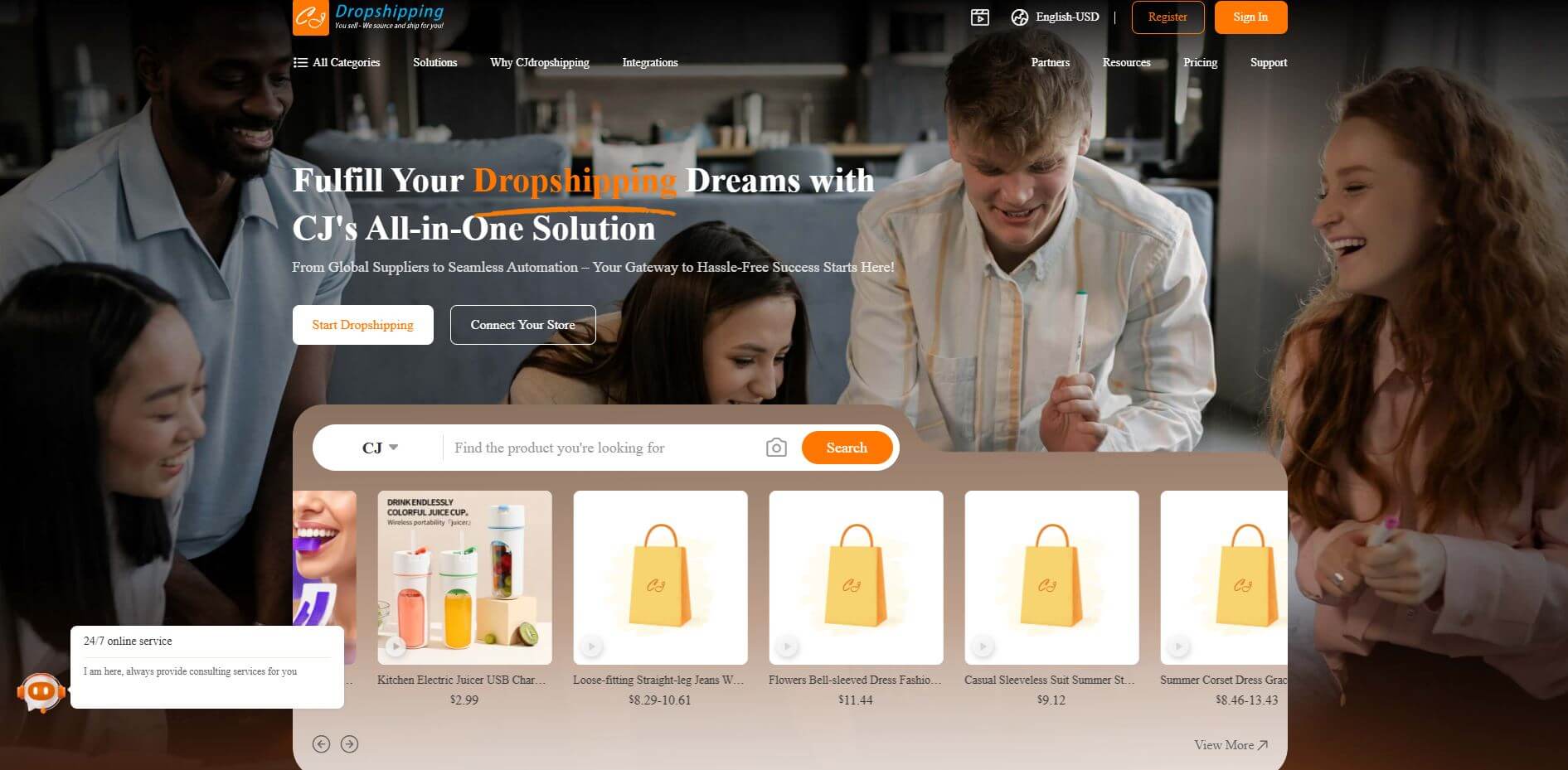
CJ dropshipping Singapore is a massive all-in-one platform headquartered in Yiwu, China. It is incredibly popular among dropshippers globally, and for good reason.
The standout feature for Singapore sellers is that CJDropshipping actually has a dedicated warehouse in Singapore. This means you can offer local customers lightning-fast delivery times of 3-7 days, completely destroying the “slow shipping” stereotype associated with dropshipping.
- Pricing: Free starter plan available. Paid plans start at $15.99/month.
- MOQ: No minimum order quantity.
- Shipping to Singapore: 3-7 days for products stocked in the local Singapore warehouse; 6-12 days via CJPacket JL Express.
- Pros: Dedicated Singapore warehouse; over 50 million product listings; extensive branding options; integrates with Shopify, Shopee, and Lazada.
- Cons: The user interface can be complex for beginners; customer support can sometimes be slow.
- Best For: Dropshippers of all levels looking for fast local shipping to Singapore and an all-in-one solution.
2. Spocket
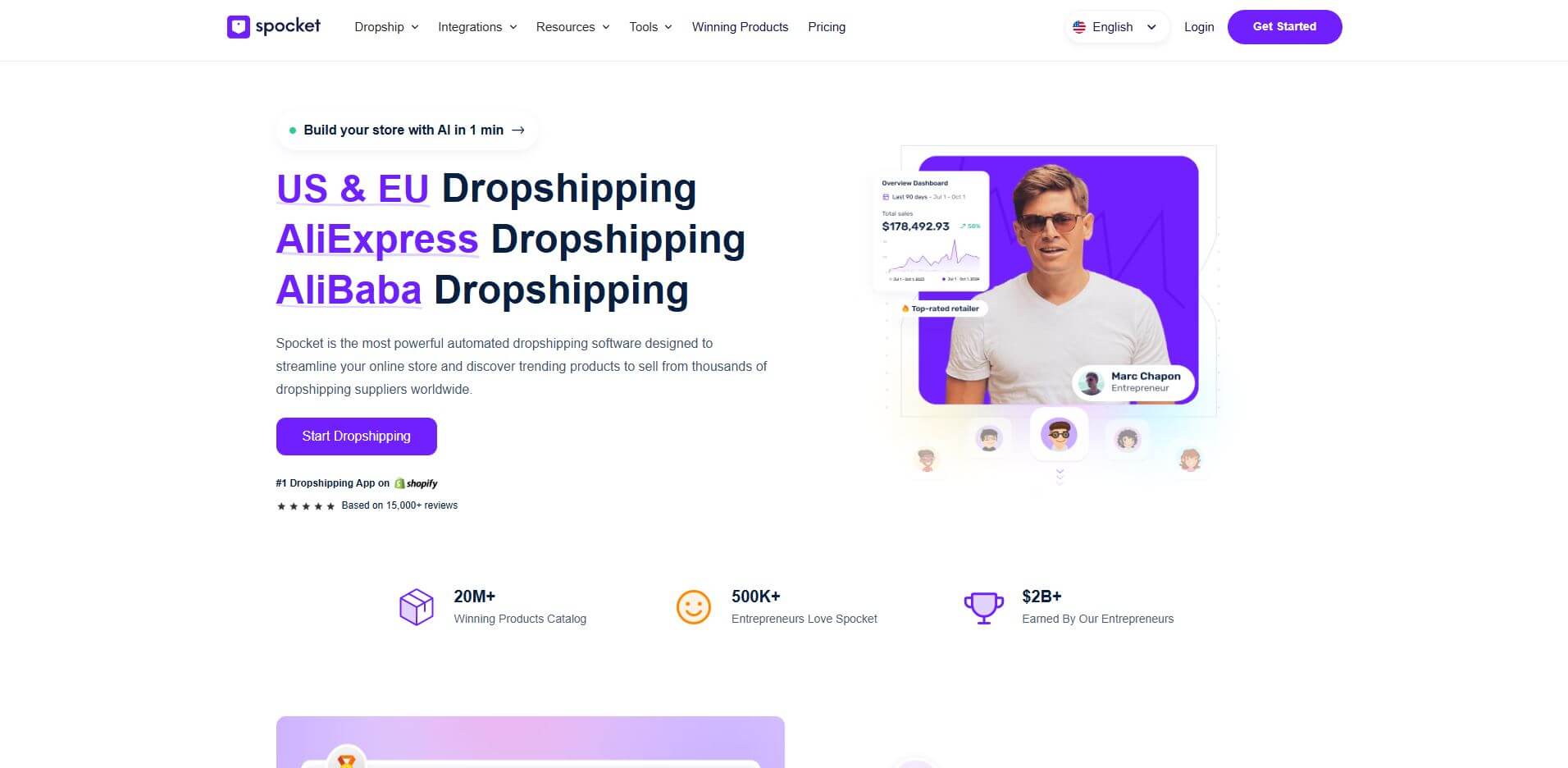
Spocket is a supplier marketplace that focuses heavily on connecting retailers with vetted suppliers from the US and Europe. If you are targeting a premium audience in Singapore who demands high-quality, non-Chinese products, Spocket is fantastic.
They offer branded invoicing, allowing you to add your logo and a personal note to customer packages. This small touch goes a long way in building trust.
- Pricing: Free trial available. Paid plans start at $39.99/month.
- MOQ: No MOQ required.
- Shipping to Singapore: Varies by supplier. Since most are in the US/EU, shipping to Singapore may take longer and cost more.
- Pros: Access to high-quality US/EU products; branded invoicing; seamless integration with major platforms.
- Cons: Higher product costs compared to AliExpress; shipping to Asia can be expensive.
- Best For: Dropshippers targeting a premium market who prioritize product quality over low costs.
3. AliExpress
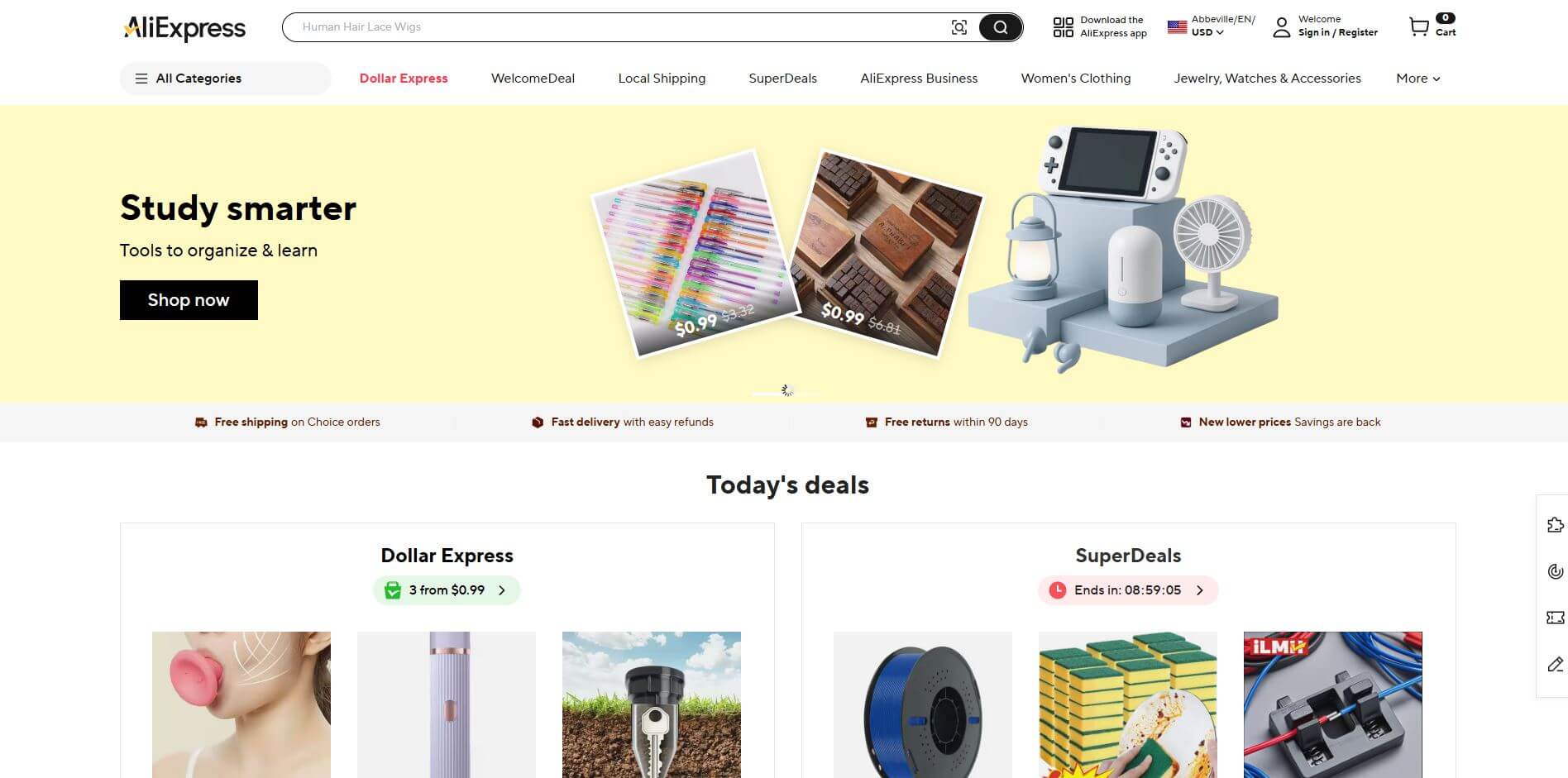
AliExpress needs no introduction. It is the giant of the dropshipping world, offering over 100 million products across every conceivable category.
While it’s famous for long shipping times, AliExpress has significantly improved. They now offer a “Global 5-Day Delivery” service via Cainiao for select products to Singapore, making it a viable option again.
- Pricing: Free to use with no monthly fees.
- MOQ: No MOQ required.
- Shipping to Singapore: 5-15 days depending on the shipping method chosen (Cainiao, Standard Shipping, or Express).
- Pros: Extremely large product selection; very low product costs; buyer protection program.
- Cons: Inconsistent product quality; limited branding options; customer support can be difficult to navigate.
- Best For: Beginner dropshippers on a tight budget who want to test a massive variety of products.
4. NicheDropshipping
NicheDropshipping is a China-based sourcing agent that has helped over 1,000 Shopify and Amazon sellers scale their businesses. If you want to move away from generic dropshipping and build a real brand, this is your best bet.
Unlike standard directories, NicheDropshipping provides a dedicated sourcing agent for each client. They source products on-demand directly from local Chinese factories, ensuring you get the best prices and quality. The magic part is their comprehensive branding services—from custom packaging to white-labeling.
- Pricing: Free product sourcing with no monthly subscription fees.
- MOQ: No MOQ required for basic dropshipping.
- Shipping to Singapore: Fast worldwide fulfillment using various methods, including dedicated lines.
- Pros: Dedicated agent support; strong focus on private labeling; automated Shopify integration; quality inspection included.
- Cons: Communication delays due to time zones; adds a layer between you and the factory.
- Best For: Dropshippers who want to build a private label brand and require a dedicated sourcing agent.
5. SaleHoo
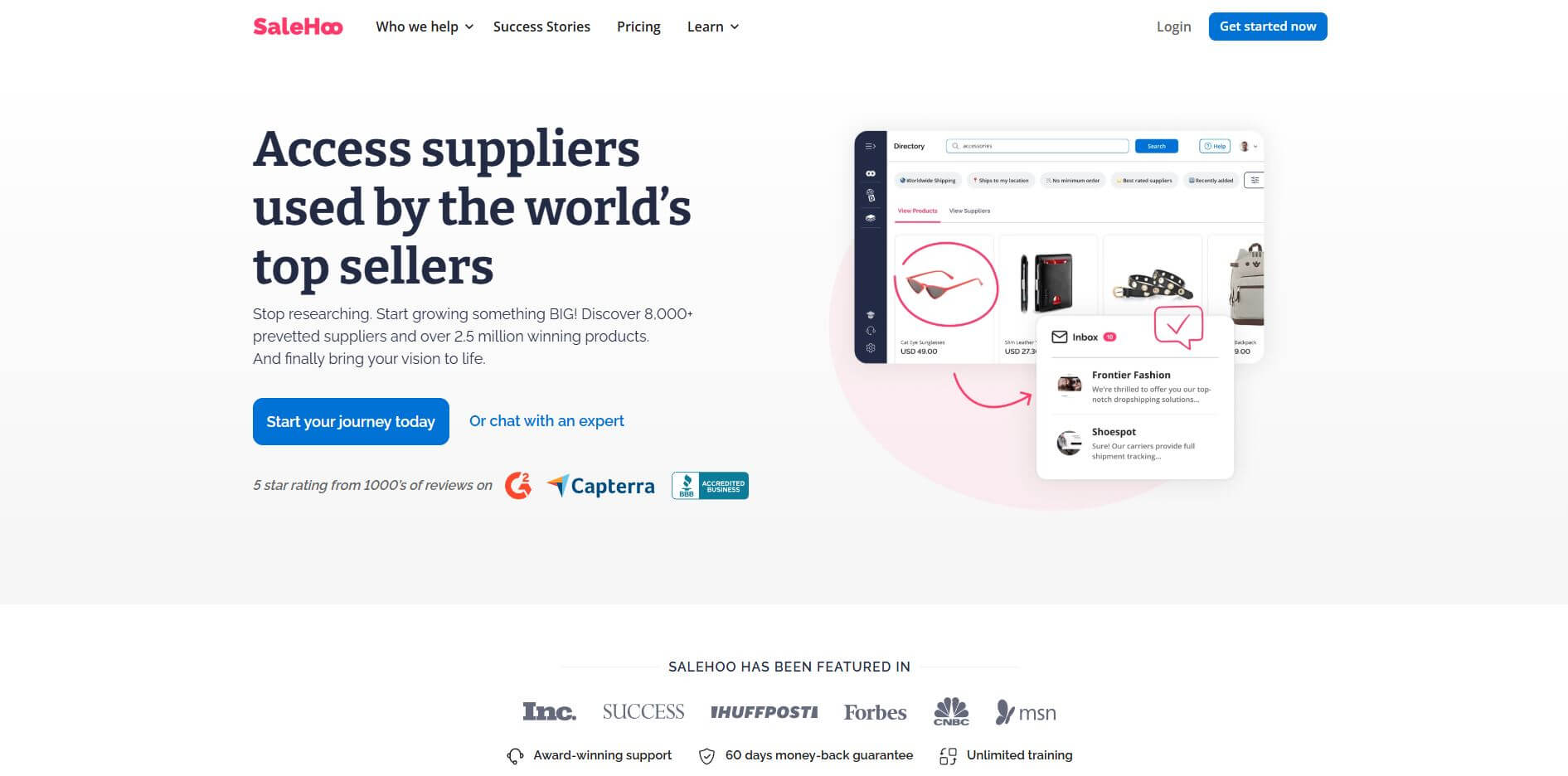
SaleHoo is a highly respected supplier directory based in New Zealand. It gives you access to over 8,000 pre-vetted dropship and wholesale suppliers globally.
What makes SaleHoo great is its research lab, which helps you identify high-profit and trending products before you even contact a supplier. They also provide excellent 24/7 customer support and comprehensive training guides.
- Pricing: $9/month or $49/month (billed annually). Lifetime access available.
- MOQ: Many suppliers have low or no MOQ.
- Shipping to Singapore: Varies entirely by the individual supplier you choose from the directory.
- Pros: Thoroughly vetted suppliers; powerful market research tools; excellent customer support.
- Cons: No free plan; the directory model means you still have to negotiate with suppliers individually.
- Best For: Dropshippers looking for a reliable platform to source from vetted suppliers and research trending products.
6. Printful
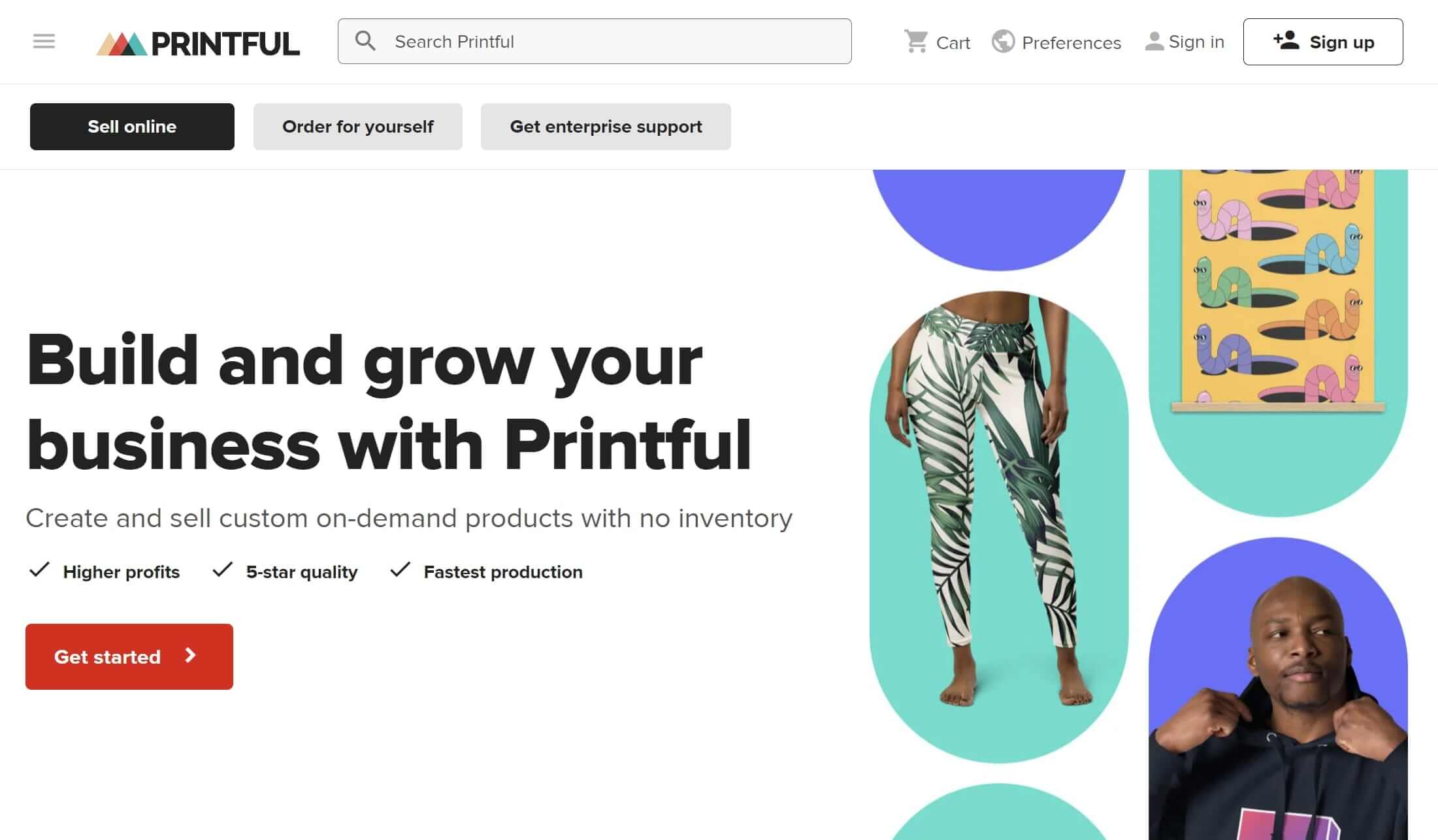
If you want to sell custom apparel, mugs, or phone cases, Printful is the undisputed king of print-on-demand (POD).
They handle everything from printing to fulfillment. You simply create a design, place it on a product using their mockup generator, and sync it with your store. When a customer in Singapore orders, Printful prints and ships it automatically.
- Pricing: Pay-as-you-go model with no monthly fees.
- MOQ: No MOQ required.
- Shipping to Singapore: Typically 5-10 business days.
- Pros: High-quality products and printing; custom branding options (labels, pack-ins); no upfront costs.
- Cons: Can be more expensive than other POD services; shipping times can occasionally be slow.
- Best For: Businesses wanting to sell custom-designed products without managing inventory.
7. DSers
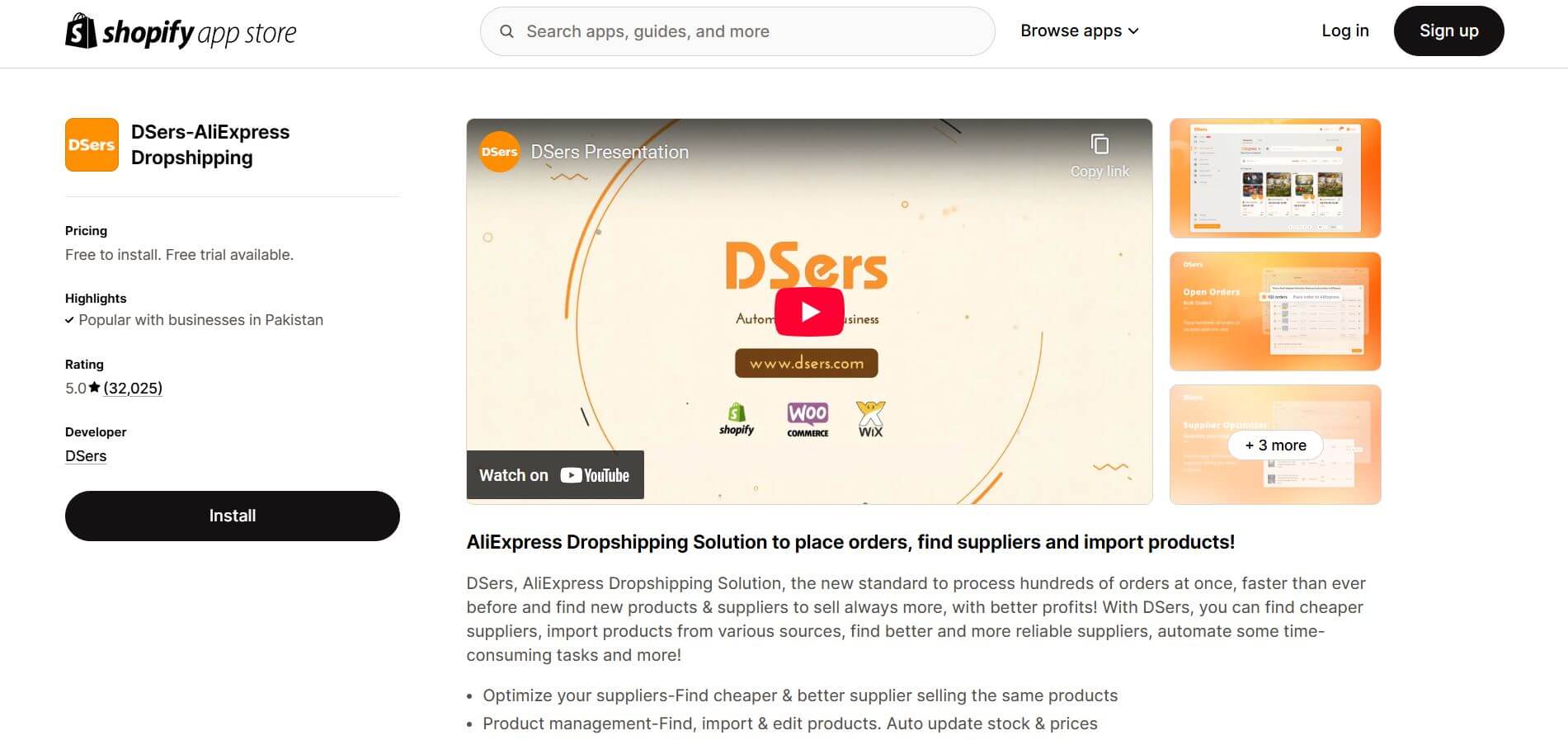
DSers is the official AliExpress dropshipping automation tool. If you decide to use AliExpress as your primary source, you absolutely need DSers to manage your store.
It allows you to process bulk orders to AliExpress with a single click, sync tracking numbers automatically, and manage multiple stores (Shopify, WooCommerce, Wix) from one dashboard.
- Pricing: Free Basic plan available. Paid plans start at $19.90/month.
- MOQ: No MOQ required.
- Shipping to Singapore: Handled by individual AliExpress suppliers.
- Pros: Excellent bulk order processing; multi-store management; free plan is very generous.
- Cons: Relies entirely on AliExpress; no built-in branding services; customer support is basic on the free tier.
- Best For: Dropshippers using AliExpress who need to automate and scale their order fulfillment.
8. Zendrop
Zendrop was built by dropshippers, for dropshippers, to solve the common pain points of using AliExpress. They offer an all-in-one platform with over 1 million products and a robust logistics network.
While they lean heavily towards the US market with local warehouses, they do ship globally. They also offer custom branding options, making it easy to transition from a generic store to a recognized brand.
- Pricing: Free plan available. Pro plan starts at $49/month.
- MOQ: No MOQ required.
- Shipping to Singapore: Varies by product and warehouse location.
- Pros: Faster fulfillment than standard AliExpress; clear pricing; strong support; custom branding available.
- Cons: The best features are locked behind the paid plans; shipping outside the US can be slower.
- Best For: Dropshippers looking for a reliable, automated alternative to AliExpress with branding capabilities.
9. EPROLO
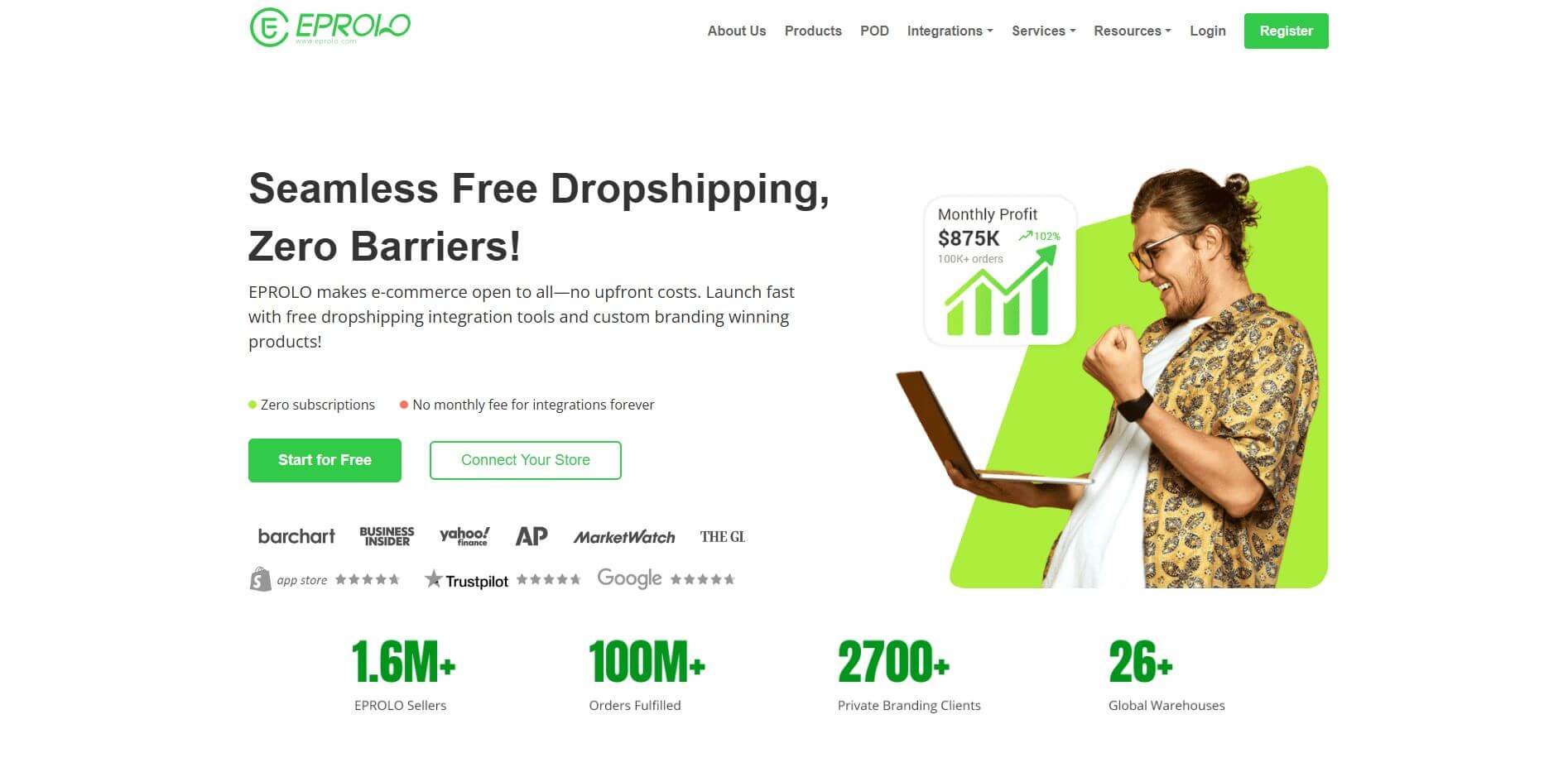
EPROLO is a forever-free dropshipping platform that has fulfilled over 100 million orders globally. They are particularly strong in the fashion niche, adding over 3,000 new styles weekly.
The biggest advantage of EPROLO is that they offer custom branding and private label services (custom labels, tags, and packaging) with absolutely no minimum order quantity.
- Pricing: Free to use. Advanced branding features cost $19.90/year.
- MOQ: No MOQ required.
- Shipping to Singapore: 5-15 days via global express shipping.
- Pros: Completely free core platform; no MOQ for custom branding; massive fashion catalog.
- Cons: Some users report inconsistent product quality; customer support can be slow.
- Best For: Beginner and experienced dropshippers looking for a free platform with extensive branding capabilities.
10. HyperSKU
HyperSKU is a China-based sourcing and fulfillment platform designed to streamline operations for eCommerce sellers. They provide access to over 2,000 vetted suppliers.
What sets HyperSKU apart is their strict quality control and fast global shipping. They also offer print-on-demand and private labeling services, making them a strong all-around partner.
- Pricing: Free sign-up (transaction fees apply).
- MOQ: Not publicly disclosed, generally low.
- Shipping to Singapore: 5-12 days global shipping.
- Pros: Fast global shipping; access to vetted suppliers; strong branding options; 24/7 support.
- Cons: Lack of transparent pricing for paid plans; occasional issues with account management.
- Best For: Dropshippers with consistent order volume looking to scale with a reliable fulfillment partner.
11. Printify
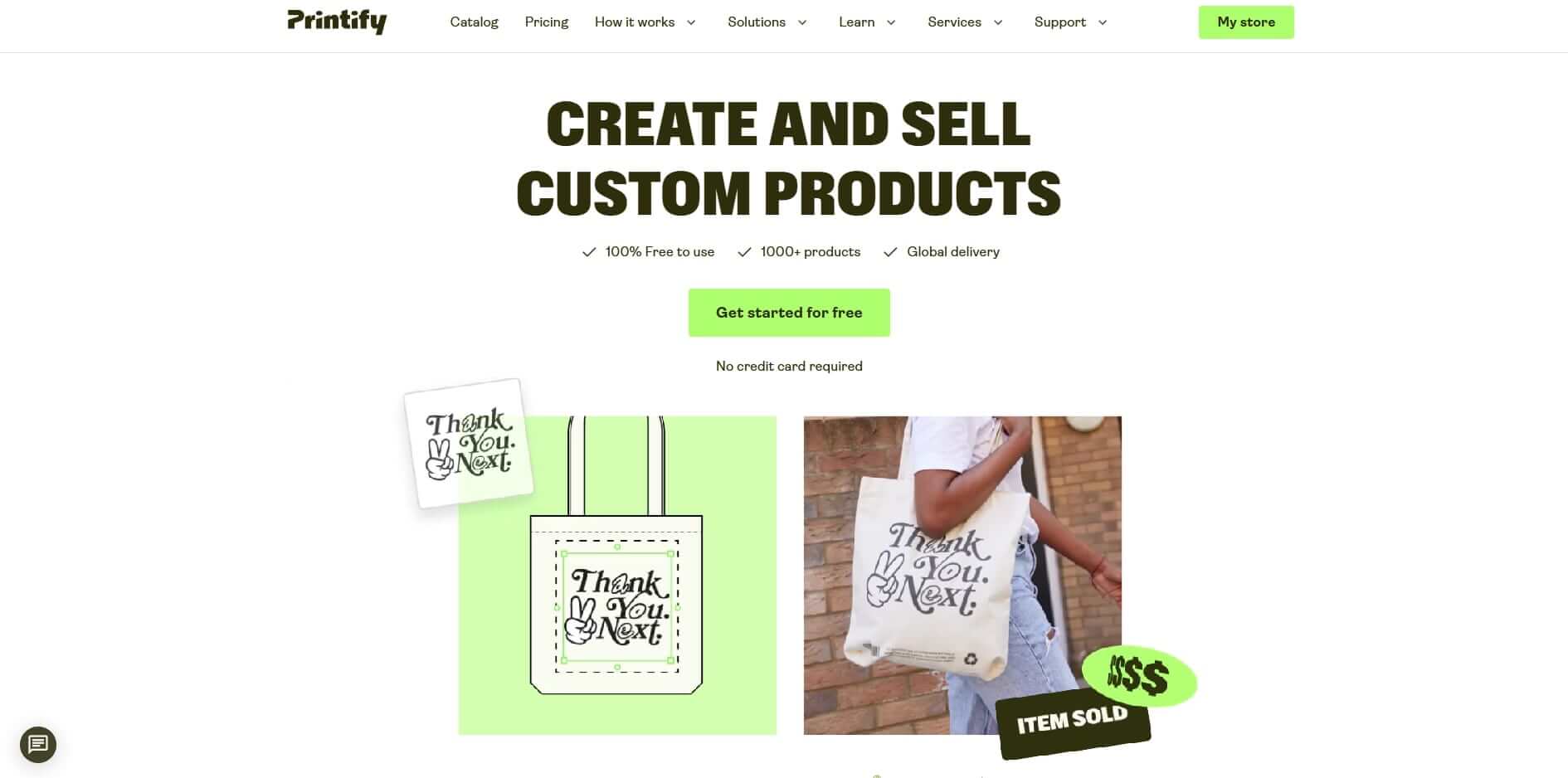
Printify is Printful’s biggest competitor in the print-on-demand space. Instead of owning their own printing facilities, Printify connects you with a global network of over 140 print providers.
This model allows them to offer a massive catalog of over 1,300 customizable products, often at lower base prices than Printful.
- Pricing: Free plan available. Premium plan is $29/month.
- MOQ: No MOQ required.
- Shipping to Singapore: 7-10 business days from print providers in Asia or Australia.
- Pros: Massive product catalog; lower base costs; automatic order routing to the nearest print provider.
- Cons: Print quality can vary between different providers; limited custom packaging options.
- Best For: Entrepreneurs who want the widest variety of POD products at competitive prices.
12. AutoDS
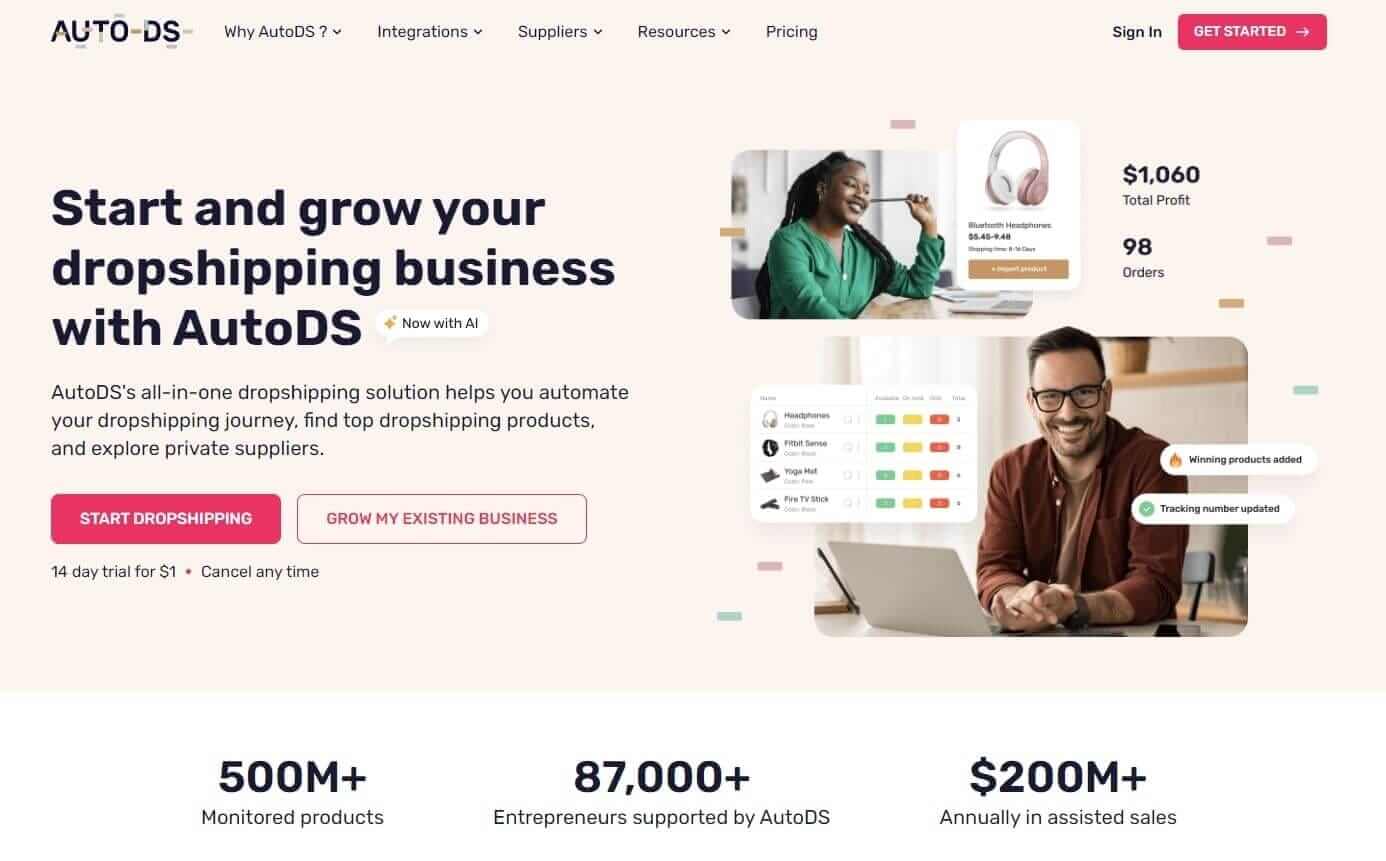
AutoDS is a powerful dropshipping automation platform that supports multiple marketplaces, including Shopify, WooCommerce, eBay, and TikTok Shop.
It offers a suite of AI-powered tools for product finding, automated importing, price optimization, and full order fulfillment. If you want to run your store on autopilot, AutoDS is incredibly comprehensive.
- Pricing: $1 trial available. Plans start at $26.90/month.
- MOQ: No MOQ required.
- Shipping to Singapore: Varies based on the global suppliers used within their network.
- Pros: Extensive automation features; AI-powered tools; supports multiple sales channels.
- Cons: Pricing plans can be confusing and expensive for beginners; occasional stock monitoring glitches.
- Best For: Dropshippers who want an all-in-one platform to completely automate their business operations.
13. Syncee
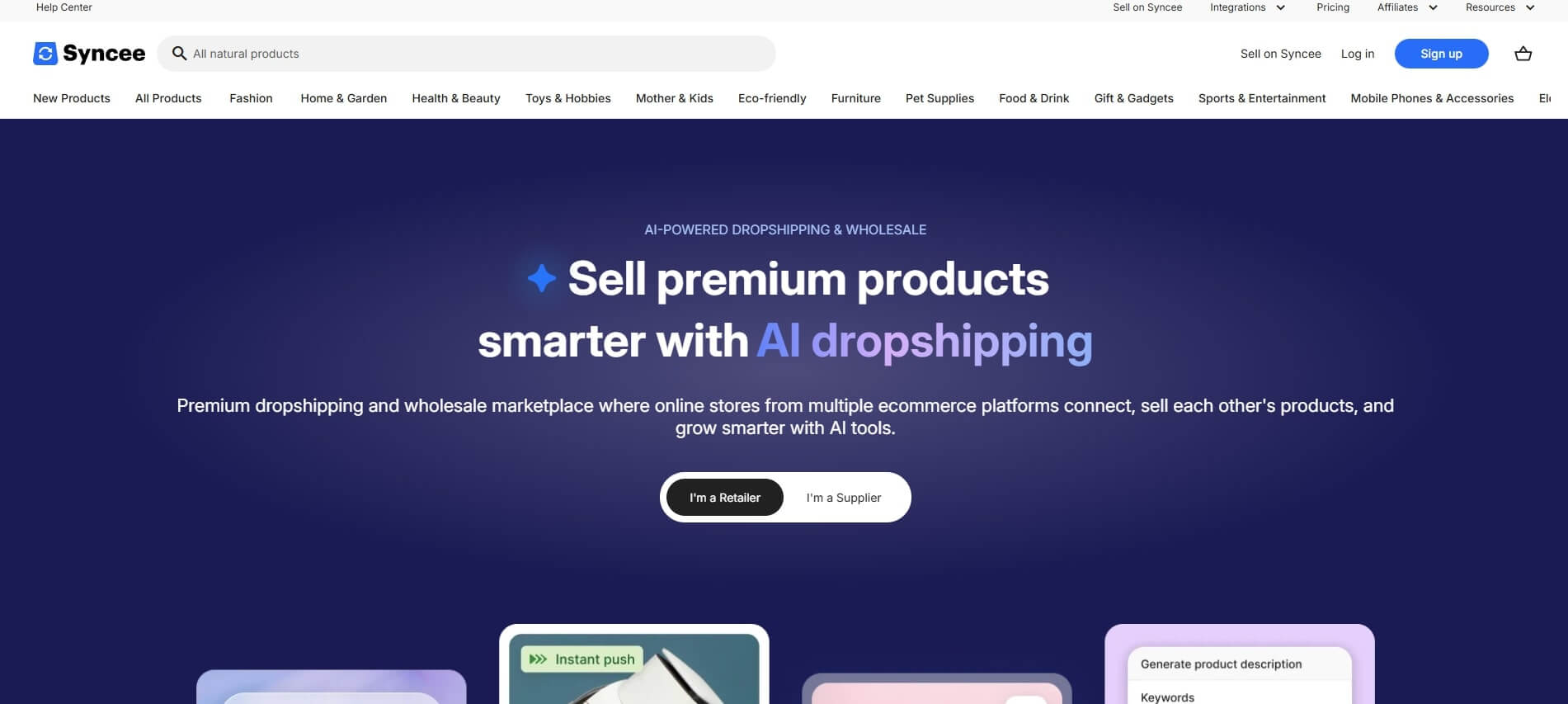
Syncee operates as a premium B2B dropshipping and wholesale platform. It connects your online store with over 12,000 vetted brands globally, offering millions of products.
They heavily utilize AI for product sourcing, recommendations, and even writing SEO-optimized descriptions. It is a great platform if you want to sell established brands rather than generic unbranded goods.
- Pricing: Free starter plan available. Paid plans start at $39.99/month.
- MOQ: No MOQ required.
- Shipping to Singapore: Varies entirely by the individual brand/supplier.
- Pros: Access to millions of products from vetted brands; powerful AI features; no transaction fees on paid plans.
- Cons: Paid plans are relatively expensive; reliance on individual suppliers for shipping consistency.
- Best For: Retailers looking to sell a wide variety of branded products and leverage AI for automation.
14. Alibaba
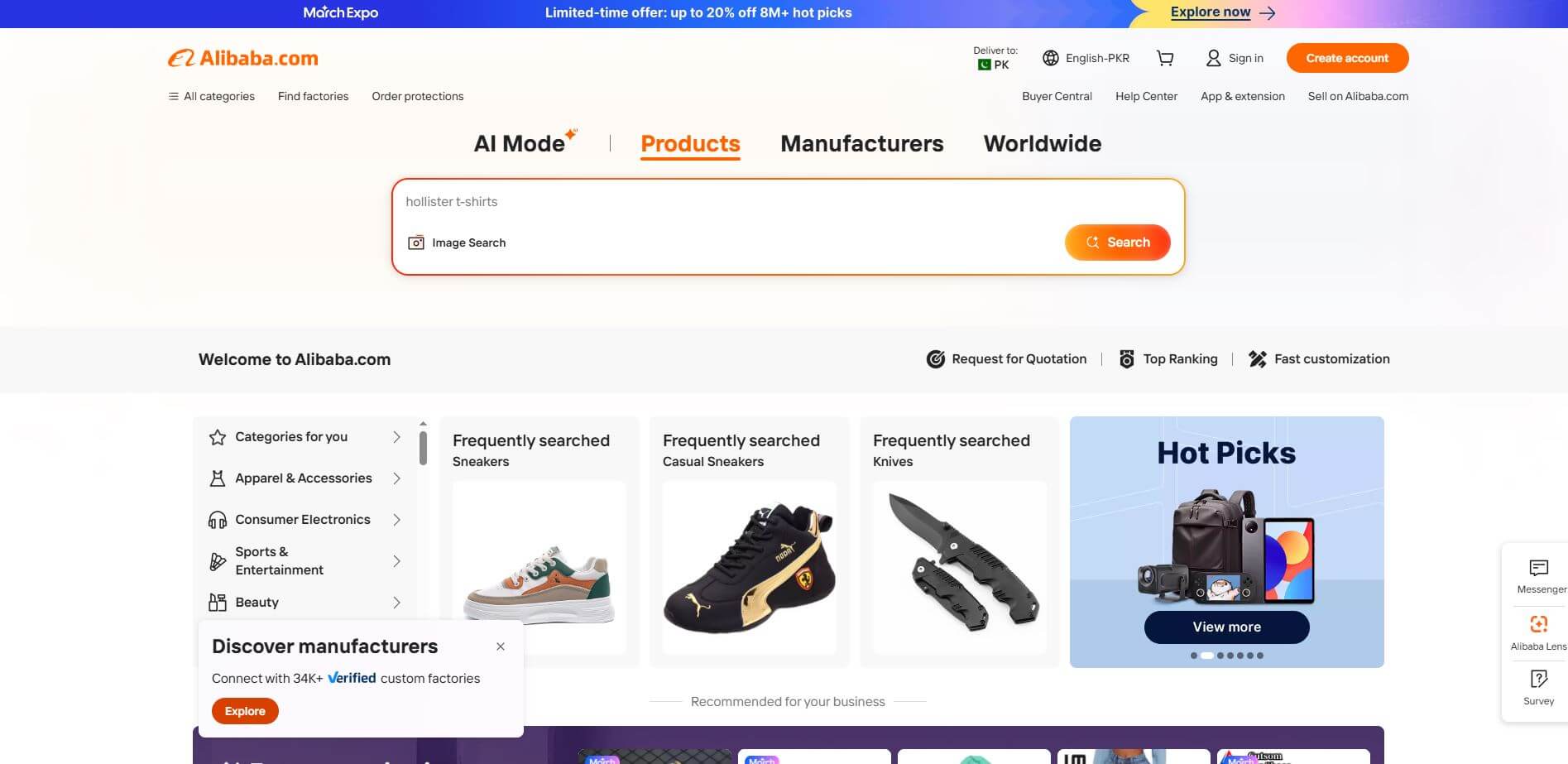
Alibaba is the undisputed king of dropshipping suppliers singapore wholesale and factory-direct sourcing. If you are ready to buy in bulk, create your own custom products, or secure the absolute lowest prices, Alibaba is where you go.
While traditionally focused on bulk wholesale, many Alibaba suppliers now offer dropshipping services or very low MOQs to accommodate smaller sellers.
- Pricing: Free to use for buyers.
- MOQ: Varies wildly by supplier. Some offer 1 piece, others require 500+.
- Shipping to Singapore: 3-10 days via Express (DHL/FedEx); 20-35 days via economical Sea Freight.
- Pros: Lowest possible factory-direct prices; Trade Assurance protects your payments; endless customization options.
- Cons: High MOQs for many products; communication barriers; longer shipping times for standard freight.
- Best For: Experienced sellers looking to source products in bulk, private label, or find manufacturers for custom products.
15. Worldwide Brands
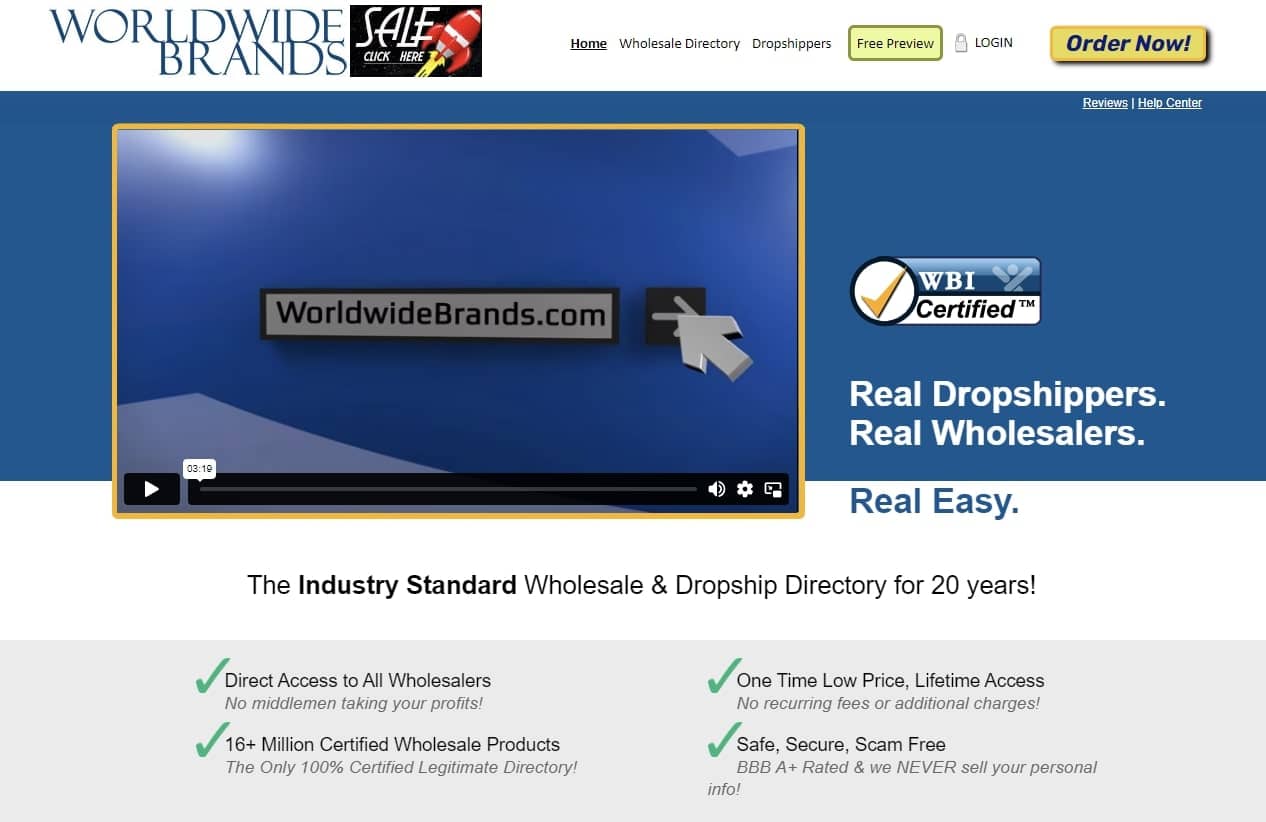
Worldwide Brands is one of the oldest and most respected supplier directories on the internet, operating since 1999. They offer a directory of over 8,000 certified wholesale suppliers and more than 16 million products.
The biggest draw is their pricing model: a one-time payment for lifetime access. They have a strict scam-free guarantee, ensuring every supplier listed is a legitimate business.
- Pricing: $197 one-time fee for lifetime access.
- MOQ: Varies by supplier.
- Shipping to Singapore: Varies by supplier.
- Pros: One-time fee with no recurring charges; highly vetted and certified suppliers; scam-free guarantee.
- Cons: High upfront cost; you still have to contact and negotiate with suppliers directly.
- Best For: Serious dropshippers who want a lifetime resource of vetted, high-quality wholesale suppliers.
Is Dropshipping Legal in Singapore?
Yes, dropshipping is 100% legal in Singapore. It is a legitimate e-commerce fulfillment model used by thousands of entrepreneurs globally. However, because you are running a business, you must comply with local laws.
If you are living in Singapore, you must register your dropshipping business with the Accounting and Corporate Regulatory Authority (ACRA). This applies whether you are a local or a foreigner. You can choose to register as a Sole Proprietorship (which costs around SGD $115) or a Private Limited Company. Registering protects you legally and allows you to open business bank accounts .
You also need to pay attention to taxes. The corporate tax rate in Singapore is a flat 17%, but there are generous exemptions for startups in their first three years. Additionally, if your taxable turnover exceeds SGD $1 million in a 12-month period, you are legally required to register for Goods and Services Tax (GST), which is currently 9% .
Finally, ensure you are not dropshipping restricted items like certain health supplements, cosmetics, or electronics without the proper licenses. When in doubt, it is always best to start a dropshipping business with standard consumer goods first.
Can You Dropship on Shopee in Singapore?
Yes, you can absolutely dropship on Shopee Singapore, but it comes with unique challenges. Shopee is a marketplace, not a standalone storefront like Shopify.
To dropship on Shopee, you set up a seller account and list products from your supplier (like CJDropshipping or AliExpress). When a customer buys on Shopee, you place the order with your supplier and input the customer’s shipping details.
The biggest challenge is shipping time. Shopee has strict fulfillment deadlines. If your supplier ships from China using standard ePacket (15-30 days), your Shopee account will likely be penalized or suspended for late shipment. Furthermore, Shopee customers are highly price-sensitive, making your profit margins extremely thin.
To succeed on Shopee, your best bet is to use a supplier with a local Singapore warehouse (like CJDropshipping) or a sourcing agent who can guarantee 3-5 day delivery.
How Much Does It Cost to Start Dropshipping in Singapore?
Many beginners wonder if $500 is enough to start, or if they can start with $0. The truth is, while you don’t need to buy inventory upfront, dropshipping is not entirely free.
Here is a realistic breakdown of the minimum costs to start a professional dropshipping business in Singapore:
- ACRA Business Registration: SGD $115 (Sole Proprietorship).
- E-commerce Platform: Shopify costs $39/month (though they often have $1/month trials). WooCommerce is free, but you pay for hosting (~$10/month).
- Domain Name: Around $15/year.
- Supplier Platform Fees: Many are free (like AliExpress or NicheDropshipping), but premium apps cost $15-$50/month.
- Marketing/Ads: This is your biggest expense. You should budget at least $300-$500 for initial Facebook or TikTok ads to test products.
Can you start with $1000? Absolutely. Can you start with $0? It is extremely difficult. While you can use free dropshipping methods like organic TikTok traffic, you still need to pay for your domain and store hosting.
FAQs About Dropshipping Suppliers in Singapore
Is dropshipping still profitable in 2026?
Yes, it is highly profitable if done correctly. The global dropshipping market is projected to reach $1,253 billion by 2030 . However, the days of selling low-quality generic items with 30-day shipping are over. Profitability in 2026 requires building a brand, ensuring fast shipping, and offering excellent customer service.
How much can a beginner dropshipper make?
A beginner can realistically make anywhere from $500 to $2,000 per month in profit during their first 3-6 months, assuming they dedicate consistent time to learning marketing and testing products. Experienced dropshippers who scale winning products can make tens of thousands of dollars monthly.
Do I need to pay for dropshipping suppliers?
No, you do not have to pay for suppliers. Platforms like AliExpress, CJDropshipping, and NicheDropshipping offer free sourcing and fulfillment services. You only pay for the actual product cost and shipping when you make a sale. Paid directories (like SaleHoo) charge a fee for access to their vetted lists, but they are optional.
What is the biggest risk in dropshipping?
The biggest risk is relying on unreliable suppliers. If your supplier sends poor-quality products, ships items late, or runs out of stock without telling you, your customers will demand refunds and leave bad reviews. This can lead to your payment gateways (like Stripe or PayPal) shutting down your account.
Which product is most sold in dropshipping?
Fashion apparel, beauty products, consumer electronics (like phone accessories), and pet supplies are consistently the top-selling categories. However, we encourage you to find specific sub-niches (e.g., orthopedic dog beds instead of just “dog toys”) to reduce competition.
How do I find a supplier for my dropshipping business?
You can use free marketplaces like AliExpress, sign up for all-in-one platforms like CJDropshipping, use a paid directory like SaleHoo, or partner with a dedicated dropshipping agent like NicheDropshipping who will source products directly from factories for you.
Is dropshipping worth it for beginners?
Yes, dropshipping remains the best business model for beginners to learn e-commerce. It teaches you incredibly valuable skills—like digital marketing, copywriting, and customer service—with very low financial risk compared to traditional retail.
Conclusion
Starting a dropshipping business in Singapore is an exciting opportunity, but your success depends entirely on the partners you choose.
If you want to test a massive variety of products on a budget, AliExpress and CJDropshipping are excellent starting points. However, if your goal is to build a sustainable, long-term brand with custom packaging and reliable fulfillment, partnering with a dedicated sourcing agent is your best bet.
At NicheDropshipping, we provide a complete, one-stop solution. From sourcing products directly from Chinese factories to private labeling and fast global fulfillment, we handle the logistics so you can focus on scaling your sales.
Ready to take your Singapore dropshipping business to the next level? Register for free today and let our dedicated agents help you source your first winning product.